
The Hernandez surname means “son of Hernando”, and Hernando is the old Castilian form of the name we know as Ferdinand. It is a Spanish patronymic, born in medieval Castile, long before it became one of the most-carried names in the Americas.
What Does the Surname Hernandez Mean?
Hernández means “son of Hernando”. Hernando was a medieval Spanish form of the given name Ferdinand, so every Hernández family line records, somewhere in its Castilian past, a father who answered to that name.
The mechanism is the ending. In Spanish the suffix -ez turned a father’s given name into his children’s surname: Rodrigo gave Rodríguez, Gonzalo gave González and Gonzales, Hernando gave Hernández. Those two pages trace in detail how the system hardened into fixed, inheritable surnames between the tenth and fifteenth centuries, and the story is the same here.
Behind Hernando sits something older and not Spanish at all. Ferdinand came into Iberia from the Germanic-speaking Visigoths, recorded in Latin as Fredenandus or Firdinandus. The elements are usually read as frithu, “peace” or “protection”, plus nanth, “daring, bravery”. Some philologists prefer farth, “journey”, giving a bold traveller rather than a bold protector. The honest position is that the first element is disputed and the second is not.
Where the Hernandez Name Comes From
Hernández comes from the Christian kingdoms of medieval Spain, chiefly Castile and León, where the given name Hernando was common enough to generate a surname many thousands of times over.
The Hernando and Fernando doublet
Spanish carries the same name twice, and this is the detail most surname pages miss. Castilian went through a well-documented sound change in which an initial f weakened to an aspirated h and then fell silent: Latin facere became hacer, filius became hijo. Fernando was pulled along with it and produced Hernando, and both forms were in ordinary use by the fifteenth century.
That is why Hernández and Fernández are the same name. They are doublets, two surnames from one given name, separated by a phonetic accident rather than by ancestry. A family that fixed its surname while its neighbours said Hernando became Hernández; one that fixed it in a district that kept the f became Fernández. Neither is the corruption of the other.
Ferdinand III and the saint who made the name
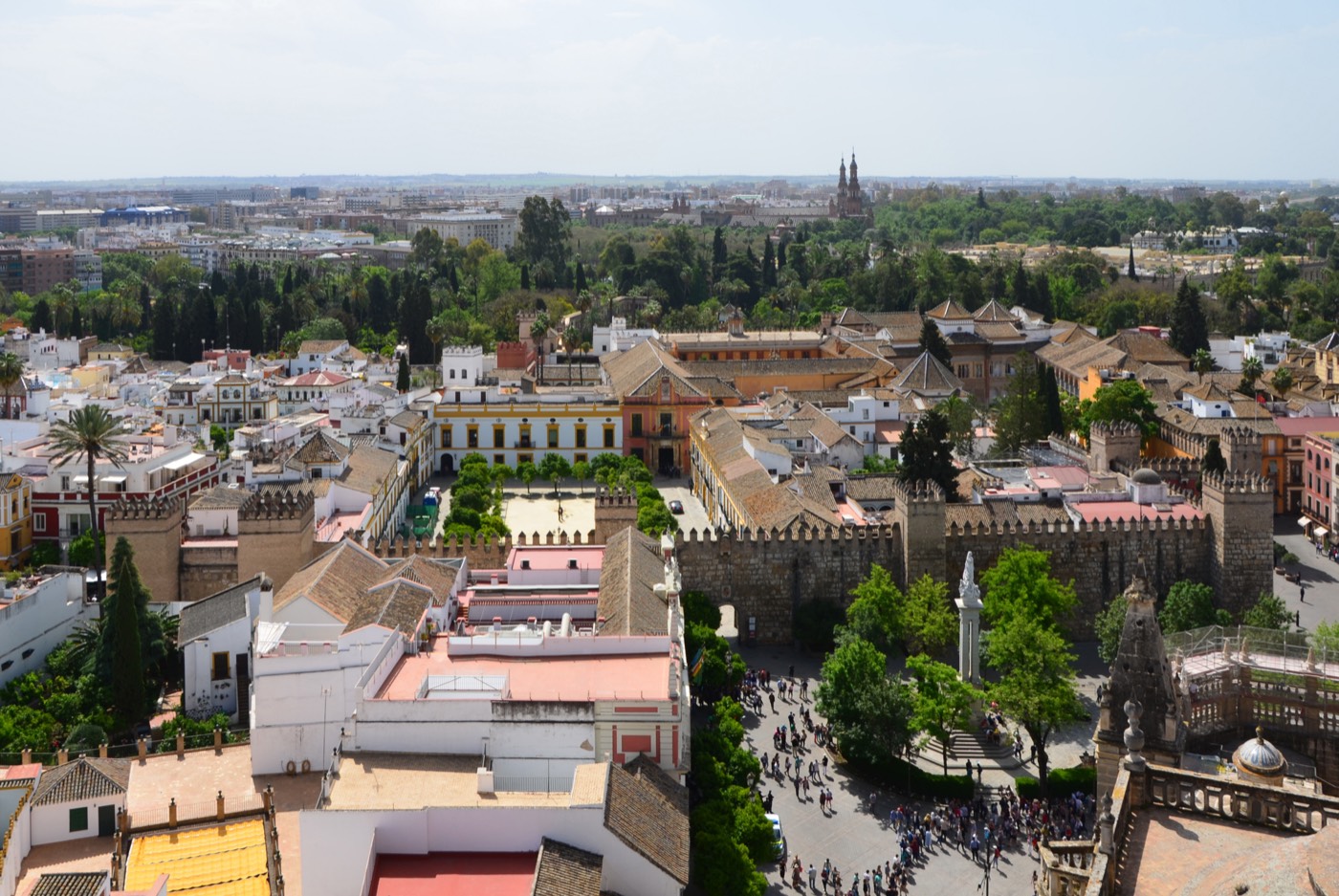
The given name owes its reach to one man. Fernando III of Castile, king of Castile from 1217 and of León from 1230, took Córdoba in 1236 and Seville in 1248, and was buried in the cathedral there. He was canonised in 1671, and miracles reported at his tomb turned him into a cult with real pull.
Baptismal fashion follows saints. Fernando and Hernando were already royal names, and sainthood kept them in the font for centuries, in Spain and then across the Spanish empire. The surname is simply the arithmetic of that popularity.
Sephardi Hernández and Fernández families
Both forms appear on Sephardi Jewish records in Spain, Portugal, Amsterdam and the Caribbean, and on Inquisition files for conversos. This is often read as a clue to hidden Jewish ancestry. It is not one.
Medieval Iberian Jews formed surnames exactly as their Christian neighbours did, patronymic and toponymic alike, and converts frequently took the baptismal surname of a godparent. Hernández and Fernández were among the commonest names in the country, borne by enormous numbers of Old Christian families. A common patronymic is evidence of nothing on its own. Only documents can establish descent.
Spelling Variants and Related Names
The main variants are Fernández, the Portuguese Fernandes and Hernandes, and the shortened Hernán and Fernán, with Hernando and Fernando surviving as surnames in their own right.
In Spanish the name is written Hernández, with an accent on the second syllable. American record-keeping stripped it, so Hernandez without the accent is now the standard United States form and appears that way in the census. Both are the same name.
Cognates outside Spain include Ferrando and Ferrandi in Italy and Ferrand in France, all from the same Germanic given name by separate routes. Similar-looking Spanish surnames such as Herrera, from herrero, “blacksmith”, and Herrero itself are unrelated and should not be folded in with it.
The Hernandezes in America
Hernández reached the United States through several distinct migrations, the largest by far from Mexico, alongside Puerto Rican, Cuban, Dominican, Salvadoran and Filipino strands that arrived for entirely different reasons.
Parts of the name were never immigrants at all. Hernández families were established in New Mexico, Texas and California under Spanish and Mexican rule, and the border moved across them in 1848. Everything after that is migration proper: the railroad and agricultural recruitment of the early twentieth century, the upheaval of the Mexican Revolution, the Bracero programme, and the long postwar movement that built Houston’s Mexican neighbourhoods, Santa Ana in Orange County and the Segundo Barrio in El Paso, the first American street many families ever stood on.
The Caribbean strands run separately. Puerto Ricans, United States citizens since 1917, moved north in the great postwar migration to North Philadelphia and similar districts. Cuban Hernándezes arrived largely after 1959 and built Hialeah into the most Cuban city in America. Dominican families came later still, concentrating in Washington Heights. Salvadoran and other Central American Hernándezes came in numbers during and after the civil wars of the 1980s.
Then there is a strand with no Spanish ancestry behind it. In 1849 the Spanish governor-general of the Philippines, Narciso Clavería, decreed that Filipinos adopt surnames from an official Catálogo alfabético de apellidos to make taxation and census-taking workable. Towns were allotted pages of the list. Spanish surnames, Hernández among them, were distributed wholesale to families who had never had one. Filipino Hernándezes in Daly City and elsewhere often descend from that decree rather than from Castile.
Notable People Named Hernandez
Francisco Hernández de Toledo (c. 1514 to 1587), physician to Philip II, led the first scientific expedition to the Americas between 1571 and 1577 and catalogued thousands of Mexican plants.
José Hernández (1834 to 1886), Argentine poet and politician, wrote Martín Fierro in 1872, the gaucho epic that became Argentina’s national poem.
Miguel Hernández (1910 to 1942), Spanish poet from Orihuela, a goatherd who became one of the great voices of his generation and died of tuberculosis in a Francoist prison in Alicante.
Amado V. Hernández (1903 to 1970), Filipino poet and novelist, wrote Mga Ibong Mandaragit while imprisoned and was named National Artist of the Philippines for Literature in 1973.
Keith Hernandez (born 1953), American first baseman, shared the 1979 National League Most Valuable Player award and won eleven consecutive Gold Gloves.
José M. Hernández (born 1962), NASA astronaut, grew up in a family of Mexican migrant farmworkers and flew aboard the shuttle Discovery in 2009.
How Common Is Hernandez Today?
Hernandez is the eleventh most common surname in the United States, carried by 1,043,281 Americans at the 2010 census, and it is among the commonest surnames in the Spanish-speaking world. Only García and Rodríguez rank higher among names of Spanish origin in America.
| US rank (2010 Census) | #11 |
|---|---|
| Americans with the name | 1,043,281 |
| Origin | Spanish |
| Meaning | Son of Hernando, the Spanish Ferdinand |
The 2010 census also recorded how bearers identified themselves. Among American Hernandezes, 94.89 per cent identified as Hispanic and 3.79 per cent as white. Fernandez, at rank 142 with 180,842 bearers, looks different: 83.58 per cent Hispanic, 8.77 per cent white and 5.38 per cent Asian or Pacific Islander, against 0.60 per cent for Hernandez. That Asian share is the Clavería decree still showing in the data. These are self-identification proportions from a single census, not a measure of ancestry.
Frequently Asked Questions
What does the surname Hernandez mean?
It means “son of Hernando”, Hernando being the medieval Spanish form of Ferdinand. That given name came from the Visigoths, and its elements are usually read as “peace” or “protection” plus “daring”, though the first element is disputed.
Is Hernandez Spanish or Mexican?
Spanish. The surname formed in medieval Castile and León, centuries before Mexico existed. Mexico is simply where most American bearers came from, because it is where the name spread most widely after 1521.
Where does the Hernandez family come from?
There is no single Hernández family. The name arose independently wherever a man named Hernando had children, so thousands of unrelated lines share it. In Spain it is densest in the Canary Islands, Murcia, Castile and León, and Extremadura.
How common is the surname Hernandez?
It ranks eleventh in the United States, with 1,043,281 bearers at the 2010 census. Worldwide, more than half of all Hernándezes live in Mexico, with large populations in Colombia, Venezuela, Cuba and Spain.
Is there a Hernandez family crest or coat of arms?
No. In almost every heraldic tradition arms are granted to an individual and pass to direct descendants, never to everyone sharing a surname. With a million American Hernandezes descended from countless unrelated Hernandos, no single coat of arms could possibly cover them. Sites selling a “Hernandez family crest” are selling a decoration, not a lineage.
Are Hernandez and Fernandez the same name?
Yes, historically. Both mean “son of Hernando or Fernando”, and the difference comes from a Castilian sound change that turned an initial f into a silent h. The two forms then fixed separately as surnames, so a Hernández and a Fernández are rarely close relatives despite sharing an origin.
If your family carries the Hernandez name, its route from Spain to America is traceable. Atlas of Home can follow it from the Castilian towns where a father called Hernando gave his children a surname, through Mexico, the Caribbean or the Philippines, to wherever your family landed and wherever you are now.