
The Rodriguez surname means “son of Rodrigo”, and Rodrigo was a Germanic name the Visigoths carried into Spain: hrod, fame, joined to ric, power. It is one of the oldest and most widely borne family names in the Spanish-speaking world.
What Does the Surname Rodriguez Mean?
Rodríguez means “son of Rodrigo”. Rodrigo is the Spanish form of the Germanic personal name Hrodric, built from hrod, meaning fame or glory, and ric, meaning power or rule. The surname therefore carries the sense “descendant of the famous ruler”.
That same root travelled across Europe under different spellings, giving English Roderick and German Roderich, all of them describing a man whose renown was matched by his authority.
Spanish did something else with it as well. Rodrigo was shortened in everyday speech to Ruy or Rui, and that short form produced its own patronymic, Ruiz. So Rodríguez and Ruiz are siblings, two surnames grown from the same personal name by two different routes.
Where the Rodriguez Name Comes From
The name comes from the Christian kingdoms of northern Iberia, where the Germanic personal name Rodrigo survived the fall of Visigothic Spain and was turned into a hereditary surname between roughly the ninth and twelfth centuries. Its densest homelands today are Galicia, Asturias and the Canary Islands.
A King Called Roderic
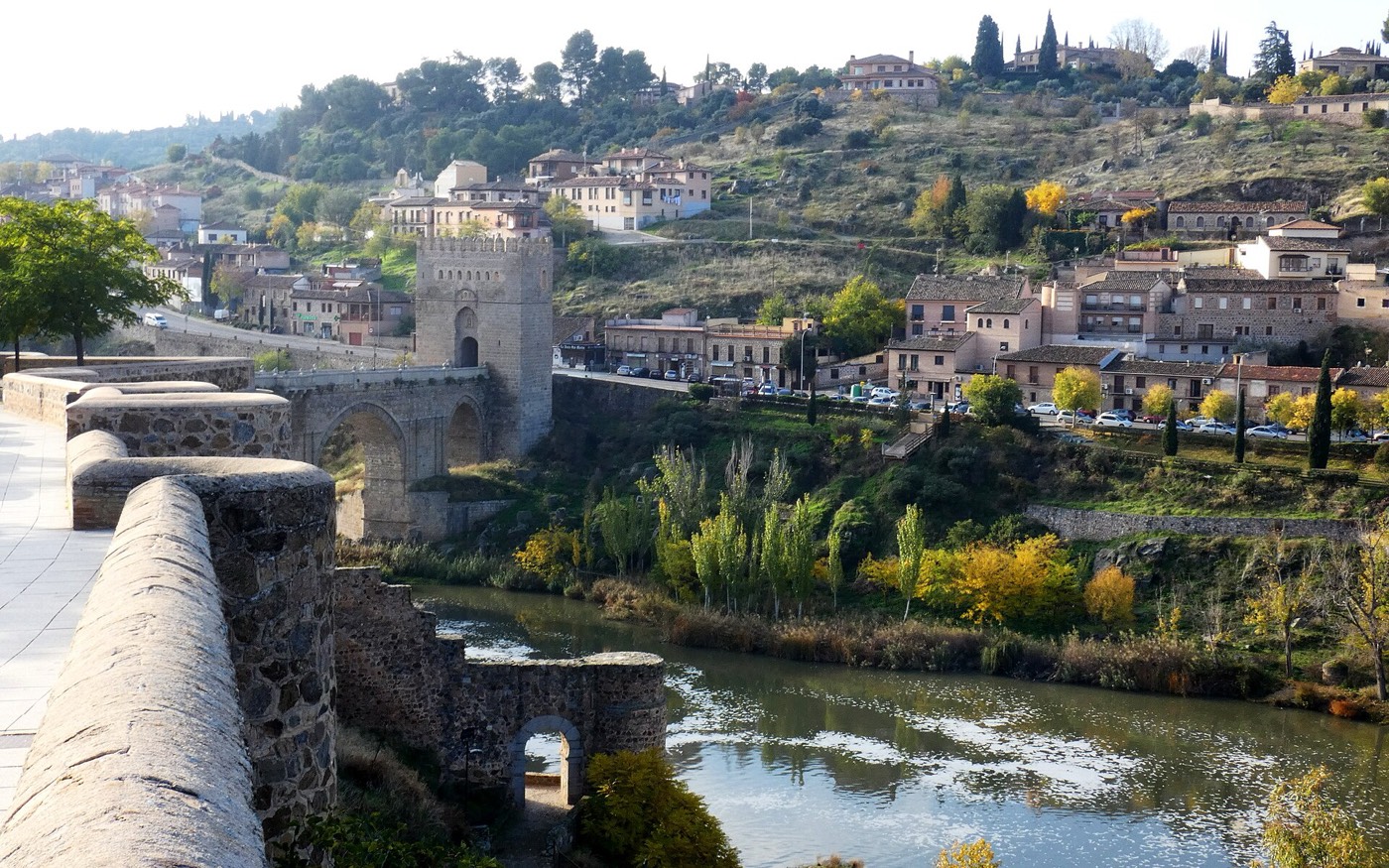
The Visigoths ruled Hispania for two centuries from their capital at Toledo, and they brought their own stock of personal names with them. The last of their kings to rule from Toledo was Roderic, Spanish Rodrigo, who was defeated and killed by the invading Umayyad forces at the Battle of Guadalete in 711.
His defeat ended Visigothic Spain but made his name immortal. Rodrigo became a legend in Iberian ballad and chronicle, and parents kept giving it to their sons for centuries, which is why so many men were later recorded as somebody’s Rodrigo-son.
How the -ez Names Were Made
Medieval Iberians were identified by a given name plus their father’s: Rodrigo’s son Fernando was Fernando Rodríguez, and Fernando’s own son might be Pedro Fernández. The suffix froze into a fixed family name only later, which is why the great Spanish surnames are a roll call of medieval first names. Rodríguez, Fernández, González, Martínez, Sánchez, Pérez, Gómez, Álvarez.
Where the -ez itself came from is genuinely disputed. Some scholars trace it to a Latin genitive, so that Roderici, “of Roderic”, eroded to a final -z. Others point to the Germanic genitive brought in by the Goths, and others to Old Basque, where -ez, -oz, -iz and -az all mean “of”. No theory has won outright.
Galicia, Asturias and the Canaries
Within Spain the surname is thickest in Galicia and Asturias, the north-western Atlantic provinces, and in the Canary Islands. Those are also the regions that sent the heaviest emigration to the Americas, which is one reason the name is so much commoner across the Atlantic than in Spain itself.
Spelling Variants and Related Names
The main variants are Rodríguez, the accented Spanish form, Rodriguez without the accent, and Rodrigues, the Portuguese cognate. Clerical variants such as Rodriquez, with a q, are common in American records.
The accent is usually the first casualty of emigration. Spanish stresses the middle syllable and writes Rodríguez, but American clerks almost never recorded the mark, so branches here are overwhelmingly Rodriguez. Rodriquez, a transcription slip, has hardened into a surname of its own for some families.
Rodrigues is the Portuguese form and follows Portuguese naming everywhere Portugal went: Brazil, Cape Verde, Angola, Mozambique, and the old Asian settlements of Goa, Mangalore, Malacca and Sri Lanka, where Catholic families still carry it. The choice between a final -es and a final -ez is not random, and we have unpicked that split in detail on the Gonzales surname page.
Rodrigues also has a particular Sephardi history. It was among the commonest surnames in Portuguese Inquisition proceedings against Judaisers, and Rodrigues families were prominent in the Portuguese Jewish communities that re-established themselves in Amsterdam, London and the Caribbean, often as compound names like Rodrigues Pereira. The name proves nothing on its own, though. Converso families frequently took the surnames of their Christian baptismal sponsors.
The Rodriguezes in America
Rodriguez reached the United States along at least five separate routes: the Mexican strand, by far the largest, then Puerto Rican, Cuban, Dominican, and a newer Central and South American wave. Each arrived for different reasons and settled in different cities.
The Mexican strand is the oldest, and much of it did not migrate at all. Rodriguez families were living in Texas, New Mexico, Arizona and California when the border moved over them in 1848, and they have been American for longer than most of the country. Later arrivals joined them through railroad and farm recruitment, the wartime bracero programme, and the migrations of recent decades. You find the results in the working neighbourhoods of Mexican Santa Ana in Orange County, in the east-side barrios that make up Mexican Houston, and as far north as Mexicantown in southwest Detroit, where auto work drew families up from the border in the 1920s.
Puerto Rican Rodriguezes have been United States citizens by birth since 1917, so their movement to the mainland was internal migration rather than immigration. The great wave came after 1945, by ship and then by cheap air fare, into New York, Chicago and the mill towns of the north-east. The Puerto Rican barrio of North Philadelphia grew out of exactly that period.
The Cuban strand is sharper. Rodriguez is the commonest surname in Cuba, and after 1959 exile carried tens of thousands of those families into South Florida, above all Cuban Hialeah. Dominican Rodriguezes came later, mostly after the 1965 immigration reform, settling in Upper Manhattan and in factory towns such as Dominican Paterson. Arrivals from Colombia, Venezuela and El Salvador have added another layer, and Rodríguez is the most common surname in Colombia outright.
The 2010 Census recorded how bearers described themselves: 93.77 per cent identified as Hispanic, 4.75 per cent as white, 0.57 per cent as Asian or Pacific Islander, 0.54 per cent as Black, and 0.18 per cent each as American Indian or Alaska Native and as two or more races. Those are self-identification proportions from one census form, not a measure of ancestry, but they show a surname still closely tied to Hispanic identity, as Garcia and the other big Spanish names are.
Notable People Named Rodriguez
Simón Rodríguez (1769 to 1854) was the Venezuelan philosopher and educator who tutored the young Simón Bolívar and shaped the man who broke Spanish rule in South America.
Amália Rodrigues (1920 to 1999), the Rainha do Fado, was Portugal’s greatest singer and the voice that carried fado from Lisbon’s back streets to concert halls around the world.
Juan “Chi Chi” Rodríguez (1935 to 2024) grew up in a Puerto Rican cane-cutting family, won eight PGA Tour events and entered the World Golf Hall of Fame as much for his showmanship as his swing.
José Luis Rodríguez Zapatero (born 1960) served as Prime Minister of Spain from 2004 to 2011, proof that the name is as prominent in the homeland as abroad.
Robert Rodriguez (born 1968), from a large San Antonio family, made El Mariachi in 1992 on a famously tiny budget and became a defining figure of American independent cinema.
Iván “Pudge” Rodríguez (born 1971), from Manatí in Puerto Rico, is widely rated among the finest catchers baseball has produced and was elected to the Hall of Fame in 2017.
How Common Is Rodriguez Today?
Rodriguez is the ninth most common surname in the United States, borne by 1,094,924 Americans at the 2010 Census. Worldwide it is one of the largest surnames of any origin, with Mexico holding the greatest number of bearers and Cuba the highest density.
It held ninth place in both 2000 and 2010, but the count rose by more than a third across that decade, from 804,240 to 1,094,924. In Colombia, Cuba, the Dominican Republic, Panama, Costa Rica and Uruguay it is the commonest surname in the country.
| US rank (2010 Census) | #9 |
|---|---|
| Americans with the name | 1,094,924 |
| Origin | Spanish (patronymic, from a Germanic personal name) |
| Meaning | Son of Rodrigo, “famous power” |
Frequently Asked Questions
What does the surname Rodriguez mean?
It means “son of Rodrigo”. Rodrigo comes from the Germanic Hrodric, combining hrod, fame, with ric, power, so the name means something close to “descendant of the famous ruler”.
Is Rodriguez Spanish or Mexican?
The name is Spanish in origin, formed in medieval Iberia from a Germanic personal name. Mexico is simply where most bearers live today and where the largest American branch came from, so a Mexican Rodriguez family carries a Spanish surname, not a Mexican one.
Where does the Rodriguez family come from?
There is no single Rodriguez family. The surname arose independently in many households across northern Iberia wherever a man’s father was named Rodrigo, and it is thickest in Galicia, Asturias and the Canary Islands.
How common is the surname Rodriguez?
It ranks ninth in the United States with 1,094,924 bearers at the 2010 Census. Globally it is among the largest surnames anywhere, with Mexico, Spain, Colombia, the United States, Venezuela and Cuba holding the biggest populations.
Is there a Rodriguez family crest or coat of arms?
No. In Spanish and every other European heraldic tradition, arms are granted to an individual and pass to their direct descendants, never to everyone sharing a surname. With over a million American Rodriguezes descended from thousands of unrelated men called Rodrigo, no single coat of arms could belong to them all. Sites selling a “Rodriguez family crest” are selling a decoration, not a lineage.
Is Rodriguez a Sephardic Jewish surname?
It can be, but the name alone proves nothing. Rodrigues was among the commonest surnames in Portuguese Inquisition records and is well documented in the Sephardi communities of Amsterdam and London, yet enormous numbers of Christian families have always borne it. Only documentary genealogy can settle an individual case.
If your family carries the Rodriguez name, its route from Iberia to America is traceable. Atlas of Home can follow it from the Visigothic north of Spain to whichever port, border town or barrio your family landed in, and to wherever you are now.