
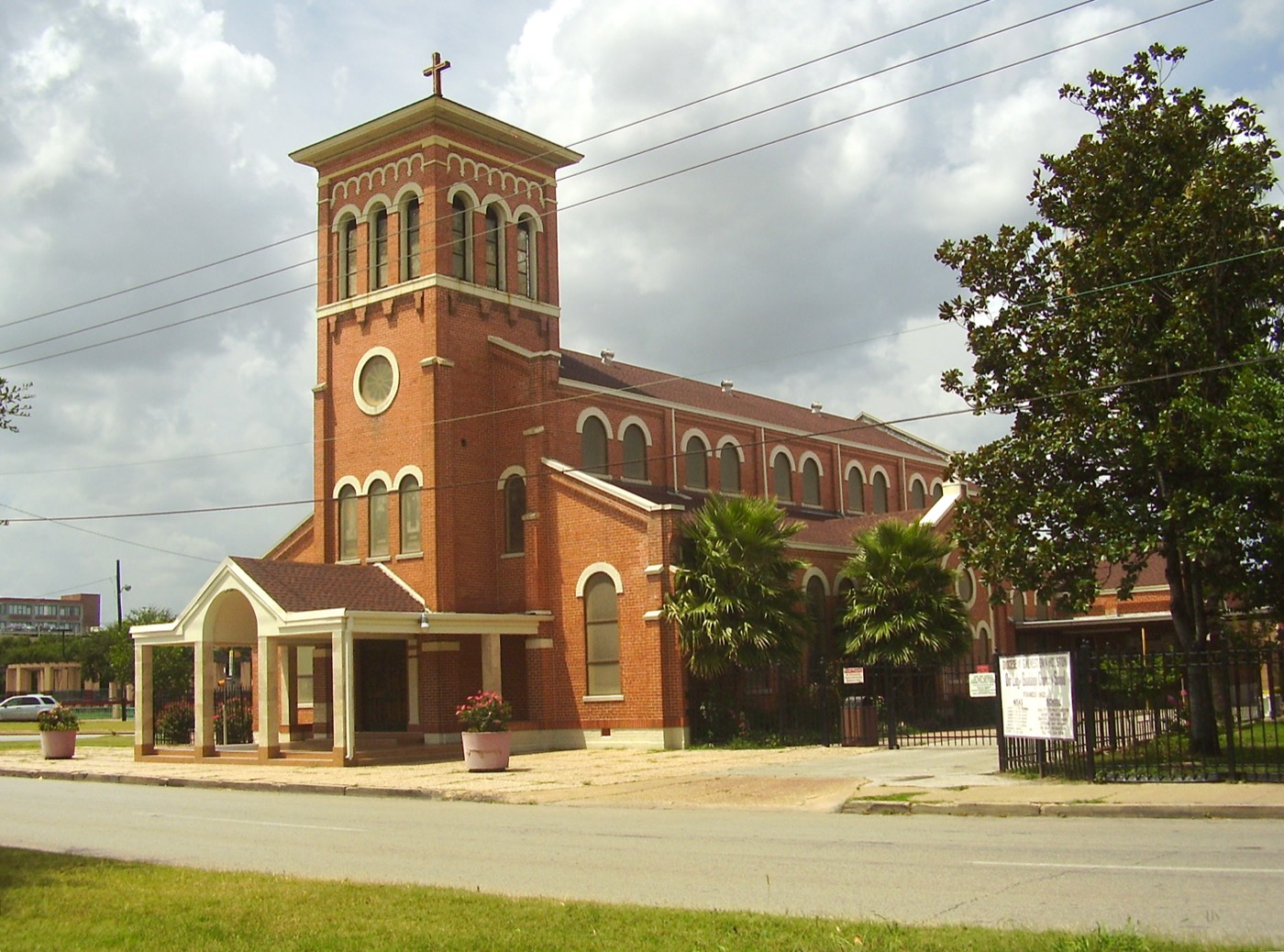
Stand on the Esplanade where Navigation Boulevard runs east from downtown, and you can read the whole story of Mexicans in Houston in a single block. A tortilla factory that birthed the fajita. A bakery case fogged with the warmth of pan dulce. The bells of a church that has rung in Spanish since 1912. This is the East End, and for more than a century it has been the heart of Mexican Houston.
The Place
Houston’s East End sits just southeast of downtown, a flat sprawl of bungalows, warehouses and rail lines pressed up against the Houston Ship Channel. Its historic core is the Second Ward, known in Spanish as Segundo Barrio, and the older neighbourhood of Magnolia Park further east.
Magnolia Park was platted in 1890 and named for the nearly 4,000 magnolia trees planted along its streets. It is one of the oldest Hispanic neighbourhoods in the city.
Today the East End is overwhelmingly Mexican in character. Census figures show that in parts of Magnolia Park over 97 per cent of residents identify as Hispanic, the densest such concentration in Houston.
How It Became Mexican
The story begins not with a plan but with work. At the turn of the twentieth century Houston was dredging the bayou into a deepwater port, and the labour came largely from Mexico and South Texas.
The neighbourhood that absorbed them, Magnolia Park, had been laid out in 1890 as a separate town and planted with thousands of magnolias. Within two decades it would belong, almost entirely, to Mexican families. The transformation was not gentle and it was not given. It was built house by house, shift by shift, by people the rest of the city preferred to keep at a distance.
Refugees of the Revolution
Mexican Americans from South Texas began settling in Magnolia Park around 1911. Then came the rupture. The Mexican Revolution of 1910 sent waves of refugees north, and many followed the rails and the river into Houston’s East End.
They found work where the city was building itself: laying railroad track, loading ships on the Ship Channel, working the docks and rail yards. By 1920, with a steady influx of immigrants from northern Mexico, the area had become a barrio with its own business district of Mexican-owned firms.
A school named for Lorenzo de Zavala, the Tejano statesman and first vice president of the Republic of Texas, was established in Magnolia Park in 1920. By the mid-1920s the neighbourhood had grown into the city’s largest Mexican American community, earning the affectionate nickname “Little Mexico.”
A Church of Their Own
In 1911 Houston’s Church of the Immaculate Conception sent four Oblate priests to establish a mission for the city’s growing Spanish-speaking population. The result was Our Lady of Guadalupe.
The first Mass was celebrated on 18 August 1912 on the second floor of a two-storey wood-frame building, with a school opening on the ground floor three weeks later. Services and classes were held in Spanish.
The establishment of a separate Mexican national church was not only an act of devotion. The institutional Church set up these parishes, as one history puts it, “so as not to offend Anglos accustomed to separation of the races.” Faith and segregation were braided together from the start.
In 1921 the mission was raised to full parish status, and Father Esteban de Anta, a native of Spain, became its first pastor. A larger church building was begun that year and dedicated two years later. Our Lady of Guadalupe became, in the words of local historians, the “Mother Church” of Mexican Catholicism in Houston.
Organising and Belonging
A barrio is more than houses. The East End built institutions to defend and define itself. Mutual aid societies, recreational clubs and political organisations took root in the 1920s and 1930s.
Club Femenino Chapultepec, a women’s group, provided recreation, promoted Mexican American culture and protested against segregation across the city. In 1934 a branch of the League of United Latin American Citizens, LULAC, was organised at Magnolia Park.
The growth of the community was visible even to officialdom. As Houston’s Mexican population swelled in the 1920s, it became large enough to require a Mexican consulate, and the annual Fiestas Patrias celebrations of Mexican Independence began in that decade.
After the War
The Second World War was a turning point. Mexican American men from the East End served overseas, and many returned determined to claim a fuller citizenship at home.
After the war, as white residents moved out to newer suburbs, Mexican American families moved further into the area and began expanding beyond the old barrio boundaries. The community spread, eventually merging Magnolia Park and the Second Ward into one continuous Mexican East End.
By the late 1960s, civic leaders had institutionalised the community’s public life. Juan Coronado was instrumental in making the annual Fiestas Patrias parade a permanent event, and in 1969 Judge Armando V. Rodriguez gathered community leaders to sustain it.
This East End belongs to the same family of Texas Mexican communities as the Mexicans of San Antonio and the border-shaped Segundo Barrio of El Paso, each built by railroad work and revolution-era migration.
The Landmarks
Our Lady of Guadalupe Catholic Church, 2405 Navigation Boulevard. The mother church of Mexican Catholicism in Houston, where the first Spanish-language Mass was said in 1912. It remained a refuge across the decades, becoming a home church to Central American and Vietnamese refugees in the 1970s as the East End absorbed new arrivals.
The Original Ninfa’s on Navigation, 2704 Navigation Boulevard. In 1973, recently widowed, Ninfa Laurenzo began grilling skirt steak and folding it into handmade flour tortillas inside her family’s struggling tortilla factory. She called the dish tacos al carbon. The world came to call it fajitas, and Mama Ninfa is credited with launching a Tex-Mex revolution from this East End corner.
Villa Arcos, on Navigation Boulevard. Founded in 1977 by Velia Arcos Rodriguez Duran and run for years by her daughter Yolanda Black Navarro, this taqueria is famed for breakfast tacos on hand-rolled tortillas made fresh each morning. In 2019 the Houston Chronicle named it one of the city’s Top 100 restaurants.
Canino’s Produce, 2520 Airline Drive. A fixture since 1958, Canino’s is where Mexican Houston shops for the staples of home: dried chiles, masa, molcajetes, piñatas, tropical fruit and herbs like huazontle and flor de calabaza. It anchors the Airline Drive farmers’ market district north of downtown.
El Bolillo Bakery, 2517 Airline Drive. Founded in September 1998 by Galveston-born Kirk Michaelis, this panaderia grew from a small shop into a Houston institution, named for the classic Mexican white roll. Its cases hold around 150 varieties of pan dulce and pan salado, handmade fresh daily, and the bakery has since expanded across the metroplex.
Talento Bilingue de Houston, near Jensen Drive and Navigation Boulevard. Begun in 1977 as a theatre programme, this 270-seat bilingual venue beside Guadalupe Plaza stages plays, films and workshops, and has branched into mariachi, dance and a summer arts camp for children. It sits two blocks from downtown, a cultural beachhead for the barrio.
The Esplanade on Navigation. The landscaped median that runs through the heart of the East End is the community’s front porch. Each year it hosts the East End Street Fest, a free celebration of Mexican and Chicano arts, music and food, with dozens of local vendors lining a street once defined by warehouses.
Where They Came From
The East End’s first families came overwhelmingly from northern and central Mexico and from the Mexican communities of South Texas. The railroads were the thread: lines running north from the border deposited workers in Houston’s yards, and word travelled back along the same tracks.
The Revolution accelerated everything. Between 1910 and the early 1920s, violence and upheaval pushed families out of states like Guanajuato, Coahuila, Nuevo Leon and Tamaulipas, and many made their way to the growing port city.
Mexican-origin residents remain by far the largest Hispanic group in Houston, numbering in the hundreds of thousands and making up roughly two thirds of the city’s Hispanic population. The chain that began with a few railroad labourers in Magnolia Park never stopped pulling families forward.
Houston Today
Houston is now one of the most Mexican cities in the United States outside Mexico itself. By the 2020 census, Hispanics made up about 47 per cent of the city’s population, and Mexicans are the overwhelming majority of that share.
The East End feels the dual pull familiar to old barrios everywhere. Light rail now runs down Harrisburg, downtown’s towers loom two blocks from Talento Bilingue, and rising property values press against families who have lived here for generations. The neighbourhood the magnolias built is fighting to keep its character even as it changes.
Yet the institutions hold. Our Lady of Guadalupe still rings its bells. Ninfa’s still sizzles. The panaderias still open before dawn, and every spring the Esplanade fills with music. The barrio endures, the way Mexican Houston has always endured, by feeding, praying and celebrating in place.
Other Mexican neighbourhoods across the country tell parallel stories, from Little Village in Chicago and Pilsen to Mexicantown in Detroit. Houston’s East End belongs firmly among them.
Frequently Asked Questions
Where is the historic Mexican neighbourhood in Houston?
The heart of Mexican Houston is the East End, made up of the Second Ward, known as Segundo Barrio, and the older neighbourhood of Magnolia Park just to the east. Magnolia Park, platted in 1890, is one of the oldest Hispanic neighbourhoods in the city and became the largest Mexican American community in Houston by the mid-1920s.
When did Mexicans first settle in Houston’s East End?
Mexican Americans from South Texas began settling in Magnolia Park around 1911. The community grew rapidly after 1910 as refugees fled the Mexican Revolution, many finding work building the Houston Ship Channel and laying railroad track. By 1920 the area had its own Mexican-owned business district.
What is the oldest Mexican church in Houston?
Our Lady of Guadalupe Catholic Church on Navigation Boulevard, where the first Spanish-language Mass was celebrated in 1912. It is considered the mother church of Mexican Catholicism in Houston and was founded by Oblate priests sent to serve the city’s growing Spanish-speaking population.
Where were fajitas invented in Houston?
At The Original Ninfa’s on Navigation Boulevard. In 1973 Ninfa Laurenzo began grilling skirt steak in flour tortillas, a dish she called tacos al carbon, inside her family’s tortilla factory in the East End. Mama Ninfa is widely credited with popularising the fajita and sparking a Tex-Mex revolution.
How many Mexicans live in Houston?
Mexicans are by far the largest Hispanic group in Houston, numbering in the hundreds of thousands and making up roughly two thirds of the city’s Hispanic population. As of the 2020 census, Hispanics overall were about 47 per cent of Houston’s residents.
What festivals celebrate Mexican culture in the East End?
The annual Fiestas Patrias mark Mexican Independence and trace back to the 1920s, becoming a permanent parade by the late 1960s. The East End Street Fest, held free on the Esplanade on Navigation, celebrates Mexican and Chicano arts, music and food each year with local vendors and live performances.
If your family’s story passed through Houston, or any of the places Mexicans have made home in America, Atlas of Home can trace that journey. From the railroad towns of northern Mexico to the magnolia-lined streets of the East End, to wherever you are now.