
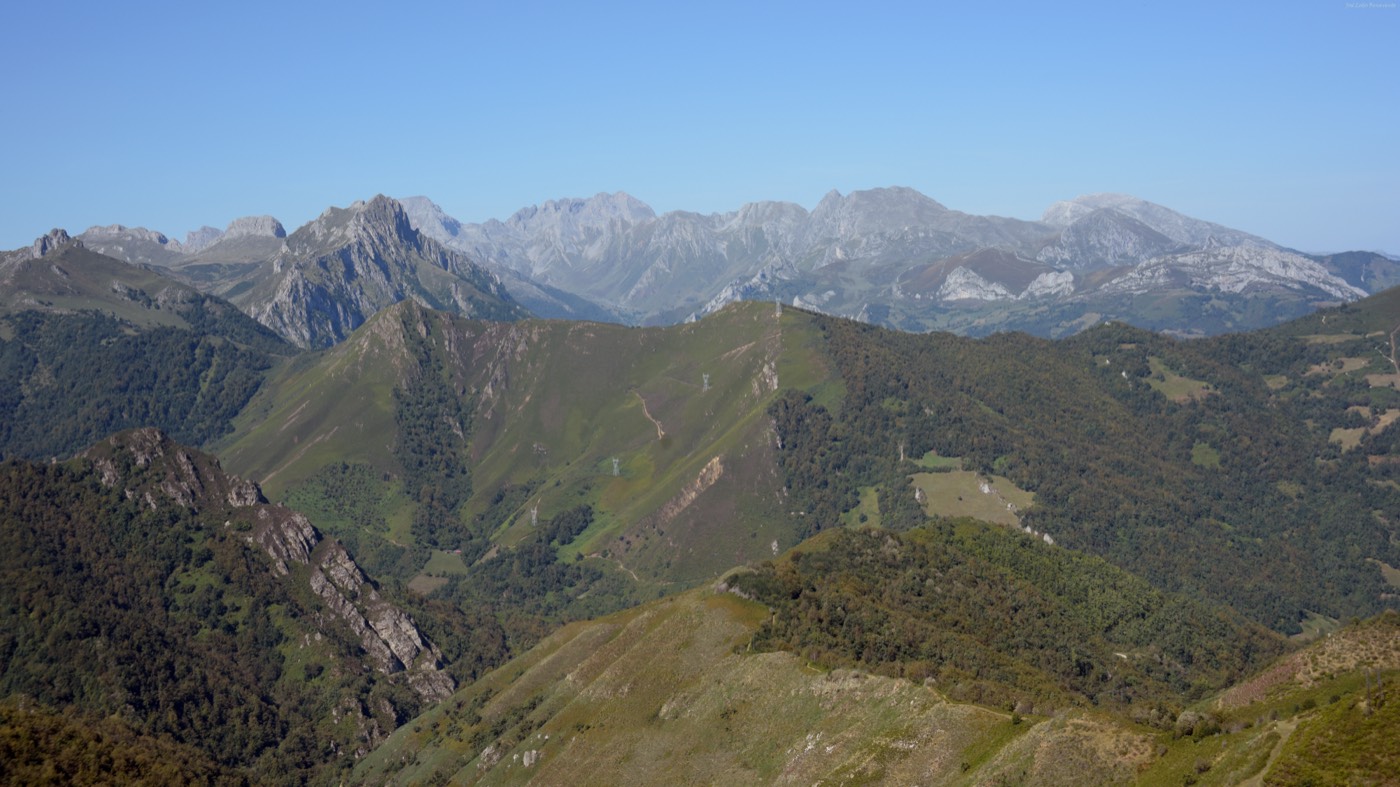
The Gonzales surname is Spanish, and it means “son of Gonzalo”, a personal name the Visigoths carried into Iberia from elements meaning battle and, most probably, elf. Its homeland is the north of Spain: Asturias, León and Old Castile.
What Does the Surname Gonzales Mean?
Gonzales means “son of Gonzalo”. Gonzalo is a Germanic personal name brought into Spain by the Visigoths, built on the element gunth, meaning battle or war, joined to a second element that scholars still argue over.
That second element is the honest uncertainty at the heart of the name. The most widely repeated reading is Gothic alfs, “elf”, giving “battle elf”, a compound that sounds odd in English but was ordinary in Germanic naming, where elves were powerful rather than whimsical.
A rival reading starts from the medieval Latin form Gundisalvus and takes the ending from Latin salvus, “safe” or “unhurt”, giving “unhurt in battle”. Most name scholars treat that as folk etymology, a Latin-sounding tidy-up by clerks. A third suggestion reads the ending as saiwala, “soul”. All three agree on the first half: whatever Gonzalo meant, it began with a word for fighting.
The surname itself is purely patronymic. It is not occupational, it names no village, and it describes nobody’s appearance. The ending simply says “descendant of”, so Gonzales began as a phrase rather than a name: Gonzalo’s son, said of a boy to tell him from the other boys in the parish.
Where the Gonzales Name Comes From
The Gonzales name comes from northern Spain. It is densest today in Asturias, the Canary Islands and Castile and León, the old Christian north where the Visigothic name Gonzalo stayed in fashion longest and where the patronymic habit took hold hardest.
The Visigoths and the name Gonzalo
The Visigoths ruled Hispania from the fifth century until the Muslim conquest of 711, and although they were absorbed into the Latin-speaking population, their names outlasted their kingdom. Gonzalo belongs to a set of Germanic survivors that includes Rodrigo, Fernando, Alvaro and Ramiro, all of which spawned enormous surnames. It was still a live given name in the Christian north four centuries after that kingdom fell, which is why the surname is northern rather than southern: it formed in mountain kingdoms never absorbed into al-Andalus.
Asturias, León and Old Castile
Spanish surname distribution still shows the fingerprint: roughly one person in twenty in Asturias, one in twenty-two in the Canary Islands, one in twenty-nine in Castile and León, thinning southward. Across Spain it is the second commonest surname of all.
There is no single Gonzales clan. The name was generated independently wherever a man called Gonzalo had a son, so two Gonzales families from neighbouring valleys may share no ancestor within recorded history. From the sixteenth century it travelled wherever Castile did: to Mexico, Peru and the Caribbean, and across the Pacific to the Philippines.
Spelling Variants and Related Names
Gonzales and González are the same name. The -es ending is the older and more transparent spelling, closer to the Latin genitive it descends from, while -ez became the Castilian standard and now dominates almost everywhere.
The reason a reader has one and not the other is almost never ancestry. It is paperwork. Spanish orthography was standardised gradually, and -ez won on the peninsula as Castilian spelling was regularised and exported. What matters is where a family’s spelling got frozen, and who froze it.
Two populations froze it as -es. The first is the Hispano families of New Mexico and southern Colorado, whose records were kept in an isolated frontier province and passed into American courthouses and censuses in the 1840s, before later peninsular conventions reached them. The second is the Philippines, where a colonial catalogue fixed the spelling of a whole population in 1849 and parish registers have repeated it ever since. A third and smaller cause is the English-speaking clerk: American census, army and school records dropped the accent from González and sometimes swapped the final z for an s, and families kept whatever the paperwork said.
Related forms are numerous. In Latin the name is Gundisalvus. Portuguese turned the same patronymic into Gonçalves, from the given name Gonçalo, and carried Gonsalves and Gonsalvez to Goa, Bombay and East Africa. Catalan and Aragonese produced Gonzalvo, Italian Consalvo, French Gonzalès. Older Spanish records show Gonsales and Gonçales.
The Gonzaleses in America
Gonzaleses reached the United States by three separate routes: Spanish colonists who settled New Mexico from 1598, Mexican migrants who crossed a border that had already moved past them, and Filipinos from an archipelago Spain had renamed. These are not three versions of one story.
The oldest is the New Mexican one. Juan de Oñate’s colonising expedition of 1598 took families north from New Spain into the upper Rio Grande valley, and more followed the reconquest of the province after the Pueblo Revolt. Gonzales families put down roots in Santa Fe, Taos, Santa Cruz de la Cañada and the villages of Rio Arriba and stayed for three centuries. When the Treaty of Guadalupe Hidalgo transferred New Mexico to the United States in 1848, they did not immigrate anywhere. The border moved over them. Gonzales is still one of the commonest surnames in the state, and the Library of Congress keeps a research guide devoted to these colonial lines.
Texas has its own early strand. Rafael Gonzáles, born in the presidio town of San Fernando de Béxar in 1789 and first governor of Coahuila y Tejas, gave his name to the town of Gonzales, founded in 1825, where the Texas Revolution opened ten years later. San Fernando de Béxar is now San Antonio, and those old Tejano lines run on through the Mexican and Tejano communities of San Antonio.
The much larger strand is the migration that began after 1900, from Chihuahua, Zacatecas, Jalisco and Guanajuato into the fields, railroads and packing houses of the Southwest. It filled the barrios of Los Angeles, El Paso, Denver and the Mexican neighbourhoods of Phoenix, where most American Gonzales families with Mexican roots begin.
The Filipino strand is different again, and it deserves to be told honestly. Filipino Gonzaleses are usually not descended from a Spaniard called Gonzales. In November 1849 the governor-general Narciso Clavería y Zaldúa decreed that the population must take permanent surnames drawn from an official Catálogo alfabético de apellidos of roughly 61,000 names. Copies went to provincial governors and then to parish priests, who allotted names town by town, alphabetically, so one district got the As and the next the Bs. The aim was tax collection, not heritage.
So a Spanish surname in the Philippines records Spanish administration rather than Spanish descent. That is not a lesser inheritance, only a different one, and it is a documented event many families can trace to a named parish. Filipino Gonzaleses came in their own waves: manong farm labourers from the 1920s, US Navy men, and nurses and engineers after 1965. They built the communities of Daly City, Vallejo, San Diego and Carson.
Notable People Named Gonzales
Rafael Gonzáles (born 1789) was the first governor of Coahuila y Tejas, from 1824 to 1826. Green DeWitt named the Texas town of Gonzales after him in 1825, and it was there in October 1835 that Texian settlers raised the “Come and Take It” flag.
The rebel governor of New Mexico in 1837, recorded variously as José Ángel Gonzales and José María González, was installed by the Río Arriba or Chimayó uprising and held office barely a month before it was crushed.
Richard “Pancho” Gonzales (1928-1995), born in Los Angeles to Mexican immigrant parents, taught himself tennis on public courts, won the US National Championships in 1948 and 1949 and dominated the professional tour for most of the 1950s.
Rodolfo “Corky” Gonzales (1928-2005) was a Denver featherweight who left boxing 65-9-1, founded the Crusade for Justice in 1965 and wrote the 1967 poem Yo Soy Joaquín, the defining literary statement of the Chicano movement.
Neptali A. Gonzales (1923-2001) of Mandaluyong served as Philippine minister of justice under Corazon Aquino, then three separate times as President of the Senate between 1992 and 1998.
Alberto R. Gonzales (born 1955), born in San Antonio to Mexican migrant workers, became White House Counsel in 2001 and Attorney General of the United States from 2005 to 2007, the first Hispanic American in the post.
How Common Is Gonzales Today?
Gonzales is the 111th most common surname in the United States, carried by 214,758 Americans at the 2010 Census. Counted separately, the Gonzalez spelling is several times larger, which is itself the clearest evidence of how thoroughly -ez won out.
Worldwide the spelling belongs to roughly a million people and is most numerous in the Philippines, where it ranks among the ten commonest surnames and clusters in Calabarzon, Central Luzon and Metro Manila. It is strong in Peru and Bolivia too. Within the United States it concentrates in New Mexico, Texas, California, Colorado and Arizona, exactly the map its three arrival routes predict.
| US rank (2010 Census) | #111 |
|---|---|
| Americans with the name | 214,758 |
| Origin | Spanish (from a Germanic personal name) |
| Meaning | Son of Gonzalo, from elements meaning “battle” and, probably, “elf” |
Frequently Asked Questions
What does the surname Gonzales mean?
Gonzales means “son of Gonzalo”, a Germanic personal name of Visigothic origin whose first element means battle or war. The second element is disputed, with “elf” the most widely accepted reading and “safe” or “unhurt” a Latin-influenced alternative.
Is Gonzales Spanish or Filipino?
The name is Spanish. It is extremely common in the Philippines, but that follows from Spanish colonial rule and specifically the 1849 Clavería decree, which assigned surnames from an official catalogue parish by parish. A Filipino Gonzales is usually not descended from a Spaniard.
Where does the Gonzales family come from?
There is no single Gonzales family. The name arose independently across northern Spain, above all in Asturias, León and Old Castile, wherever a man called Gonzalo had children, and then spread through the Spanish empire to the Americas and the Philippines.
How common is the surname Gonzales?
Gonzales ranks 111th in the United States, with 214,758 bearers at the 2010 Census. Globally the spelling is carried by about a million people and is most numerous in the Philippines, then the United States, Peru and Bolivia.
Is there a Gonzales family crest or coat of arms?
No. In every major heraldic tradition, arms are granted to an individual and pass to that person’s direct descendants, never to everyone sharing a surname. Because Gonzales was created independently thousands of times over, one crest covering all of them is not a coherent idea. Sites selling a “Gonzales family crest” are selling a decoration, not a lineage.
What is the difference between Gonzales and Gonzalez?
They are the same name with the same meaning. The -es spelling is older and closer to the Latin genitive; -ez became the Castilian standard. Families keep -es largely because their records were fixed early, notably in colonial New Mexico and in the Philippines after 1849.
If your family carries the Gonzales name, its route from northern Spain to America is traceable. Atlas of Home can follow it from Asturias, León and Old Castile through the frontier parishes of New Mexico or the town registers of the Philippines to wherever your family landed, and wherever you are now.