
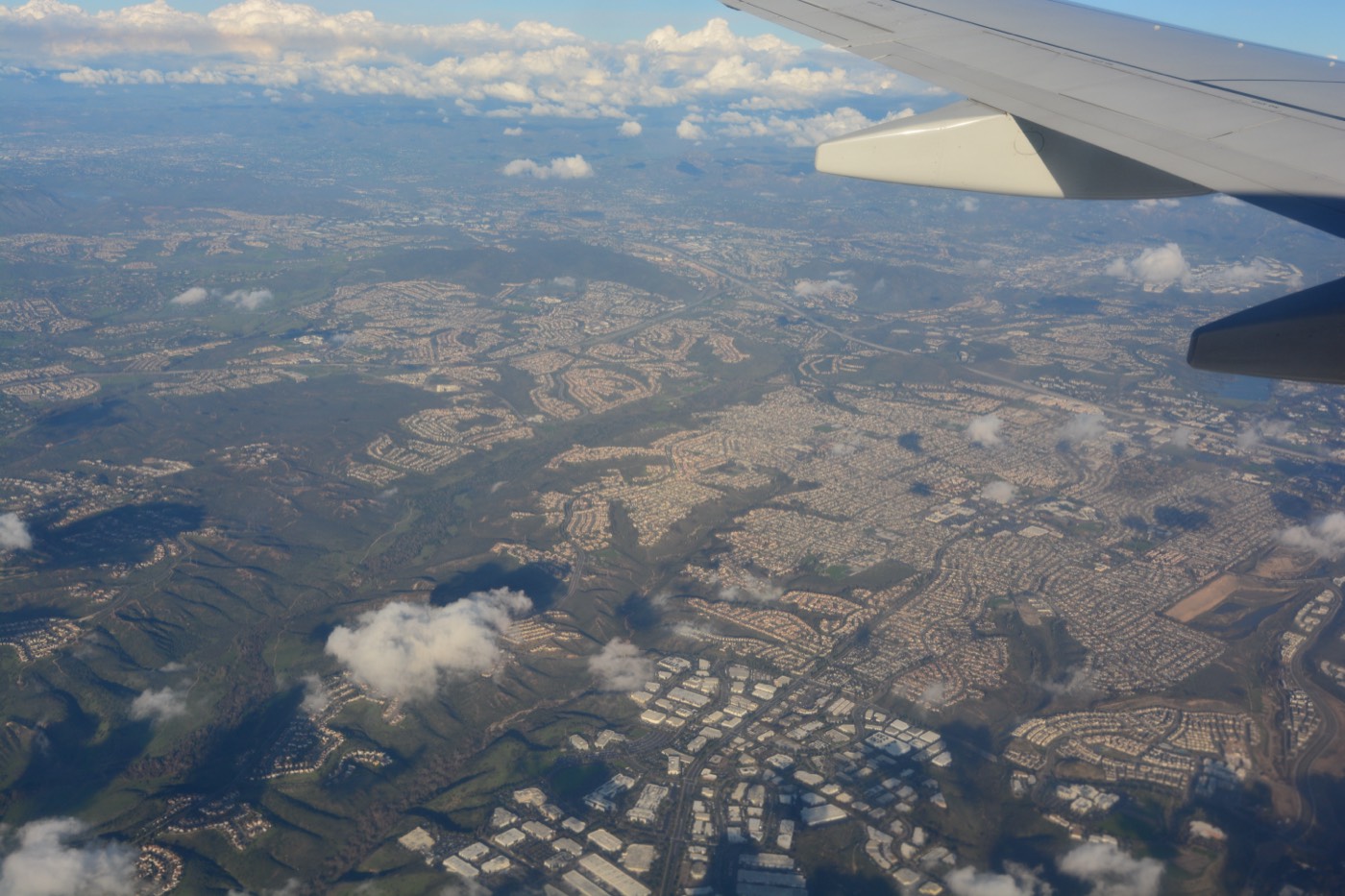
Drive north on Interstate 15 to the broad tableland of Mira Mesa, turn onto Mira Mesa Boulevard, and the signage tells the story before the census does. Bakeries selling pandesal and ube, a Seafood City the size of an aircraft hangar, churches that fill for the pre-dawn Masses of Simbang Gabi every December. The Filipinos in San Diego have built one of the largest and oldest such communities in the United States, and locals long ago gave its busiest pocket a second name: Manila Mesa.
The Place
San Diego sits at the southwest corner of the continental United States, a Navy town wrapped around a deep natural harbour, with the Mexican border just twenty minutes south of downtown. For more than a century it has been one of the great anchorages of the United States Pacific Fleet, and that fact shaped almost everything about how Filipinos came to settle here.
The community is not confined to one district. It runs from the older downtown and National City in the south up to the planned suburbs of the north county, with Mira Mesa as its modern heart. Together these neighbourhoods hold the largest Asian American population in the county.
Mira Mesa itself, Spanish for “table view”, was farmland until the late 1960s, when developers laid out tract housing on the flat mesa near the Marine Corps air station. Filipino Navy families moved in early, and they kept arriving.
How It Became Filipino
The Filipino presence in San Diego predates the city’s suburbs by a long way. Filipino sailors crossed the Pacific aboard the Manila galleons centuries ago, and the modern community traces its roots to the moment the Philippines became a United States territory in 1898. That colonial relationship opened a door that, for better and worse, ran straight through the United States Navy.
The Pensionados and the early arrivals
Among the first to come were the pensionados, government-sponsored Filipino students sent to study in the United States beginning in 1903. Some were placed in National City, just south of downtown San Diego, to pursue their education. They were a small, elite vanguard, but they established a foothold and a reputation.
By the 1920s and 1930s the numbers grew, and the character of the migration changed. Most newcomers were young men looking for work, many of them moving between agricultural jobs and the city.
The colour line downtown
Early Filipino San Diegans were hemmed in by the racial restrictions of the era. Barred from renting or buying homes in most of the city, they clustered downtown, in and around Market Street, in the district outsiders dismissively labelled “Skid Row”.
It was crowded and policed, but it was also a community. Along Market Street, Filipinos ran small restaurants, pool halls and gambling rooms, and sponsored the dances and fiestas that held the lonely bachelor society together.
The Navy years
The decisive engine of growth was the United States Navy. San Diego held the largest naval base on the West Coast and the Navy’s primary training facilities, and Filipinos had a particular, narrow path into the service.
For decades Filipino enlistees were largely confined to the steward rating, serving as cooks, mess attendants and personal attendants to officers. The work was menial and the ceiling was low, but a Navy salary was steady, and at the end of a tour a sailor could bring his family and stay.
Generation after generation enlisted. Fathers brought sons, uncles sponsored nephews, and the chain pulled whole villages from the Philippines to San Diego. By 1990 the county counted close to 96,000 Filipino Americans, roughly half of its entire Asian American population. The same Navy logic seeded Filipino enclaves up and down the state, from the shipyard town of Vallejo in the north to Carson in the Los Angeles basin.
From downtown to Manila Mesa
As restrictive housing covenants fell away after the Second World War and the community grew more middle class, Filipino families spread out. National City and the south bay drew many, just as Filipino families filled neighbouring towns like Chula Vista in the south bay. Then the new tract housing of Mira Mesa, affordable and close to the bases, pulled thousands more in the 1970s, 1980s and 1990s.
Mira Mesa became so heavily Filipino that the nickname Manila Mesa stuck. Even as Qualcomm, the Marine air station at Miramar and the University of California drew a broader, more diverse population into the area, the Filipino imprint on its commerce, churches and food held firm. The same suburban pull reshaped Filipino life across the region, from Mira Mesa to the planned communities of Rancho Cucamonga in the Inland Empire.
The Landmarks
Seafood City Supermarket, 8955 Mira Mesa Boulevard. The unofficial town square of Manila Mesa, this branch of North America’s largest Filipino grocery chain anchors a strip of Filipino-owned shops. Inside, Grill City turns out sisig, kare-kare and lechon, while Bakers Avenue sells warm pandesal and ube pastries to a queue that rarely thins.
Manila Fast Food & Desserts, Mira Mesa. A no-frills turo-turo spot where you point at trays of home-style Filipino dishes and eat for the price of a fast-food meal. It is the kind of place that anchors a neighbourhood’s daily life rather than its tourist itinerary.
Good Shepherd Catholic Church, 8200 Gold Coast Drive. A large Mira Mesa parish whose pews fill for the December novena of Simbang Gabi, the pre-dawn Masses that mark the Filipino Christmas season. Across the Diocese of San Diego, dozens of parishes now host their own Simbang Gabi, a tradition the diocese first observed in 1985.
House of the Philippines, 2168 Pan American Place, Balboa Park. One of the cottages of the House of Pacific Relations, founded by San Diego’s Filipino community around 1960 and formally reopened in its current cottage in 2021. It stages Filipino dance and music on the park’s lawn each summer and runs parol-making workshops before Christmas.
Mira Mesa Market Center, Mira Mesa Boulevard at Camino Ruiz. The neighbourhood’s central shopping plaza, opened in 2000, mixes national chains with Filipino bakeries, restaurants and remittance shops. It functions as the everyday gathering ground of the community, drawing millions of visits a year.
The Filipino American Arts & Culture Festival, Paradise Hills. Held each year near the historic Filipino community of the south bay, this festival has run since 2005 and times itself to Filipino American History Month in October. It brings together artists, vendors and several generations of San Diego Filipinos.
Market Street, downtown. The original Filipino quarter, where the bachelor-era restaurants and dance halls once stood. Little of that streetscape survives, but it remains the place where the community’s San Diego story began.
Where They Came From
San Diego’s Filipinos came from across the archipelago, but the Navy pipeline gave the migration a particular shape. Recruitment was concentrated around the United States naval base at Subic Bay in Zambales, and the Ilocano-speaking provinces of the northern Luzon coast sent large numbers of sailors and their families.
The Visayan islands of the central Philippines are also strongly represented, which is one reason Cebuano devotions to the Santo Niño, the Holy Child, took such firm root in San Diego parishes. Tagalog-speaking provinces from around Manila round out the mix.
What held across these origins was the family logic of chain migration. A sailor who settled in San Diego sponsored a wife, then siblings and cousins, until extended clans were reassembled neighbourhood by neighbourhood on the far side of the Pacific.
The pattern shifted after 1965, when reformed immigration law opened the door beyond the Navy. Filipina nurses and other health professionals came in growing numbers, drawn by San Diego’s hospitals, and they broadened a community that had begun as an overwhelmingly male, military one.
San Diego Today
Filipinos remain the largest Asian group in San Diego County by a wide margin. The 2020 Census counted more than 215,000 residents who identified as Filipino alone or in combination, around two in five of the county’s entire Asian population.
Mira Mesa stays the cultural centre. Its population is roughly half Asian, and Filipino bakeries, churches and restaurants line Mira Mesa Boulevard, even as Qualcomm engineers and university families have made the neighbourhood more mixed than it was a generation ago. The Navy connection endures too, with Filipino American sailors and veterans woven through the county’s military fabric.
The community is now several generations deep, and that brings its own questions. Younger San Diego Filipinos move easily between cultures, sometimes worrying that the language and the old fiestas will fade. Yet the institutions keep adapting, from the House of the Philippines in Balboa Park to the October festival in the south bay, and the smell of fresh pandesal still drifts across the mesa most mornings.
What makes the San Diego story unusual is its depth in time. This is not a community that arrived in one wave but one that has been here, in some form, since before the city had freeways, growing through galleon sailors, pensionado students, Navy stewards and nurses into the layered place it is now. The names on the Mira Mesa storefronts change, but the through line back to the Philippines stays unbroken.
Frequently Asked Questions
Why are there so many Filipinos in San Diego?
The Filipinos in San Diego are largely the legacy of the United States Navy. San Diego held the Navy’s largest West Coast base, and for decades Filipinos enlisted, often as stewards, then settled with their families and sponsored relatives to follow. The result is one of the oldest and largest Filipino communities in the country.
What is “Manila Mesa”?
Manila Mesa is the local nickname for Mira Mesa, a northern San Diego neighbourhood with a very large Filipino American population. Filipino families moved into its new tract housing from the 1970s onward, and today its supermarkets, bakeries, restaurants and churches give the area a distinctly Filipino character.
Where do Filipinos in San Diego shop and eat?
The Filipinos in San Diego centre much of their food life on Mira Mesa Boulevard, anchored by the Seafood City supermarket at 8955 Mira Mesa Boulevard with its Grill City kitchen and Filipino bakery. The street and the nearby Mira Mesa Market Center are lined with Filipino restaurants, turo-turo spots and remittance shops.
How many Filipinos live in San Diego County?
The 2020 Census recorded more than 215,000 people in San Diego County who identified as Filipino alone or in combination, roughly 40 per cent of the county’s Asian population. That makes Filipinos the single largest Asian group in the county.
When did Filipinos first come to San Diego?
Filipino sailors reached California aboard the Manila galleons centuries ago, but the modern community began after 1898, when the Philippines became a United States territory. Government-sponsored pensionado students arrived from 1903, some placed in National City, and Navy migration accelerated through the 1920s and 1930s.
What Filipino festivals and traditions happen in San Diego?
San Diego parishes hold Simbang Gabi, the pre-dawn Advent Masses, each December, a diocesan tradition since 1985, along with Santo Niño devotions rooted in the Visayan islands. The Filipino American Arts & Culture Festival in Paradise Hills has run each October since 2005, and the House of the Philippines in Balboa Park stages cultural programmes year-round.
If your family’s story passed through San Diego, or any of the places Filipinos have made home in America, Atlas of Home can trace that journey. From a naval recruitment line in Zambales to a Sunday Mass in Mira Mesa, to wherever you are now.