
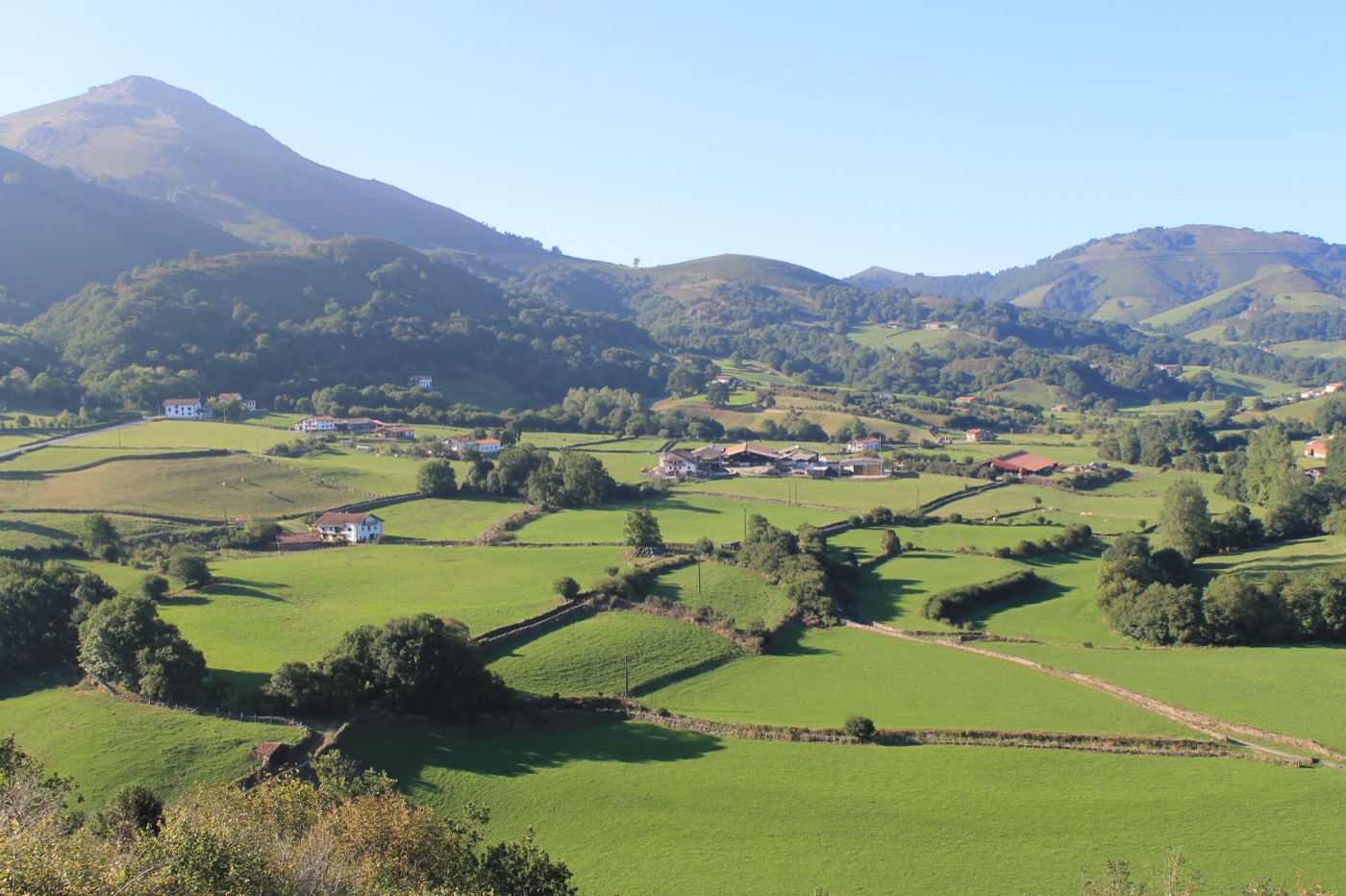
The Garcia surname most probably means “the young one” or “the bear”, and it comes from the Basque country and the old Kingdom of Navarre. Written García in Spanish, it is today the commonest surname in Spain.
What Does the Surname Garcia Mean?
García almost certainly means “young” or “bear”, from an old Basque or pre-Roman root, but scholars have never agreed on which. It began as a personal name, not a family name, and became a surname only when medieval Iberians started calling themselves after their fathers.
The name appears in Latin charters from the ninth century onward as Garsea, Garsias and Garcias, and not one of those scribes ever explained what it meant. Everything written since is reconstruction.
The Basque philologist Alfonso Irigoyen traced it to gaztea, the Basque word for “the young one”. Ramón Menéndez Pidal and Antonio Tovar, two heavyweights of Spanish philology, preferred hartz, the Basque word for bear, which would make it a warrior’s name in the old northern manner.
A third reading holds both, as a compound meaning “young bear”. A fourth abandons Basque and looks to Germanic roots carried into Iberia by the Visigoths, proposing a word for a young warrior.
None has won. What they share is a name already old and already common by the time anybody wrote it down.
Where the Garcia Name Comes From
García comes from the western Pyrenees: Navarre, the Basque provinces and the lands on both sides of the mountains, from where it spread south into Castile and then across the whole of Spain. It is documented north and south of the Pyrenees from the High Middle Ages onward.
The Kingdom of Navarre
If one place can claim the name, it is Navarre. García was a royal given name there for centuries. García Íñiguez ruled Pamplona from about 851 to 882, García Sánchez I from 931 to 970, and García Ramírez, called the Restorer, from 1134 to 1150. Courtiers and tenants named sons after their kings, and within a few generations it was everywhere.
From Given Name to Surname
Medieval Iberians identified themselves by their father: Sancho, son of García. The Spanish patronymic ending -ez or -es did that work, so a son of García became a Garcés or a Garcíaz. In parallel, the plain name itself hardened into an inherited surname.
That makes García a patronymic surname rather than a place name or a trade name. It records an ancestor’s first name, which means there is no single García family. Thousands of unrelated men were called García, and every one of them founded a line.
South into Castile and Beyond
As the Christian kingdoms pushed south through the Reconquista, Navarrese and Basque settlers went with them, and the name travelled into Castile, Aragon, Andalusia and Portugal. By the early modern period García was thoroughly Castilian, its Basque origins forgotten by most of the families carrying it.
Then it crossed the Atlantic. Spanish soldiers, priests, notaries and farmers named García went to Mexico, Cuba, Puerto Rico, Colombia, Venezuela and the Philippines from the sixteenth century onward, and the name took root in all of them.
Spelling Variants and Related Names
The main variants are Garcia without the accent, Garcías, Garcés, Garcez, Garzo and the Basque form Gartzia. Gasconic cognates on the French side of the Pyrenees include Gassie and Gassion.
The Spanish spelling carries a written accent on the second syllable. English-speaking countries and databases that cannot handle diacritics drop it, so Garcia and García are the same name and should be searched as one. Portuguese and Catalan write it unaccented as standard, which is why that form dominates in Brazil and along Spain’s Mediterranean coast.
The oldest recorded forms are Latinised: Garsea, Garsias, Garcias, Garzia. The original Basque form had an affricate sibilant, closer to a “ts”, which softened in Castilian into the modern pronunciation.
The patronymic branch matters if you are tracing a family. Garcés means “son of García” and is common in Aragon, Navarre and later in Colombia and Ecuador. Related forms include Garcí, Garciarena and the compound Basque names built on Gartzia. American clerks writing by ear also left Garsia, Garcy and Gracia in nineteenth century records.
The Garcias in America
Garcias reached America in several distinct waves: Spanish colonists in the Southwest and Florida from the sixteenth century, Mexican migrants from the 1900s onward, Puerto Ricans after 1917, and Cubans after 1959. The name is common in the United States because all of those strands ran into each other.
The oldest American Garcias were never immigrants at all. Families named García were farming, ranching and holding office in New Mexico, Texas, Arizona and California generations before those places were American. Rafael Garcia received the 9,468 acre Rancho Tomales y Baulines north of San Francisco in 1836, Francisco Garcia the Rancho San Benito in 1842. Their descendants became American by treaty in 1848, not by crossing a border.
The Tejano Garcias of south Texas have the same story, and the Texas General Land Office archives are full of their Spanish and Mexican grant paperwork. In San Antonio those roots run straight into the modern city, and the story of Mexican San Antonio is the best single window onto how colonial families and twentieth century arrivals became one community.
The second and much larger wave came with the Mexican Revolution and the labour demands of the Southwest. Garcias moved into the farm towns of the San Joaquin Valley, and the Mexican community of Fresno was built by families who came for agricultural work and stayed. In Arizona, the Mexican neighbourhoods of Phoenix grew around mining, railroads and citrus.
The same wave carried the name far north of the border states. Garcias took factory work in the Midwest, and Mexican Milwaukee and Little Village in Chicago both hold large Garcia populations descended from arrivals to tanneries, foundries and packing plants.
The Puerto Rican Garcias are a separate line entirely. Puerto Ricans have been United States citizens since 1917, and the great postwar migration to the Northeast brought thousands of Garcia families to the mainland. Puerto Rican North Philadelphia and the South Bronx are where that history is most visible.
Cuban Garcias arrived in two chapters. Cigar workers came to Florida in the late nineteenth century and built Ybor City in Tampa. The exile generation after 1959 concentrated in Miami Dade, and Hialeah became one of the most Cuban cities in the world. A Garcia in Hialeah and a Garcia in Fresno may share nothing but a ninth century Navarrese given name.
Notable People Named Garcia
Federico García Lorca (1898 to 1936) was the Andalusian poet and playwright of Blood Wedding and Gypsy Ballads, the most celebrated Spanish writer of his generation. He was murdered by Nationalist forces at the start of the Spanish Civil War, and his grave has never been found.
Gabriel García Márquez (1927 to 2014) was the Colombian novelist who wrote One Hundred Years of Solitude. He won the Nobel Prize in Literature in 1982.
Héctor P. García (1914 to 1996) was a Corpus Christi physician and a leading Mexican American civil rights figure. He founded the American GI Forum in 1948, and in 1984 became the first Mexican American awarded the Presidential Medal of Freedom.
Carlos P. García (1896 to 1971) was president of the Philippines from 1957 to 1961, and a poet and guerrilla organiser before that. His “Filipino First” policy tried to shift the country’s economy into Filipino hands.
Jerry Garcia (1942 to 1995) was the guitarist and singer of the Grateful Dead, born in San Francisco to a father who had emigrated from Spain. He became one of the defining musicians of American counterculture.
Andy García (born 1956) is the Cuban American actor of The Godfather Part III and The Untouchables, born Andrés Arturo García Menéndez in Havana. His family left Cuba for Miami when he was a small child.
How Common Is Garcia Today?
Garcia is the sixth most common surname in the United States, carried by 1,166,120 Americans at the 2010 Census. It is also the most common surname in Spain, where roughly three per cent of the population bears it, and the second most common in Mexico.
Its American rise has been dramatic. Garcia stood at 18th in 1990 and reached sixth by 2010, growing by nearly 36 per cent in a single decade. Six of the twenty commonest American surnames now have Hispanic origins, against just two in 1990, and Garcia leads them.
| US rank (2010 Census) | #6 |
|---|---|
| Americans with the name | 1,166,120 |
| Origin | Spanish, ultimately Basque or pre-Roman |
| Meaning | Disputed: most likely “young” or “bear” |
The full 2010 surname figures are published by the United States Census Bureau, and the linguistic debate is summarised on the Wikipedia entry for the surname.
Frequently Asked Questions
What does the surname Garcia mean?
García most likely means “the young one” or “the bear”, from an old Basque root, though scholars disagree on which. It began as a personal name in the western Pyrenees before becoming an inherited surname. A minority view traces it instead to a Germanic word for a young warrior.
Is Garcia Spanish or Basque?
Both, in a sense. García is a Spanish surname in every practical way, spelled and pronounced in Castilian and carried by Spaniards and Latin Americans worldwide. Its ultimate root, however, is almost certainly Basque or pre-Roman, from the Navarrese country where it first appears in the record.
Where does the Garcia family come from?
There is no single García family. The name arose independently wherever a man called García had children, chiefly in Navarre and the Basque provinces, and spread south through Castile. Most Garcías in the Americas descend from Spanish colonists and later migrants from Mexico, Cuba, Puerto Rico and Colombia.
How common is the surname Garcia?
Garcia is the sixth most common surname in the United States, with 1,166,120 bearers at the 2010 Census. It is the most common surname in Spain and the second most common in Mexico, and it is widespread across Latin America and the Philippines.
Is there a Garcia family crest or coat of arms?
No. In Spanish, British and most other heraldic traditions, arms are granted to an individual and pass to that person’s direct descendants, never to everybody who happens to share a surname. Since thousands of unrelated men were called García, no single set of arms could cover them. Sites selling a “Garcia family crest” are selling a decoration, not a lineage.
Why do so many Filipinos have the surname Garcia?
Because of a colonial decree. In 1849, Governor General Narciso Clavería ordered Filipino families to adopt surnames from an official list, the Catálogo alfabético de apellidos, drawn largely from Spanish names. Garcia was among them, so many Filipino Garcias have no Spanish ancestry at all.
If your family carries the Garcia name, its route from the Pyrenees to America is traceable. Atlas of Home can follow it from Navarre and the Basque country through Mexico, Cuba or Puerto Rico to wherever your family landed, and to wherever you are now.