
If someone has told you the Shah surname means “king”, the truth is more interesting than that. For most Shahs the name comes from Gujarati sah, “merchant”, and it points to Gujarat and Rajasthan rather than to Persia.
What Does the Surname Shah Mean?
Shah is chiefly an Indian mercantile surname from Gujarati sah, “merchant”, which descends through Prakrit sahu from Sanskrit sadhu, “honest, good”. A separate Persian word, shah (شاه), means “king”. The two are not the same name.
The older written form is Sah. The Dictionary of American Family Names records it as a Bania, Vania and Jain name of Gujarat and Rajasthan, and notes that the spelling appears to have drifted towards Shah under the influence of the Persian word for king. Sah and Sahu both survive alongside it.
The sense was social as much as commercial. From the twelfth and thirteenth centuries, inscriptions give the honorific Sahu to shravakas, Jain lay followers, and the derived word sahukari still means the business of banking and moneylending. To be a Sah was to be creditworthy. It described a man whose word closed an account.
The Persian title is a different story entirely. Shah descends from Old Persian xshayathiya, “king”, and was carried by the rulers of Iran into the twentieth century. It travelled into India with Persian court culture and settled into Muslim family names there.
Two unrelated words arrived at the same four letters in English. Almost every page that treats them as one name has got the ancestry of most Shahs backwards.
Where the Shah Name Comes From
The Indian Shahs come from Gujarat and Rajasthan in western India, from the bania trading communities: Jain and Hindu merchant families who worked as bankers, brokers, moneylenders and shopkeepers.
The bania towns of Gujarat and Marwar
Bania, also written Vania, comes from Sanskrit vanij, “merchant”. In the market towns of Gujarat and the Marwar region of Rajasthan, these families held the credit that moved grain, cotton and cloth, and under the Gujarat sultanate and later the Mughals they financed a great deal of it.
Shah belongs to a small vocabulary of names drawn from that trade, alongside Sheth and Seth, from Sanskrit shreshthin, “eminent one”, and Mehta. These are occupational and status names rather than lineage names, which is why they are shared so widely.
Why so many Shahs are Jain
Jain lay ethics restrict work that causes harm to living things, which historically ruled out ploughing, and Jain families concentrated instead in commerce, credit and later gemstones. The result is a community of a few million people with an unusually concentrated occupational history.
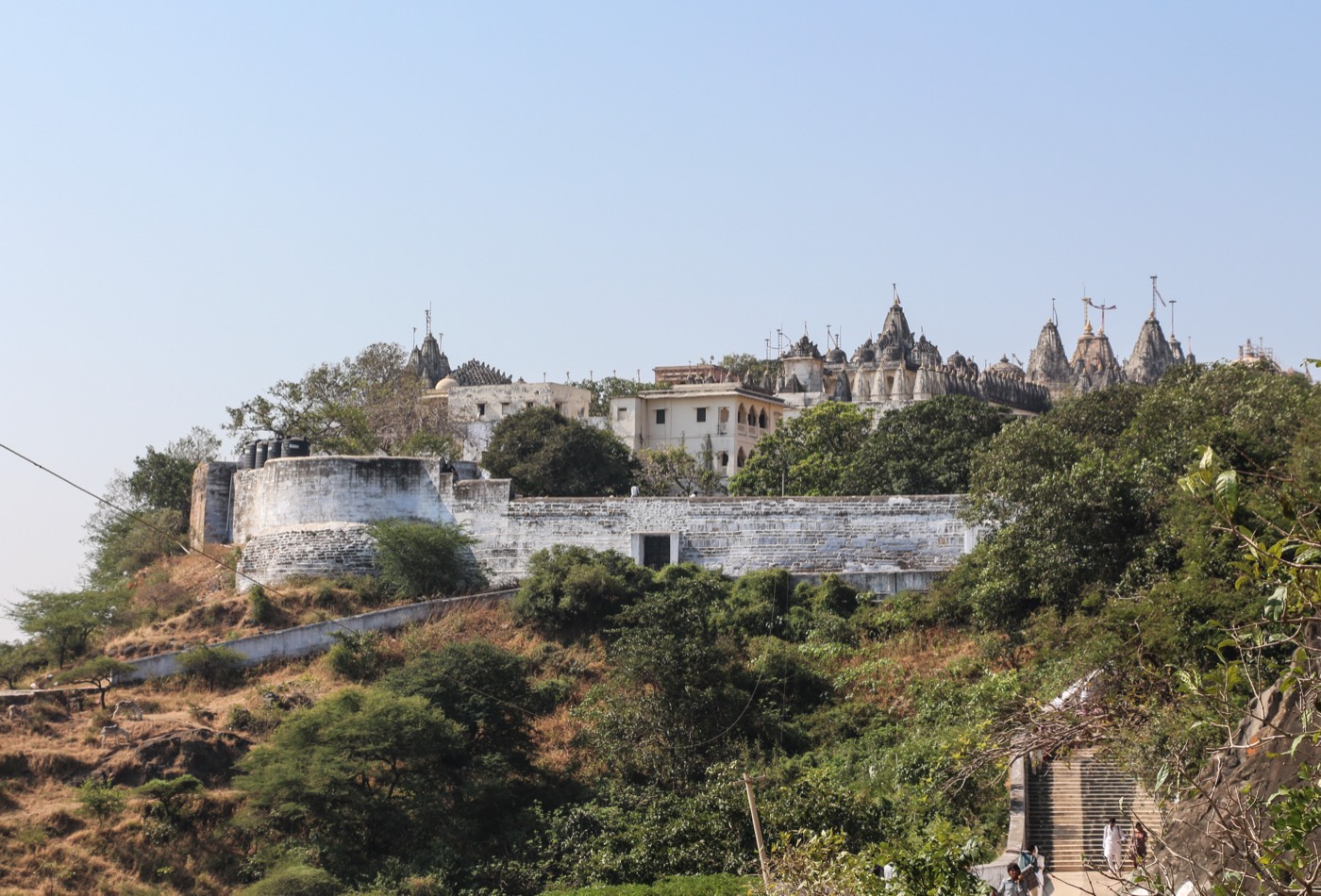
The centre of that world is Saurashtra, where the temple city of Palitana crowns Shatrunjaya hill, the most important Jain pilgrimage site in Gujarat. Further north, the Jains of Palanpur took a family brokerage tradition into the diamond trade, built networks in Antwerp from the mid twentieth century, and helped make Surat the cutting and polishing capital of the world. Shah and Mehta became names you heard on trading floors from Mumbai to Belgium.
The Persian and Afghan line
The other Shah is Muslim and Persianate. It appears in Iranian and Central Asian names, and among Sayyid and Afghan families who settled in northern India under the Mughals and after them. The nineteenth century Afghan chief Jan-Fishan Khan, made Nawab of Sardhana in Uttar Pradesh, founded one such line, and his descendants carry the name still.
Nepal adds a third and separate use. The royal Shah dynasty of Gorkha, which unified Nepal under Prithvi Narayan Shah and ruled until 2008, claimed Rajput descent, and the derivation of its name is not settled.
Spelling Variants and Related Names
The main variants are Sah, Sha, Shaha and Sahu, with Sheth, Seth and Sahukar drawn from the same merchant vocabulary. In native script the Indian name is written शाह in Devanagari and શાહ in Gujarati; the Persian title is شاه.
Persian-derived names built on the royal word include Shahi, Shahani, Shahnawaz, Shahzad and Badshah or Padshah, “great king”. These belong to the Iranian and Indian Muslim side of the story, not the Gujarati one.
Watch out for Shah used as a given name or title rather than a family name. Shah Jahan, Nadir Shah, Reza Shah and Shah Rukh Khan all carry the Persian word, and in none of those cases is it a surname in the modern sense.
One false friend worth naming: Shah has no connection to the Scottish and Irish surname Shaw, or to Shea, despite the resemblance in English. The similarity is an accident of transliteration.
The Shahs in America
Most American Shahs arrived after the Immigration and Nationality Act of 1965 abolished the national origins quotas, in a wave of Gujarati doctors, engineers, accountants, pharmacists and small business owners that continued through the technology hiring of the 1990s.
A second route ran through East Africa. Gujarati merchant families, Jain and Hindu alike, had built trading houses in Uganda, Kenya and Tanzania across the colonial period, and were pushed out again by Idi Amin’s 1972 expulsion and the Africanisation policies that followed. Many reached Britain and Canada, and a good number reached the United States. That twice-migration is told in full on our page on the Patel surname, the other great Gujarati community marker.
In America the Shahs settled where Gujarati networks were densest. Middlesex County in New Jersey is the heart of it, above all the Indian community in Edison and the Oak Tree Road corridor running through neighbouring Iselin. North Texas drew a second concentration into Richardson and Carrollton, and the Cincinnati suburbs built theirs around West Chester in Ohio.
The 2010 Census recorded how Shahs described themselves: 91.74 per cent as Asian or Pacific Islander, 3.59 per cent as White, 2.70 per cent as two or more races, 0.94 per cent as Black and 0.70 per cent as Hispanic. Those are self-identification figures from a single census, not a measure of ancestry, but they show a surname that in America is overwhelmingly South Asian.
Like Singh, Shah marks a community rather than a family. It tells you a great deal about what your ancestors did and who they worshipped with, and almost nothing about which particular household you came from.
Notable People Named Shah
Prithvi Narayan Shah (1723 to 1775) was the Gorkha king who conquered the Kathmandu Valley and founded the unified Kingdom of Nepal, beginning a royal house that lasted until 2008.
Idries Shah (1924 to 1996) was an Afghan-descended author and teacher in the Sufi tradition, born in Simla and based in London, whose books introduced Sufi thought to a wide Western readership.
Naseeruddin Shah (born 1950) is one of India’s most respected screen and stage actors, a leading figure of the parallel cinema movement. He is a great-great-grandson of Jan-Fishan Khan, and so a relative of Idries Shah.
Amit Shah (born 1964) is the Indian politician who has served as Union Home Minister since 2019, born in Mumbai to a Gujarati bania family.
Sonal Shah (born 1968) is an American economist, born in Mumbai and raised in Houston, who directed the White House Office of Social Innovation and Civic Participation from 2009 to 2011.
Rajiv Shah (born 1973) is an American physician and economist, the son of Gujarati immigrants to Michigan, who led the US Agency for International Development from 2010 to 2015 and became president of the Rockefeller Foundation in 2017.
How Common Is Shah Today?
Shah is the 573rd most common surname in the United States, carried by 58,287 Americans at the 2010 Census. In India it is far more common again, concentrated in Gujarat, Rajasthan and Maharashtra, and it is also widespread in Nepal and Pakistan.
| US rank (2010 Census) | #573 |
|---|---|
| Americans with the name | 58,287 |
| Origin | Indian (Gujarati and Rajasthani); separately Persian |
| Meaning | “Merchant”, from Sanskrit sadhu, “honest, good” |
Frequently Asked Questions
What does the surname Shah mean?
For the great majority of bearers it means “merchant”, from Gujarati sah, which comes through Prakrit sahu from Sanskrit sadhu, “honest, good”. The older spelling was Sah. It was a title of standing in the trading and banking communities of Gujarat and Rajasthan.
Is Shah Indian or Persian?
Both, but they are two different names that happen to look identical in English. The Indian Shah is a Gujarati and Rajasthani merchant name; the Persian shah is the royal title meaning “king”. Nearly all American Shahs carry the Indian one.
Where does the Shah family come from?
The Indian name comes from Gujarat and from the Marwar region of Rajasthan, where it belonged to Jain and Hindu bania trading families. The Persian name comes from Iran and reached India through Persianate court culture and Afghan and Sayyid settlement in the north.
How common is the surname Shah?
Shah ranked 573rd in the United States at the 2010 Census, with 58,287 bearers. It is much more common in India, where it is one of the leading surnames of Gujarat, and it is also frequent in Nepal, Pakistan and the Gujarati diaspora in Britain and East Africa.
Is there a Shah family crest or coat of arms?
No. In the European heraldic traditions that produced coats of arms, arms are granted to individuals and pass to their direct descendants, never to everyone who shares a surname. Shah also sits outside those traditions entirely, in Indian and Persian naming worlds that never used them. Anyone selling you a Shah family crest is selling a decoration, not a lineage.
Are all Shahs Jain?
No, though a large share are. The name is carried by Jain and by Hindu Vaishnav bania families in Gujarat and Rajasthan, and separately by Muslim families of Persian and Afghan derivation. Religion cannot be read from the surname alone.
If your family carries the Shah name, its route from Gujarat to America is traceable. Atlas of Home can follow it from the bania towns of Gujarat and Marwar to wherever your family landed, and to wherever you are now.