
It starts with the smell. A wall of cardamom and ghee drifting out of a sweet shop on Oak Tree Road, mingling with the diesel of a bus and the warm yeast of a tandoor down the block.
Then the colour. Saris stacked in shop windows, gold against marigold against deep plum, lit up under sodium lights. On a Saturday night in October the road disappears under strings of bulbs and twenty thousand people walking shoulder to shoulder for Diwali. This is one and a half miles of central New Jersey that, somewhere along the way, became India.
Edison, The Place
Edison Township sits in Middlesex County, about thirty miles southwest of Manhattan, hemmed in by the New Jersey Turnpike on one side and the Garden State Parkway on the other. NJ Transit’s Northeast Corridor runs through it, with stations at Edison and Metuchen feeding commuters into Newark and Penn Station.
The township borders Iselin, a section of Woodbridge Township, and the line between the two is invisible on the ground. Oak Tree Road is the spine of the Indian community: a one-and-a-half-mile commercial strip that crosses straight from Iselin into Edison, threading split-level houses, postwar bungalows, and older brick storefronts of a road that used to be something else entirely.
How Edison Became Indian
Before the Indians
For most of the twentieth century, Iselin and Edison were Italian, German, Polish, and Irish. Working-class commuter towns built on cheap land near the rail line, with shotgun bungalows for the Pennsylvania Railroad workers and brick taverns for everyone else.
By the early 1980s Oak Tree Road was in trouble. Storefronts boarded up. The road had turned into a stretch of biker bars and abandoned buildings with almost no foot traffic. If you’d driven it in 1985, the idea that it would one day host the largest South Asian retail corridor in America would have sounded absurd.
And yet the bones of the place were sound. Postwar housing stock, good public schools, a direct train into New York, and rents that had collapsed alongside the storefronts. Somebody just needed a reason to come.
The Indians Arrive
The reason was a law passed twenty years earlier. The Immigration and Nationality Act of 1965, sometimes called Hart-Celler after its sponsors, scrapped the national-origin quotas that had effectively shut out Asian immigration since the 1920s. In their place it set up a new system that prioritised family reunification and, crucially, skilled professionals.
For India, that change was a doorway. Doctors, engineers, scientists, and PhD students started arriving through the 1970s, many of them landing first in New York City and then drifting south down the Northeast Corridor in search of affordable housing and yards. A 2010 TIME piece quoted by later historians notes that some of the earliest Edison arrivals were engineers and doctors from Gujarat, drawn to the township’s proximity to AT&T’s research labs, its school district, and its stock of modest postwar homes.
Dr. Surender Grover, an orthopaedic surgeon who left New Delhi for New Jersey in the late 1960s, became an early investor along the dying Oak Tree Road strip. He bought property when nobody else wanted it.
The first wave of Indian retail followed the residents, not the other way around. In 1986, Jaswant Singh opened a restaurant and sweets shop on Oak Tree Road, among the first Indian-owned businesses to plant a flag on the strip. In 1987, Nina Jewelers opened in the Iselin stretch. In 1989, a small jeweller called Sona, now widely credited as the pioneer business of New Jersey’s Little India, opened its doors on Marconi Avenue, a block off the main road.
Not everyone welcomed them. In Jersey City, a thirty-minute drive north, an informal gang of local youths calling themselves the Dotbusters launched a string of racist attacks on Indian residents between June 1987 and February 1988. The group’s name came from the bindi worn by Hindu women. Over fifteen people were assaulted in nine months. One man, Navroze Mody, was beaten to death outside a café in Jersey City in September 1987.
The attacks shocked the community. They also galvanised it. Indian Youth Against Racism formed in the wake of the killings, demonstrations spread, and New Jersey passed tougher anti-hate-crime legislation in 1990. Some of the earliest Indian merchants on Oak Tree Road in the late 1980s reported racist incidents too. By the early 1990s, that hostility had mostly subsided. The shopfronts had stopped going up alone.
Edison at Its Peak
The 1990s changed everything. As more Indian families bought homes in Edison and Iselin, the retail caught up fast. Boarded-up storefronts were repainted in saffron and turquoise. New plazas went up. Grocery stores, sari shops, video parlours, sweet houses, electronics dealers, travel agents specialising in Mumbai-Delhi-Ahmedabad routes.
In 1991, the first Navratri festival in New Jersey was held on Oak Tree Road. That same year, Moghul opened at 1655 Oak Tree Road, founded by the Mehtani family. It was a sit-down North Indian and Punjabi restaurant in a township that, a decade earlier, had nowhere to get a proper biryani. Zagat would later call it New Jersey’s best Indian restaurant for years running.
Then came the dot-com boom. Indian engineers on H-1B visas poured into the corridor between New York and Princeton through the late 1990s and early 2000s, many of them landing in Edison and Iselin within their first week in the country. The chain migration accelerated. A cousin sponsored a cousin. A brother brought a brother. A whole village in Anand district might end up scattered across three streets in Edison inside a decade.
By 2000, the U.S. Census found that 17.75% of Edison’s residents identified as Indian American, the highest percentage of any municipality in the country at the time. By 2010, that had jumped to 28.3%. By 2020, 34.9%. The 2020 Census also recorded that the township was, overall, 50% ethnically Asian.
Iselin moved even faster. The 2017 American Community Survey put it at 42.6% Indian American, the highest concentration of any census-designated place in the United States.
The Story Now
The shift from Gujarati-and-Punjabi to pan-Indian started in the 1990s and never stopped. Where the early waves were dominated by Gujarati families from Anand, Vadodara, and Surat, plus Punjabis from both India and Pakistan, the dot-com and IT generations added Telugu speakers from Hyderabad, Tamils from Chennai, Malayalis from Kerala, Bengalis from Kolkata, and Marathi speakers from Pune and Mumbai.
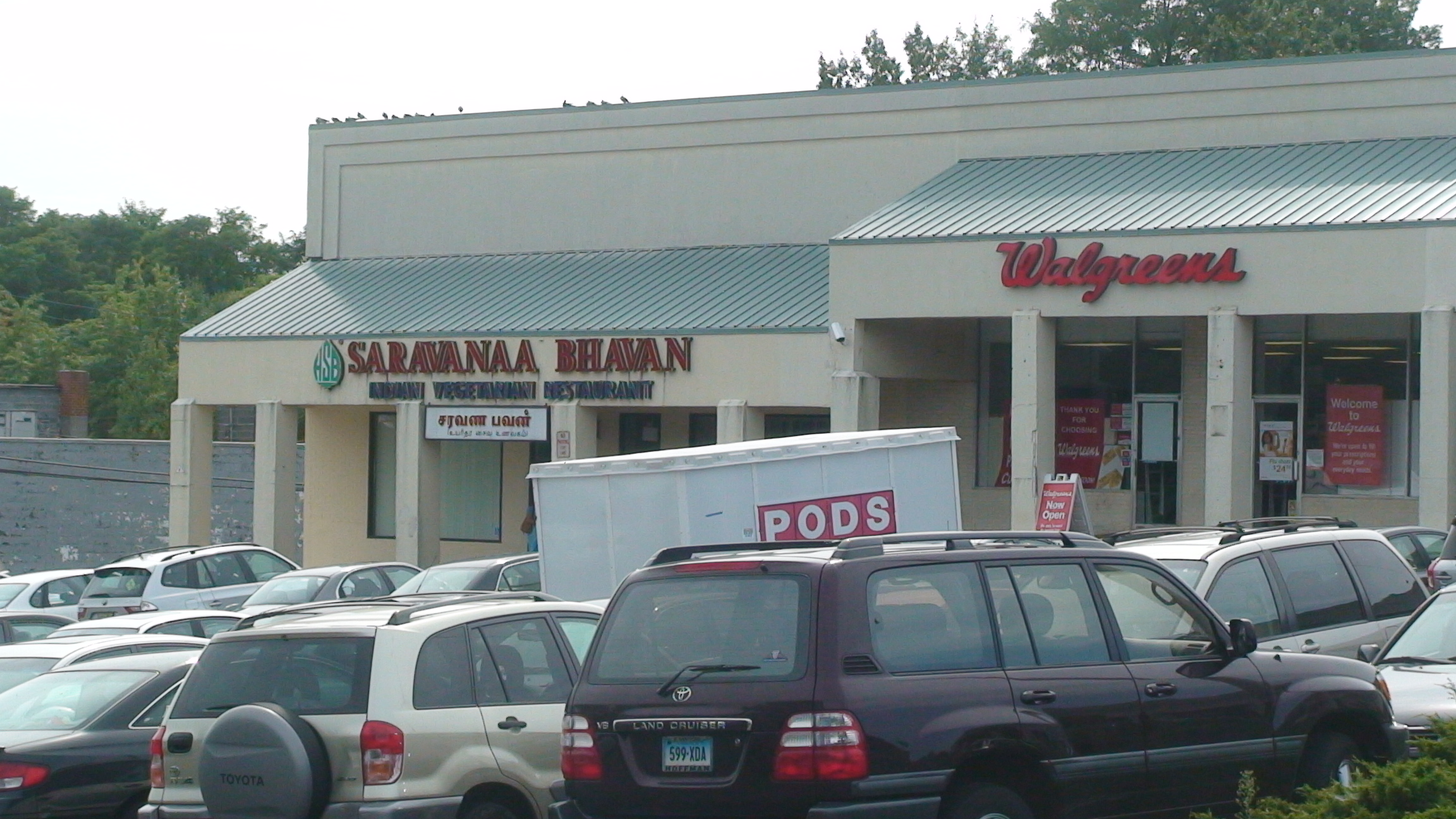
Today, Middlesex County election ballots are printed in English, Spanish, Bengali, Gujarati, Hindi, and Punjabi. About 110,000 Gujarati speakers live in New Jersey, more than any other state. Tamil-language signs share Oak Tree Road with Hindi billboards and Punjabi sweets shops.
In January 2022, Samip “Sam” Joshi was sworn in as the first Indian American mayor of Edison Township, at thirty-two the youngest mayor in the township’s history. He had started interning at Edison Town Hall at fourteen.
The Landmarks of Indian Edison
India Square / Oak Tree Road, between Correja Avenue and Middlesex Avenue, Iselin. The two-block heart of the strip, officially designated India Square. This is where the Diwali switch-on happens, where the annual New Jersey India Day Parade ends, and where most first-time visitors are told to start. On a normal Saturday night the sidewalks are too crowded to walk in a straight line.
Moghul, 1655 Oak Tree Road, Edison. Opened in 1991 by Sneh and Satish Mehtani, who had run a Manhattan restaurant called The Moghul Room since 1983. Moghul became the anchor white-tablecloth Indian restaurant of the corridor, a place where doctors took their parents for anniversaries and Bollywood stars stopped on tour. The Mehtani family went on to build a small empire on the same block, including Mithaas and Ming.
Patel Brothers, 1555 Oak Tree Road, Iselin. The Iselin Patel Brothers is one of the anchor groceries of Oak Tree Road, part of the Chicago-founded chain that now spans dozens of locations. The current 1555 store, a full-sized supermarket, opened in 2013 next door to an older, smaller branch. A second Patel Brothers operates a few doors down at 1357 Oak Tree Road. Walk in any Sunday morning and you will hear five languages before you reach the lentil aisle.
Mithaas, 1655 Oak Tree Road, Edison. The Mehtanis’ sweet shop and snacks counter, opened in Edison in 2013. Glass cases of kaju katli, gulab jamun, jalebi, soan papdi. The smell hits you from the parking lot.
Sona Jewelers, 6 Marconi Avenue, Iselin. Founded in 1989, widely credited as the pioneer business of New Jersey’s Little India. A second related shop, Sona Mahal Jewelers at 1394 Oak Tree Road, opened in 1999. The gold is the same gold you’d see in a jewellery street in Ahmedabad or Surat, sold by the gram for weddings that often pull in hundreds of guests from three continents.
Saravana Bhavan, 149 Wood Avenue, Edison. The Edison outpost of the global Chennai-born vegetarian chain founded in 1981. Dosa, idli, sambar, filter coffee. The Edison branch has been a destination for Tamil families up and down the Northeast Corridor since it opened, evidence that Oak Tree Road is no longer just Gujarati-speaking territory.
BAPS Shri Swaminarayan Mandir, 112 North Main Street, Robbinsville. About forty minutes south of Edison and worth the drive. The original Robbinsville mandir opened in August 2014 in white Italian Carrara marble, carved across 4.7 million volunteer-hours. In October 2023, the same campus dedicated Swaminarayan Akshardham, the largest Hindu mandir in the Western Hemisphere. It serves the Edison community as a regional pilgrimage site.
Sri Venkateswara Temple, 1075 Old Post Road, Bridgewater. Opened in 1998 after almost a decade of planning, designed by Madras-based architect Ganapati Sthapati in traditional South Indian style. Better known locally as the Balaji Mandir. It anchors the Telugu and Tamil populations of central New Jersey and draws worshippers from across the New York metro area.
Where the Edison Indians Came From
The Indians in Edison and Iselin did not come from one place. They came in waves, each wave carrying a different region’s accent and food and gods.
The first generation, arriving after Hart-Celler in 1965, was heavily Gujarati. Patels, Shahs, Modis, and Desais from Anand, Kheda, Vadodara, and Surat districts. They came as engineers, scientists, doctors, and graduate students, and once one family bought a house in Edison the next dozen knew where to look. Punjabi Sikh families from Jalandhar, Ludhiana, and Amritsar came in parallel, often through Toronto or Vancouver first.
The IT and dot-com waves of the late 1990s and 2000s redrew the map. Telugu-speaking engineers from Hyderabad and the towns of Andhra Pradesh poured in on H-1B visas. Tamil software workers arrived from Chennai and Coimbatore. Malayalis came from Kochi, Thrissur, and Trivandrum, many of them nurses recruited into the New Jersey hospital system. Bengalis came from Kolkata and Dhaka. Maharashtrians from Mumbai and Pune.
Sit on a bench outside Patel Brothers on a Saturday and you can hear the whole subcontinent talking past itself in six languages, all of it about onions.
Edison Today
Most heritage neighbourhoods we write about on Atlas of Home are in their second or third act. Faded, transformed, layered with new arrivals. Edison is the opposite. The community is still growing. Each census jumps. New shops open every year. The Diwali festival that drew 15,000 in its first attempt now pulls in tens of thousands, sometimes upwards of twenty thousand on its biggest weekend, said to be the largest public Diwali in the United States.
What has changed is the generational layering. The first-generation aunties and uncles still run the saree shops, the sweet houses, the travel agencies. Their American-born and American-raised children are lawyers in Newark, doctors at Robert Wood Johnson, founders of Princeton-corridor startups, mayors of Edison Township. They come back to Oak Tree Road on weekends because their parents are still there and because no one in Manhattan makes mithai the way Mithaas does.
The third generation is now in elementary school. They will grow up with Gujarati grandmothers and Trader Joe’s in the same fifteen-minute drive. Whatever Edison becomes in the 2040s, it will be something the rest of the country has not yet seen. A heritage neighbourhood that never stopped arriving.
Frequently Asked Questions
Why did Indian immigrants settle in Edison and Iselin?
Indian immigrants began arriving in Edison and Iselin after the Immigration and Nationality Act of 1965 reopened U.S. immigration to skilled professionals from Asia. Edison offered affordable postwar housing, strong public schools, a direct Northeast Corridor rail line into New York, and proximity to AT&T’s research labs, which attracted early engineers and doctors from Gujarat and Punjab. Chain migration through family sponsorship pulled the next waves into the same few streets.
Is Edison still predominantly Indian today?
Yes, and the share is still growing. As of the 2020 Census, 34.9% of Edison Township residents identified as Indian American, up from 28.3% in 2010 and 17.75% in 2000. Neighbouring Iselin, in Woodbridge Township, was recorded at 42.6% Indian American in the 2017 American Community Survey, the highest concentration of any census-designated place in the United States.
What are the most famous Indian landmarks on Oak Tree Road?
India Square, the officially designated two-block heart of the strip between Correja and Middlesex Avenues in Iselin, is the centre of the action. Moghul restaurant at 1655 Oak Tree Road, Patel Brothers at 1555 Oak Tree Road, Mithaas at 1655 Oak Tree Road, and Sona Jewelers on Marconi Avenue are among the anchor businesses. Nearby, the BAPS Swaminarayan Mandir in Robbinsville and the Sri Venkateswara Temple in Bridgewater serve as regional places of worship.
Where in India did the Edison Indians come from?
The earliest waves after 1965 came largely from Gujarat, especially Anand, Kheda, Vadodara, and Surat districts, plus Punjabi families from both India and Pakistan. From the late 1990s onward, dot-com and IT immigration brought large numbers of Telugu speakers from Hyderabad and Andhra Pradesh, Tamils from Chennai, Malayalis from Kerala, Bengalis from Kolkata, and Marathi speakers from Mumbai and Pune. About 110,000 Gujarati speakers live in New Jersey today, more than any other state.
When did Indian immigrants first arrive in Edison?
Indian engineers and doctors began moving to Edison and Iselin in small numbers in the late 1960s and 1970s, after the Hart-Celler Act of 1965 ended national-origin quotas. The first Indian-owned businesses on Oak Tree Road opened in the mid to late 1980s, with Jaswant Singh’s restaurant in 1986, Nina Jewelers in 1987, and Sona Jewelers in 1989. The community then expanded rapidly through the 1990s and 2000s as IT migration accelerated.
If your family’s story passed through Edison, Iselin, or any of the places Indians made home in America, Atlas of Home can help you trace that journey. From a village in Anand district to Oak Tree Road, to wherever you are now.