
The Patel surname is Gujarati and began as a job rather than a bloodline: patel meant the headman of a village, the man who held the land records. It comes from central Gujarat, above all the Charotar plain of the Kheda and Anand districts.
What Does the Surname Patel Mean?
Patel means village headman. The Gujarati word paṭel, along with its Marathi cousins pāṭel and pāṭīl, descends from the Prakrit paṭṭaïl(l)a, “village headman”, which in turn goes back to the Sanskrit paṭṭakila, “tenant of royal land”.
That root matters. A paṭṭa was a deed, a written grant. The man who held one held a documented claim to land, and in a village economy that made him the man everyone dealt with.
A second thread runs alongside it. The community most associated with the name calls itself Patidar, from patti, a share or strip of land held under the village tenure system. The two words differ, but point at the same thing: land, and the paperwork that proved you had it.
So Patel is a title-derived surname. It was never a family name in the European sense, describing descent from one ancestor. It described a function, the function became hereditary, and it hardened into a surname carried by millions of unrelated people.
Where the Patel Name Comes From
The Patel name comes from Gujarat in western India, and most densely from Charotar, the fertile belt covering today’s Kheda and Anand districts between the Mahi and Sabarmati rivers. Nearly every American Patel family traces back to a village in that region or to north Gujarat around Mehsana.
From Kanbi cultivators to Patidar landholders
The community behind the name was historically known as Kanbi, a caste of cultivators. Under the Mughal empire and later under Maratha rule, some Kanbi families were made responsible for collecting village revenue and keeping the land registers. Those men took the titles Patel, Desai, Amin and Mukhi, depending on the rank and the region.
Over the nineteenth century the Kanbis increasingly styled themselves Patidar, emphasising ownership rather than the tilling implied in the older label. It was a deliberate rebranding, and it worked: by the 1931 census, Patidar had taken hold.
Leva and Kadva
The Patidars split into two principal groups, the Leva and the Kadva. The Levas are centred on Charotar and were traditionally the wealthier, dominant in commerce, education and the producer cooperatives that later made Anand famous. The Kadvas come mainly from north Gujarat and Kutch. Community tradition traces the two to Lava and Kusha, the twin sons of Rama, which is a story about status rather than a genealogy. In practice they have long dined together and married separately.
Villages, not families
Marriage among Charotar Levas was organised into gols, circles of villages that intermarried. The most prestigious was the chha gam, the six villages, with wider circles of twelve, twenty-two and more ranked below it. The anthropologist David Pocock documented the system in Kanbi and Patidar.
This is why “are you related to the other Patels?” has no clean answer. A Patel’s real identity marker was never the surname. It was the village.
Spelling Variants and Related Names
Patel is written પટેલ in Gujarati script and पटेल in Devanagari. The most common variants and relatives are Patil, Patell, Pattel, Patela and, in the Marathi-speaking Deccan, Patil and Patwari for related revenue offices.
Patil is the direct Marathi cognate and means the same thing. In Karnataka the title travelled with Lingayat landholding families. Where you find Patil rather than Patel, you are usually looking at Maharashtra or northern Karnataka rather than Gujarat.
More useful than spelling variants are the sibling titles. Desai, Amin and Mukhi went to the same Kanbi families for the same revenue work, at different ranks and under different regimes. A Desai and a Patel from neighbouring Charotar villages may be closer kin than two Patels from opposite ends of Gujarat.
Amin in this Gujarati sense is unrelated to the Arabic name Amin despite the identical spelling, a false friend that trips up a lot of family research.
Patel is also not exclusively a Patidar name. Landholding members of the Koli caste, some Parsi herding families, and Muslim converts from Koli and Patidar backgrounds all used the title. The surname alone establishes neither community nor religion.
The Patels in America
Patels reached America in two streams: directly from Gujarat, mostly after the Immigration and Nationality Act of 1965 removed the national origin quotas, and indirectly from East Africa, where Gujarati families had been settled for generations before political upheaval pushed them out.
The East African route matters more than most people realise. Gujarati traders and clerks moved to Uganda, Kenya and Tanganyika from the late nineteenth century, many arriving in the era of the Uganda Railway and staying to run shops, cotton gins and small industry. Their children were born in Kampala, Nairobi and Dar es Salaam.
Then it ended. Kenya’s Africanisation policies from the late 1960s squeezed non-citizen Asian traders out, and on 4 August 1972 Idi Amin gave Uganda’s Asian population ninety days to leave. Around 80,000 people were displaced by the expulsion. Most went to Britain, many eventually to the United States. A great many American Patel families count Kampala or Nairobi as the last stop before America, not Ahmedabad.
The other American story is the motels. It begins with Kanji Manchhu Desai, a Gujarati immigrant who in 1942 took over a Sacramento hotel whose Japanese American owner had been forced into a wartime internment camp, and who later ran San Francisco’s Goldfield Hotel as an informal landing pad for arriving Gujaratis. His advice became a proverb: if you are a Patel, lease a hotel.
Sixty years on, Indian Americans own roughly half the hotels and motels in the United States, concentrated at the budget end, and Patels account for a very large share of that. The sociologist Pawan Dhingra, whose Life Behind the Lobby is the standard account, calls it plausibly the largest ethnic business concentration in American history. The Asian American Hotel Owners Association, founded in 1989, now speaks for tens of thousands of properties.
The “Patel motel” nickname has been used both fondly and as a slur, but the history underneath it is not a joke. It is a story about chain migration, family credit, businesses that needed no licence or perfect English, and households that lived behind the front desk so the property could pay for itself.
Where those families settled is visible across the country. Gujarati and wider Indian American communities anchor the Indian community in Edison, New Jersey and the shops of Iselin’s Oak Tree Road, both long-standing centres of Gujarati commercial life. In Texas, the suburbs north of Dallas drew engineers and business owners in large numbers, building the Indian community in Carrollton and the older, denser one in Richardson.
In New England the pattern followed the technology corridor into Westborough and neighbouring Shrewsbury, Massachusetts, and in the Midwest into Cincinnati’s northern suburbs, most visibly West Chester, Ohio.
Notable People Named Patel
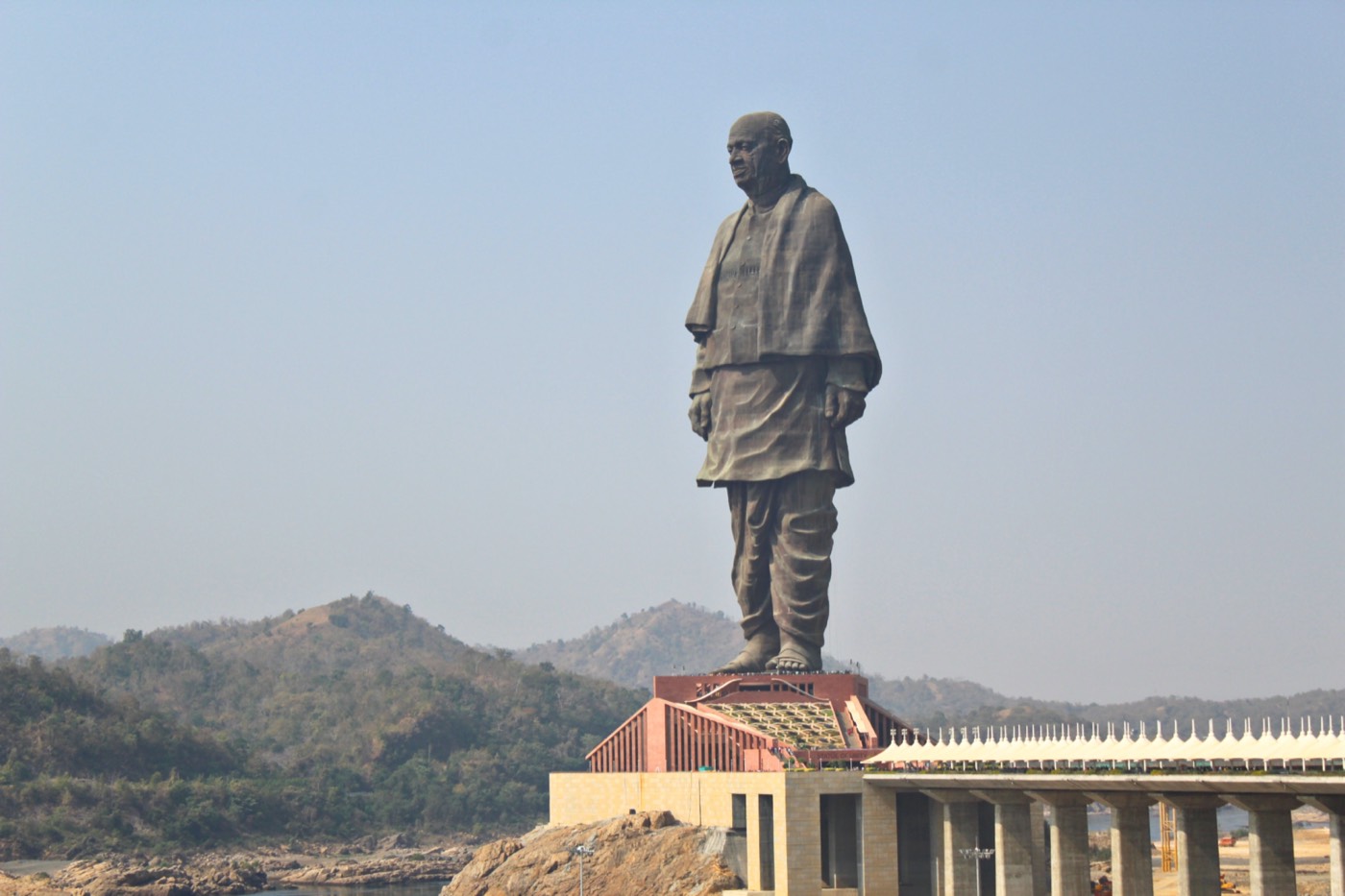
Sardar Vallabhbhai Patel (1875 to 1950) is the towering figure. Born in Nadiad and raised in Karamsad in the Kheda district, he trained as a barrister in London, led the Kheda and Bardoli peasant campaigns that earned him the title Sardar, and as independent India’s first deputy prime minister and home minister oversaw the integration of more than 560 princely states. The Statue of Unity, unveiled in Gujarat in 2018, is his monument.
Amrita Patel (born 1943) chaired India’s National Dairy Development Board in Anand from 1998 to 2014, running the later phases of Operation Flood, the cooperative dairy programme that transformed rural incomes across Gujarat. She was awarded the Padma Bhushan in 2001.
Priti Patel (born 1972) has been a British Member of Parliament since 2010 and served as Home Secretary from 2019 to 2022. She was born in London to a Gujarati family who left Uganda in the 1960s, a few years before Amin’s expulsion order, and built a chain of newsagents in England.
Dev Patel (born 1990) is a British actor of Gujarati descent who broke through as Jamal in Slumdog Millionaire in 2008 and received an Academy Award nomination for Lion in 2016.
Eboo Patel (born 1975) is the founder and president of Interfaith America, was a Rhodes Scholar at Oxford, and served on President Obama’s advisory council on faith-based and neighbourhood partnerships.
Nimesh Patel became the first Indian American writer on Saturday Night Live in 2017, after Chris Rock recruited him to write for the Academy Awards.
How Common Is Patel Today?
Patel is the 95th most common surname in the United States, carried by 229,973 Americans at the 2010 census. That is ahead of many long-established Anglo and Irish names, and remarkable for a name almost unknown in America before 1965.
| US rank (2010 Census) | #95 |
|---|---|
| Americans with the name | 229,973 |
| Origin | Indian (Gujarati) |
| Meaning | Village headman, holder of a land share |
Worldwide the name is concentrated in Gujarat, with large diaspora populations in Britain, the United States, Canada, East Africa and South Africa.
Frequently Asked Questions
What does the surname Patel mean?
Patel means village headman. It derives from the Prakrit paṭṭaïl(l)a and ultimately the Sanskrit paṭṭakila, “tenant of royal land”. It described the man who held the village land records and collected revenue, and it became hereditary.
Is Patel Gujarati or Maharashtrian?
Patel is Gujarati. The Maharashtrian and Deccan form of the same title is Patil, with an identical meaning. Both descend from the same Prakrit word, but the spelling reliably distinguishes the two regions.
Where does the Patel family come from?
There is no single Patel family. The surname is concentrated in central Gujarat, above all the Charotar region of the Kheda and Anand districts, and in north Gujarat around Mehsana. Families trace to specific villages, which mattered far more than the shared name.
How common is the surname Patel?
It ranked 95th in the United States at the 2010 census with 229,973 bearers, and is among the most common surnames in Gujarat. Around 500,000 Patels live outside India, with broadly comparable populations in Britain and the United States.
Is there a Patel family crest or coat of arms?
No. Arms are granted to individuals and their direct descendants, never to everyone sharing a surname, and Indian status systems never used European heraldry at all. Any site selling you a Patel family crest is selling a decoration, not a lineage.
Why do so many American motels belong to Patels?
It began with Gujarati immigrants in 1940s California, for whom hotel leases were one of the few businesses open to them, and grew through chain migration, family lending and word of mouth. Indian Americans now own around half of American hotels and motels.
If your family carries the Patel name, its route from Gujarat to America is traceable. Atlas of Home can follow it from a Charotar village through Kampala or Nairobi to wherever your family landed, and to wherever you are now.