
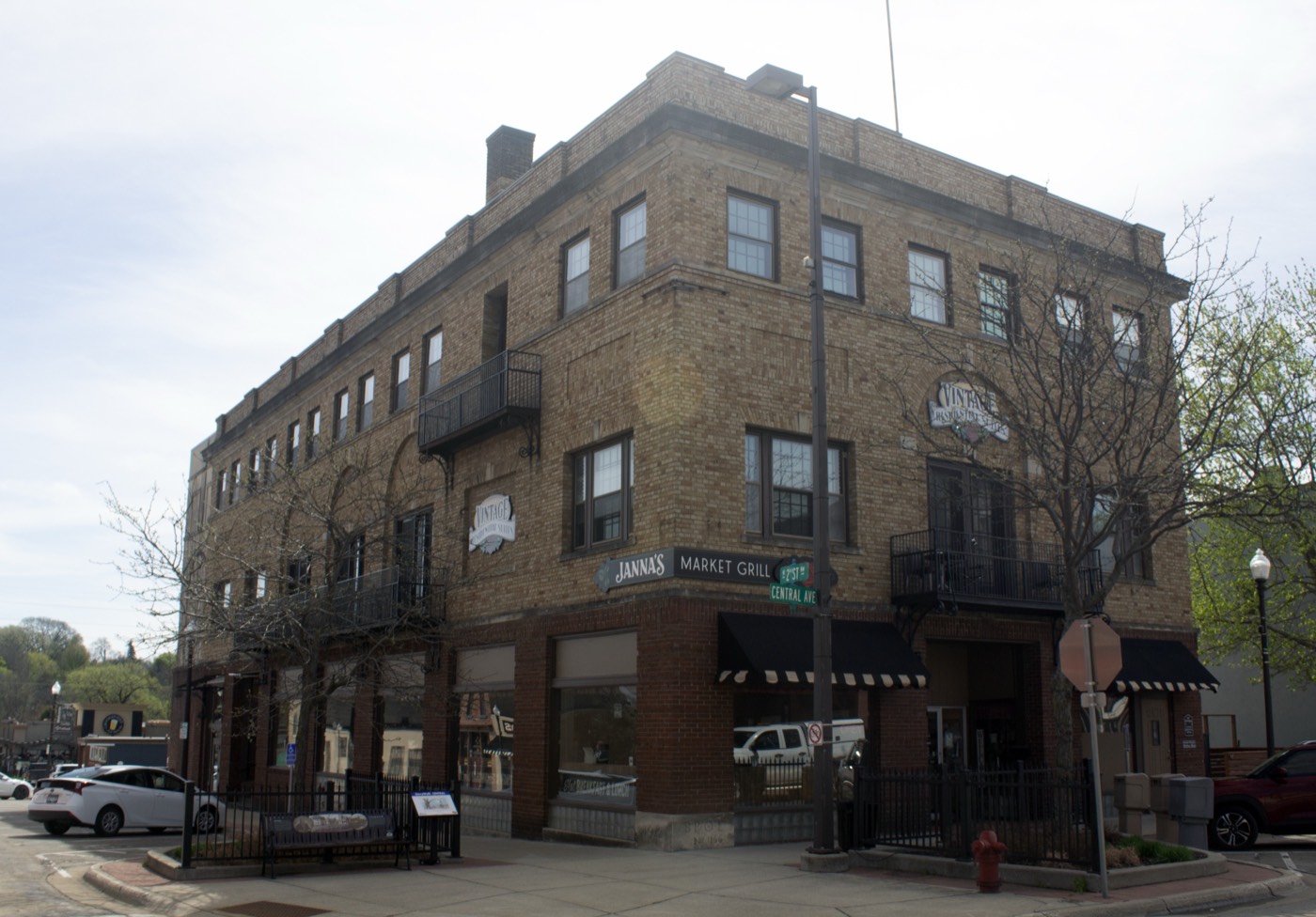
On a winter afternoon along Central Avenue, the storefronts of small-town Minnesota glow with a second language. A halal grocer sells frankincense and dates beside a money-transfer counter, the smell of cardamom drifts from a doorway, and a woman in a flowing guntiino waits at the crossing. This is the story of the Somalis in Faribault, a community that came for turkey-plant wages and stayed to remake a 170-year-old mill town.
The Place
Faribault sits about 50 miles south of the Twin Cities in Rice County, where the Straight River meets the Cannon. The fur trader Alexander Faribault founded the town site in 1852, and it grew on water power and grit.
It is the home of the Faribault Woolen Mill, established on the Cannon River in 1865 and still one of the last vertically integrated wool mills in the country. It is also, improbably, the birthplace of the Tilt-A-Whirl, which the woodworker Herbert Sellner invented in his Faribault basement in 1926.
For most of the twentieth century this was a white agricultural and manufacturing town of around 24,000 people. Then, in a single generation, it became something its founders never imagined.
How It Became Somali
The change did not arrive all at once. It came through a turkey plant, a recession, and a slow chain of cousins and friends following one another down Interstate 35.
The plant that pulled them in
Faribault’s demographic shift began in the 1980s, when a small wave of Cambodian refugees arrived to work at the Jennie-O turkey processing plant. The line work was hard, cold and physically punishing, and the company struggled to keep it staffed after it eliminated union positions and lowered wages.
In 1993, Somali-American leaders from the Twin Cities drove down to Faribault to scout job opportunities for newly arrived refugees who had limited English and little American work experience. The turkey plant needed bodies. The new arrivals needed paycheques. Word spread quickly through the Somali networks of Minneapolis and Saint Paul.
By the spring of 2011, roughly 220 Somalis worked at the Jennie-O Turkey Store in Faribault. For families who had survived war and refugee camps, a steady wage on a processing line was not a hardship. It was a foothold.
The recession that turned a trickle into a stream
Through the late 1990s and 2000s the Somali presence grew slowly. The decisive acceleration came with the Great Recession. As jobs dried up in the Twin Cities, Somali families looked again at Faribault, where the plant still hired and rents were a fraction of what they were in Minneapolis.
People moved down to join relatives and friends who had already settled. A cousin’s spare room became a rented house, a rented house became a bought one. This is how secondary migration works: not through a single dramatic exodus, but through trust, kinship and the quiet logic of where you already know someone.
By the late 2010s an estimated 4,000 Somali residents had put down roots in Faribault. The 2020 census counted 2,328 Somali residents, about 9.5 percent of the city, with the broader Black population near 9 percent and people of colour making up more than a quarter of the town. In 2000, white residents had been 90 percent of Faribault.
The friction, and the thaw
The transition was not frictionless. Newcomers and longtime residents eyed one another across a gap of language, faith and custom. There were tense town meetings, complaints about the pace of change, and the ordinary suspicion that arrives whenever a familiar place starts to look unfamiliar.
What gradually replaced the suspicion was contact. Somali children filled the public schools, where students of colour came to make up more than half of enrolment. Somali shoppers kept downtown storefronts occupied that might otherwise have gone dark. Local institutions like the Faribault Diversity Coalition organised events to put neighbours in the same room.
Faribault’s experience echoes that of other Somali destinations in the upper Midwest and New England, from the older hub at Somalis in Columbus, Ohio to the celebrated small-town turnaround of Somalis in Lewiston, Maine. In each, a struggling town discovered that immigrants were not a threat to its survival but a condition of it.
Building a community, not just a workforce
A workforce becomes a community when it builds institutions. The Somalis of Faribault did exactly that. In October 2007 the community established an Islamic centre, renting space in a strip mall on Cannon Circle for Friday prayers, weekend Qur’an school, dugsi, and the two Eid holidays.
Alongside the mosque came the practical machinery of belonging: resettlement services, English classes, job-placement help, halal grocers and money-transfer shops sending remittances back to Mogadishu and the camps. Mahad Abdulle, a Faribault resident of more than 20 years, opened Madina Cuisine and Market in 2013 to share Somali food and culture with his neighbours. Hassan Mursal, a businessman who arrived in 2002, became one of the community’s recognisable faces downtown.
By the 2010s, more than a dozen Somali-owned grocery stores, restaurants, cafes and remittance shops had opened across Faribault, most clustered downtown along Central Avenue. The main street of a fading mill town had become a Somali high street.
The Landmarks
Abubakar As-Saddique Islamic Center, 1201 Division Street West. Faribault’s mosque grew out of a rented storefront on Cannon Circle and moved to its permanent Division Street home in July 2013, the congregation graduating from renting to owning. The finished basement holds women’s prayer space and classrooms, and the building sits about half a mile from the public high school. A second, smaller prayer space downtown serves workers during business hours.
Madina Cuisine and Market, 309 Central Avenue. Mahad Abdulle opened this restaurant and grocery in 2013 to put Somali cooking and Somali staples within reach of his neighbours. It is the kind of place where a newcomer can buy the spices of home and a curious local can try goat suqaar and sweet shaah for the first time.
Banadir Restaurant and Grocery, 211 Central Avenue North. Named for the Banaadir region around Mogadishu, this small restaurant and grocer is one of the anchors of the Somali stretch of Central Avenue, serving rice, sambusa and the strong, cardamom-scented tea that follows every Somali meal.
Somali Community Resettlement Services, 302 Central Avenue, Suite 3. This organisation is the connective tissue of the community, linking new arrivals to employment, housing and county services. For a family stepping off the highway from Minneapolis or straight from a refugee camp, it is often the first door they knock on.
The Jennie-O Turkey Store. The plant that started everything remains the gravitational centre of the community’s working life. Its cold, demanding lines gave a generation of Somali refugees a first American paycheque, and the families who built the mosque and the markets first earned their footing here.
Central Avenue, downtown Faribault. The historic main street, lined with nineteenth-century brick blocks like the Batchelder Building, became the social and commercial hub of foreign-born Faribault. Money-transfer counters, halal grocers and Somali cafes now share the avenue with the town’s older shops, a single street holding two centuries at once.
Faribault Public Schools. The clearest measure of the change is in the classrooms, where students of colour came to make up more than half of district enrolment. The children who learned English in these halls are the ones now translating for their parents, opening businesses and standing for the school board.
Where They Came From
The Somalis of Faribault are part of the great dispersal that began when the government of Mohamed Siad Barre collapsed in 1991. The civil war that followed, together with a devastating famine in 1991 and 1992, displaced hundreds of thousands of people and drove them into refugee camps in Kenya and Ethiopia.
Many passed through the sprawling Dadaab complex or the Kakuma camp before the United States began resettling Somali refugees in 1992. The first Somalis resettled directly to Minnesota, largely people from the Mogadishu area, began arriving in 1996.
Minnesota became the centre of Somali America for concrete reasons: early arrivals found steady work in food processing and manufacturing, refugee-support organisations were strong, and family reunification pulled more relatives in. Faribault drew its share of that flow from the established core in Minneapolis, the same core anchored by the high-rises and halal malls of Somalis in Cedar-Riverside, Minneapolis. The connection between the big-city neighbourhood and the small mill town is direct: many Faribault families lived in the Twin Cities first.
That same pattern of refugees feeding manufacturing towns runs through the wider region. Minnesota has long absorbed displaced peoples, from the Somalis who fanned out across the state to the Hmong in Minneapolis, the Hmong in St. Paul and the Oromo in Minneapolis. Faribault is a smaller, more rural chapter of the same long story.
Faribault Today
Faribault today is a town that has, in the words of its own newspapers, moved from a rocky beginning toward a growing acceptance. The early friction has softened into something closer to ordinary coexistence: Somali kids on the youth soccer teams, Somali-owned shops on the main street, Somali names on the school board ballot.
The community is not a monolith. There are elders who still think mostly in Somali and grandchildren who think mostly in English, families thriving in business and families still grinding through plant shifts, the devout and the secular. What binds them is a shared route into this particular town and a shared stake in its future.
The deeper truth is the one the demographers keep pointing out. Faribault, like so many Midwestern towns, faced stagnation and decline. The arrival of Somalis, alongside Latino and other immigrant newcomers, kept its population growing, its schools full and its downtown lit. The mill town that made wool and Tilt-A-Whirls now makes something else as well: a place where a refugee family from Mogadishu can become, simply, Faribault.
For a wider view of how Somalis have built communities across America, the history of Somalis in Minneapolis and Saint Paul and the reporting of MinnPost on the Somali experience in Faribault are good places to begin.
Frequently Asked Questions
Why did Somalis settle in Faribault, Minnesota?
The Somalis in Faribault came primarily for work at the Jennie-O turkey processing plant, which struggled to fill hard, low-wage line jobs. Somali-American leaders from the Twin Cities scouted the opportunity in 1993, and word spread through Somali networks, drawing families south from Minneapolis and Saint Paul.
How many Somalis live in Faribault?
The 2020 census counted 2,328 Somali residents, about 9.5 percent of Faribault’s population, and some estimates of the broader community reach around 4,000. In 2000, white residents made up 90 percent of the town, so the change has been rapid.
Is there a mosque in Faribault?
Yes. The Abubakar As-Saddique Islamic Center, founded in 2007 and now located at 1201 Division Street West, is Faribault’s mosque. It hosts Friday prayers, weekend Qur’an school and the Eid holidays, and the congregation moved from a rented storefront to its own building in 2013.
Where can you find Somali food in Faribault?
Somali restaurants and grocers cluster downtown along Central Avenue. Madina Cuisine and Market at 309 Central Avenue and Banadir Restaurant and Grocery at 211 Central Avenue North are among the longstanding spots, part of more than a dozen Somali-owned businesses in town.
Where did the Somalis in Faribault originally come from?
Most trace their journey to the collapse of Somalia in 1991 and the civil war and famine that followed. Many passed through refugee camps in Kenya, such as Dadaab and Kakuma, before resettlement in the United States, which began for Somalis in 1992, with the first direct arrivals in Minnesota in 1996.
How has the Somali community changed Faribault?
The Somali arrival, alongside other immigrants, reversed the population stagnation that has emptied many Midwestern towns. Somali families filled the schools, where students of colour now exceed half of enrolment, kept downtown storefronts occupied and built a mosque, markets and resettlement services that anchor community life.
If your family’s story passed through Faribault, or any of the places Somalis have made home in America, Atlas of Home can trace that journey. From a refugee camp outside Mogadishu to a turkey-plant shift and a storefront on Central Avenue, to wherever you are now.