
The Sharma surname comes from the Sanskrit śarman, meaning joy, comfort, shelter or protection, and it is carried chiefly by Brahmin families across northern India and Nepal. It began life not as a family name at all, but as an honorific.
What Does the Surname Sharma Mean?
Sharma derives from the Sanskrit stem śarman (शर्मन्), glossed in the standard lexicons as joyfulness, comfort and happiness, and by extension shelter or refuge. It describes a quality, not a place, a trade or a father.
That is unusual. Most of the world’s surnames are one of four things: a patronymic, an occupation, a place name, or a nickname. Sharma is none of them. It is a blessing word.
The reason lies in how it was used. In classical Sanskrit convention śarman was not a surname but an element appended to the personal name of a Brahmin, so that a boy called Deva became Devaśarman. It announced what he was, not whom he descended from.
Where the Sharma Name Comes From
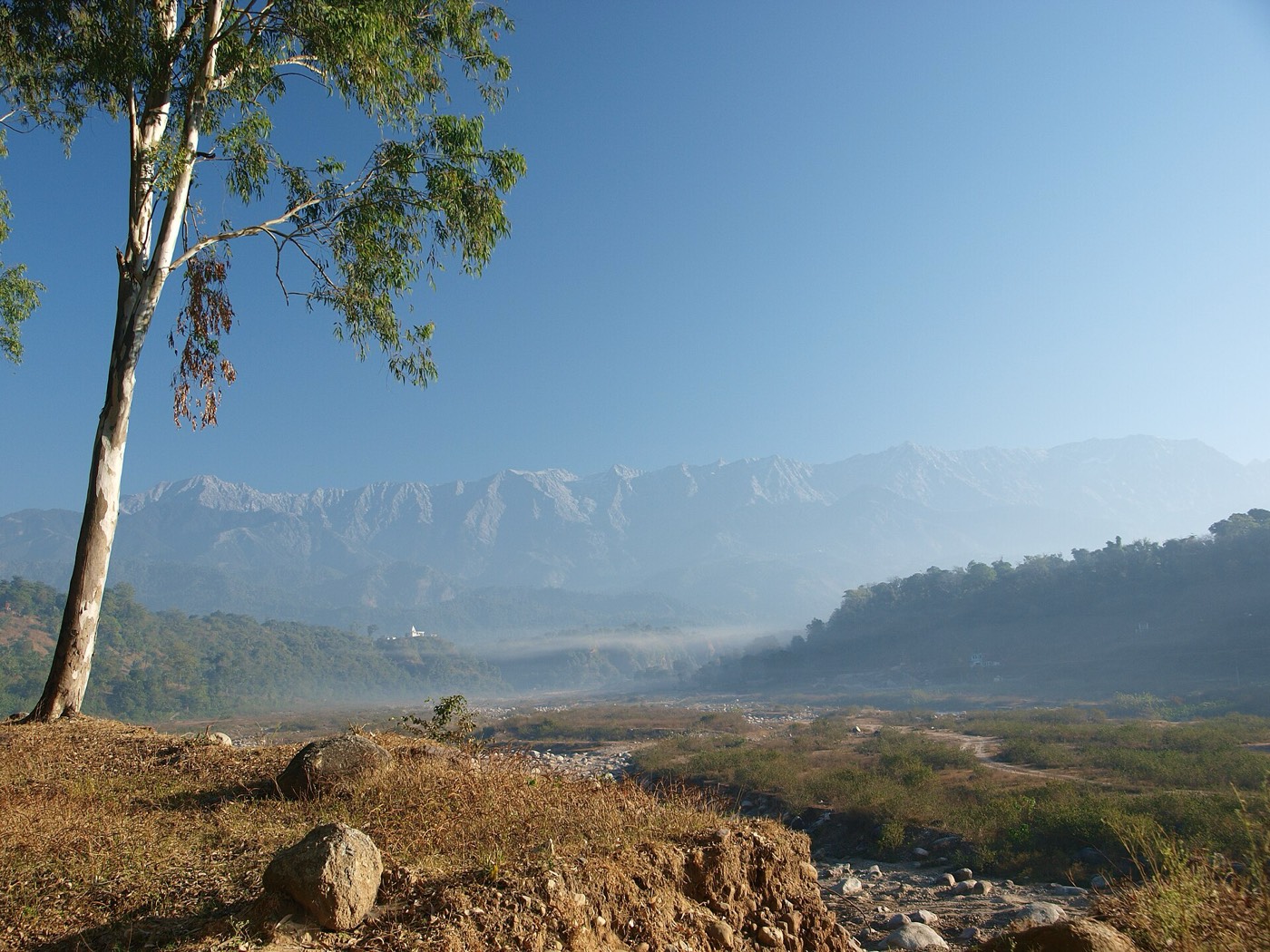
Sharma comes from the Brahmin communities of northern India and the Nepali hills rather than from any single town, valley or ancestor. It is densest in Himachal Pradesh, Uttarakhand, Punjab, Haryana, Uttar Pradesh, Rajasthan and Bihar, and is common across Nepal.
This is the part that most surname pages blur. Sharma is not a lineage. It marks a community, and two people carrying it are usually unrelated.
The śarman Convention
Classical Sanskrit legal and ritual texts prescribed name endings by varna, the fourfold social classification those texts set out. The commentaries on Manusmriti 2.32, quoting the Vyāsa-Smriti, give Śarma as the name ending commended for the Brahmana, Varma for the Kshatriya, Gupta for the Vaishya and Dāsa for the Shudra.
The same commentary explains the choice: the Brahmana’s name should end in Śarma because he imparts śarma, happiness, to the world through religious character, calmness and self-control. The name was conferred with the personal name, traditionally around the upanayana or sacred thread ceremony.
So for most of its history śarman was a suffix on a single man’s name. It died with him. It was not inherited.
From Honorific to Surname
Fixed hereditary surnames became a practical necessity in India comparatively late, under colonial land records, court registers, army lists and the census. Families that had identified themselves by gotra, by village, by priestly office or by scholarly title now needed one stable word for the box.
Large numbers of Brahmin families across north India settled on Sharma, and in many cases it displaced the older gotra-based, village-based or occupational name a household had used for generations. The result is a surname of enormous size and very shallow genealogical depth.
Handled plainly, that is what caste means here as a matter of record: Sharma is associated historically with the Brahmin community, the priestly and scholarly class in the classical varna scheme. It is worth adding what Wikipedia’s own entry on the name notes, that people carrying it today may or may not belong to that community at all.
Sharma is not alone in this. The Patel surname and the Singh surname mark community in the same way, telling you which group a family belonged to and almost nothing about who its ancestors were. A separate tradition reaches a comparable outcome: the Cohen surname names a hereditary priestly status that is transmitted by family tradition rather than by the surname itself, and many kohanim carry unrelated names.
The Gotra Is the Real Lineage
If you carry the Sharma name and want to know where your family actually comes from, the surname will not tell you. The gotra will.
A gotra is a patrilineal clan traced through the male line to one of the ancient Vedic sages: Bharadvaja, Kashyapa, Vashishtha, Gautama, Atri, Jamadagni, Vishvamitra and others. It is the true unit of descent, and traditionally of exogamy, since marriage within the same gotra was prohibited, often extended through shared pravara names and sapinda reckoning. The Hindu Marriage Act of 1955 removed the legal force of the rule, though it retains social weight in parts of rural north India.
Because Sharma was adopted so widely and so late, it cuts across nearly every major gotra. One Sharma family in Uttar Pradesh may be Bharadvaja, another in Himachal Pradesh Kashyapa, a third in Rajasthan Vashishtha. Ask an elder or the family priest for the gotra and the pravara. That is the thread that actually runs backwards.
Spelling Variants and Related Names
In Devanagari the name is written शर्मा. The main romanised variants are Sarma and Sarmah, the latter especially common among Assamese Brahmins, along with Sharmah and the anglicised Sharman.
More important are the names that sit alongside it. Because Sharma was a standardising choice, a single extended family can show several of these across a few generations, and cousins can carry different ones:
- Shastri, from śāstra, marking a man learned in the scriptures.
- Dwivedi, Trivedi, Chaturvedi and the derived Dubey, denoting knowledge of two, three and four Vedas respectively. These are parallel titles rather than variants of one another.
- Pandit and Pandey, from the same root as pundit, a learned man.
- Mishra, Bhatt, Acharya and Upadhyaya, all teaching or priestly designations.
- Bhattacharya, the equivalent scholarly surname among Bengali Brahmins.
In Nepal the name belongs largely to the Bahun or hill Brahmin community of Khas descent, where Sharma sits within the Upadhyaya grouping and is often used interchangeably with Upadhyaya, Acharya, Bhatta and Pandit. Newar Rajopadhyaya Brahmins of the Kathmandu Valley also use it. A Nepali Sharma and an Indian Sharma share a convention, not a family.
The Sharmas in America
Sharmas arrived in the United States chiefly after 1965, when the Immigration and Nationality Act abolished the national origin quotas that had effectively excluded Indians for decades. The new law favoured occupational skills, and in the decade that followed nearly 148,000 Indians came as doctors, engineers, scientists and academics.
That selection shaped everything after. The first Sharmas in America were disproportionately physicians, research chemists and electrical engineers, and they settled near hospitals, laboratories and campuses rather than near ports. A second, larger wave followed in the 1990s and 2000s through the technology industry.
The densest concentration is in central New Jersey, where the Indian community in Edison and neighbouring Iselin, with its Oak Tree Road, form the largest South Asian hub in the country. In Texas, Indian families in Carrollton grew up around the Dallas technology corridor. The Midwest has its own version in the Indian community of Hilliard, Ohio, and in Massachusetts the pattern is academic, with Indian families in Lexington clustered around the Boston research economy.
The 2010 Census recorded how Americans named Sharma described themselves: 90.64 per cent as Asian or Pacific Islander, 3.75 per cent as two or more races, 3.56 per cent as white, 0.86 per cent as Hispanic. Those are self-identification proportions from a single census, not a measure of ancestry, but they show a name that is still overwhelmingly first and second generation.
Notable People Named Sharma
Shankar Dayal Sharma (1918 to 1999) was the ninth President of India, in office from 1992 to 1997, after a long career as a Congress politician, chief minister of Madhya Pradesh and vice president.
Rakesh Sharma (born 1949), an Indian Air Force pilot from Patiala, became the first Indian citizen in space on 3 April 1984, flying aboard Soyuz T-11 to the Salyut 7 station with Soviet cosmonauts Yury Malyshev and Gennady Strekalov.
Shivkumar Sharma (1938 to 2022) was the musician who brought the santoor, a Kashmiri folk instrument, into Hindustani classical music. He gave his first public performance in Bombay in 1955 and spent six decades establishing it on the concert stage.
Akhil Sharma (born 1971) is the Indian American novelist whose Family Life, drawn from his own family’s move from Delhi to New Jersey, won the 2016 International Dublin Literary Award. His first novel, An Obedient Father, won the PEN/Hemingway Award.
Anushka Sharma (born 1988) is one of the most prominent Hindi film actors of her generation and a producer, a reminder of how far the name now travels beyond its priestly origins.
How Common Is Sharma Today?
Sharma ranked 1,236th among American surnames in the 2010 US Census, with 28,559 bearers. In India and Nepal it is one of the most widely borne names of all, an artefact of how many separate families adopted the same standardised word.
| US rank (2010 Census) | #1236 |
|---|---|
| Americans with the name | 28,559 |
| Origin | Indian (Sanskrit) |
| Meaning | From śarman, joy, comfort, shelter or protection |
Frequently Asked Questions
What does the surname Sharma mean?
It comes from the Sanskrit śarman, meaning joyfulness, comfort or happiness, and by extension shelter and protection. It was originally an honorific element attached to a Brahmin man’s personal name rather than an inherited family name.
Is Sharma an Indian or a Nepali surname?
Both, and the two are independent. The convention is Sanskritic and therefore shared, so Brahmin families in northern India and Bahun families in the Nepali hills arrived at the same surname without any common ancestor. Nepali Sharmas often use Upadhyaya, Acharya or Bhatta interchangeably.
Where does the Sharma family come from?
There is no single Sharma family. The name is concentrated in Himachal Pradesh, Uttarakhand, Punjab, Haryana, Uttar Pradesh, Rajasthan, Bihar and Nepal, but it was adopted separately by thousands of unrelated households. Ancestry runs through the gotra, not the surname.
How common is the surname Sharma?
In the United States it ranked 1,236th in the 2010 Census with 28,559 bearers, almost all of them first or second generation. In India and Nepal it is among the most common surnames in the country.
Is there a Sharma family crest or coat of arms?
No. In the heraldic traditions that grant arms, they are granted to individuals and their direct descendants, never to everyone sharing a surname, and Indian Brahmin naming never operated through heraldry at all. Any site selling you a Sharma crest is selling a decoration, not a lineage.
What is my gotra if my surname is Sharma?
The surname cannot tell you. Gotra is inherited separately through the paternal line and traced to a Vedic sage such as Bharadvaja, Kashyapa or Vashishtha, and Sharma families are spread across nearly all of them. Ask an older relative or your family priest, who will usually know both the gotra and the pravara.
If your family carries the Sharma name, its route from the north Indian plains and Himalayan foothills to America is traceable. Atlas of Home can follow it from gotra and village to wherever your family landed, and to wherever you are now.