
The Martinez surname is Spanish, and it means simply “son of Martin”. Behind it stands Martinus, a Roman name built on Mars, god of war, carried across Europe by a saint who cut his cloak in half for a beggar.
What Does the Surname Martinez Mean?
Martinez (properly Martínez, with the stress on the first syllable) is a Spanish patronymic meaning “son of Martín”. The personal name Martín comes from Latin Martinus, a derivative of Mars, the Roman god of war and fertility.
That is the whole etymology, and it is unusually clean for a surname this common. There is no lost village, no forgotten trade, no nickname to decode. Somewhere in medieval Spain a man called Martín had sons, and the sons were known by their father.
What needs explaining is not Martín but the ending. The -ez suffix is the engine of Spanish surnames: Rodríguez from Rodrigo, González from Gonzalo, Fernández from Fernando, and Martínez from Martín. Its own origin is genuinely disputed among linguists, with competing cases made for an old Basque possessive, a Visigothic Germanic genitive, and a worn-down Latin genitive form. We set out the argument in full on the Rodriguez surname page, so we will not repeat it here.
The reason Martín was so abundant a father’s name is the saint. Martin of Tours, a fourth-century Roman soldier in Gaul who became a bishop and a legend, was among the most venerated saints in medieval Christendom. Churches, feast days and boys across the continent took his name, and wherever a naming system turned fathers into surnames, a crop of Martin-names followed.
Where the Martinez Name Comes From
Martínez is a Castilian Spanish surname, formed in the Christian kingdoms of northern and central Iberia between roughly the tenth and thirteenth centuries, and carried south and then overseas from there.
The Spanish heartland
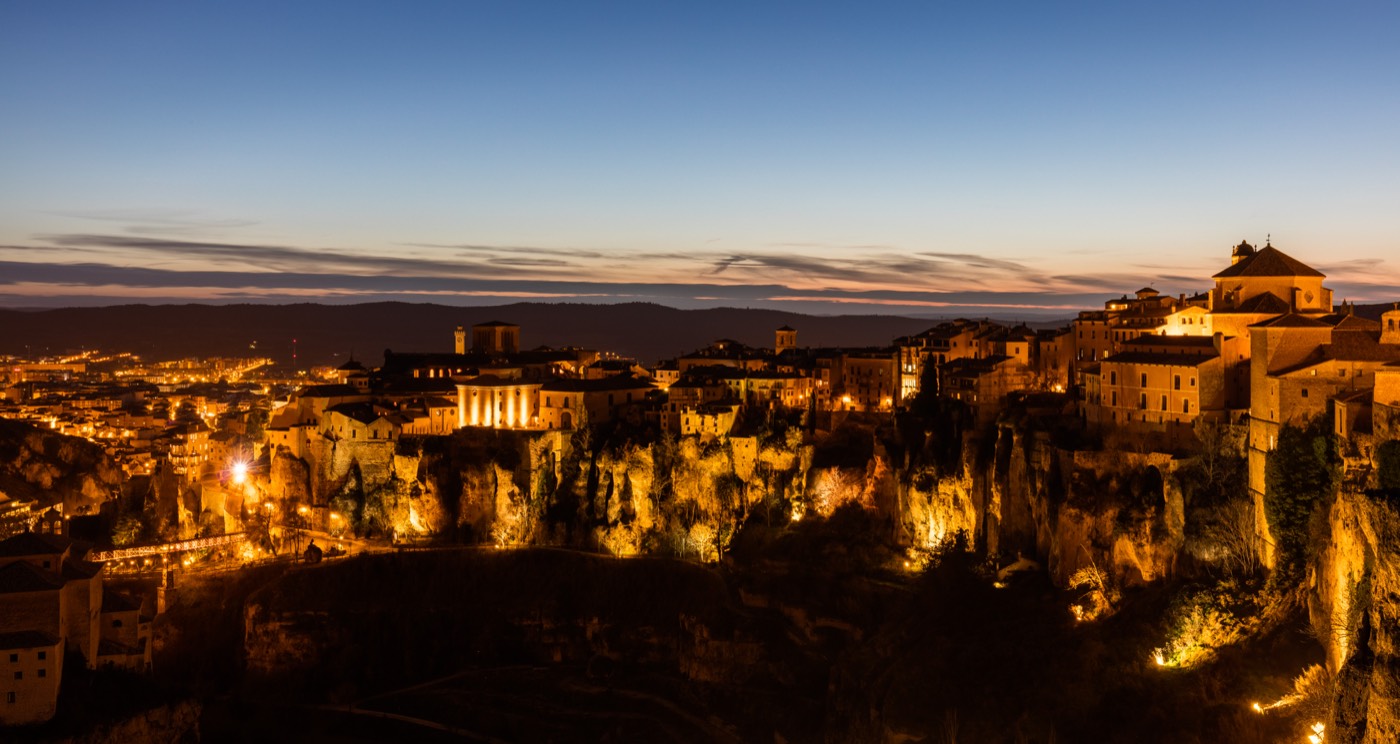
Fixed hereditary surnames took hold in Iberia gradually, and patronymics were the first form most families settled into. Today Martínez is among the half-dozen most frequent surnames in Spain and is the single most common surname in Navarre, La Rioja, Cuenca and Murcia. That spread, an arc running from the Basque and Navarrese north down through New Castile to the Mediterranean southeast, is the old Castilian expansion drawn in surnames.
The Atlantic crossing
From 1492 onward the name went where Spain went: to Mexico and Peru, to the Caribbean, to Central America and the Southern Cone, and to the Philippines. Colonial Spanish America was not settled by a cross-section of Spain but by particular regions in particular decades, and Martínez travelled in every one of those waves. It is now a top-ten surname in Mexico, Argentina, Cuba, Venezuela, Colombia and the Dominican Republic.
A note on the record
You will find crest sites offering a Martínez knight at some improbably early battle. Treat those stories carefully. With a name this common there is no single founding family and no single line of descent, only thousands of unconnected households who each independently had a father called Martín.
Spelling Variants and Related Names
The main variants are Martínez, Martinez without the accent, and Martines with an s. American records lost the accent almost immediately, because clerks, typewriters and forms had no use for it.
The Martines spelling is worth understanding, because it is not a mistake. Medieval Iberian scribes wrote both -ez and -es, and the two settled differently in different places. Portuguese standardised on -es, Spanish on -ez, and a good number of Spanish families in the Americas held onto the s form for generations. The same split is why Gonzales and González are both everywhere in the United States.
Then there is the wider family. Portuguese gives Martins, one of the most common surnames in Portugal and Brazil, and Catalan gives Martí, along with Martorell nearby. Look beyond Iberia and the same saint produces one of the largest surname cousinhoods in Europe: Martin in France, England and Scotland, Martini and Martinelli in Italy, Martens and Maartens in the Low Countries, Mortensen in Denmark, Martinsson in Sweden, Marton in Hungary, and Martinov, Martinović and Martinenko across the Slavic world. None of these families are related to each other. They simply all named a son after the same saint.
One further branch belongs in the record. Martínez appears in Spanish Inquisition files among converso families, Jews compelled to convert in the fifteenth century, and it circulates today on lists of “Sephardic surnames”. Those lists are unreliable as evidence. Scholars have shown that the great majority of converso families took ordinary Spanish Christian names, so a name as common as Martínez tells you nothing on its own. Some Martínez families are of Sephardi descent. Documents, not the surname, are what show it.
The Martinezes in America
Martinez arrived in North America in two very different ways: with the Spanish colonial frontier itself, and with a century and a half of migration from Mexico, the Caribbean and Latin America.
The oldest strand is the smallest and the deepest. When Juan de Oñate led colonists up the Rio Grande into New Mexico in 1598, among them were brothers of the Martín Serrano family. Over generations in the Chama and Taos valleys their name drifted from Martín to los Martínes and finally to Martínez. Their descendants include Padre Antonio José Martínez of Taos, and their house still stands as the Hacienda de los Martínez. Those families were in North America a generation before the Mayflower and have never left.
The far larger strand is Mexican. Migration north across the border grew through the railroad and mining decades, surged during the Mexican Revolution after 1910, was industrialised by the bracero programme from 1942, and has continued ever since. It built the Tejano communities of San Antonio and above all the West Side barrios, the border neighbourhoods of El Paso’s Segundo Barrio, the orchard and cannery towns of California such as Santa Ana, and the auto-plant colonias of the Midwest, including Mexicantown in Detroit.
The Caribbean strands came later and by different routes. Puerto Rican Martínez families moved as US citizens into the wartime and postwar northeast, filling North Philadelphia and the barrios of New York and New England. Cuban Martínez families arrived in the exile waves after 1959 and made Hialeah one of the most Cuban cities in the world. Dominican Martínez families followed from the 1960s, concentrating in Washington Heights, and Salvadoran, Guatemalan, Honduran, Colombian and Venezuelan Martínez households have joined them since. The name is the same. The journeys are not remotely the same, and the same is true of Garcia, its near neighbour in every American count.
Notable People Named Martinez
Antonio José Martínez (1793 to 1867), priest of Taos, opened New Mexico’s first coeducational school in 1826 and ran the territory’s first printing press from 1836.
Vilma Martínez (born 1943), Texas-born lawyer, led the Mexican American Legal Defense and Educational Fund through the 1970s and later served as US ambassador to Argentina.
Mel Martínez (born 1946), sent alone from Cuba to Florida as a boy in Operation Pedro Pan, became the first Cuban-born United States senator in 2005.
Conchita Martínez (born 1972), from Aragón, won Wimbledon in 1994, the first Spanish woman to do so.
Pedro Martínez (born 1971), from Manoguayabo in the Dominican Republic, was elected to the Baseball Hall of Fame in 2015.
Susana Martínez (born 1959), a prosecutor from Las Cruces, became governor of New Mexico in 2011 and the first Latina governor in American history.
How Common Is Martinez Today?
Martinez is the tenth most common surname in the United States, shared by 1,060,159 people at the 2010 census. It is one of only a handful of Spanish-origin names in the American top ten.
| US rank (2010 Census) | #10 |
|---|---|
| Americans with the name | 1,060,159 |
| Origin | Spanish |
| Meaning | Son of Martín |
The census also records how bearers described themselves. In 2010, 92.91 per cent of American Martinezes identified as Hispanic, 5.28 per cent as white, 0.60 per cent as Asian or Pacific Islander, 0.51 per cent as American Indian or Alaska Native, 0.49 per cent as Black and 0.22 per cent as two or more races. These are self-identification figures, not measures of ancestry, but that American Indian share is notably high for a top-ten surname, and it points straight back to the old New Mexican and Southwestern families.
Frequently Asked Questions
What does the surname Martinez mean?
It means “son of Martín”. Martín comes from Latin Martinus, a name derived from Mars, the Roman god of war, and the -ez ending is the Spanish patronymic suffix meaning “son of”.
Is Martinez Spanish or Mexican?
The name is Spanish. Mexico is where most American Martinez families came from, not where the name began. Martínez formed in medieval Castile and reached Mexico, Cuba, Puerto Rico and the rest of the Americas with Spanish colonisation after 1492.
Where does the Martinez family come from?
There is no single Martínez family. The name arose independently in many households across Christian Spain, and is most concentrated in Navarre, La Rioja, Cuenca and Murcia, where it is the commonest surname of all.
How common is the surname Martinez?
Very. It is the tenth most common surname in the United States with 1,060,159 bearers, sits in the top ten in Spain, Mexico, Argentina, Cuba and several other countries, and is among the most widespread surnames in the Spanish-speaking world.
Is there a Martinez family crest or coat of arms?
No. In every European heraldic tradition, arms are granted to an individual and pass to that person’s direct descendants, never to everyone who happens to share a surname. Particular Martínez individuals were granted arms; “the Martínez coat of arms” does not exist. Sites selling you one are selling a decoration, not a lineage.
Is Martinez related to the surname Martin?
They share a root, not a family. Martin, Martins, Martí, Martini, Martens, Mortensen and Martinov all descend from the same Latin Martinus and the same fourth-century saint. Bearers of these names are almost never related to one another.
If your family carries the Martinez name, its route from Spain to America is traceable. Atlas of Home can follow it from the Castilian villages where Martín first became Martínez to wherever your family landed, and to wherever you are now.
Further reading: the Martínez surname and Martin of Tours on Wikipedia.