
The Sato surname is written 佐藤 and means, roughly, “the Fujiwara of Sa”. It is the most common family name in Japan, and its story begins in the province of Shimotsuke, in what is now Tochigi Prefecture.
What Does the Surname Sato Mean?
Sato (佐藤) is a compound of two characters: 佐 (sa), which carries the sense of helping or assisting, and 藤 (tō), the character for wisteria, taken directly from the clan name Fujiwara (藤原). The name therefore means something close to “the Fujiwara of Sa”.
That second character is the important one. 藤 is read fuji on its own and tō in compounds, softening to dō after certain sounds. Wherever you see a Japanese surname ending in -to or -do, that character is very often the reason.
The first character is where the sources part company. One well established explanation reads 佐 as a shortening of Sano (佐野), a district of Shimotsuke, giving “the Fujiwara of Sano”. Another reads it as an office rather than a place: under the Ritsuryō code, 佐 stood for suke, the assistant governor of a province, and a related account points to the post of saemon-no-jō (左衛門尉) in the palace guard.
Reference works generally lead with Sano and note the office theory alongside it. The plainest honest answer is that Sato means “Fujiwara of Sa”, and that scholars still argue about what Sa stood for.
Where the Sato Name Comes From
The Sato name comes from Shimotsuke Province, now Tochigi Prefecture in northern Kantō, and specifically from the Sano district, where a branch of the northern Fujiwara settled in the tenth century.
Fujiwara no Hidesato and Shimotsuke
The figure at the root of the tradition is Fujiwara no Hidesato, a warrior of the tenth century who helped suppress the rebellion of Taira no Masakado in 940 and was rewarded with authority in Shimotsuke. Folklore knows him as Tawara Tōda, the man who killed a monstrous centipede.
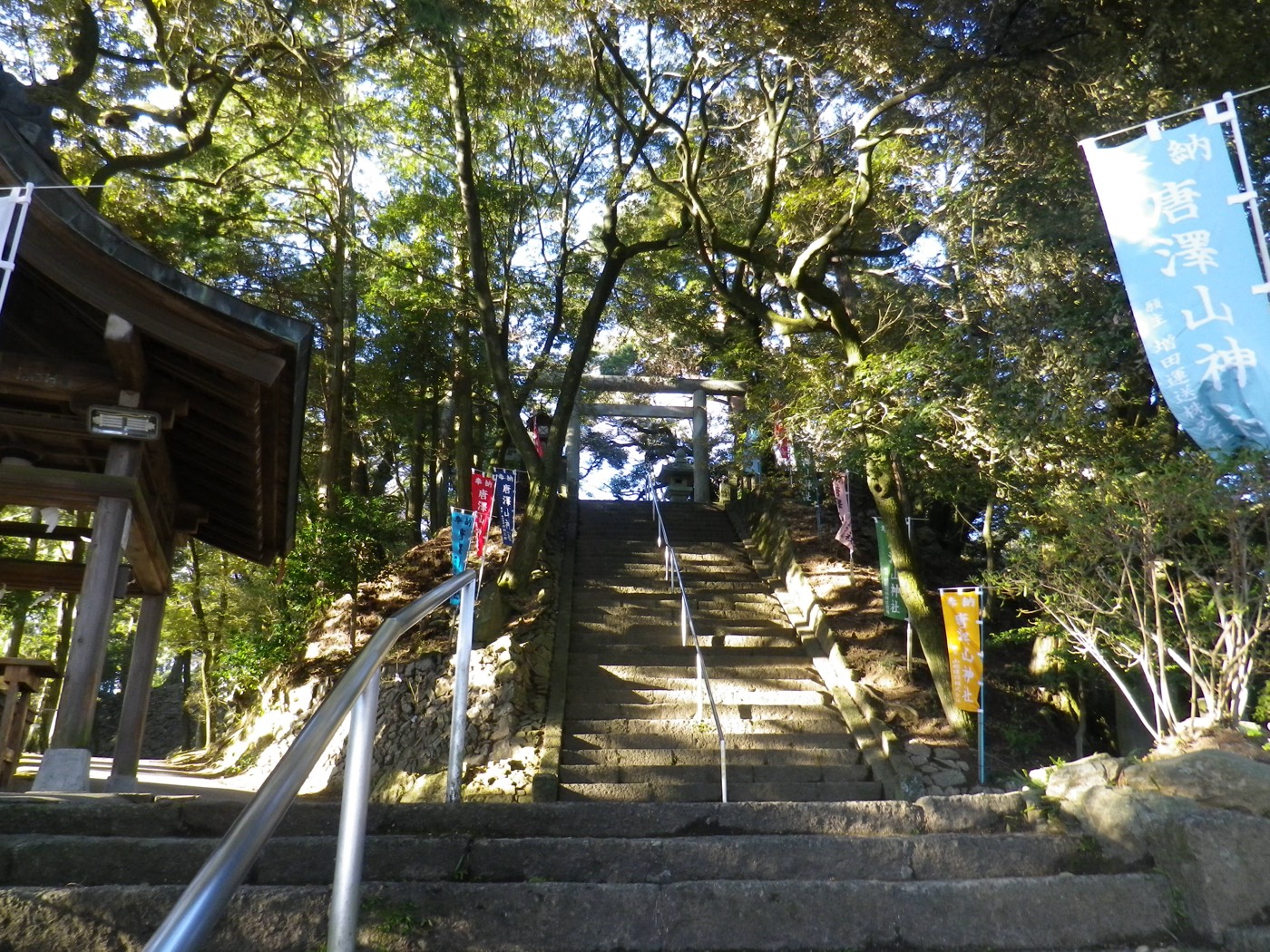
Hidesato’s descendants held Karasawayama Castle above Sano for five generations. The castle site now carries a shrine dedicated to him. By tradition it was his grandson Kinkiyo, holder of the saemon-no-jō post, who first wrote his name as 佐藤.
The wisteria names: the -to and -do family
Sato is not a lone case. The Fujiwara were vast, and their branches distinguished themselves by keeping the wisteria character and prefixing it with a province, an office or a trait.
Itō (伊藤) is the Fujiwara of Ise. Katō (加藤) is the Fujiwara of Kaga. Endō (遠藤) is the “far” Fujiwara, of Tōtōmi. Mutō (武藤) is the warrior Fujiwara, associated with Musashi. Kudō (工藤) carries the character for artisan and belongs to the Southern House of the clan, based in Izu. Saitō (斎藤) points to the office of saigū-no-kami. Gotō, Andō, Bitō, Naitō, Kondō, Sudō and Shindō belong to the same family of formations.
Something like one in ten of Japan’s hundred commonest surnames carries that wisteria character. If your name ends in -to or -do, you may well share a naming pattern with several million other people.
North into Tohoku
The name travelled north. The Ōshū Fujiwara ruled the far north from Hiraizumi in the twelfth century, and Sato lines took root across the region, the Shinobu Satō of what is now Fukushima among them.
That history still shows in the map. Sato is the leading surname in nine prefectures, among them Hokkaidō, Iwate, Miyagi, Akita, Yamagata, Niigata and Fukushima, with Ōita and Tokushima outliers in the south. In Akita and Yamagata it is carried by roughly seven per cent of the population, where a prefecture’s top name usually accounts for one to three.
One caution matters here, and most pages skip it. Japan’s commoners were compelled to register surnames by the Heimin Myōji Hitsusho Girei of 1875, a law covered in detail on our pages for the Tanaka surname and the Nakamura surname. Families choosing a name in that decade often reached for one already common and prestigious in their district. In Tohoku, that name was Sato.
So the fact that Sato is Japan’s commonest surname is not evidence that its bearers descend from the Fujiwara. Many do. Many others simply adopted a good local name in 1875. Adoption is not descent, and no honest page should blur the two.
Spelling Variants and Related Names
In Japanese the name is almost always written 佐藤, but in the Latin alphabet it appears as Sato, Satō, Satou, Satoh and Satow. All five are the same name, and the difference is entirely about how to write one long vowel.
Strict Hepburn marks that vowel with a macron. Word processors and email addresses tend to render it as Satou, following the kana. Passport Hepburn, which Japan’s foreign ministry permits, writes it Satoh. Satow is an older convention that survives in families who romanised the name generations ago.
For anyone tracing an American line, that variability is a real obstacle. Macrons do not survive US paperwork, so Satō becomes Sato. A family may appear as Sato on one census sheet, Satow on a naturalisation record and Satoh on a passenger list, and an index that alphabetises strictly will scatter them. Search every spelling before concluding a record does not exist.
The related names are the wisteria surnames above: Itō, Katō, Saitō, Endō, Kudō, Gotō, Mutō, Andō and Bitō. They are cousins of Sato in construction, whatever the biology.
The Satos in America
Sato arrived with Japanese labour migration, beginning with the Gannenmono who reached Hawai’i in 1868 and accelerating after 1885, when contract workers came in numbers to the sugar plantations.
Mainland migration followed in the 1890s and 1900s, into California, Oregon and Washington, and into farming above all. The Gentlemen’s Agreement of 1907 curtailed male labour migration but allowed wives, and the picture bride era carried the name into a second generation before the Immigration Act of 1924 closed the door.
Then came 1942 and mass incarceration, which uprooted almost every Sato family on the West Coast. That history is told at length on our page for the Yamamoto surname and across our neighbourhood histories, and it is the hinge on which most Japanese American family stories turn.
The Satos who returned rebuilt in particular places. You will find them in the storefronts and Buddhist temples of Little Tokyo in Los Angeles, in the nurseries and family businesses of Gardena and neighbouring Torrance, along the old commercial strip of Sawtelle, and later, with the postwar corporate and technical migration, in Bellevue, Washington and Cupertino, California.
The 2010 US Census recorded how Sato bearers identified themselves, and the spread is worth reading carefully. It captures self-identification in 2010, not ancestry: 73.54 per cent Asian or Pacific Islander, 9.12 per cent white, 8.77 per cent two or more races, 7.36 per cent Hispanic and 1.07 per cent Black. The Hispanic share is not a rounding error. It very likely reflects the Japanese communities of Peru and Brazil, whose descendants have moved north in numbers.
Notable People Named Sato
Saigyō (1118 to 1190). Born Satō Norikiyo, a palace guard to Emperor Toba who abandoned the court in his twenties to become a wandering monk. He is one of the supreme poets of the Japanese tanka, heavily represented in the Shin Kokinshū.
Eisaku Satō (1901 to 1975). Prime Minister of Japan from 1964 to 1972, the longest continuous tenure of the postwar era, and joint recipient of the 1974 Nobel Peace Prize for his non-nuclear policy and Japan’s signature on the Non-Proliferation Treaty.
Masao Satow (1908 to 1976). Nisei leader who served as national director of the Japanese American Citizens League for 27 years from 1946, growing it from 28 chapters to more than 90. The JACL headquarters in San Francisco is named for him.
Mikio Sato (1928 to 2023). Mathematician, founder of algebraic analysis and the theory of hyperfunctions, and winner of the Wolf Prize in 2003.
Takuma Sato (born 1977). Racing driver, winner of the Indianapolis 500 in 2017 and again in 2020, the first Japanese driver to take the race.
How Common Is Sato Today?
Sato ranks 4,956th among US surnames, carried by 7,095 Americans at the 2010 Census. In Japan it is first, held by roughly two million people, ahead of Suzuki and Takahashi.
| US rank (2010 Census) | #4,956 |
|---|---|
| Americans with the name | 7,095 |
| Origin | Japanese (佐藤) |
| Meaning | “Fujiwara of Sa”, from 佐 (assist, or Sano) and 藤 (wisteria, from Fujiwara) |
Frequently Asked Questions
What does the surname Sato mean?
Sato (佐藤) means “the Fujiwara of Sa”. The 藤 character is wisteria, borrowed from the Fujiwara clan name, and 佐 is read either as the Sano district of Shimotsuke or as the office of suke, an assistant provincial governor.
Is Sato a Japanese surname or could it be Spanish?
Sato is Japanese, written 佐藤. The 7.36 per cent of American Sato bearers who identified as Hispanic in 2010 most likely reflect the large Japanese communities of Peru and Brazil rather than a separate Iberian origin.
Where does the Sato family come from?
The name originates in Shimotsuke Province, now Tochigi Prefecture, and specifically the Sano district, where descendants of Fujiwara no Hidesato settled in the tenth century. Today the name is densest in Tohoku, above all in Akita and Yamagata.
How common is the surname Sato?
Sato is the most common surname in Japan, borne by around two million people, and leads in nine prefectures. In the United States it ranked 4,956th at the 2010 Census, with 7,095 bearers.
Is there a Sato family crest or coat of arms?
No. There is no crest belonging to everyone named Sato. Japanese families used kamon, and Fujiwara-derived lines often used a wisteria design, but a kamon belonged to a specific household, not to a surname. In European heraldry arms are granted to individuals and their direct descendants, never to a name. Anyone selling you a “Sato family crest” is selling a decoration.
Does being named Sato mean I descend from the Fujiwara?
Not necessarily. Many Sato lines do descend from Fujiwara branches, but when the 1875 registration law required all commoners to take a surname, huge numbers of families adopted the commonest respectable name in their district. Adoption is not descent.
If your family carries the Sato name, its route from Japan to America is traceable. Atlas of Home can follow it from Shimotsuke and the villages of Tohoku to wherever your family landed, and to wherever you are now.