
The Pace surname means peace, and it arrived at that meaning twice: once in medieval Italy, from the word pace, and once in England, by a route that runs through Easter rather than through peacemaking.
What Does the Surname Pace Mean?
Pace means peace. The Italian Pace comes directly from pace, from the Latin pax, and began life as a medieval given name given to boys and girls alike. The English Pace has two possible sources, both Latin at the root.
In Italy the name was hopeful rather than descriptive. Parents named a child Pace as a wish, or because the child was born in a season of truce, and by the thirteenth century it had hardened into a hereditary surname across Tuscany, Umbria, Lazio and the south. It could also be a nickname for a mild man, or for the one in a village who settled disputes.
The English Pace is different underneath. One strand comes from Middle English pais, from Old French, meaning peace or concord, again a nickname. The other, and the more interesting one, comes from Middle English pasche, meaning Easter or Passover, from Latin pascha and ultimately from Hebrew pesach. A child born at Easter might be called Pace, and the name stuck.
So an English Pace and an Italian Pace can share a spelling without sharing a word. Peace and Passover are not the same root. They are two separate Latin borrowings worn down to the same four letters, a coincidence of erosion rather than a common ancestor. The Sherman surname shows the same pattern from another angle: one spelling, more than one origin, no single family behind it.
Where the Pace Name Comes From
There is no single homeland. Italian Paces are concentrated in Sicily and the southern mainland, English Paces are oldest in the south of England, and in Malta Pace is one of the commonest surnames on the islands. Each strand is genuinely independent.
Sicily and the Italian South
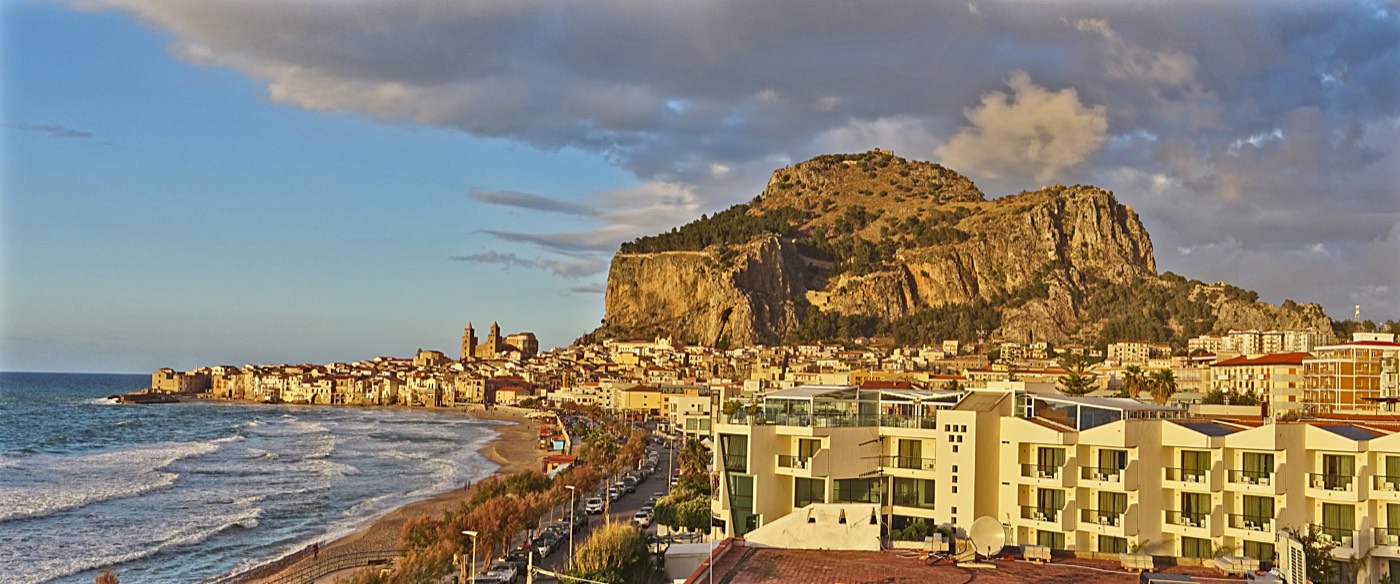
Pace is recorded in every Italian region but is most prevalent in Sicily, where families of the name held feudal estates. It is embedded in the map, too: Pace del Mela sits in the province of Messina, on the Tyrrhenian coast between Milazzo and the strait.
It is also common in Puglia, Campania and Calabria, which matters for American genealogy: those are the provinces that emptied westward after 1880.
Malta and the Arabic Layer
Malta is where the Pace story gets genuinely unusual. Some Maltese Pace families descend from Sicilian and Italian settlers who arrived with the surname already formed. Others do not.
The historian Godfrey Wettinger, working through late medieval Maltese records, identified Arabic surnames including Salam, Salāma and Salma that were translated rather than transliterated when Maltese families were Christianised and their names Latinised. Arabic salām means peace. Its Romance equivalent is Pace. The same root survives openly in Selmun, a place name near St Paul’s Bay.
So a Maltese Pace family may descend from Italian incomers, or from Arabic-speaking islanders whose name was carried into a new language by meaning alone. The surname will not tell you which, and no honest page should claim otherwise. Wettinger’s work is available through the University of Malta’s open access repository.
England and the Easter Name
The English Pace is thinner on the ground but older in the records, appearing across Hampshire, Kent, Essex and the eastern counties from the medieval period. The Easter word survives in the Pace Egg plays still performed in parts of Lancashire and Yorkshire.
Spelling Variants and Related Names
The English Easter strand produced Pash, Paish, Payse, Pask, Paske, Paschal and Pascall. The peace strand overlaps with Peace, which is the same idea spelled the modern way. Pacey and Pacy look related but are usually not: they are Norman locative names from Pacy in France.
On the Italian side, Pace heads a large family of derivatives. Paci is the plural or patronymic form. Pacelli, borne by Eugenio Pacelli before he became Pope Pius XII, and Pacini, borne by the Sicilian-born opera composer Giovanni Pacini, are diminutives on the same stem, as are Pacetti and Pacello.
Across the wider Romance world the meaning travels intact. French Paix, Spanish and Portuguese Paz and the Latin Pax carry the same word, though a Paz family is not a Pace family renamed. They are parallel formations from shared vocabulary, not branches of one tree.
The Paces in America
American Paces arrive in two separate waves, roughly two and a half centuries apart, and a third group took the name in America itself. Which one your family belongs to usually depends on the state, not the spelling.
The English Paces came first, and very early. Richard Pace held a plantation called Pace’s Paines in what is now Surry County, Virginia, across the James River from Jamestown. In March 1622 a Powhatan man working on his land warned him of the coming attack, and Pace rowed over to raise the alarm. The messenger’s name went unrecorded; the later attribution to a man called Chanco is doubted by historians.
From tidewater Virginia the English Paces spread down the Piedmont into North Carolina, Georgia, Tennessee, Alabama and Mississippi, a footprint still visible in the census.
It also explains the second American strand. In the 2010 Census, 78.26 percent of people named Pace identified as White and 16.49 percent as Black or African American, with 2.35 percent identifying as Hispanic and 1.71 percent as two or more races. Those are self-identification proportions recorded in a single census, not a measure of anyone’s descent. But a share that size, on a name concentrated in the plantation South, points to the same process that shaped many southern surnames: after emancipation, freed families chose or kept names already circulating in the counties where they lived. Black Pace families are documented across Georgia, Alabama and the Gullah Geechee lowcountry of South Carolina, and one of them produced Harry Pace, who left Covington, Georgia for Harlem during the Great Migration and founded the first Black-owned record label in the United States.
The Italian Paces came last and fastest. Between 1880 and 1924 Sicilians and southern mainlanders left in enormous numbers, and Pace families landed with them. New Orleans took Sicilians directly, decades before Ellis Island opened, and the Sicilian community in New Orleans remains one of the oldest in the country. Galveston served as the other southern gateway, which is part of why Texas now holds more Paces than any other state. Others went to the mills, and Pace turns up in the parish registers of steel towns like Youngstown, Ohio. The same routes carried the Russo surname and most other southern Italian names.
Maltese Paces followed a narrower path, above all to the car plants: the Maltese community in Detroit is the largest in North America.
Notable People Named Pace
Richard Pace (c. 1482 to 1536) was an English diplomat and humanist, secretary to Cardinal Wolsey, Dean of St Paul’s from 1519 and a correspondent of Erasmus and Thomas More.
Carmelo Pace (1906 to 1993) was Malta’s leading twentieth century composer, writing four operas and hundreds of chamber works while teaching theory in Valletta.
Harry Pace (1884 to 1943) founded Black Swan Records in Harlem in 1921, the first Black-owned and Black-operated record company in America. It recorded Ethel Waters and Fletcher Henderson before folding in 1923.
José Carlos Pace (1944 to 1977) was a Brazilian Formula One driver who won his home Grand Prix in 1975. The Interlagos circuit in São Paulo now bears his name.
Peter Pace (born 1945) served as Chairman of the Joint Chiefs of Staff from 2005 to 2007, the first Marine to hold the post.
Orlando Pace (born 1975) was a seven-time Pro Bowl offensive tackle for the St Louis Rams, elected to the Pro Football Hall of Fame in 2016.
How Common Is Pace Today?
Pace ranked 868th in the 2010 United States Census, with 39,879 Americans carrying the name. It is far more common per head in Malta, where it sits among the most frequent surnames on the islands, and it is found throughout Italy with its centre of gravity in Sicily.
| US rank (2010 Census) | #868 |
|---|---|
| Americans with the name | 39,879 |
| Origin | Italian, English and Maltese |
| Meaning | Peace, or born at Easter |
Frequently Asked Questions
What does the surname Pace mean?
It means peace. The Italian Pace comes from pace, from Latin pax, used as a medieval given name and a nickname. The English Pace comes either from Middle English pais, peace, or from pasche, Easter.
Is Pace Italian or English?
Both, and Maltese too. These are independent origins, not one name that migrated. In America the Italian strand is the most recent, arriving mainly between 1880 and 1924, while the English strand has been in Virginia since the 1620s.
Where does the Pace family come from?
There is no single Pace family. Italian Paces are concentrated in Sicily, Puglia, Campania and Calabria. English Paces are oldest in Hampshire, Kent and the eastern counties. Maltese Paces are spread across the islands.
How common is the surname Pace?
Pace is the 868th most common surname in the United States, held by 39,879 people at the 2010 Census. In Malta it is proportionally far more common, and in Italy it is most frequent in Sicily.
Is there a Pace family crest or coat of arms?
No. In English, Italian and Maltese heraldry alike, arms are granted to individuals and pass to their direct descendants, never to everyone sharing a surname. Given that Pace has at least three unrelated origins, a single Pace crest is impossible in principle. Sites selling one are selling a decoration, not a lineage.
Why is Pace such a common Maltese surname?
Partly through Sicilian and Italian settlement, partly through translation. Godfrey Wettinger showed that Arabic surnames from the root salām, meaning peace, were rendered as their Romance equivalent Pace when Maltese families were Christianised in the late Middle Ages.
If your family carries the Pace name, its route from Sicily, Malta or the English shires to America is traceable. Atlas of Home can follow it from a Sicilian parish register or a Maltese village to wherever your family landed, and to wherever you are now.