
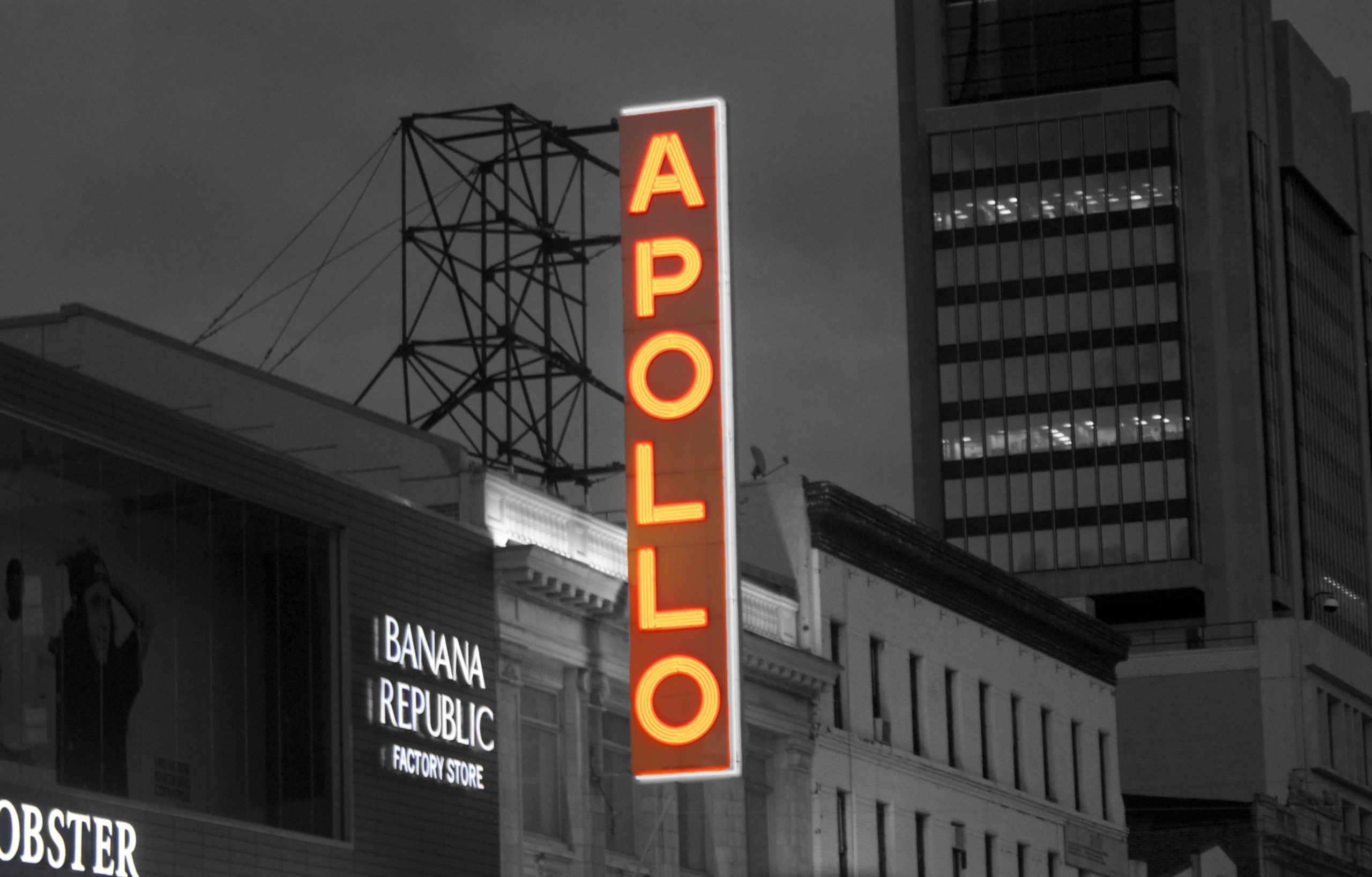
It became the capital of Black America almost by accident. Harlem was built as a white middle-class suburb, all new brownstones and elevated trains, and then the bottom fell out of the property market. Into the empty buildings, beginning around 1905 and surging through the 1920s, came hundreds of thousands of Black Southerners stepping off the trains at Penn Station with cardboard suitcases and the names of cousins written on scraps of paper. The Great Migration in Harlem turned a few square blocks of upper Manhattan into the most famous Black neighbourhood on earth.
Harlem: The Place
Harlem sits at the top of Manhattan, roughly from 110th Street up past 155th, bordered by the Hudson and Harlem rivers and the green ridge of Morningside and St. Nicholas parks. The Lenox Avenue subway, which opened in 1904, was supposed to fill the new apartment houses with commuters. The housing was good: wide avenues, four and five storey rowhouses, ornamented limestone fronts meant for clerks and managers.
The crossroads of it all became 135th Street and Lenox Avenue. That corner, and the wide stretch of 125th Street to the south, would carry the weight of a whole people remaking themselves in a Northern city.
How Harlem Became the Capital of Black America
Before the Migration
Harlem in 1900 was white, and meant to stay that way. Developers had overbuilt during the subway boom, betting that the new lines would draw middle-class families uptown. When the speculative bubble burst around 1904, landlords were left holding rows of empty apartments and mounting debts.
Manhattan’s Black population, meanwhile, was crowded into the Tenderloin and San Juan Hill districts further downtown, pushed around by redevelopment and rising rents. There were empty homes uptown and people who needed them. What was missing was anyone willing to break the colour line.
The Migrants Arrive
The man who opened the door was Philip A. Payton Jr. In 1904 he founded the Afro-American Realty Company, pitching Black investors with a blunt promise: “The very prejudice that has heretofore worked against us can be turned and used to our profit.” When white landlords could not fill a building, Payton leased it and filled it with Black tenants.
It worked block by block. The entire street at 13 West 131st Street had been white in 1900. By the 1915 state census it was almost entirely Black. By 1914 one magazine reckoned three-quarters of the city’s Black population lived in Harlem and called Payton “the father of his Negro community”. He earned the title that stuck: the Father of Harlem.
Then came the larger wave. Between 1910 and 1930 roughly 1.3 million Black Southerners moved north, and New York’s Black population jumped by 65 percent in a single decade. They left Georgia, South Carolina, Virginia, and the Carolinas because the boll weevil was eating the cotton, because Jim Crow law had hardened into daily humiliation, and because the threat of the lynch mob was real. The North had factories, wages, and the simple dignity of a sidewalk you did not have to step off.
Harlem at Its Peak
By the 1920s Harlem was not just a neighbourhood. It was a movement. The Harlem Renaissance gave the world Langston Hughes, who wrote the jazz and ache of the streets into poetry, and Zora Neale Hurston, who arrived from the South and turned its voices into literature. The Savoy Ballroom opened in 1927 with two bandstands and dancing past midnight. Duke Ellington, Bessie Smith, and Fats Waller played the clubs.
The migration also brought politics. Marcus Garvey ran his Universal Negro Improvement Association from West 135th Street, and in August 1920 packed Liberty Hall on West 138th Street for the First International Convention of the Negro Peoples of the World. Garvey’s parades filled the avenues, his message of Black pride and self-determination electric to people one generation out of the cotton fields.
Daily life ran on chain migration and improvisation. One cousin came up, found a room, then sent for the next. When rent came due, families threw rent parties: a few cents at the door, a piano player, fried fish in the kitchen, and the money to keep the landlord away for another month. It was Southern hospitality rebuilt five flights up in a Northern winter, the same instinct that shaped the Black Southern community that built Bronzeville on Chicago’s South Side.
The Change
A second migration wave came in the 1940s, swelling Harlem again as wartime industry pulled more families north. But the neighbourhood was already overcrowded and underinvested. Landlords carved apartments into ever smaller rooms, and the rents stayed high while the buildings decayed.
From the early 1940s through the late 1980s, Central Harlem stayed more than 90 percent Black. The postwar decades brought hard times, then renewal, then the long slow churn of a city always reinventing itself. The institutions held even as the economy did not.
The Landmarks of Great Migration Harlem
The Apollo Theater, 253 West 125th Street. Reopened to Black audiences on 26 January 1934 with a revue headlined by Benny Carter, the Apollo and its Amateur Night launched Ella Fitzgerald and countless others. It remains the spiritual stage of Black American performance.
Abyssinian Baptist Church, 132 West 138th Street. Founded downtown in 1808, the congregation followed its people uptown. Under Adam Clayton Powell Sr. it opened its Tudor Gothic Harlem home in 1923, paid for entirely by member tithes with no white donors. It grew into the largest Black church in the country.
The Schomburg Center, 515 Malcolm X Boulevard. The Division of Negro Literature, History and Prints opened at the 135th Street branch library in 1925. In 1926 the New York Public Library bought the personal collection of Arturo Schomburg, a Puerto Rican-born Black bibliophile, seeding what is now the world’s great research library of Black history.
Strivers’ Row, West 138th and 139th Streets. Built in 1891 as the King Model Houses and designed in part by Stanford White, these elegant rows sat empty until they were sold to Black buyers around 1919 for $8,000 each. They drew the upwardly mobile, the “strivers”, who gave the block its name.
Sylvia’s, 328 Malcolm X Boulevard. Sylvia Woods came up from Hemingway, South Carolina, waited tables at a Harlem luncheonette, and bought it in 1962 for $20,000. New York magazine crowned her “the queen of soul food” in 1979. Sylvia’s is chain migration on a plate: Lowcountry cooking carried north and served on Lenox Avenue for more than sixty years.
Liberty Hall, 120 to 128 West 138th Street. The beating heart of Garvey’s UNIA, where thousands gathered on Sunday evenings for hymns, the Black Star Line Band, and speeches that imagined an Africa for the African diaspora. The hall is gone, but the address remains a pilgrimage point.
Where the Harlem Migrants Came From
The people who built Harlem came overwhelmingly from the Atlantic South. The greatest losses of Black population were in Georgia, South Carolina, Virginia, and North Carolina, and the rail lines ran straight up the coast into Penn Station. New York drew families from the Upper South and the Carolina Lowcountry the way Chicago drew them from Mississippi.
The names map the route. Ella Fitzgerald’s family came from Newport News, Virginia. The painter Romare Bearden came from Charlotte, North Carolina. The tennis champion Althea Gibson was born in Clarendon County, South Carolina. Sylvia Woods came from Hemingway, a small town in the South Carolina Lowcountry, and brought its kitchen with her. Each arrival sent word home, and the next cousin packed a bag, the same word-of-mouth heritage that links Harlem’s blocks to the wider story of the Caribbean migrants who reshaped neighbourhoods like Flatbush in the same decades.
Harlem Today
Harlem is changing again, and not gently. Between 2010 and 2020 the neighbourhood lost roughly 10,800 Black residents and gained more than 18,000 white ones. For the first time in nearly a century, Black residents are no longer Central Harlem’s largest group, having been edged out in the broader district by Latino New Yorkers, a layering visible just east in the Puerto Rican community of East Harlem.
Rents have climbed and evictions have spiked, and longtime families feel the squeeze. Yet the anchors hold. The Apollo still lights its marquee, Abyssinian still fills on Sunday, the Schomburg still draws scholars, and Sylvia’s still serves smothered chicken to anyone who walks in. New arrivals have layered on too, including the West African families who gave 116th Street its nickname as Little Senegal.
For the descendants of the Great Migration, Harlem is both an address and an inheritance. Many now trace their roots back down the coast to the same Carolina and Virginia counties their grandparents left, closing a circle the trains once opened.
Frequently Asked Questions
Why did Black Southerners settle in Harlem?
Harlem had a glut of empty middle-class housing after its property bubble burst around 1904, and Black realtor Philip A. Payton Jr. opened those buildings to Black tenants through his Afro-American Realty Company. As the Great Migration in Harlem gathered force, families leaving Jim Crow in Georgia, the Carolinas, and Virginia followed cousins into the available apartments. Chain migration did the rest.
Is Harlem still a Black neighbourhood today?
Harlem remains deeply tied to Black culture, but the demographics have shifted sharply. Between 2010 and 2020 it lost around 10,800 Black residents and gained over 18,000 white ones, and Black residents are no longer the largest single group in Central Harlem. The historic institutions endure even as gentrification reshapes the streets.
What are the most famous landmarks of Great Migration Harlem?
The Apollo Theater on 125th Street, Abyssinian Baptist Church on 138th Street, the Schomburg Center on Malcolm X Boulevard, the brownstones of Strivers’ Row, and Sylvia’s soul food restaurant are the enduring anchors. Each was built or claimed by Black Southern migrants and their children during and after the Great Migration in Harlem.
Where in the South did Harlem’s Black migrants come from?
Most came from the Atlantic South: Georgia, South Carolina, North Carolina, and Virginia, carried north on the coastal rail lines into Penn Station. New York drew heavily from the Carolina Lowcountry and the Upper South. Sylvia Woods of Hemingway, South Carolina, and Ella Fitzgerald’s family of Newport News, Virginia, are typical of the route.
When did Black migrants first arrive in Harlem?
Black tenants began moving into Harlem around 1905 after Philip A. Payton Jr. opened its empty buildings to them. The largest waves came between 1916 and 1930 during the first phase of the Great Migration, with a second surge in the 1940s. By 1914 most of New York’s Black population already lived in Harlem.
If your family’s story passed through Harlem, or any of the places the Great Migration made home, Atlas of Home can help you trace that journey. From a Carolina cotton field to a Lenox Avenue brownstone, to wherever you are now. Explore your story →
Sources include the Schomburg Center for Research in Black Culture and historical records of the Great Migration.