
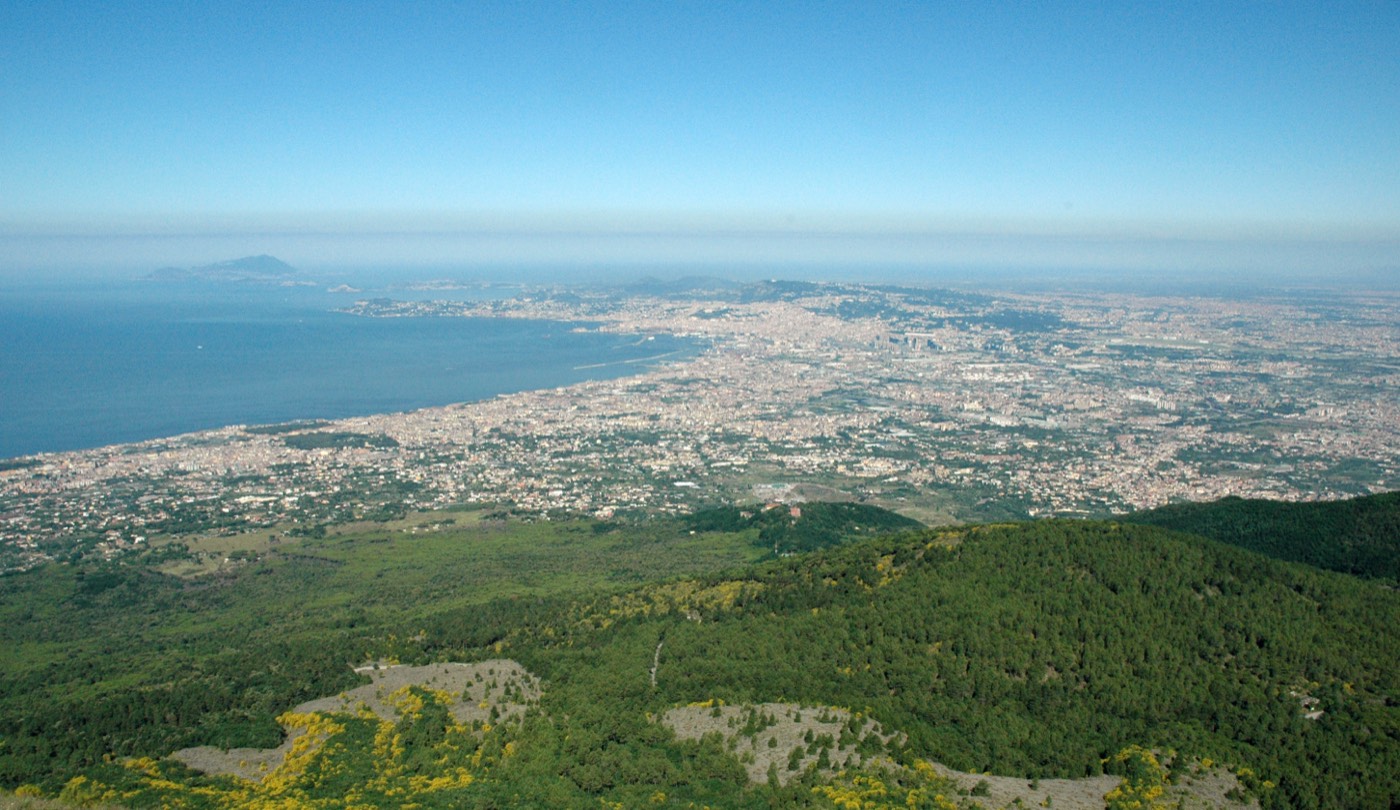
The Russo surname means red, from the southern Italian form of rosso, and it belongs to the Mezzogiorno: Campania, Sicily, Calabria and Puglia. In the north, the very same nickname became Rossi. One word, two dialects, two halves of a country.
What Does the Surname Russo Mean?
Russo means red. It began as a nickname for a man with red or reddish hair, a red beard or a high, ruddy complexion, and it comes from the southern Italian form of the adjective rosso.
The chain runs back through late Latin russus and rubius to classical Latin rubeus, red. Southern dialects raise the stressed vowel, so where a Tuscan said rosso a Neapolitan or a Sicilian said russo, and the spelling of the nickname followed the mouth that said it.
What the red actually described is not always recoverable. Etymologists are confident about the colour and cautious about the rest: hair is the usual reading, but a beard, a weather-burnt face or even habitual clothing could all have earned a man the name.
Where the Russo Name Comes From
Russo comes from southern Italy. It is the single commonest surname in Sicily, it is at its densest in Campania, where roughly one resident in seventy-two carries it, and it is close behind in Calabria and Puglia.
The Line That Splits Italy in Two
Here is the fact that matters most, and that almost no other page about this name will tell you. Rossi is the commonest surname in Italy. Russo is the second commonest. They are not two names. They are one nickname in two accents.
The split is geographic and remarkably clean. Rossi is typical of almost all of northern Italy and of the centre, and close to absent in the deep south. Russo does the opposite: it dominates the southern peninsula and the islands and thins out as you travel north.
So the spelling on your family’s papers is a rough compass needle. A Russo family is almost certainly southern. A Rossi family is almost certainly northern or central. Taken together the two forms make the commonest surname family in the whole of Italy, which is why Mario Rossi is the Italian equivalent of John Smith.
Campania, Sicily and the Mezzogiorno
Within the south the name has its own geography. Sicily is where it ranks highest, at number one. Campania is where it is thickest on the ground, second only to Esposito, the name once given to foundlings in the Neapolitan orphanages. In Puglia’s Terra di Bari the article fused to the front of it and it became Lorusso, so common there that it reads as a Bari name rather than a general southern one.
Why a Red Nickname Became So Common
Southern Italians are overwhelmingly dark haired, so how did a name meaning “the red one” end up on hundreds of thousands of doors? The rarity is the reason. A surname begins as a way of telling one Giovanni from another, and the most useful label is the most unusual one.
In a village of dark heads, the man with the copper beard needed no further description, and the name stuck to his sons. That also means there is no single Russo family: the nickname was coined independently in hundreds of separate places across the south.
Spelling Variants and Related Names
The main variants are Rossi, Rosso, Russi, Lo Russo, Lorusso, La Russa and Larussa, plus the diminutives Rossini, Rossetti, Russello, Russino and Russotto, and the compound Russomanno.
They divide into three families. The plain adjective gives Russo, Russi, Rosso and Rossi, the last a plural meaning “the household of the red one”. The article forms, Lo Russo and Lorusso on the mainland and La Russa and Larussa in Sicily, keep the definite article that was there in speech: lu russu, the red one.
The diminutives are the third group. Rossini and Rossetti both mean something like “little red one”, which is how a composer’s name and a painter’s name turn out to be built from the same brick as your own.
Ruffo belongs to the same colour but a different Latin word, rufus, red haired; Queen Paola of the Belgians was born Paola Ruffo di Calabria in 1937. Further afield, the English Russell descends from Old French rousel, from the same Latin root, so a Russo and a Russell carry the same idea in two languages that parted company a thousand years ago.
The Russos in America
Russos arrived in America mainly between 1880 and 1924, in the great migration out of southern Italy, and they settled in the industrial north east, the mill and mine towns of Pennsylvania and Ohio, and the Gulf ports.
Roughly four million Italians crossed in those years and about eighty per cent came from the Mezzogiorno, driven out by land hunger, punitive taxes on wheat and salt, and malaria. That fact produces the mirror image of the Italian picture. In Italy, Rossi outnumbers Russo. In America, Russo outnumbers Rossi almost two to one, because America took its Italians overwhelmingly from the half of the country that says russu.
The oldest Russo colonies in the United States are Sicilian, not Neapolitan. Sicilian fruit traders were working the docks of New Orleans, where the Louisiana lemon and banana trade drew Sicilians decades before Ellis Island opened, and the same shipping lanes carried families through Galveston, the Gulf port that served as a southern back door into America.
The later and much larger wave went to work. Campanian and Calabrian families filled East Harlem, the first and biggest of New York’s Little Italies, then spread to the anthracite country around Pittston in the Pennsylvania coal belt and the steel furnaces of Youngstown, Ohio. Chicago’s southern Italians pushed west out of the city into Melrose Park, whose Feast of Our Lady of Mount Carmel has run since 1894.
If you have hit the usual wall of not knowing whether a name is Italian or Spanish, the same puzzle sits under the Guerra surname and the Franco surname, both of which travelled the same southern routes.
In the 2010 census, 93.85 per cent of Americans named Russo identified themselves as white and 4.14 per cent as Hispanic. Those are self-identification figures from a census form, not a measure of descent, but they sketch a name that has stayed close to its Italian American core while picking up a real Latin American branch, largely by way of Argentina.
Notable People Named Russo
Ferdinando Russo (1866 to 1927) was a Neapolitan journalist and the great dialect poet of his generation. His song Scètate, written in 1887, was one of some 250 lyrics he produced in the city’s own speech.
Richard Russo (born 1949) is an American novelist from Gloversville, New York, who won the 2002 Pulitzer Prize for Fiction for Empire Falls, a novel about a dying mill town that could stand for a hundred of them.
Rene Russo (born 1954), the actress and former model, grew up in Burbank, California, the daughter of Nino Russo, a sculptor and car mechanic of Italian descent.
Anthony Russo (born 1970) and Joe Russo (born 1971), the directing brothers behind Avengers: Endgame, were born in Cleveland into an Italian American family long active in the city’s politics.
Clemente Russo (born 1982), a heavyweight boxer from Marcianise in Campania, took Olympic silver in 2008 and again in 2012, carrying the name in the province where it is thickest.
How Common Is Russo Today?
Russo is the 715th most common surname in the United States, carried by 48,696 Americans at the 2010 census, which places it among the most common Italian surnames in the country.
The comparison with its northern twin is the striking part. Rossi ranks 1,348th with 26,183 bearers, so American Russos outnumber American Rossis by nearly two to one, exactly reversing the order of the two names in Italy itself.
| US rank (2010 Census) | #715 |
|---|---|
| Americans with the name | 48,696 |
| Origin | Italian (southern), descriptive nickname |
| Meaning | Red, for red hair or a ruddy complexion |
Frequently Asked Questions
What does the surname Russo mean?
Russo means red. It is the southern Italian form of rosso, from late Latin russus and ultimately classical Latin rubeus, and it began as a nickname for a man with red hair, a red beard or a ruddy face.
Is Russo Italian or Russian?
Russo is Italian, and specifically southern Italian, despite the coincidence that it looks like the Italian word for Russian. The resemblance is accidental. The surname comes from the colour red, not from the country.
Where does the Russo family come from?
From the Italian south. Russo is the commonest surname in Sicily and is at its densest in Campania, with large concentrations in Calabria and Puglia. There is no single ancestral Russo family, because the nickname arose independently in many places at once.
How common is the surname Russo?
Very. It is the second commonest surname in Italy after Rossi and the 715th commonest in the United States, held by 48,696 Americans in 2010. It is also well established in Argentina and Brazil.
Is there a Russo family crest or coat of arms?
No, and this needs saying plainly. In every serious heraldic tradition, arms are granted to an individual and pass to that person’s direct descendants, never to everyone who shares a surname. Sites selling a “Russo family crest” are selling a decoration, not a lineage, and with a name coined independently hundreds of times over, one shared coat of arms is impossible on its face.
What is the difference between Russo and Rossi?
Geography, not meaning. They are the same nickname in two dialects: Rossi in the north and centre, Russo in the south and the islands. If your family carries Russo rather than Rossi, that alone points your search towards Naples, Sicily, Calabria or Puglia.
If your family carries the Russo name, its route from southern Italy to America is traceable. Atlas of Home can follow it from a Campanian or Sicilian village to whichever mill town, mining patch or Gulf port your family landed in, and on to wherever you are now.
Further reading: the Wikipedia entry on the Russo surname and the Library of Congress account of the great arrival of Italians in America.