
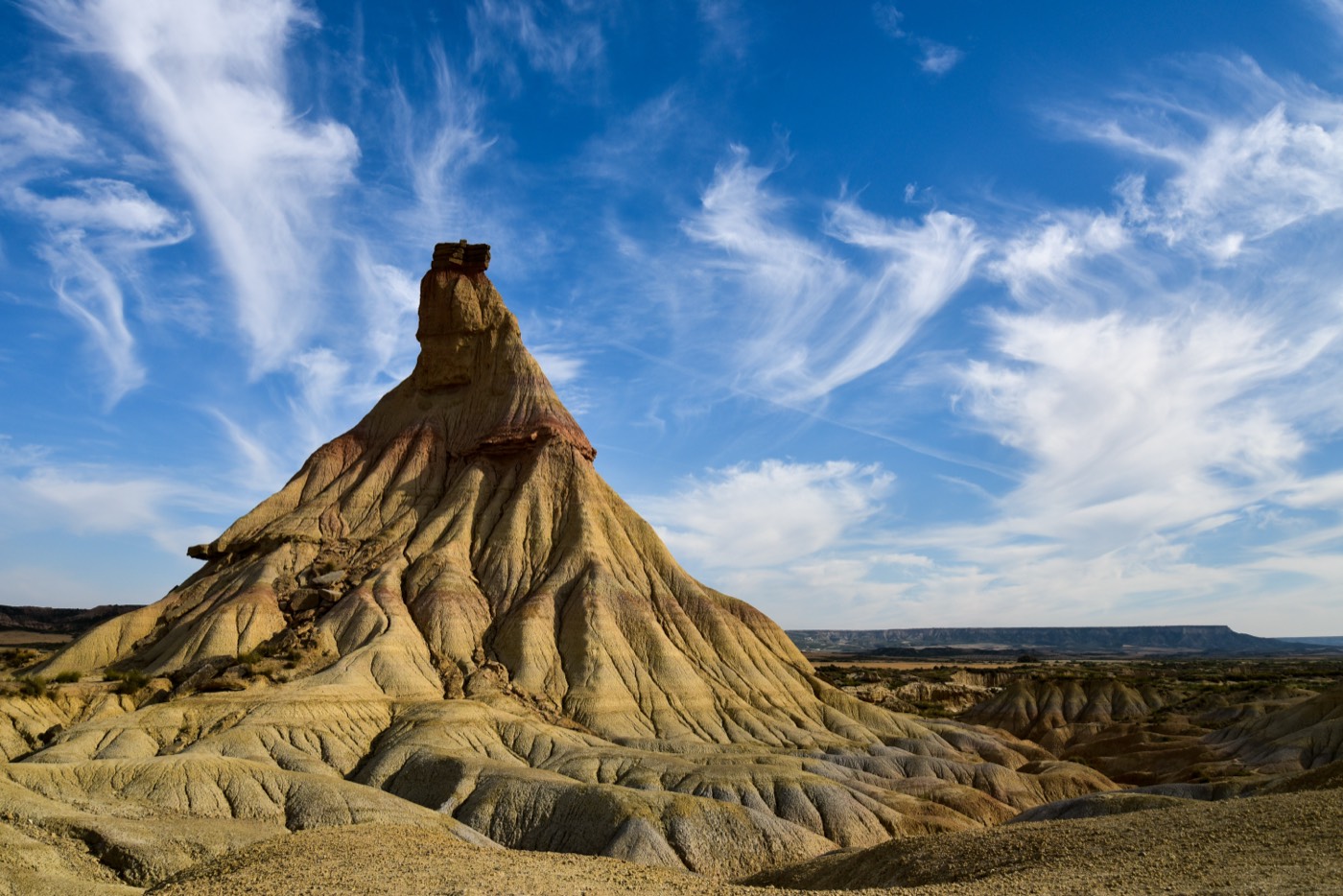
The Navarro surname means “the Navarrese”, a person from Navarre, the old Basque kingdom straddling the western Pyrenees. It is a name given by outsiders, and most Spanish Navarros today live hundreds of miles from Navarre itself.
What Does the Surname Navarro Mean?
Navarro is a Spanish ethnonym meaning “the Navarrese”, someone from the Kingdom of Navarre in the western Pyrenees. It is toponymic, not patronymic: it records where a family came from rather than who fathered them.
Names of this kind are always given from the outside. Nobody in Navarre needed to be called the Navarrese, because everyone around them was. The name only becomes useful once a family has left, which is the single most important fact about it.
The etymology of Navarre itself is genuinely disputed, and honest sources say so. Two Basque derivations compete. The first takes nabar, meaning brownish or multicoloured, contrasting the dun southern lands along the Ebro with the green mountains to the north. The second takes naba or Spanish nava, a valley or plain lying against mountains, joined to herri, people or land.
The linguist Joan Coromines complicated the second theory by arguing that naba belongs to a wider Vasconic or Aquitanian substrate rather than to Basque proper. The earliest record of the people is older than either argument: Einhard’s ninth-century chronicle of Charlemagne’s campaigns names the navarros as a people met in the Pyrenees.
Where the Navarro Name Comes From
The Navarro name comes from the Kingdom of Navarre in northern Spain, but the surname is densest today in Murcia, Valencia and Andalusia, hundreds of miles to the south. That inversion is the real story of the name.
The kingdom in the Pyrenees
After the Battle of Roncevaux Pass in 824, the Basque chieftain Iñigo Arista was made King of Pamplona, founding the realm later known as Navarre. It reached its height under Sancho III, whose death in 1035 split the kingdom among his sons.
Navarre never recovered that reach. By 1200 it had lost its western Basque districts to Castile and become landlocked, and after the native Jiménez dynasty ended in 1234 its crown passed repeatedly to French houses. Squeezed between Castile and Aragon, it was the one Christian kingdom that gained almost nothing from the Reconquista.
Why most Navarros live far from Navarre
That is precisely why the surname travelled. While Castile and Aragon opened enormous conquered territories in the thirteenth and fourteenth centuries, Navarrese families had no southern frontier of their own to settle. Their younger sons went to somebody else’s.
They joined the repopulation of Aragon, then Valencia, then Murcia and Andalusia, and in each new town they were registered by the obvious label: el navarro. Murcia drew them especially hard, having been taken by both Castilian and Aragonese forces, so settlers could weigh privileges offered by two crowns. Navarrese settlers are documented in the repopulation of the kingdom of Seville in the thirteenth century.
The map still shows it. The heaviest concentrations of the surname in Spain are in Murcian towns such as Moratalla, Caravaca de la Cruz, Lorca and Águilas, and Valencian ones including Requena, Chiva and Llíria. It thins out towards the northwest and is not especially common in Navarre. A very similar southward drift carried the Navarrese royal name García across Spain, which is why the García surname has a Basque and Navarrese etymology and a distribution that is overwhelmingly southern.
Sephardi and colonial Navarros
Medieval Navarre had substantial Jewish communities, and Jews bearing the name Navarro are recorded in Spain before the 1492 expulsion. Afterwards the name reappears across the Sephardi diaspora: in Amsterdam, in the Ottoman Levant, and in London after Menasseh ben Israel persuaded Cromwell to permit Jewish resettlement in the 1650s. A Nunes Nabarro ancestor was buried in the East End’s first Jewish cemetery in 1670, and the family traded between London and Amsterdam for roughly 180 years afterwards.
The Philippine strand has a different mechanism entirely. On 21 November 1849 the governor-general Narciso Clavería y Zaldúa issued a decree attaching Filipino families to fixed surnames drawn from the Catálogo alfabético de apellidos, a list of some 60,662 names distributed town by town. That is why Navarro is common in the Philippines. It is a Spanish name administratively assigned under colonial rule, so a Filipino Navarro’s surname is evidence of Spanish bureaucracy rather than of Spanish descent.
Spelling Variants and Related Names
Older Spanish documents write the name as Nauarro or Nabarro before the modern spelling settled, and both survive as living surnames. Nabarro is the form most associated with Sephardi families in Britain and the Netherlands.
An older name for the region, Naharra, produced its own branch of the family: Naharro, Naharros, Narro and Narros, all rare and scattered, with Naharro concentrated in Madrid, Badajoz, Cáceres, Albacete and Ciudad Real. In Basque the region is Nafarroa and a Navarrese person is a nafar. The French cognate is Navarre, the Italian and occasional Spanish variant Navarra.
Navarrete is related but distinct: it comes from the town of Navarrete in La Rioja rather than from the region directly, so it is a place name at one remove. A useful warning applies here. Spanish surnames ending in -ez are usually patronymic, but not always, and a toponymic can hide inside that ending, as it does in the Valdéz surname. Navarro carries no such ambiguity: it has never been anything but a name for a place and its people.
The Navarros in America
Most American Navarros descend from Spanish-speaking families rather than from Spain directly. In the 2010 Census, 88.14 per cent of Americans named Navarro self-identified as Hispanic, 6.66 per cent as white, 4.04 per cent as Asian or Pacific Islander and 0.55 per cent as two or more races. Those are self-identification figures recorded on a form, not a measurement of ancestry.
The Mexican strand is by far the largest, and it arrived in every wave: the labour recruitment of the 1910s and 1920s, the bracero years, and the sustained migration of the later twentieth century. There are long-settled Navarro communities among the Mexicans of Fresno, California and the Mexicans of Phoenix, Arizona, as well as older urban barrios such as Segundo Barrio in El Paso.
Some Navarros never crossed a border at all. Colonial families of the name were established in northern New Spain, in San Antonio de Béxar, in New Mexico and in Alta California, generations before the frontier moved south past them in 1848. For those households the American story begins with annexation rather than arrival.
Caribbean Navarros came separately, through Cuban and Puerto Rican migration, and the Cuban name is old in Florida: it is present in Key West and Tampa long before the mid-century exile generation that reshaped Hialeah. The Filipino strand is the fourth, arriving with twentieth-century migration and clustering in Southern California, in Cerritos and West Covina. Two Navarro families in the same American town may share nothing but a Pyrenean kingdom’s name.
Notable People Named Navarro
José Antonio Navarro (1795 to 1871) was a Tejano statesman born at San Antonio de Béxar, and the only native-born Texan to sign the Texas Declaration of Independence in 1836. Navarro County, Texas, is named for him.
Theodore “Fats” Navarro (1923 to 1950) was a bebop trumpeter from Key West, of Cuban, African and Chinese descent. He died of tuberculosis at 26, having already shaped the playing of Miles Davis, Clifford Brown and Lee Morgan.
David Nabarro (1949 to 2025) was a British physician and public health official who served as a World Health Organization special envoy on COVID-19, and a descendant of the Sephardi Nabarro line that traded between Amsterdam and London.
Dave Navarro (born 1967) is the Los Angeles guitarist of Jane’s Addiction, who also played with the Red Hot Chili Peppers, and a grandson of the Mexican migration to California.
Ana Navarro (born 1971) is a Nicaraguan-born American political commentator, a reminder that the surname reached the United States through Central America as well.
How Common Is Navarro Today?
Navarro is the 315th most common surname in the United States, carried by 99,807 people at the 2010 Census. In Spain it ranks 21st, held as a first surname by roughly 176,800 people according to national statistics, and it is common throughout Mexico, the Philippines, Argentina and Colombia.
| US rank (2010 Census) | #315 |
|---|---|
| Americans with the name | 99,807 |
| Origin | Spanish (toponymic) |
| Meaning | “The Navarrese”, a person from Navarre |
Frequently Asked Questions
What does the surname Navarro mean?
It means “the Navarrese”, a person from Navarre in the western Pyrenees. The name of the region itself is disputed, derived either from Basque nabar, brownish or multicoloured, or from naba, a plain beside mountains, joined to herri, land.
Is Navarro Spanish or Filipino?
Spanish. It is common in the Philippines because the 1849 Clavería decree assigned Spanish surnames from an official catalogue to Filipino families under colonial rule. A Filipino Navarro carries a Spanish name, which is not the same as Spanish ancestry.
Where does the Navarro family come from?
Ultimately from Navarre, but the surname was formed by Navarrese families who left it. Most Spanish Navarros today trace to the medieval resettlement of Aragon, Valencia, Murcia and Andalusia, where the densest concentrations still are.
How common is the surname Navarro?
Very. It is the 315th most common surname in the United States with 99,807 bearers, and the 21st most common in Spain. It is also widespread in Mexico, the Philippines and across Latin America.
Is there a Navarro family crest or coat of arms?
No. In Spanish and every other European heraldic tradition, arms are granted to an individual and pass to that person’s direct descendants, never to everyone who happens to share a surname. Any site selling you a Navarro crest is selling a decoration, not a lineage.
Is Navarro a Jewish surname?
It can be. Medieval Navarre had significant Jewish communities, and Navarro and Nabarro families appear across the Sephardi diaspora in Amsterdam, London and the Ottoman Empire after 1492. The name is not exclusively Jewish, and most bearers are not.
If your family carries the Navarro name, its route from Navarre to America is traceable. Atlas of Home can follow it from the Pyrenean kingdom and the southern towns its people resettled to wherever your family landed, and to wherever you are now.