
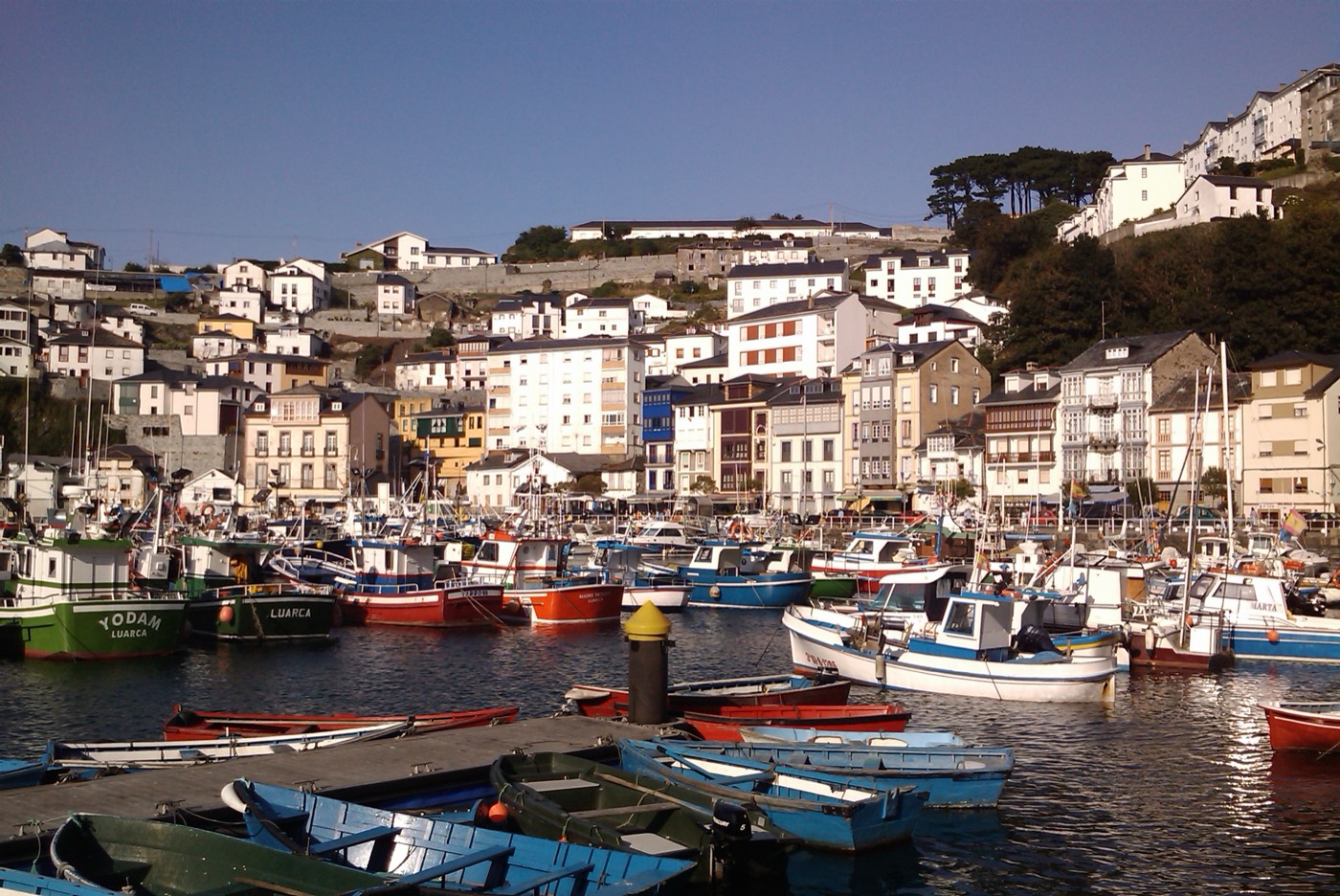
The Valdez surname is Spanish, and it began as a place rather than a person: the valley of Valdés on the Atlantic coast of Asturias, in the far green north of Spain. It travelled from there to Mexico, New Mexico and, by a stranger route, to the Philippines.
What Does the Surname Valdez Mean?
Valdez means “of the Valdés valley”, and the valley itself takes its name from the medieval phrase val de Ese, the valley of the river Ese, now known as the Esva. The literal sense is closer to “from the river valley” than to anything about ancestry.
That matters more than it sounds, because of the ending.
Most Spanish surnames ending in -ez are patronymics. Rodríguez is the son of Rodrigo, González the son of Gonzalo, Martínez the son of Martín. The suffix is a fossil of an old genitive.
Valdés is not one of those. Its ending is not a suffix at all. It is the worn-down tail of the river name in val de Ese, which contracted over centuries into a single word. There is no Valdo or Valdeo whose sons the Valdez family are.
The confusion is old and understandable. Once the family reached the Americas the name was reshaped by analogy with the patronymics around it, and Castilian Valdés acquired the familiar-looking Valdez spelling. The form most Americans carry was quietly pulled into the wrong grammatical family.
Where the Valdez Name Comes From
The name comes from the concejo of Valdés in western Asturias, northern Spain, the coastal district whose capital is the fishing town of Luarca, roughly halfway between Gijón and the Galician border.
The valley of the Esva
The district appears in the written record early. A charter preserved in the register of the monastery of Corias, dated 1038, refers to a villa “in the territory of Valdés”, so the place name was settled well before surnames were. It is a country of narrow valleys running down to a hard, cliff-bound coast, and families who held land there, or who left it, came to be identified by it.
Out of Asturias
The lineage is documented from the era of the Reconquista, and by the fourteenth century Valdés had spread through Castile and then across the peninsula. It became a name of the minor nobility and the church, of naval officers and colonial administrators, precisely the class of people the Spanish empire posted overseas.
That is how a valley in Asturias ended up on street signs in Texas.
Spelling Variants and Related Names
The two principal forms are Valdés, standard in Spain, Cuba and much of Latin America, and Valdez, dominant in the United States, Mexico and the Philippines. Both are the same name.
You will also meet Valdes (accent dropped), Valdéz (a hybrid, the accent carried onto the z), de Valdés, and Baldez or Baldes from scribes who heard no difference between b and v. Noble compounds such as Cuervo y Valdés and Flores de Sierra y Valdés are the same name with a second line attached.
The lost accent is worth pausing on. American record-keeping had no room for it: enumerators, ship clerks, army sergeants, typewriters and databases all flattened Valdés to Valdez. Most families did not choose the change so much as inherit it from a form someone else filled in. If your papers say Valdez and your great-grandparents wrote Valdés, nothing has been lost but a diacritic.
One name that looks related and is not: the French Valdès, borne by Peter Valdes, the twelfth-century Lyon merchant behind the Waldensian movement. It descends from a Latin form tied to a place near Lyon and has no connection to Asturias.
The Valdezes in America
Valdez reached the United States by three separate routes: colonial New Mexico, twentieth-century migration from Mexico, and the Philippines. These are genuinely distinct histories, and a Valdez family belongs to one of them rather than all three.
New Mexico and southern Colorado
This is the oldest strand and the deepest rooted. Valdeses were in New Mexico while the Thirteen Colonies were still being founded. Juan Flores de Sierra y Valdés served as governor in 1641, and Francisco Cuervo y Valdés, born in 1651 at Grado in Asturias itself, governed from 1705 to 1707 and founded Albuquerque on 23 April 1706.
Ordinary Valdez households came with the resettlement colonies that followed the Pueblo Revolt of 1680, and their descendants spread up the Rio Grande and into the San Luis Valley of southern Colorado. The hamlet of Valdez in Taos County still carries a family’s name. New Mexico remains the state where you are likeliest to meet a Valdez per head of population.
These are Hispano families, in many cases with three centuries of continuous residence in the same valleys and no Mexican immigration story at all. The same pattern shapes several other New Mexican surnames, and we look at it in more depth on the Gonzales surname page.
Mexican migration
The larger flow came later, from Mexico, through El Paso and Laredo and Nogales from the 1900s onward and heavily after 1942. These Valdez families settled the border states and the farming valleys beyond them, from the fields around Fresno in California’s Central Valley to the barrios of Phoenix, Arizona.
The Filipino Valdezes
The third strand is the one most often misread. Valdez is a common Filipino surname, but a Filipino Valdez is usually not descended from any Spaniard of that name.
In 1849 the governor-general Narciso Clavería issued a decree attaching a Catálogo alfabético de apellidos, a list of some sixty thousand surnames, Spanish and indigenous alike. Parishes were assigned blocks of the alphabet and families given names from their allocated pages, chiefly so taxes and censuses could be kept straight. Whole towns still share an initial letter as a result. The catalogue is why so many Filipinos carry Castilian names without Castilian ancestry.
Filipino Valdezes came to the United States as farm labourers from the 1920s, as Navy families after 1946, and as nurses and professionals after 1965. They concentrated in southern California and the Bay Area, in West Covina, Cerritos and Rancho Cucamonga, and around the old naval town of Union City.
The census reflects all three currents. Of Americans named Valdez in 2010, 88.66 per cent identified as Hispanic, 6.29 per cent as white and 3.35 per cent as Asian or Pacific Islander. Those are self-identification figures recorded on a form rather than a measure of descent, but the Asian share is a fair trace of the Filipino line.
Notable People Named Valdez
Francisco Cuervo y Valdés (born 1651, Grado, Asturias) was governor of New Mexico from 1705 to 1707 and founded Albuquerque in April 1706, naming it for the viceroy.
Miguel Alemán Valdés (1900 to 1983) was president of Mexico from 1946 to 1952, the first civilian in the office after the revolutionary generals.
Fidel Valdez Ramos (1928 to 2022) was president of the Philippines from 1992 to 1998. Valdez was his mother’s surname, in the Spanish manner the archipelago inherited.
Luis Valdez (born 1940) grew up in a Delano farmworking family, founded El Teatro Campesino during the grape strike of 1965, wrote Zoot Suit and directed La Bamba. He is generally called the father of Chicano theatre.
Chucho Valdés (born 1941, Quivicán, Cuba) founded the Latin jazz band Irakere in 1972 and has won a shelf of Grammy awards, several alongside his father, the pianist Bebo Valdés.
Lupe Valdez was elected sheriff of Dallas County in 2004, the first Latina sheriff in the United States, and in 2018 became the Democratic nominee for governor of Texas.
How Common Is Valdez Today?
Valdez is the 244th most common surname in the United States, carried by 124,995 Americans at the 2010 census, comfortably inside the top 250 of roughly six million recorded surnames.
| US rank (2010 Census) | #244 |
|---|---|
| Americans with the name | 124,995 |
| Origin | Spanish (Asturian) |
| Meaning | From the valley of the Esva, in Valdés, Asturias |
It is common in Mexico, Cuba, Colombia, the Philippines and Spain, and it is stamped on the map in places the Spanish navy reached, including Valdez in Alaska, named for a minister of the Spanish crown.
Frequently Asked Questions
What does the surname Valdez mean?
It means “from the Valdés valley” in western Asturias, Spain. The place name contracts the medieval phrase val de Ese, the valley of the river Ese, today called the Esva. It is a toponymic surname, taken from a landscape rather than an ancestor.
Is Valdez Spanish or Filipino?
The name is Spanish in origin, from Asturias. It is also genuinely common in the Philippines, but almost always because it was assigned there under the 1849 Clavería decree rather than carried by a Spanish settler. Both families are real Valdezes; only one line runs back to Asturias.
Where does the Valdez family come from?
From the coastal district of Valdés in western Asturias, around the town of Luarca. The name spread through Castile by the fourteenth century and into the Americas with Spanish colonisation, where the Valdez spelling took hold.
How common is the surname Valdez?
It ranks 244th in the United States, with 124,995 bearers recorded in the 2010 census. New Mexico has the highest concentration per head of population, while Texas and California have the largest raw numbers.
Is there a Valdez family crest or coat of arms?
No. In Spanish and every other heraldic tradition, arms are granted to an individual and pass to that person’s direct descendants, never to everyone who shares a surname. Various Valdés lineages did bear arms, but they were theirs, not the name’s. A site selling a “Valdez family crest” is selling a decoration, not a lineage.
Does the -ez in Valdez mean “son of”?
No, and this is the most common mistake made about the name. In Rodríguez, González and Martínez the -ez is a patronymic suffix meaning “son of”. In Valdez it is simply the end of the river name Ese, worn down inside val de Ese. The z spelling arose in the Americas by analogy with the true patronymics.
If your family carries the Valdez name, its route from Asturias to America is traceable. Atlas of Home can follow it from the valley of the Esva to a New Mexican village, a Mexican border crossing or a Philippine parish register, and on to wherever you are now.