
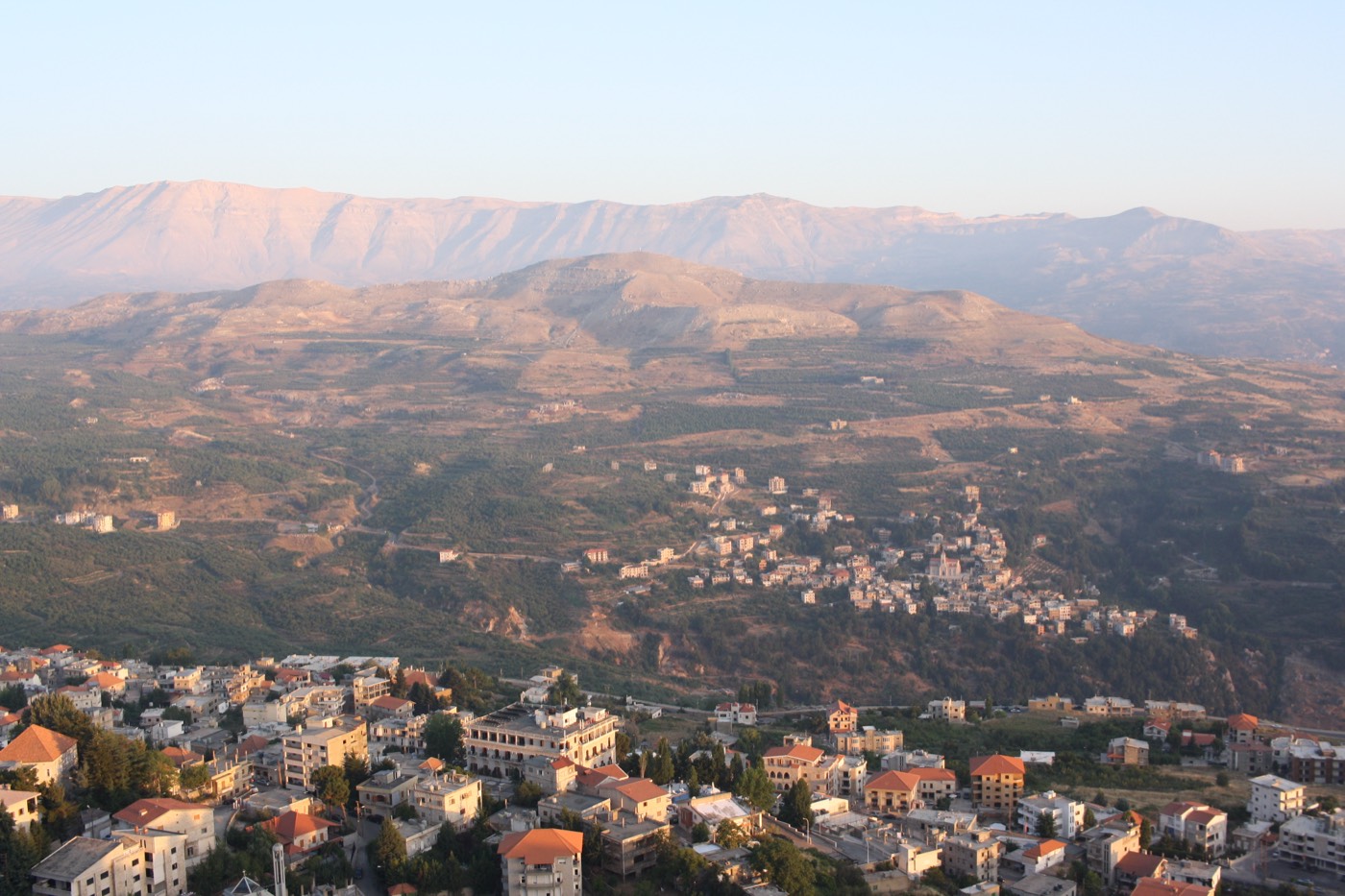
The Karam surname is Arabic, from the root k-r-m, and it means generosity. Its densest homeland is Lebanon, where it belongs to Maronite mountain families and Muslim city ones alike, but it is carried today from Cairo to Lahore.
What Does the Surname Karam Mean?
Karam (كرم) means generosity, open-handedness, nobility of character. It comes from the Arabic triliteral root k-r-m, which carries the sense of giving freely and of being honoured and highly prized.
That root runs deep in the language. It gives karim, the adjective meaning generous or noble; karama, meaning dignity, the word Arab protest movements have chanted for a century; and al-Karim, the Generous, one of the ninety-nine names of God in Islam.
There is a quieter second reading. Vowelled differently, the same three letters give karm, a vineyard or grapevine, cognate with the Hebrew kerem inside the name Carmel. In the terraced highlands of Mount Lebanon a family called Karam could owe the name to the plot rather than the virtue. Most sources take it from the personal quality, and the record is not fine-grained enough to settle it.
Where the Karam Name Comes From
Karam began as a personal name and hardened into a family name, most densely in Lebanon, where roughly one person in 272 carries it. From there it spread across the Arabic-speaking world and, by a separate route, into Persian and South Asian naming.
The Karams of Ehden and Mount Lebanon
The best-documented Karam line is Maronite and northern: the sheikhly family of Ehden, the summer town of the Zgharta district, perched above the Qadisha Valley and its cliff-face monasteries. Sheikh Boutros Karam governed the Ehden district in the first half of the nineteenth century, and his son Youssef succeeded him in 1846.
That son became Youssef Bey Karam, who took up arms in the conflicts of 1860 and led a rising against Ottoman rule in 1866 and 1867. He lost, was exiled, and died near Naples in 1889. His body was carried home the following year, and his proclamations are still read as an early statement of Lebanese national feeling.
Muslim Karams and the wider Arab world
It would be wrong to file the name as Christian. The related Karami family of Tripoli are Sunni Muslims who supplied the city with muftis for generations and Lebanon with prime ministers. The Assyrian singer Elias Karam is Syriac Orthodox and from Syria. Egypt, not Lebanon, holds the largest number of Karams of any country.
Further east the name arrives by a different road. Karam was borrowed from Arabic into Persian, Urdu and Punjabi with the sense of grace or kindness, which is why it appears as a given name across Iran, Pakistan and India. Those Karams are not Levantine cousins. They are separate families who reached the same word.
Spelling Variants and Related Names
In Arabic script the name is written كرم, one spelling for all of it. Everything below is what happened when that word met Latin letters, French clerks and American immigration officers.
Direct transliterations: Karam, Karem, Karm, Kerem, and the Portuguese-influenced Caram found in Brazil.
With the definite article: El Karam, Al Karam, and the fused forms Elkaram and Alkaram. The Saad surname page explains how the Arabic article al- came and went in Western records, sometimes attaching permanently and sometimes vanishing at a port.
Formed from it: Karami and Karameh, adjectival forms meaning belonging to the Karam line; Abou Karam, Bou Karam, Abi Karam and Abikaram, meaning father of Karam; Karamallah and Karamatallah, the generosity of God.
Same root, different word: Karim, Kareem, Abdul Karim and Akram all draw on k-r-m, but they are separate names, not spellings of Karam. Karim is the adjective, generous; Akram is its superlative, most generous. A Kareem family and a Karam family share an etymology in the way that Noble and Nobility share one. Assume no relation without documents.
Not related at all: Karaman is Turkish, from kara, black, and has nothing to do with the Arabic root despite the near-miss in English spelling.
The Karams in America
Karams came to America inside the great Syrian-Lebanese migration that began in the 1880s: Ottoman subjects from Mount Lebanon travelling on a pack and a licence, selling notions door to door, then opening a shop. That story is told in full on the Haddad and Khoury pages. What follows is what the Karams did with it.
The most remarkable of them was Afifa Karam, born in Amsheet in 1883 and in Shreveport, Louisiana by 1897, having married a cousin who had gone ahead six years earlier. From 1903 she wrote for Al-Hoda, the Arabic daily printed in Lower Manhattan, and her three novels, published between 1906 and 1910, are among the earliest Arabic novels by anyone. She founded two women’s magazines besides. Those presses stood in the tenements of Little Syria on Washington Street, the first address of nearly every Levantine family in the country.
Others followed the ordinary route. Nasif Karam, who anglicised himself to Michael, built M. Karam Sons & Co. into a fixture of Nogales on the Arizona border. Faris Karam took the long way round, working in Mexico until he had saved enough to send for the wife and children he had left in Lebanon, then crossing from Juárez to El Paso once the family had citizenship in 1927.
That Mexican leg is not a footnote. Many Levantine emigrants landed at Veracruz rather than New York, and the Karam name is now thoroughly Mexican as well as American, which is why 7.23 per cent of Karams in the United States identified as Hispanic in 2010. Later Karams came with the professionals and refugees of the civil war years, and went where the community already was: the auto-belt suburbs of Troy and Grosse Pointe in Michigan, the energy economy of Houston, the old settled colony at Cedar Rapids in Iowa, and the mill towns of eastern Pennsylvania around Allentown and Scranton.
The 2010 Census recorded how Karams described themselves, not where they came from, and it offered no Middle Eastern box to tick. Of 3,401 bearers, 81.51 per cent selected white, 7.23 per cent Hispanic, 7.00 per cent Asian or Pacific Islander and 1.26 per cent Black. That Asian seven per cent is the Pakistani, Indian and Iranian Karams: the American Karams are two unrelated migrations sharing a page in the phone book.
Notable People Named Karam
Youssef Bey Karam (1823 to 1889) led the Maronite rising against Ottoman rule in Mount Lebanon in 1866 and died in exile in Italy. He is remembered in Lebanon as the Lion of Ehden.
Afifa Karam (1883 to 1924) emigrated from Amsheet to Louisiana and became one of the first women to publish novels in Arabic, writing for the New York daily Al-Hoda from 1903.
Rashid Karami (1921 to 1987), of the Sunni Karami dynasty of Tripoli, was prime minister of Lebanon eight times, the longest-serving in the country’s history. He was assassinated in 1987.
Jesús Murillo Karam (born 1948), a Mexican lawyer and politician of Lebanese descent from Hidalgo, served as governor of his state and later as attorney general of Mexico.
Najwa Karam (born 1966) is among the best-known singers in the Arab world. She was born in Zahlé to a Maronite family, and her father was named Karam Karam: the whole history of the surname in three words.
Stephen Karam (born 1979), raised in a Lebanese-American family in Scranton, Pennsylvania, won the Tony Award for Best Play for The Humans. His earlier Sons of the Prophet was a Pulitzer finalist.
How Common Is Karam Today?
Karam is the 9,560th most common surname in the United States, carried by 3,401 people at the 2010 Census. Worldwide it is far commoner, with Egypt holding the largest number of bearers and Lebanon the highest density, at roughly one person in 272.
| US rank (2010 Census) | #9,560 |
|---|---|
| Americans with the name | 3,401 |
| Origin | Arabic, chiefly Lebanese and Levantine |
| Meaning | Generosity, nobility of character |
Frequently Asked Questions
What does the surname Karam mean?
Karam means generosity or nobility of character, from the Arabic root k-r-m. It began as a personal name given as a compliment and became hereditary when Levantine families fixed their surnames under Ottoman and later French administration.
Is Karam Lebanese or Egyptian?
Both, and more besides. Egypt has the largest number of Karams of any country, but Lebanon has by far the highest concentration, and the best-documented Karam lineages are Lebanese. The name is also independently common in Pakistan, India and Iran through a Persian borrowing of the same Arabic word.
Where does the Karam family come from?
There is no single Karam family. The most prominent line is the Maronite sheikhly family of Ehden in the Zgharta district of North Lebanon, above the Qadisha Valley. Other Karams are Muslim, Syriac Orthodox, Egyptian or South Asian, and are unconnected to it.
How common is the surname Karam?
In the United States it ranks 9,560th, with 3,401 bearers recorded in 2010. Globally it is much commoner, held by an estimated 216,000 people, which places it among the 2,600 most common surnames in the world.
Is there a Karam family crest or coat of arms?
No. In every heraldic tradition, arms are granted to individuals and pass to their direct descendants, never to everyone who happens to share a surname. Arabic naming has no heraldic tradition at all, which makes a “Karam family crest” doubly invented. Anyone selling you one is selling a decoration, not a lineage.
Are Karam and Karim the same name?
No, though they share the root k-r-m. Karam is the noun, generosity; Karim is the adjective, generous. They are separate names in Arabic, spelled differently in Arabic script, and a Karam family and a Kareem family should be assumed unrelated without documentary evidence. The same caution applies to Akram and Abdul Karim.
If your family carries the Karam name, its route from Lebanon to America is traceable. Atlas of Home can follow it from a village in the mountains above the Qadisha Valley to whichever port, mill town or border city your family landed in, and to wherever you are now.
Further reading: Youssef Bey Karam and Afifa Karam on Wikipedia.