
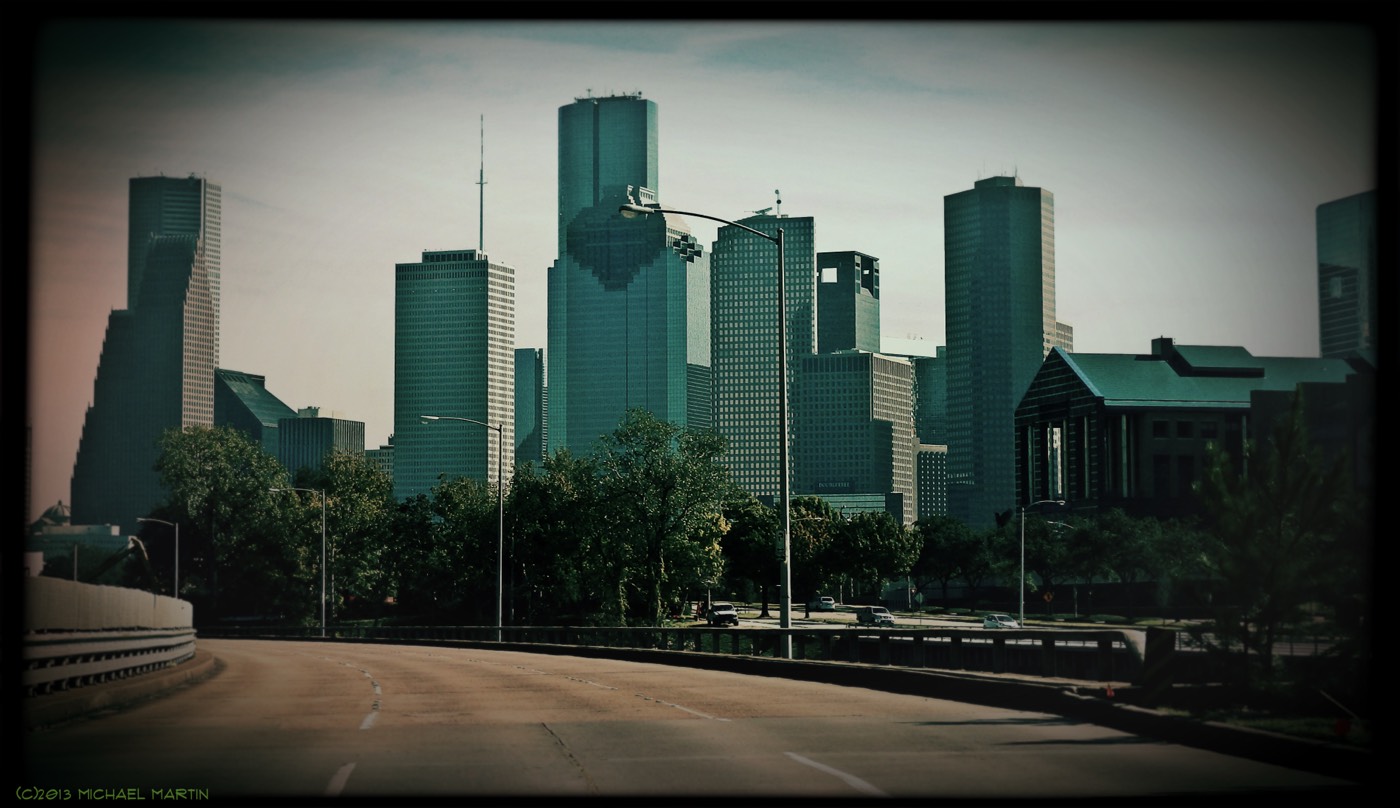
The Lebanese in Houston do not announce themselves with a single street of awnings or a neon-lit strip. You find them instead in the courtrooms downtown, in the oil and gas towers along the energy corridor, in a Maronite church on Bellfort Village Drive, and in the memory of a grocery store on Kirby where presidents once shopped for peaches. It is one of the oldest and most quietly accomplished immigrant stories in Texas, and it began, as so many did, with a peddler’s pack.
The Place
Houston is the largest city in Texas and the fourth largest in the United States, a flat, sprawling, air-conditioned metropolis that grew rich first on cotton and railroads, then on oil, ports, and medicine. It has almost no zoning, which means a refinery can sit near a mansion and a mosque near a megachurch, and somehow it works.
The Lebanese here are not confined to one neighbourhood. The community’s institutions and prosperous families cluster toward the west and southwest: the Memorial villages, Bellaire, Sugar Land, and the long commercial spine of Westheimer Road.
If there is a centre of gravity, it is less a place than a profession. Lebanese Houston has always been a story of work, and of how quickly the children of peddlers learned to argue cases, drill wells, and heal patients in the world’s largest medical complex.
How It Became Lebanese
The Lebanese came to Texas in the same wave that carried hundreds of thousands of people out of the Eastern Mediterranean between roughly 1880 and 1924. They left the mountain villages of what was then Ottoman Syria, the region the world now calls Lebanon, and they joined the great dispersal that Arabic speakers call the Mahjar, the place of emigration.
The peddler years
Most arrived with little money and one portable trade: the pack. Many of the first Lebanese and Syrians in Texas began as itinerant peddlers, and they walked and rode an astonishing territory, from Canadian in the Panhandle to Del Rio on the Rio Grande and Tyler in the eastern pines.
The pack held thread, lace, needles, shaving blades, small luxuries a farm wife could not easily get to town to buy. A well established merchant in a city would supply newcomers, often relatives or men from the same village, with goods on credit, and the newcomer would walk it out into the countryside and pay him back.
It was hard, lonely work, but it had a logic. The peddler met everyone, learned English fast, and saw which towns were growing. When he had saved enough, he stopped walking and opened a store.
From peddler to merchant
In Houston the clearest example of that climb is the Jamail family, long described as the largest Lebanese clan in the city. The Jamails were organised enough to form the United Jamail Club as early as 1890, an early sign of a community that took its own continuity seriously.
The family’s commercial story is usually dated to 1905, when Nageeb “Jim” Jamail opened a produce stand in the old City Market. That stand eventually grew, under his sons and their cousins, into Jim Jamail and Sons, a grocery that became a Houston institution.
By the postwar decades the store on Kirby Drive was a 28,000-square-foot landmark with its own wholesale operation, a bakery, and a celebrated coffee department. It was where Houston’s elite came to be seen choosing their tomatoes, and its customers reportedly ranged from sitting presidents to touring entertainers.
Faith as the anchor
Religion held the community together across generations. The Lebanese in Houston are split, as in Lebanon itself, between Maronite Catholics, who are in full communion with Rome but keep their own ancient Syriac liturgy, and Antiochian Orthodox Christians.
The Orthodox came together first. In 1928 a small group of immigrants, mostly from Syria and Lebanon, organised an Orthodox community in Houston. The women of the parish raised the first building funds by cooking and selling Middle Eastern food, a pattern that would repeat in church kitchens for a century.
The Maronites organised their own parish, Our Lady of the Cedars, decades later, after several false starts. It has since grown into one of the largest Maronite parishes in the United States, proof of how deep the community’s roots had become by the late twentieth century.
The professional generation
The children and grandchildren of the peddlers did not, on the whole, stay in groceries. They moved, as one account puts it plainly, into law, education, and oil exploration, and they did so with conspicuous success.
Houston’s oil economy rewarded nerve and technical skill, and Lebanese Texans had both. The most celebrated was Michel T. Halbouty, born in 1909 to Lebanese immigrants and raised near the Spindletop field, who carried ice water to roughnecks as a boy and became one of the most famous independent geologists and wildcatters in the world.
In the law the towering figure was Joe Jamail, of the same grocery family, a son of St. Thomas High School and the University of Texas who became known nationally as the “King of Torts.” His 1985 victory for Pennzoil against Texaco produced a jury verdict of more than ten billion dollars, at the time the largest in American civil history.
The Landmarks
St. George Orthodox Christian Church, 5311 Mercer Street. Founded in 1928 by Syrian and Lebanese immigrants, St. George moved to its current site near Bissonnet in 1954. It remains the historic heart of Antiochian Orthodox Houston, a congregation that has welcomed Greeks, Palestinians, Serbs, and many others while keeping its Levantine character.
Our Lady of the Cedars Maronite Catholic Church, 11935 Bellfort Village Drive. The Maronite parish dedicated its permanent home in southwest Houston in 2003 after two decades of effort. With several hundred registered families it is among the largest Maronite communities in the country, and its very name invokes the cedar of Lebanon.
Antone’s Famous Po’ Boys, founded on Taft Street in the Fourth Ward. Jalal Antone, the son of Syrian and Lebanese parents, opened his import company in 1962 selling cheeses, pasta, and pickled delicacies. Told that Houstonians were not yet ready for hummus and baba ghanoush, he wrapped Levantine flavour inside a familiar sandwich and created the chowchow-topped Antone’s po’ boy, now a Houston classic.
The Houston Mediterranean Festival, St. George Orthodox Church, Mercer Street. Begun in the early 1980s, the festival fills a September weekend with grape leaves, kibbeh, kabobs, and trays of baklava. It is the city’s longest-running showcase of Levantine cooking, run from the same church kitchens that funded the parish nearly a century ago.
Phoenicia Specialty Foods, 1001 Austin Street, Downtown. Arpi and Zohrab Tcholakian arrived from Lebanon in 1978 and opened a small Mediterranean deli on Westheimer in 1983. It grew into a vast international market and, in 2011, became downtown Houston’s first grocery store in more than forty years, stocking the olives, breads, and spices of home.
The Joseph D. Jamail name across Houston and Austin. The grocery dynasty turned its fortune into civic memory: the Joseph D. Jamail Centennial Chair at the University of Texas School of Law, established in 1986, and Jamail family gifts whose name marks athletic and academic facilities. It is the Lebanese arc made permanent in limestone and bronze.
St. Thomas High School, 4500 Memorial Drive. The Basilian Catholic boys’ school where Joe Jamail studied has educated generations of Houston Catholics, including many from the Lebanese community, a reminder that the immigrant church and the immigrant school often rose together.
Where They Came From
The overwhelming majority of Houston’s Lebanese trace their families to Mount Lebanon and the villages of the Levantine coast and hills, the same heartland that fed the Mahjar across the Americas. They left under Ottoman rule, pushed by poverty, conscription, and the collapse of the silk trade, and pulled by the promise of American commerce.
They were overwhelmingly Christian, Maronite and Orthodox, which shaped where they worshipped and whom they married in the first generations. Chain migration did the rest: one brother sent for the next, one village clustered around one church, and the merchant who had already arrived staked the man fresh off the boat.
A later wave came differently. Families like the Tcholakians, Armenians who had found refuge in Lebanon, left during the Lebanese civil war and the oil-bust years, carrying Beirut’s cosmopolitan food culture into a Houston that was finally ready for it.
Houston Today
The Census Bureau counted nearly thirty thousand Texans of Lebanese and Syrian ancestry around the turn of this century, and Houston holds a large share of them. They are, by now, an assimilated and prosperous community, more likely to be identified by a profession than by an accent.
That very success makes them easy to overlook. There is no Lebanese quarter to photograph, no single corridor of shops, because the families dispersed into Memorial and Sugar Land and the medical district two and three generations ago. Their heritage lives in churches, surnames, and festival weekends rather than in a geographic enclave.
What endures is the pattern itself, the climb from the peddler’s pack to the courtroom and the oil patch, and the institutions built along the way. In a city defined by reinvention, the Lebanese were early proof that you could arrive with nothing and end up with your name on the building. For a sense of how other communities have layered themselves onto this same sprawling map, it is worth reading about the Persians in Houston and the Nigerians in Houston.
Frequently Asked Questions
When did the Lebanese first settle in Houston?
Lebanese and Syrian immigrants began arriving in Texas around 1880, part of the great Mahjar emigration from the Ottoman Levant. In Houston the Jamail family’s produce stand dates to 1905, and the Orthodox community organised in 1928, marking the Lebanese in Houston as one of the city’s oldest immigrant communities.
Where do the Lebanese live in Houston today?
There is no single Lebanese neighbourhood. The community and its institutions lean toward west and southwest Houston, including the Memorial villages, Bellaire, and Sugar Land, with the long commercial stretch of Westheimer Road as a familiar artery.
What churches serve the Lebanese in Houston?
Two anchor the community. St. George Orthodox Christian Church on Mercer Street, founded in 1928, serves Antiochian Orthodox families, while Our Lady of the Cedars on Bellfort Village Drive serves Maronite Catholics and is among the largest Maronite parishes in the United States.
Who are the most famous Lebanese Houstonians?
The attorney Joe Jamail, the “King of Torts” who won the record Pennzoil v. Texaco verdict, and the geologist and wildcatter Michel T. Halbouty are the best known. Both came from Lebanese immigrant families, and both embody the community’s move from trade into law and oil.
What is Antone’s, and why is it Lebanese?
Antone’s Famous Po’ Boys grew from an import company opened in 1962 by Jalal Antone, the son of Syrian and Lebanese parents. His chowchow-topped po’ boy made Levantine grocery flavours into a beloved Houston sandwich, a small, edible monument to the Lebanese in Houston.
Is there a Lebanese festival in Houston?
Yes. The longest-running is the Houston Mediterranean Festival, held by St. George Orthodox Church since the early 1980s, usually in autumn. It serves kibbeh, grape leaves, kabobs, and baklava, and remains the city’s most visible celebration of Levantine food and faith.
The Lebanese journey did not end in Houston, of course. The same Maronite and Orthodox migration built deep communities elsewhere, and the parallels are striking. Readers tracing their own families may recognise the pattern in the Lebanese in Bloomfield Hills, the Lebanese in Birmingham, and the Lebanese in Dearborn, Michigan, the largest Arab American community in the country. For the Texas context, the Texas Almanac offers a useful overview of Lebanese-Syrian Texans.
If your family’s story passed through Houston, or any of the places Lebanese have made home in America, Atlas of Home can trace that journey. From a mountain village in Ottoman Lebanon to a peddler’s route across Texas, to a church on Mercer Street, to wherever you are now.