
The Cho surname is Korean, written 조 in hangul, and it is really two surnames wearing one spelling: 趙, the great clan of Hanyang, and 曺, the great clan of Changnyeong. Which one your family carries is the first question worth asking.
What Does the Surname Cho Mean?
Cho (조) has no single meaning, because it stands for two entirely separate hanja characters that happen to be pronounced identically in Korean. The larger, 趙, is the character of the ancient Chinese state of Zhao. The smaller, 曺, is a distinctively Korean written form of the character otherwise read Cao.
Neither is descriptive the way an English surname like Baker or Hill is. Korean surnames of this kind are lineage markers, not words about a person.
So the honest answer to “what does Cho mean” is that it means the house you come from. The character tells you which of two unrelated bodies of families that is, and the bon-gwan, the ancestral seat, tells you which branch within it.
Where the Cho Name Comes From
Cho comes from Korea, and specifically from a set of clan seats spread from Hanyang, now Seoul, in the centre, to Changnyeong in South Gyeongsang Province in the south east. The 2015 South Korean census counted 1,055,567 people writing the name 趙 and 398,260 writing it 曺.
Every Korean surname is subdivided by bon-gwan, the ancestral seat that identifies a lineage by the place its founding ancestor is recorded from. The system is explained in full on our page on the Kim surname. It matters more for Cho than for almost any other name, because the bon-gwan is what tells you which character you inherited.
The 趙 clans, and Hanyang
The largest 趙 lineage is the Hanyang Jo, with 332,580 members in 2015. Its recorded founder is Jo Ji-su, a Goryeo-era figure whose descendants settled in the north east and held hereditary office under the Mongol administration at Ssangseong, before Jo Don returned his family to Goryeo allegiance under King Gongmin and helped recover the territory.
Behind Hanyang come the Haman Jo of the south, with 282,890, the Pungyang Jo with 113,798, and the Baecheon, Okcheon and Pyongyang lines. These are separate clans with separate genealogies, sharing a character rather than a common ancestor within recorded memory.
The 曺 clans, and Changnyeong
Almost the whole of the 曺 side belongs to one clan. The Changnyeong Jo numbered roughly 366,798 in 2015, out of 398,260 bearers of the character in total, which makes 曺 unusual among Korean surnames for being so nearly a single lineage.
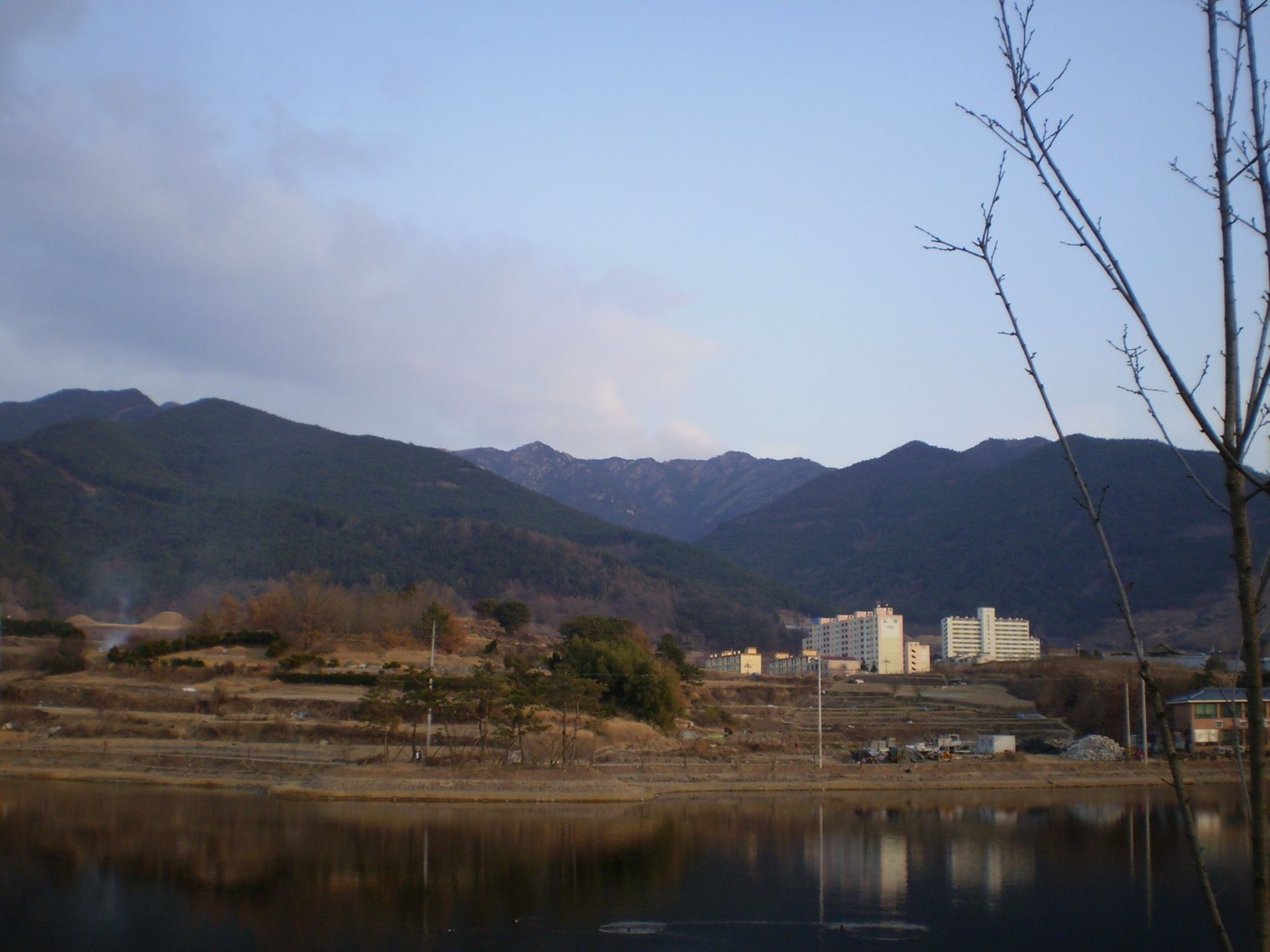
Its founding story is one of the strangest in the Korean genealogical record. Clan tradition places it in the reign of King Jinpyeong of Silla, at a dragon pond on Hwawangsan, the mountain above Changnyeong. A young woman, cured of illness after praying there, bore a son with the character 曺 marked on his body, and the king gave him the name Gye-ryong, “descendant of the dragon.”
Historians treat this as founding myth rather than record, but the geography is real, Changnyeong remains the clan’s seat, and a monument was raised at the site in 1897.
Why the split is invisible in English
Hangul does not distinguish the two characters, and romanisation flattens them further. Documents that once carried hanja beside the name have largely stopped doing so, so many Korean American families lose the distinction within two generations. It survives reliably in one place: the bon-gwan, held in a jokbo or in an older relative’s memory.
Spelling Variants and Related Names
Cho, Jo and Joh are the same Korean name, 조, spelled three ways in English. Cho follows the older McCune-Reischauer convention, Jo is the form produced by the Revised Romanisation South Korea adopted in 2000, and Joh, Zo and the rarer Chough are family preferences fixed on a passport decades ago.
The pattern is exactly the one that produced Choi and Choe, described on our page on the Choi surname: the official system says one thing, and families who have spelled their name a certain way since 1965 keep spelling it that way. Nobody renames a business, a byline or a headstone to satisfy a romanisation table.
Cho and Choi are not variants of each other. They are different surnames, different characters, different clans: Cho is 조, Choi is 최 (崔). English speakers confuse them constantly because the letters look alike, but in Korean they neither sound nor look related. The same trap catches Moon, a Korean name (문, 文) that has nothing whatever to do with the moon, and other short romanised names that collide on the page and nowhere else.
Outside Korea, the characters have their own families. 趙 is Zhao in Mandarin, Chiu or Ziu in Cantonese, Chao in the Wade-Giles spelling used in Taiwan and Hong Kong, Teo in Hokkien and Trieu in Vietnamese. It stands first in the Hundred Family Surnames, because it was the imperial surname of the Song dynasty when that list was compiled. 曺 corresponds to Chinese 曹, Cao or Tsao. A Cho, a Zhao, a Chiu and a Tsao may be writing characters with shared histories, but they are not relatives.
The Chos in America
Chos arrived in America in three movements. The first was small: from 1903, workers recruited to the sugar and pineapple plantations of Hawaii, some seven thousand Koreans in two years, followed by picture brides and students before Asian immigration was effectively closed.
The second came after 1945 and the Korean War: war brides, adoptees and the families of servicemen. The third and largest by far followed the Immigration and Nationality Act of 1965, which opened professional and family-reunification routes and brought Korean doctors, engineers, pharmacists and shopkeepers to American cities in numbers that transformed the community.
Those arrivals built recognisable places. The Cho name is thick on the ground in the Korean community of Glendale, California, and across the Los Angeles basin from Koreatown outward. On the east coast the Bergen County corridor became the densest Korean settlement in the country, from the Korean families of Paramus to the smaller, quieter streets of Harrington Park.
The newer settlements are suburban and southern. Korean families have gathered in Cary, North Carolina, drawn by the Research Triangle, and in Frisco, Texas, north of Dallas, where the pattern of church, school and Korean grocery repeats itself a generation on from Los Angeles.
Notable People Named Cho
Jo Gwang-jo (1482-1520), of the Hanyang Jo, was the Neo-Confucian reformer whose programme under King Jungjong made him enough enemies to be condemned in the literati purge of 1519 and ordered to drink poison. He is venerated still as a model of scholarly integrity.
Jo Sik (1501-1572), of the Changnyeong Jo and known by his pen name Nammyeong, was one of the towering philosophers of the Joseon period, famous for refusing office repeatedly and teaching instead.
Cho Man-sik (1883-1950) led non-violent resistance to Japanese rule from Pyongyang, organised the Korean Products Promotion Society, and was called the Gandhi of Korea. He is believed to have been executed in October 1950.
Margaret Cho (born 1968), raised in San Francisco, broke ground as a Korean American stand-up comedian and starred in the first American network sitcom built around an Asian American family.
John Cho (born 1972), born in Seoul and raised in Los Angeles, has worked steadily from Harold & Kumar through the rebooted Star Trek films.
Seong-Jin Cho (born 1994) became the first South Korean to win the International Chopin Piano Competition, taking first prize in Warsaw in 2015.
How Common Is Cho Today?
Cho was the 1,038th most common surname in the United States at the 2010 Census, carried by 33,490 people. In South Korea it stands among the ten most common surnames when both characters are counted together.
Of Americans named Cho in 2010, 95.12 per cent self-identified as Asian or Pacific Islander, 1.92 per cent as two or more races and 1.88 per cent as white. Those are proportions of how people described themselves on a form, not a measure of ancestry. The count also covers only the Cho spelling: Americans who write the same name Jo or Joh sit elsewhere in the data.
| US rank (2010 Census) | #1038 |
|---|---|
| Americans with the name | 33,490 |
| Origin | Korean (조, 趙 or 曺) |
| Meaning | Two distinct clan surnames sharing one Korean spelling |
Frequently Asked Questions
What does the surname Cho mean?
Cho is a Korean lineage name rather than a descriptive word. It represents either 趙, the character of the ancient state of Zhao, or 曺, a Korean form of the character read Cao, and its meaning for a given family lies in the clan and ancestral seat attached to it.
Is Cho Korean or Chinese?
Cho is Korean. The characters it uses are shared with Chinese surnames, 趙 with Zhao and 曺 with Cao, but the Korean clans have their own genealogies and their own ancestral seats. A Cho is not a Zhao who moved.
Where does the Cho family come from?
It depends on the character. The largest 趙 lineage is seated at Hanyang, now Seoul, with major branches at Haman, Pungyang and Baecheon. Almost all 曺 bearers belong to the Changnyeong Jo of South Gyeongsang Province.
How common is the surname Cho?
Cho ranked 1,038th in the United States in 2010 with 33,490 bearers, and many more Americans carry the same Korean name spelled Jo or Joh. In South Korea the two characters together accounted for well over 1.4 million people at the 2015 census.
Is there a Cho family crest or coat of arms?
No. In European heraldry arms are granted to individuals and pass to their direct descendants, never to everyone who shares a surname, so a “Cho family crest” does not exist. Korea had no heraldic tradition of that kind at all: the equivalent record is the jokbo, the written clan genealogy. Sites selling a Cho crest are selling a decoration.
Are Cho and Choi the same surname?
No, and this is the most common mistake made about the name. Cho is 조, Choi is 최, written with the character 崔, and they are unrelated surnames with different clans and different histories. They look similar only in English letters.
If your family carries the Cho name, its route from Korea to America is traceable. Atlas of Home can follow it from the clan seat at Hanyang or Changnyeong to wherever your family landed, and to wherever you are now.