
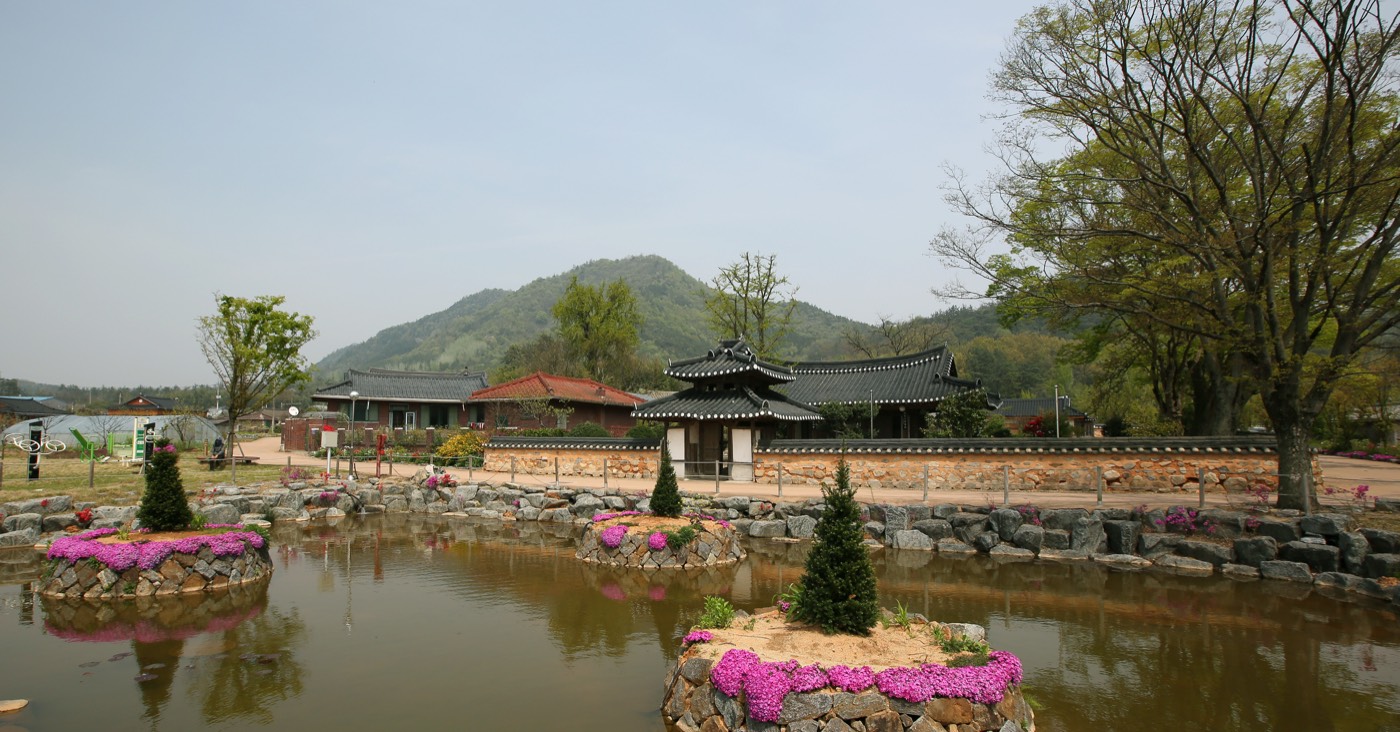
The Moon surname has nothing to do with the night sky. For most Moons alive today it is a romanisation of the Korean 문, written with the hanja 文, meaning writing, letters and learning, and its heartland is Nampyeong in Naju, South Jeolla.
What Does the Surname Moon Mean?
Moon most often means writing, letters or learning. It is the usual English spelling of the Korean surname 문, written with the single hanja 文, a character that covers literature, culture, civility and the written word. It is a scholar’s character, not a celestial one.
The lunar reading is an accident of English orthography. Korean has a separate word for the moon, 달 (dal), unconnected to the family name. Any page telling you your Moon ancestors were named for the moon has confused a spelling with a meaning.
There is, however, a second and entirely unrelated Moon. In England the name is a worn-down form of Mohun, from Moyon in La Manche, Normandy, a place name built on the Gallo-Roman personal name Modius. In Ireland it is one of many anglicisations of Ó Mocháin, descendant of Mochán, from moch, early or timely.
Where the Moon Name Comes From
The Korean Moons come from Nampyeong, now part of Naju in South Jeolla province. The English Moons come from Moyon in Normandy by way of Somerset and Devon. The Irish Moons come from Connacht, chiefly Galway and Sligo.
Nampyeong, Naju, and the bon-gwan
Every Korean surname is paired with a bon-gwan, an ancestral seat identifying which lineage you belong to. Two Moons with different seats are not considered kin, however identical their name. The system, and the 1909 registration law that fixed it on the whole population, is set out on our page on the Kim surname.
For Moon the picture is unusually lopsided. South Korea’s 2000 census counted 426,927 Moons across 47 surviving bon-gwan, and the Nampyeong Mun alone accounted for 380,530 of them. The next largest, the Gangneung Mun, numbered 4,646. If a Korean Moon does not know their seat, Nampyeong is the overwhelming likelihood.
The clan’s progenitor is Mun Da-seong, placed by tradition in the Silla period and tied to the Naju country Wang Geon fought over on his way to founding Goryeo. Genealogists treat him as a legendary founder rather than a documented man; the verifiable line begins later, with Goryeo officials such as the military figure Mun Jang-pil.
The Mohuns of Dunster
William de Moion crossed with William the Conqueror in 1066 and was rewarded with estates in Somerset and Dorset, holding Dunster as the seat of his feudal barony. His descendants held the Barony of Mohun, created in 1299, and a second Mohun barony of Okehampton followed in 1628.
Around that great house, tenants took the name from the place rather than the blood: Reginald de Moyn in Somerset in 1239, William de Mohun in Wiltshire in 1272. In West Country speech the final syllable wore away, and by the early modern period Mohun and Moon were written for the same families. Devon and Somerset remain the English counties where Moon is thickest.
Ó Mocháin in Connacht
Two Irish families carried the name. One, of the Cinel Ianna in the diocese of Kilmacduagh, is still numerous in County Galway, though there the usual anglicisation became Mahon. The other was an ecclesiastical family in County Sligo, erenaghs of Killaraght in the barony of Coolavin. Moon is one of a dozen English spellings their name was pressed into by clerks.
Spelling Variants and Related Names
The main variants are Mun and Munn for the Korean name, and Mohun, Mohan, Moone, Moohan, Moan and Moughan for the European ones. They look alike and mean nothing alike.
The Korean split is the interesting one. Revised Romanisation, official in South Korea since 2000, renders 문 as Mun, and that is what appears on road signs and in academic transliteration. Passports tell a different story. A 2007 study found 73.5 per cent of bearers wrote Moon in their passports against 26.4 per cent who wrote Mun. Established family spellings almost always defeat official schemes, the same tension that keeps Choi rather than Choe on Korean documents, as our page on the Choi surname explains.
Moon held on because it was in use long before 2000, and because a family that emigrated in 1972 has no appetite for renaming itself to satisfy a later standard. Munn turns up occasionally, usually where an improvised spelling was entered at a consulate and stuck.
On the European side, the recorded anglicisations of Ó Mocháin run to Mohan, Moughan, Moohan, Moan, Mowen, Maughan and Moon. A minority theory derives some English Moons instead from Old French moun, a monk, used as a nickname; it is a genuine competing suggestion rather than a settled fact, and the Norman place-name derivation is much better evidenced.
The Moons in America
Moon reached America twice. English and Irish bearers arrived across the colonial and nineteenth-century migrations, diffusely and with no single port of entry. Korean bearers came later, in small numbers from 1903 and then in force after the Immigration and Nationality Act of 1965.
The 2010 Census records how Americans named Moon described themselves: 65.69 per cent as White, 19.10 per cent as Asian or Pacific Islander, 10.02 per cent as Black or African American, 2.18 per cent as two or more races, 2.02 per cent as Hispanic and 0.99 per cent as American Indian or Alaska Native. Those are self-identification proportions, not a measure of ancestry, but they capture something real: nearly one American Moon in five is of Korean background, and the majority is not.
The first Korean arrivals were the roughly 7,000 labourers recruited to Hawaii’s sugar plantations between 1903 and 1905, but the community Americans know today is post-1965. Its oldest anchor is Koreatown in Los Angeles, with the professional families of nearby Glendale forming a quieter second layer.
On the East Coast the centre of gravity is Bergen County, New Jersey, where Paramus and the smaller borough of Harrington Park hold some of the densest Korean American populations in the country. Newer clusters have grown around technology and corporate relocation: Cary, North Carolina in the Research Triangle, and Frisco, Texas north of Dallas.
The English and Irish Moons left a different map, spread thinly across the South, the Midwest and Appalachia with no equivalent concentration. The Black American Moons, a tenth of the total, reflect a pattern common to English-origin surnames, where the name was carried out of slavery rather than inherited by descent.
Notable People Named Moon
Mun Ik-jeom (1329 to 1398) was a Goryeo scholar-official of the Nampyeong clan who travelled to Yuan China in 1363 and returned with cotton seed. Korean tradition credits him with establishing cotton cultivation, and within a decade the crop was in general use.
Sun Myung Moon (1920 to 2012), born Mun Yong-myeong in what is now North Korea, founded the Unification Church in 1954 and built it into an international movement with large business and media holdings.
Moon Jae-in (born 1953), of the Nampyeong Mun and the son of refugees from the North, served as the twelfth president of South Korea from 2017 to 2022, after a career as a human rights lawyer.
Keith Moon (1946 to 1978) was the English drummer of The Who, as famous for the chaos of his life as for the unorthodox playing that shaped the band’s sound.
Warren Moon (born 1956) played 23 professional seasons in the CFL and NFL and in 2006 became the first African American quarterback, and the first undrafted one, elected to the Pro Football Hall of Fame.
Charles Mohun, 4th Baron Mohun (c. 1675 to 1712) was an English peer of famously violent temper who died alongside the Duke of Hamilton in a duel in Hyde Park.
How Common Is Moon Today?
Moon is the 758th most common surname in the United States, carried by 45,528 Americans at the 2010 Census. In South Korea it is far more common still, borne by 426,927 people at the 2000 census, roughly one South Korean in a hundred.
| US rank (2010 Census) | #758 |
|---|---|
| Americans with the name | 45,528 |
| Origin | Korean (문, hanja 文, romanised Moon or Mun); also English and Irish |
| Meaning | Writing, letters, learning (Korean); from Moyon in Normandy (English) |
Frequently Asked Questions
What does the surname Moon mean?
In its Korean form it means writing, letters or learning, from the hanja 文. In its English form it is a place name, from Moyon in Normandy by way of the Norman family de Mohun. It never means the moon.
Is Moon Korean or English?
Both, in genuinely separate lines. Roughly a fifth of American Moons identified as Asian or Pacific Islander in 2010 and around two thirds as White. The two names simply converged on the same English spelling.
Where does the Moon family come from?
Korean Moons overwhelmingly trace to Nampyeong in Naju, South Jeolla. English Moons trace to Moyon in La Manche and then to Dunster in Somerset. Irish Moons come from Galway and Sligo.
How common is the surname Moon?
It ranks 758th in the United States with 45,528 bearers. In South Korea it is far more prominent, with 426,927 bearers recorded in 2000, placing it among the twenty most common Korean surnames.
Is there a Moon family crest or coat of arms?
No. In European heraldry arms are granted to individuals and pass to their direct descendants, never to everyone sharing a surname. The medieval Mohun barons bore arms; that gives no one else called Moon a claim to them. Korean lineages never used heraldry at all, recording descent in jokbo genealogies instead. Anyone selling a Moon family crest is selling a decoration.
Why is it spelled Moon rather than Mun?
Revised Romanisation, South Korea’s official system since 2000, prefers Mun, but a 2007 study found 73.5 per cent of bearers using Moon in their passports. The older spelling was already established in families and documents, and established spellings rarely surrender to new standards.
If your family carries the Moon name, its route to America is traceable, whether it runs from Nampyeong in Naju or from Moyon in Normandy. Atlas of Home can follow it from the ancestral seat to wherever your family landed, and to wherever you are now.
Further reading: Moon (Korean name) and the Moon and Mohun One-Name Study at the Guild of One-Name Studies.