
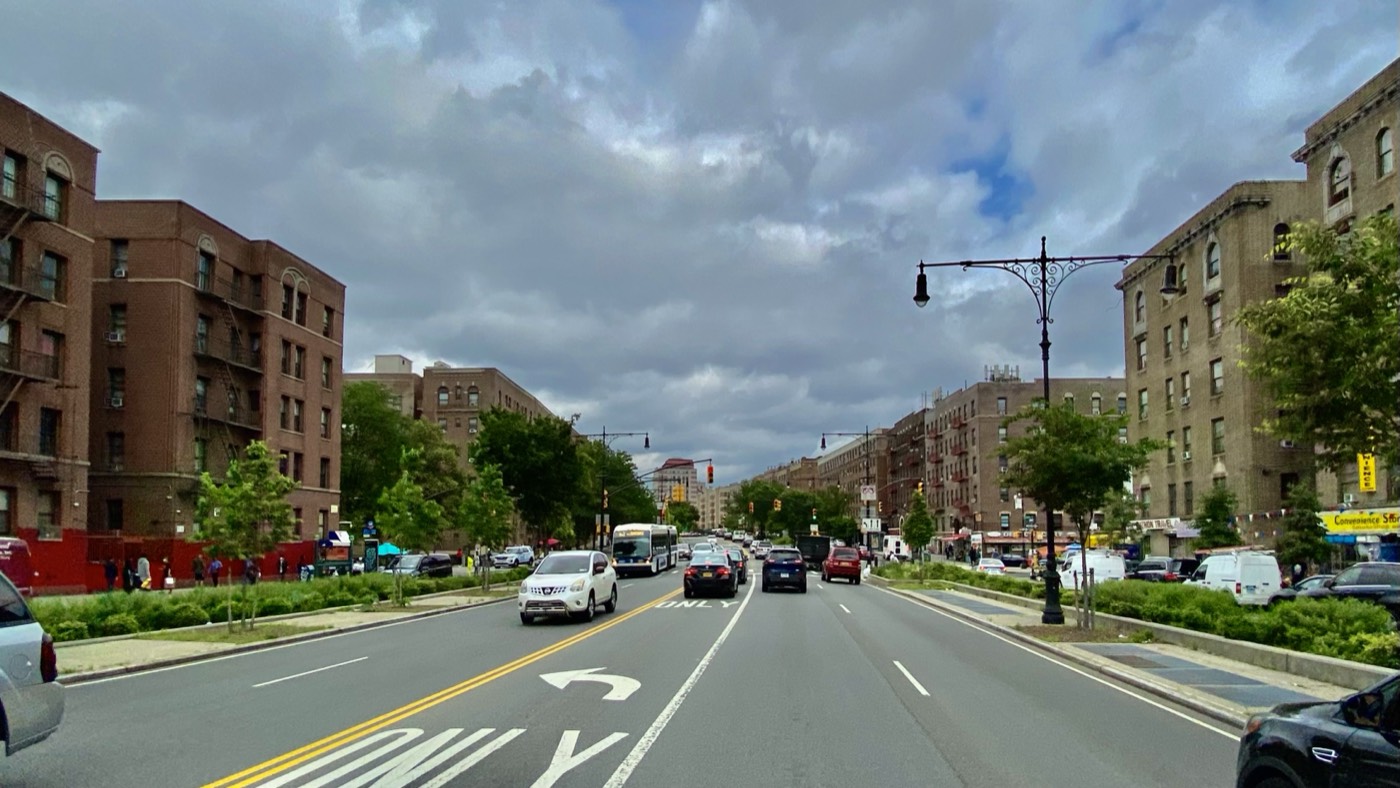
Walk three blocks downhill from the marble steps of the Bronx County Courthouse and the language around you changes. The Spanish of the Concourse gives way to Yoruba, to Igbo, to the clipped Nigerian English of a man on his phone outside a market doorway. The Nigerians in Bronx, New York have made a home along and around the Grand Concourse, the borough’s grand Art Deco boulevard, and on a Sunday morning the sound of a Pentecostal choir carries out of a converted storefront into the New York air.
The Place
The Grand Concourse runs for some four miles up the spine of the western Bronx, a boulevard conceived in the City Beautiful movement and modelled on the Champs-Elysees in Paris. It was designed by the French immigrant engineer Louis Aloys Risse and built in stages around the turn of the twentieth century, its central roadway flanked by service lanes and lined, eventually, with one of the largest collections of Art Deco apartment buildings in the United States.
For its first decades the boulevard was a Jewish, Italian and Irish address, a step up for families leaving the tenements of lower Manhattan. The neighbourhood thrived through the 1950s, declined sharply after 1960 amid white flight and disinvestment, then began to recover from the 1990s onward.
Today the Concourse is overwhelmingly Hispanic, but layered into it is one of the largest concentrations of African immigrants anywhere in the country. The Bronx is home to the largest such concentration in the entire nation, and Nigerians are a substantial part of it.
How It Became Nigerian
The Nigerian presence in the Bronx is recent by the standards of the borough’s older communities. It did not arrive with a single ship or a single decade. It accumulated, family by family, through the late twentieth century and accelerated sharply in the twenty first.
The first arrivals
Nigerians began coming to New York City in meaningful numbers after the liberalising Immigration and Nationality Act of 1965 reopened the country to migrants from outside Europe. The earliest were often students, drawn to the City University of New York and other colleges, and professionals who stayed.
Many of those first families settled in Brooklyn or Queens. The Bronx, cheaper and battered by the disinvestment of the 1970s, came later. What it offered, crucially, was rent that a newly arrived family could afford, and apartment buildings large enough to hold them.
The diversity visa years
The single biggest engine of Nigerian migration to the United States from the 1990s onward was the Diversity Immigrant Visa programme, the green card lottery created by the Immigration Act of 1990. Nigeria has consistently been among the largest beneficiaries of the lottery worldwide, and the visas it distributed reshaped neighbourhoods like the Concourse.
A lottery winner would arrive, find a foothold, and then sponsor or simply guide relatives who followed. The Bronx, with its African markets already taking root and its rents still within reach, became one of the places where that chain settled.
The great acceleration
The clearest measure of how fast the community grew comes from the census. Between 2007 and 2014, the number of West African immigrants in the borough increased by more than 60 percent, according to data collected by Queens College. Some of that influx included people fleeing the Ebola epidemic that struck West Africa in those years.
While Africans made up roughly 4 percent of New York City’s foreign born population in that period, they accounted for about 10 percent of the Bronx’s. The Concourse Village section in particular drew a large enclave, with Ghanaians most numerous and substantial numbers of Nigerians, Liberians, Senegalese, Sierra Leoneans and Ivorians alongside them.
Nigerians slotted into this wider West African Bronx. They worshipped in some of the same buildings, shopped in some of the same markets, and lived on the same blocks as their Ghanaian and Senegalese neighbours, while keeping the churches, the foodways and the associations that were distinctly their own.
Building institutions
What turns a scattering of immigrants into a community is the institutions they build, and for Nigerians in the Bronx those have most often been churches. The Redeemed Christian Church of God, a Pentecostal denomination founded in Nigeria in 1952 and now present in more than 190 countries, planted parish after parish across the borough.
Its Bronx congregations gather Nigerian families on Sunday mornings and weeknight vigils, anchoring the community as surely as the synagogues once anchored the Jewish Concourse. Alongside the churches came the markets, the restaurants and the cultural associations that gave the community somewhere to be itself.
The Landmarks
RCCG Chapel of the Great Restorer, Bronx. One of the many Bronx parishes of the Redeemed Christian Church of God, inaugurated on 8 April 2018. The RCCG, a Nigerian Pentecostal movement, has become one of the most visible institutions of the diaspora, and its Bronx chapels turn ordinary storefronts and halls into places of full throated Sunday worship.
Eko Suya Spot, 3678 White Plains Road. A Nigerian suya house in the Wakefield section of the Bronx, named for Eko, the indigenous name for Lagos. It specialises in freshly grilled suya skewers, jollof rice and egusi soup, in a small low key room of fifteen to thirty seats that regulars say evokes a Lagos street grill.
Papaye, 2300 Grand Concourse. Not Nigerian but unmistakably West African, this Ghanaian restaurant at 183rd Street opened in 2009 and became a gathering point for the whole African Concourse, Nigerians included. Counter service, a pictorial menu and televised football matches make it a neighbourhood living room as much as an eatery.
A & A African Market, Mount Hope. One of the African grocers that mark the western Bronx, stocking the yam, egusi, dried fish and palm oil that a Nigerian kitchen runs on. An employee once summed up the times in a single line: every day, he said, he meets somebody who has just moved out here.
Longwood Art Gallery, 450 Grand Concourse. In early 2016 this Bronx gallery mounted Bronx:Africa, an exhibition celebrating the borough’s deepening African connection. That a cultural institution on the Concourse itself chose to put the African Bronx on its walls was a marker of how far the community had arrived.
Bronx County Courthouse, 851 Grand Concourse. The monumental Art Deco courthouse at 161st Street is the civic heart of the borough and a fixed point in the daily life of every Concourse resident. For Nigerian families navigating naturalisation, business filings and the paperwork of new lives, the building is less a monument than a destination.
The Grand Concourse Historic District. Designated in 2011, the district protects the Art Deco apartment houses that line the boulevard. These are the buildings, with their lobbies of terrazzo and chrome, into which Nigerian families moved as earlier residents left, inheriting an architecture built for somebody else and making it their own.
Where They Came From
Nigeria is not one place, and the Nigerians of the Bronx carry that variety with them. The country’s three largest peoples, the Yoruba of the southwest, the Igbo of the southeast and the Hausa of the north, are all represented, along with many of its smaller groups, and the Yoruba and Igbo presence is especially audible on the Concourse.
Lagos, the vast commercial capital on the southwest coast, looms over the diaspora story. It is the city most arrivals passed through, the airport they flew out of, and the reference point that names a restaurant like Eko Suya Spot. The pull of Lagos and the wider southwest is part of why Yoruba is one of the languages you hear on the boulevard.
The reasons for leaving were the familiar ones of ambition and pressure: the chance of a green card through the lottery, the search for university places and professional work, and at times the instability and economic strain of life at home. What the lottery and family sponsorship did was turn individual departures into a steady current flowing toward a handful of American cities, the Bronx prominent among them.
Bronx Today
The Nigerian Bronx today is not a single enclave you can draw a circle around. It is woven into a wider West African and Hispanic Concourse, present in the churches and the suya houses and the markets rather than concentrated on one signature street. That diffusion is its own kind of strength: the community is everywhere and rooted, not penned into a block.
It is also a community living in a place that has known hardship. The Concourse carries real poverty and heavy rent burdens, the legacy of decades of disinvestment, and Nigerian families navigate the same high housing costs as their neighbours. The Art Deco grandeur of the boulevard sits alongside that everyday struggle, and the honest picture holds both.
For the latest arrivals, the Bronx still offers what it offered the first: relative affordability, an existing network of fellow Nigerians, and the institutions to land in. The church on Sunday, the market on the way home, the football on the screen at Papaye, the parade down in Manhattan in October. These are the threads of a Lagos carried four thousand miles and woven into the Grand Concourse.
For families tracing their own American story, the Nigerian Bronx sits within a much wider map. You can follow the same diaspora to Houston, Texas, to the suburbs of Katy and Frisco, to Snellville, Georgia, to Bowie, Maryland and to Brooklyn Park, Minnesota. And within New York itself, the Concourse is one chapter of an immigrant city whose other pages include the Bangladeshis of Jackson Heights and the Italians of Niagara Falls.
Frequently Asked Questions
Where do Nigerians live in the Bronx?
The Nigerians in Bronx, New York are spread through the western Bronx along and around the Grand Concourse, including the Concourse and Mount Hope areas, and further north toward Wakefield. Rather than forming one tight enclave, they are woven into a wider West African community that is most concentrated in the Concourse Village section.
How large is the Nigerian community in the Bronx?
Exact Nigerian figures are hard to isolate, but the Bronx has the largest concentration of African immigrants of any place in the United States, and Africans made up roughly 10 percent of the borough’s foreign born population in the 2007 to 2014 period. West African immigration to the borough grew by more than 60 percent over those years, with Nigerians a major part of it.
What Nigerian restaurants are there in the Bronx?
Eko Suya Spot at 3678 White Plains Road serves Nigerian suya, jollof rice and egusi soup in the Wakefield section. The wider West African food scene includes the Ghanaian restaurant Papaye at 2300 Grand Concourse, long a gathering point for the borough’s African community.
What churches serve Nigerians in the Bronx?
The Redeemed Christian Church of God, a Pentecostal denomination founded in Nigeria in 1952, runs several parishes in the Bronx, including the Chapel of the Great Restorer, inaugurated in April 2018. These churches are central institutions for Nigerian families across the borough.
Why did Nigerians settle in the Bronx?
The Nigerians in Bronx, New York came largely through the Diversity Visa lottery and family sponsorship from the 1990s onward, drawn by relatively affordable rents, large apartment buildings and an existing African community. The borough offered a foothold that more expensive parts of the city did not.
Where in Nigeria do Bronx Nigerians come from?
They come from across the country, with the Yoruba of the southwest and the Igbo of the southeast especially present on the Concourse, alongside Hausa and smaller groups. Lagos, the southwestern commercial capital, is the city most arrivals passed through and the reference point much of the community shares.
If your family’s story passed through the Bronx, or any of the places Nigerians have made home in America, Atlas of Home can trace that journey. From a green card drawn in Lagos to a Sunday choir on the Grand Concourse, to wherever you are now.