
On the second Sunday of most months, a stretch of Dallas pews fills with wax-print gele and the sound of Igbo and Yoruba hymns, and a good number of the worshippers have driven south from Frisco. The Nigerians in Frisco, Texas are one of the quietest success stories in the northern suburbs: doctors, software engineers, insurance executives and supply-chain managers who chose this booming town for the same reasons everyone else did, then built their own churches, markets and associations around it.
The Place
Frisco sits about thirty miles north of downtown Dallas, in Collin and Denton counties, at the leading edge of the Metroplex’s relentless northward sprawl. It was a sleepy farm town for most of the twentieth century, named in 1902 after the St. Louis, San Francisco and Texas Railway, with cotton gins and grain elevators and a population that did not crack two thousand until the 1970s.
Then the growth machine arrived. Frisco surged roughly 450 per cent after 2000, climbing from around 44,500 residents to an estimated quarter of a million by the mid-2020s, and in 2018 it topped Money magazine’s list of the best places to live in America.
What makes Frisco unusual for Texas is its composition. The median household income runs well above the national figure, the foreign-born share approaches one in five, and instead of the large Hispanic majority common to Texan cities, Frisco has one of the state’s largest Asian populations and a fast-growing community of African professionals layered on top.
How It Became Nigerian
The Nigerian presence in Frisco did not begin in Frisco. It began in Dallas and its older suburbs decades earlier, and it followed a path that anyone who has watched immigrant America will recognise: arrive for education or work, gather where the jobs and the churches are, then move outward as incomes rise and children reach school age.
Students, then settlers
Nigerians have come to North Texas in real numbers since the 1980s, drawn first by universities and then by the Metroplex’s deep market for skilled labour. Many arrived as students, completing medical residencies, engineering degrees and accountancy qualifications, and stayed because the work was here.
The Dallas-Fort Worth Nigerian population, estimated at somewhere between 25,000 and 35,000 across the Metroplex, grew faster in recent years than the older and larger Houston community, even if it started from a smaller base. The newcomers clustered first in Garland, Irving and Mesquite, the affordable inner suburbs where a young immigrant family could find a foothold.
The move north
The shift toward Frisco, Plano and McKinney is the second act of that story. As Nigerian professionals established themselves in medicine, technology, financial services and corporate management, they did what the rest of the metro’s rising middle class did. They followed the schools.
Frisco’s draw is no mystery. Its public schools rank among the best in the region, its neighbourhoods are new and safe, and it sits within commuting reach of the corporate campuses that have reshaped the northern Metroplex. Major employers in and around the city include the insurer Liberty Mutual, JPMorgan Chase and, just to the south in Plano, Toyota’s North American headquarters, the kind of firms that hire exactly the engineers, analysts and managers this community produces.
For a Nigerian family, the calculus was familiar. The children would get an excellent education, the commute to a Plano or Frisco office tower was manageable, and the cultural infrastructure they relied on, the churches and markets and physicians, was already taking root nearby.
Faith as the anchor
If one institution organised Nigerian life in North Texas, it was the church. The Redeemed Christian Church of God, the Lagos-born Pentecostal movement led worldwide by Pastor E.A. Adeboye, planted parish after parish across the Metroplex, and DFW became its centre of gravity in North America.
The denomination’s North American headquarters sits at a Redemption Camp near Greenville, east of Dallas, at 515 County Road 1118. Its Pavilion Center, a worship auditorium dedicated by Adeboye, was built to seat around ten thousand, with a far larger hall planned, and the camp supervises hundreds of parishes across the continent. For Nigerians scattered through suburbs like Frisco, that campus is a fixed point, a place to gather for conventions and a reminder that the faith they brought from Lagos has put down deep American roots.
Catholic Nigerians built their own structures too. The Our Lady of Assumption Nigerian Catholic Community celebrates a Nigerian Mass in Dallas on the second Sunday of most months, drawing families from Frisco, McKinney, Garland, Richardson and Wylie. Saint Joseph Catholic Church, serving Richardson and Garland, runs a dedicated Nigerian ministry. These are not side chapels. They are where weddings are blessed, where babies are named, and where a scattered community becomes, for a few hours, a congregation.
Building the associations
Alongside the churches came the cultural and professional bodies that give a diaspora its shape. The Igbo Community Association of Nigeria, DFW, headquartered in Mesquite, brings Igbo families together to mark Igbo Day and keep the language alive. The Yoruba Cultural Center hosts an annual Yorubafest, a festival of Yoruba art and culture held the first weekend of September.
For the professionals who define so much of Frisco’s Nigerian community, there is the Association of Nigerian Physicians in the Americas, whose North Texas chapter is based in Plano. It is a telling detail. The doctors who once flew in from Lagos and Ibadan to train now have a regional medical society of their own, a few minutes up the road from Frisco.
The Landmarks
All African Market, 7447 Hillcrest Road, Frisco. This is the pantry of the community, the place you go for egusi, palm oil, dried fish, garri and yam, plus ready-to-wear African clothing. Open six days and Sunday afternoons, it bills itself as a one-stop shop for Africans across far North Dallas, and for a Frisco Nigerian it means not having to drive south to Dallas for Saturday’s soup ingredients.
Frisco Urgent Care & Clinics, 3220 Parkwood Blvd, Frisco. Its medical director, Dr Obiora M. Ekweani, took his medical degree at the College of Medicine of the University of Lagos before training at Columbia’s Harlem Hospital. The clinic is a small monument to the Nigerian medical pipeline that quietly staffs so much of North Texas healthcare.
RCCG Redemption Camp, 515 County Road 1118, Greenville. The Redeemed Christian Church of God’s North American headquarters, with a Pavilion Center built to seat thousands, is the spiritual capital for the metro’s Nigerian Pentecostals. Conventions here pull worshippers from every suburb, Frisco included.
Our Lady of Assumption Nigerian Catholic Community, Dallas. The monthly Nigerian Mass, celebrated on the second Sunday, is where Catholic families from Frisco and the northern suburbs worship in their own idiom. It serves a wide arc of towns, from McKinney down through Garland and Wylie.
Igbo Community Association of Nigeria, DFW, 2425 Gus Thomasson Rd, Mesquite. The Metroplex’s Igbo families come together here to celebrate Igbo Day and pass language and custom to a generation growing up Texan. It is the kind of body that turns a set of households into a community.
Boxochops Modern African Kitchen, Plano. A short drive from Frisco, this Nigerian and modern African restaurant caters weddings and naming ceremonies and serves the jollof, moi moi and pepper soup that mark a Nigerian celebration. For events too large for a home kitchen, it is a familiar first call.
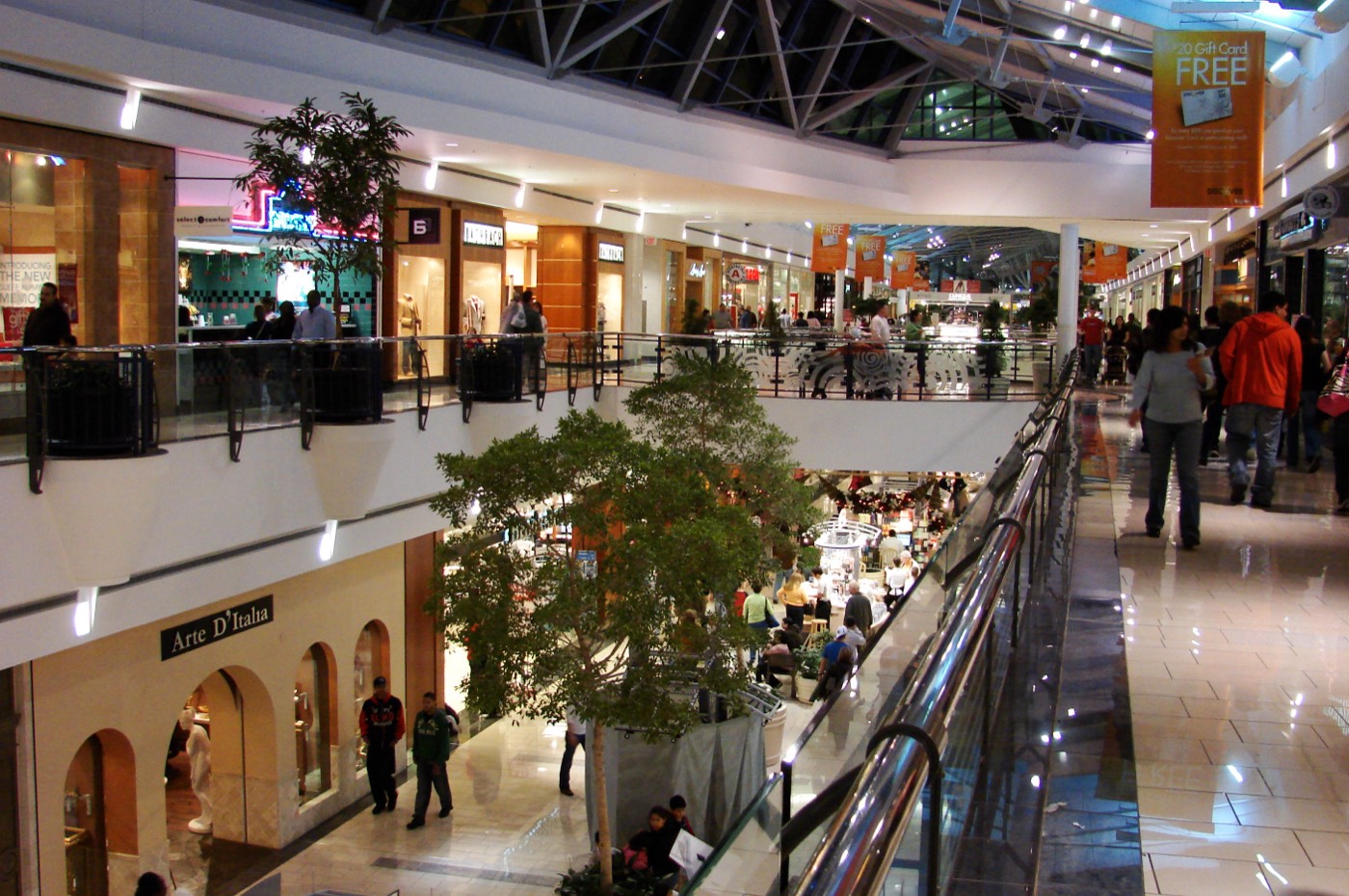
Stonebriar Centre, Frisco. The town’s flagship shopping mall is not a Nigerian landmark, but it is the suburban commons where the community’s teenagers meet their classmates and where Sunday best gets bought before a christening. Frisco life happens here, and Nigerian Frisco life is no exception.
Where They Came From
Nigeria is not one place, and neither is its Frisco diaspora. The two largest currents run from the Yoruba southwest, anchored by Lagos and Ibadan, and from the Igbo southeast, the country’s commercial and educational heartland. Both groups are strongly represented in North Texas, which is why the metro supports both a Yoruba cultural festival and a robust Igbo association.
The migration was, in large part, a movement of the educated. Nigeria sends one of the most highly qualified immigrant streams to the United States, and the families that reached Frisco tend to embody it: physicians trained at the University of Lagos and University of Ibadan, engineers and accountants, professionals who arrived for advanced study and converted it into careers.
That origin profile explains the shape of the community. It skews toward medicine, technology and corporate management, the fields that pay for a Frisco mortgage and an excellent school district, and it brings with it institutions, the physicians’ association, the Pentecostal parishes, that are themselves exports of modern Nigeria.
Frisco Today
The Nigerian community in Frisco is not a neighbourhood in the old sense. There is no single street of Nigerian shops, no enclave you can point to on a map. It is a dispersed professional community, woven into a town that is itself barely a generation old, and its institutions are shared across the wider Metroplex rather than concentrated in one suburb.
That dispersal is partly the point. Frisco’s Nigerians arrived as part of a broad, prosperous, foreign-born influx that includes large Indian, Chinese, Korean and Pakistani communities, and they live alongside those neighbours in the same cul-de-sacs and the same school catchments. The community shows itself less in geography than in rhythm: the Saturday run to All African Market, the second-Sunday Mass in Dallas, the September Yorubafest, the convention weekends at the Greenville camp.
What it is today is a community in its settled, second-generation phase. The children who fill those Frisco classrooms are American-born, fluent in the suburb’s idiom, and carrying Igbo and Yoruba names. Whether they will keep the language and the church is the open question every diaspora faces. For now, the institutions hold, the markets stay stocked, and the drive to Dallas on a Sunday morning still feels, for many Frisco families, like the most natural thing in the world. For the fuller picture, see Frisco’s own history.
Frisco’s Nigerian story rhymes with others across the region. You can trace the same arc among the Nigerians in Pearland and the Nigerians in Sugar Land south of Houston, and far away in the Maryland suburbs among the Nigerians in Bowie and the Nigerians in Mitchellville. Within Frisco itself, the same professional-suburb logic that drew Nigerian families also drew the Pakistanis in Frisco, while the Vietnamese in Houston tell a different Texan immigrant story to the south.
Frequently Asked Questions
How large is the Nigerian community in Frisco, Texas?
There is no precise count for Frisco alone, but the Nigerians in Frisco, Texas form part of a Dallas-Fort Worth Nigerian population estimated between roughly 25,000 and 35,000. Within the Metroplex they concentrate in affluent northern suburbs such as Frisco, Plano, McKinney and Irving.
Why did Nigerians settle in Frisco rather than central Dallas?
Most arrived first in older, more affordable suburbs like Garland and Irving, then moved north as their careers advanced. The Nigerians in Frisco, Texas were drawn by top-rated public schools, safe new neighbourhoods and proximity to employers such as Liberty Mutual, JPMorgan Chase and nearby Toyota.
Where do Nigerians in Frisco worship?
Many attend Redeemed Christian Church of God parishes across the Metroplex, whose North American headquarters sits at a Redemption Camp near Greenville. Catholic families travel to the Our Lady of Assumption Nigerian Catholic Community’s monthly Nigerian Mass in Dallas, held on the second Sunday.
Where can you buy Nigerian food and groceries near Frisco?
All African Market at 7447 Hillcrest Road in Frisco stocks staples such as egusi, palm oil, garri and yam, alongside ready-to-wear African clothing. For prepared Nigerian dishes and catering, Boxochops Modern African Kitchen in nearby Plano is a popular choice.
Which parts of Nigeria do Frisco’s families come from?
The community draws most heavily from the Yoruba southwest, around Lagos and Ibadan, and the Igbo southeast. Both are well represented, which is why the metro supports both a Yoruba cultural festival and the Igbo Community Association of Nigeria, DFW.
What professions are common among Nigerians in Frisco?
The community skews strongly professional, with many physicians, engineers, accountants and corporate managers. The Association of Nigerian Physicians in the Americas runs a North Texas chapter based in Plano, reflecting how central medicine is to the metro’s Nigerian community.
If your family’s story passed through Frisco, or any of the places Nigerians have made home in America, Atlas of Home can trace that journey. From a residency at the University of Lagos or a childhood in the Igbo southeast, to a Sunday Mass in Dallas and a school run in Frisco, to wherever you are now.