
On a Saturday morning along Barker Cypress Road, the parking lot fills with families in a hurry. A father loads ten-pound bags of sona masoori rice into an SUV while his daughter balances a tray of warm samosas. Inside, the freezers hold curry leaves and frozen idli, and the conversations move between Telugu, Gujarati and English without anyone noticing the switch. This is the everyday rhythm of Indians in Cypress, Texas, a community that has quietly made one of Houston’s fastest-growing suburbs feel a little like home.
The Place
Cypress sits in northwest Harris County, roughly 24 miles up U.S. Route 290 from downtown Houston. For most of its history it was prairie and farmland, settled by German immigrants in the 1840s and left largely rural until the early 1990s.
Then came the master-planned communities, and everything changed. By the 2020 census, the two primary Cypress zip codes, 77429 and 77433, held roughly 200,839 residents, with a median household income around $116,054.
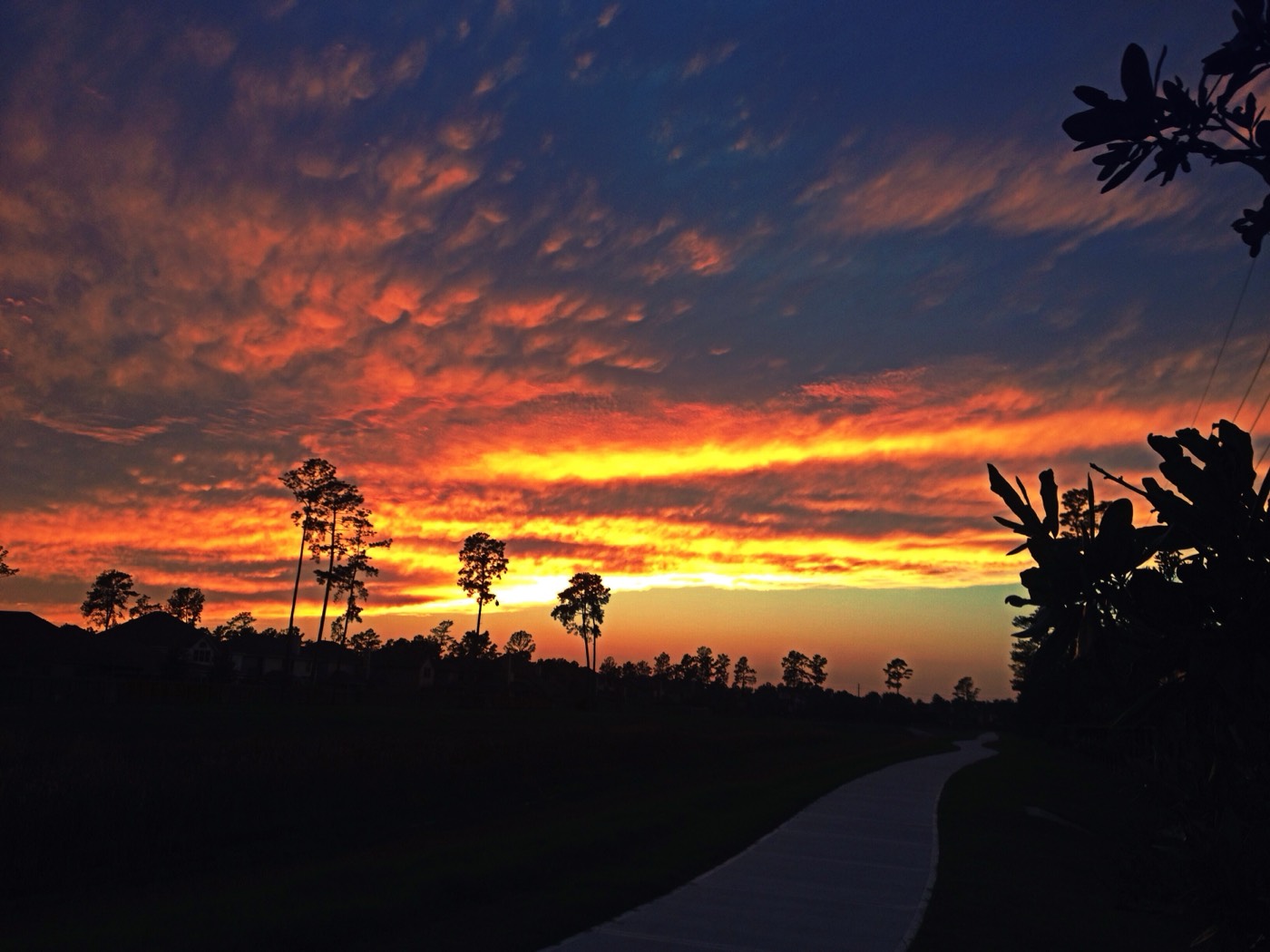
Today Cypress is a patchwork of lakes, trails and gated neighbourhoods that did not exist a generation ago. Asian residents now make up roughly 12 percent of the population, and a large share of them trace their roots to India.
How It Became Indian
The Indian story in Cypress is not an old one. It is a story of the last two decades, written almost entirely by people who came for work and stayed for the schools.
The energy capital pull
Houston has drawn Indian professionals for half a century, first to the oil and gas majors, then to the engineering and services firms that orbit them. Petroleum engineers, refinery process specialists and project managers from India became a fixture of the city’s energy economy.
For years many of them settled inside the loop or in older suburbs like Sugar Land and Stafford, closer to the corporate corridors. But as families grew and a second generation arrived, the search for space and good schools pushed the map outward.
The master-planned decade
That outward push met perfect timing. Bridgeland, an 11,500-acre community developed by the Howard Hughes Corporation, broke ground in October 2003, with home sales beginning in 2006. Towne Lake, built by Caldwell Companies around a 300-acre recreational lake, started construction the same year. Fairfield, the older sibling, had been growing since the 1990s.
These communities offered exactly what a young Indian engineering family wanted: new construction, generous lots, swimming pools and trails, and a price that still made sense compared with Houston’s pricier western suburbs. Word travelled fast through WhatsApp groups and temple parking lots.
The schools did the rest
If energy jobs brought Indian families to Houston, the Cypress-Fairbanks Independent School District kept them in Cypress. Cy-Fair is the third-largest school district in Texas, educating more than 118,000 students.
Its newer high schools, Bridgeland, Cypress Ranch and Cypress Woods, consistently rank among the strongest in the state and have appeared on national best-high-schools lists. For parents who measured a neighbourhood by its test scores and its advanced-placement offerings, the choice made itself.
The IT wave deepened the pattern. As Houston’s technology, healthcare and consulting sectors expanded, software engineers and physicians from Andhra Pradesh, Telangana and Gujarat followed the engineers who had come before them. Many were Telugu-speaking families arriving on H-1B visas, settling first in apartments near 290 and then buying in Bridgeland or Towne Lake once the green-card wait and the down-payment had both come together.
The pattern fed itself. One family’s recommendation became another family’s relocation, and a single street in a new Bridgeland phase might hold three or four households who knew each other from the same office, the same hometown, or the same temple back in Houston. Children grew up with neighbours who shared their festivals, and parents found ready-made carpools for weekend Telugu classes and tennis lessons alike.
A community builds its infrastructure
A neighbourhood becomes a community when it can feed and worship itself. The grocers came first, small shops along Barker Cypress Road and Fry Road stocking lentils, spices and the frozen staples that no American supermarket carried.
Then the restaurants, the tutoring centres, the dance and music classes for children whose parents wanted them to learn Bharatanatyam or Carnatic vocal alongside their calculus. The temples remained a drive south toward Stafford and Pearland, but the daily texture of Indian life had taken root much closer to home.
The Landmarks
Touch of India, 11700 Barker Cypress Road, Cypress. One of the anchor grocers of the Cypress Indian community, open for more than a decade. Its aisles of rice, atta and spices, and its counter of fresh sweets, make it a standard Saturday stop for families across Bridgeland and Fairfield.
Cypress Indian Grocery, 8020 Fry Road, Suite 108, Cypress. A neighbourhood store on the eastern side of Cypress, open daily from morning to night. It serves the families clustered nearer Fry Road and Highway 290, the kind of place where the owner knows which households are hosting a puja that weekend.
Indian Flavour, 11700 Barker Cypress Road, Suite E, Cypress. Sharing the same Barker Cypress plaza as Touch of India, this restaurant has become a casual gathering spot for North and South Indian dishes alike. It is the place a Telugu family might order biryani after a long week, or a Gujarati neighbour might pick up dinner before Navratri.
BAPS Shri Swaminarayan Mandir, 1150 Brand Lane, Stafford. Roughly half an hour south of Cypress, this hand-carved temple was inaugurated on 25 July 2004 and remains a spiritual centre for the entire Houston metro’s Swaminarayan community. Cypress families make the drive for festivals and for the architecture, an open-air mandir surrounded by a vast stone deck.
Sri Meenakshi Temple, 17130 McLean Road, Pearland. Built in 1982, it is among the oldest Hindu temples in the United States and the only one outside India dedicated to the goddess Meenakshi. The drive from Cypress is long, but for South Indian families it is the anchor temple, the one grandparents ask to visit.
Bridgeland High School, Cypress. More than a school, it has become a kind of community centre for the Indian families of northwest Cypress. Its science fairs, debate teams and Indian student clubs reflect a generation of children raised between two cultures, and its rankings are a point of quiet pride at dinner tables.
The Barker Cypress corridor. The stretch of Barker Cypress Road near Highway 290 has become an informal Indian high street, where grocery, food and tutoring sit within a few minutes of one another. It is not a designated district, just the natural centre of gravity for a community that arrived a household at a time.
Where They Came From
The Indian families of Cypress come overwhelmingly from two streams. The older one is broadly North Indian and Gujarati, tied to the energy and business networks that built Houston’s Indian community in the 1980s and 1990s. The Gujarati Samaj of Houston, founded in 1979, is one of the metro’s anchor cultural organisations and still organises the Navratri and Diwali gatherings many Cypress families attend.
The newer and faster-growing stream is Telugu-speaking, drawn from Andhra Pradesh and Telangana, riding the IT and healthcare boom of the 2000s and 2010s. The Telangana Association of Greater Houston is one of several organisations that keep this community connected across the sprawling metro.
What unites them is the same calculation: a career in Houston’s economy, a house in a new master-planned community, and children in a top-rated school. Cypress offered all three at once.
Cypress Today
Cypress is still growing, and the Indian community is growing with it. New phases of Bridgeland open every year, and a noticeable share of the buyers are Indian families moving up from apartments or in from older suburbs. The 77433 zip code was named one of the hottest in the country for homebuyers in 2023, and the Houston Texans have announced plans to move their headquarters to the area by 2029.
The community remains, for now, a suburban one without a single cultural landmark to call its centre. Worship still means a drive south. There is no temple in Cypress itself, no festival ground, no banner over the highway. The life of the community is distributed across grocery aisles, school auditoriums and living rooms decorated for Diwali.
But that may be changing. As the numbers grow, so does the pull to build something local, a temple, a cultural hall, a permanent address. For a community that measures success in schools and second generations, the next chapter in Cypress is likely to be written closer to home.
Cypress sits within a constellation of Indian suburbs ringing Houston. Families here trade notes with relatives in the Indian community of Katy, just down the Grand Parkway, and with those in Fulshear’s growing Indian enclave and the established Indian families of Missouri City. Closer to the master-planned heartland are the households of Cinco Ranch, while older Houston roots run through Sugar Land and the temples and shops of Houston’s Mahatma Gandhi District.
Frequently Asked Questions
Where do Indians live in Cypress, Texas?
Indians in Cypress, Texas are concentrated in the newer master-planned communities such as Bridgeland, Towne Lake and Fairfield, generally within the 77433 and 77429 zip codes. Many chose these neighbourhoods for their new construction and access to highly rated Cy-Fair ISD schools.
Why did so many Indian families move to Cypress?
The Indian community in Cypress grew mainly because of Houston’s energy, IT and healthcare jobs combined with the strong schools of the Cypress-Fairbanks district. Affordable new homes in master-planned communities sealed the decision for many families relocating from older suburbs or from apartments near Highway 290.
Are there Indian grocery stores and restaurants in Cypress?
Yes. Cypress has several Indian grocers, including Touch of India on Barker Cypress Road and Cypress Indian Grocery on Fry Road, along with restaurants such as Indian Flavour. The Barker Cypress corridor near Highway 290 has become the informal centre of Indian shopping and dining.
Is there a Hindu temple in Cypress, Texas?
There is no major Hindu temple in Cypress itself. Indian families in Cypress typically drive south to temples in the wider Houston metro, such as the BAPS Shri Swaminarayan Mandir in Stafford or the Sri Meenakshi Temple in Pearland.
What languages and regions are most common among Cypress Indians?
The community draws on two main streams: an older North Indian and Gujarati population tied to Houston’s energy and business networks, and a faster-growing Telugu-speaking population from Andhra Pradesh and Telangana linked to the IT and healthcare boom. Both Gujarati and Telugu are widely spoken alongside Hindi and English.
Which schools attract Indian families to Cypress?
Cy-Fair ISD’s newer high schools, including Bridgeland, Cypress Ranch and Cypress Woods, consistently rank among the strongest in Texas and appear on national best-high-schools lists. Their reputation is one of the main reasons Indian families choose to settle in Cypress.
If your family’s story passed through Cypress, or any of the places Indians have made home in America, Atlas of Home can trace that journey. From the energy corridors of Houston and the villages of Telangana and Gujarat, to a new house in Bridgeland, to wherever you are now.