
On a Saturday morning along South Mason Road, the parking lot at Tirupati Balaji Grocers fills with families loading bags of basmati rice and fresh curry leaves into SUVs, while a few miles north the talent show at the Indo-Americans of Katy Diwali gala runs through its twenty-sixth performer. The Indians in Katy, Texas did not arrive to a ready-made enclave. They built one, master-planned subdivision by subdivision, in a place that thirty years ago was mostly rice fields and a railroad name.
The Place
Katy sits about thirty miles west of downtown Houston, straddling the line where Harris, Fort Bend and Waller counties meet. The small original town grew up around the Missouri-Kansas-Texas Railroad, whose nickname, the “K-T,” gave the place its name. For most of the twentieth century it was rice country.
What changed Katy was Houston’s westward sprawl and the rise of the Energy Corridor, the cluster of oil and gas headquarters along Interstate 10 that put BP, Shell and ConocoPhillips offices within an easy commute. Around that economy grew some of the largest master-planned communities in Texas, Cinco Ranch chief among them, and one of the most highly rated public school systems in the state.
How It Became Indian
The Indian story in Katy is really a chapter of a larger Houston story. Texas had a small Indian presence for decades, anchored by the medical and engineering professions, but the numbers that matter to Katy are recent, and they are about the suburbs.
The Houston foundation
Indians began settling around Houston in significant numbers from the 1970s and 1980s, drawn by the Texas Medical Center, the energy industry and the engineering firms that served it. The early community clustered closer to the city, along Hillcroft Avenue in southwest Houston, the corridor now formally recognised as the Mahatma Gandhi District. That stretch of sari shops, sweet houses and restaurants became the cultural anchor for the whole region.
For a sense of how that older core took shape, see the Indians in the Mahatma Gandhi District of Houston. Katy is, in many ways, the suburban second act of that arrival.
The move to the suburbs
As the first generation prospered and their children reached school age, the priorities shifted to space, safety and schools. That pushed families outward, west toward Katy and south toward Sugar Land. The decisive factor was Katy Independent School District, consistently ranked among the best in Texas, and the new-build neighbourhoods that surrounded its campuses.
The pattern is familiar across Indian America: follow the schools, and the community follows you. The same logic built the Indians in Frisco, Texas north of Dallas, and an earlier generation of it built the Indians in Edison, New Jersey.
Fort Bend and the diversity story
Much of greater Katy spills into Fort Bend County, which has repeatedly been called the most ethnically diverse county in the United States. By the 2020 census, Fort Bend held the highest proportion of Asian residents of any county in Texas, around 22 percent, and its Asian population had grown by roughly 84 percent in a decade, faster than any other group.
Indians are a large share of that growth. The neighbouring suburb of Sugar Land shows the pattern most clearly: more than a third of its residents are Asian, and a large slice of those are Indian. Katy sits in the same orbit, and the two suburbs are often spoken of in the same breath.
The relationship between the two is close enough that families routinely choose between them on the basis of which side of the Grand Parkway their preferred school zone falls. For the Sugar Land half of the story, see the Indians in Sugar Land, Texas.
The numbers, honestly
Reading the demographics requires care. The incorporated City of Katy is tiny, only a few square miles around the old downtown, and its Indian count is small. The “Katy” that Indian families mean is the much larger unincorporated area covered by the Katy postal addresses and the Katy school district, sprawling across three counties.
The clearest evidence of the community’s weight shows up in the classrooms. At Seven Lakes High School, Asian students make up roughly 37 percent of enrolment, and at Tompkins High School about 36 percent, with Indian families a substantial portion of both. Those are not the numbers of a token presence. They describe a place where Indian Katy is simply part of the ordinary fabric.
Building institutions
Where families settle, institutions follow. Houston’s older temples, several of them landmarks in their own right, remained an easy drive away, but Katy began growing its own. The Sri Shirdi Sai Durga Shiva Venkateswara Temple opened to serve Hindu families closer to home, and cultural organisations such as the Katy Indian Cultural Association and the Indo-Americans of Katy took on the work of festivals, performances and community service.
Grocers and restaurants filled in the rest, turning South Mason Road and the Grand Parkway frontage into the everyday commercial spine of Indian Katy.
The Landmarks
BAPS Shri Swaminarayan Mandir, 1150 Brand Lane, Stafford. Completed in 2004, this hand-carved stone mandir is the largest Hindu temple in Texas, and for many Katy families it is the grandest house of worship within reach. A short drive southeast, it draws steady weekend pilgrimages and anchors major festival observances.
Sri Meenakshi Temple, 17130 McLean Road, Pearland. One of the oldest and best known South Indian temples in the country, dedicated to the goddess Meenakshi. For Katy’s substantial South Indian population, it is the destination for life-cycle rituals and the great temple festivals, even at the cost of a longer drive.
Sri Shirdi Sai Durga Shiva Venkateswara Temple, Katy. A multi-deity temple founded to give Katy’s Hindu families a place of worship without the trek into Houston. Its early gatherings drew dozens of local families and signalled that the suburb had reached the size where it could sustain its own temple.
Tirupati Balaji Grocers, 949 South Mason Road, Katy. One of the neighbourhood’s go-to Indian grocery stores, stocking the spices, lentils, sweets and frozen staples that make a Katy kitchen run. On weekends it functions as much as a meeting point as a shop.
Kurrywalah Fine Indian Cuisine, 1830 South Mason Road, Katy. A fixture of the Mason Road restaurant row, serving North Indian standards to a mixed crowd of Indian families and curious neighbours. It is the kind of place where a Friday dinner doubles as a community catch-up.
Tikka Temple, 1315 West Grand Parkway South, Katy. An Indian and Punjabi restaurant on the busy Grand Parkway corridor, part of the wave of newer dining that followed the community’s westward expansion. Its location on Highway 99 marks how far Indian Katy has spread beyond the original Mason Road cluster.
Seven Lakes High School, Katy ISD. Not a temple or a shop, but arguably the most important Indian landmark in Katy. With Asian students near 37 percent of enrolment, its college-admissions results and academic rankings are a large part of why so many Indian families chose this corner of the Houston metro at all.
Where They Came From
Indian Katy is not from any single region of India. It reflects the professional immigration streams that have fed Houston for half a century: Telugu and Tamil families from the southern states, drawn by engineering and the energy sector and the medical center; Gujaratis, whose presence underpins the BAPS tradition; and Punjabi, Hindi-belt and Bengali families across the technical and medical professions.
The common thread is not language or state but a path: graduate study or a skilled-worker visa, a job in energy, engineering, medicine or technology, a few years in an apartment closer to Houston, then a house in a Katy subdivision once the children needed schools. That sequence repeated thousands of times is what produced the community.
Katy Today
Today Indian Katy is settled and confident rather than striving. The Diwali galas fill banquet halls, weekend cricket is a fixture, and the restaurants along Mason Road and the Grand Parkway no longer feel like outposts. The second generation is moving through Seven Lakes, Tompkins and the other Katy ISD campuses and out into universities, and some are beginning to raise families of their own in the same neighbourhoods.
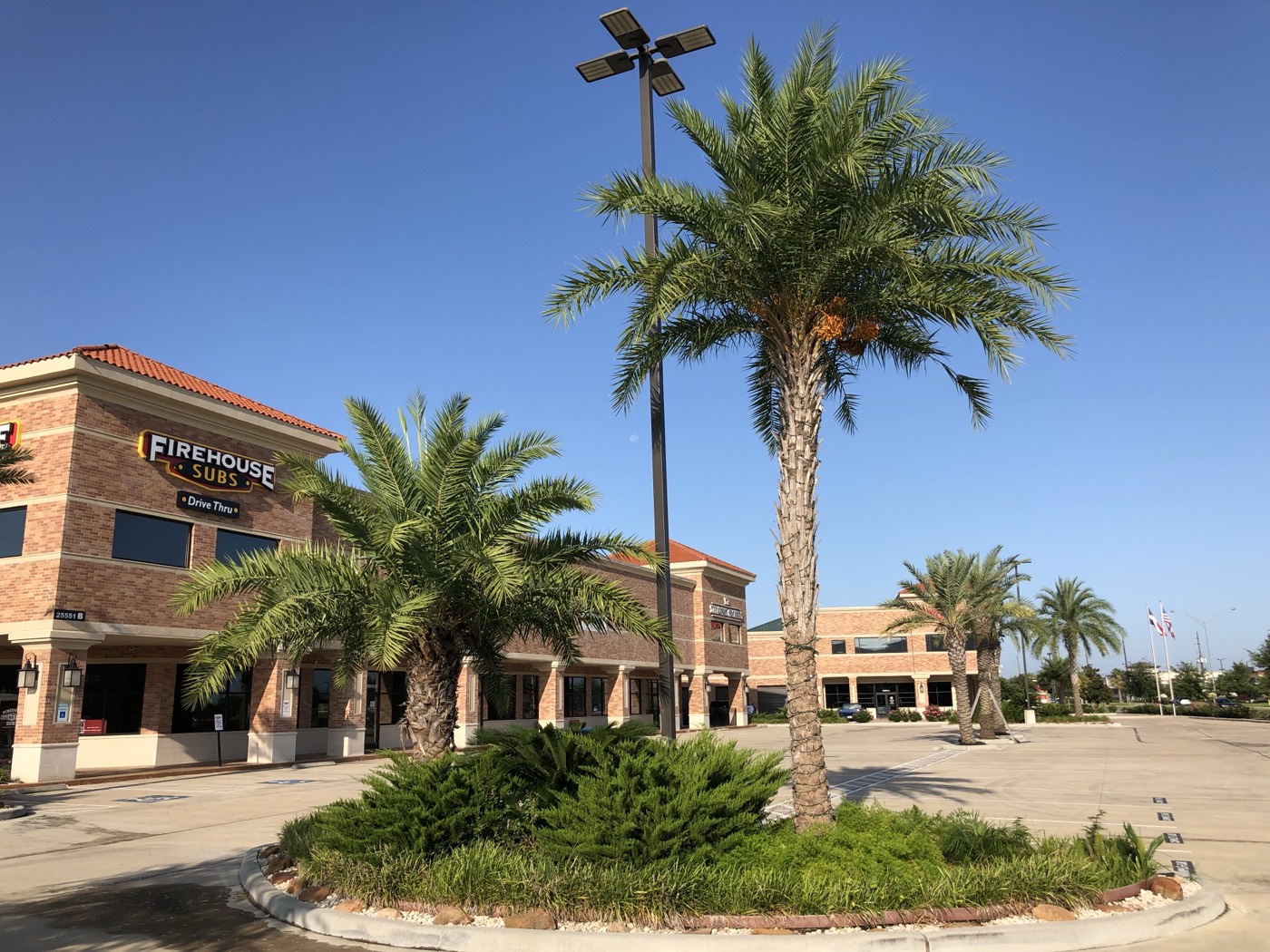
It is worth being honest about what Katy is and is not. It is not a dense, walkable ethnic quarter like Houston’s Hillcroft corridor. It is a sprawling, car-dependent suburb where Indian life is woven into master-planned neighbourhoods, school pick-up lines and strip-mall plazas rather than concentrated on a single street.
That is its own kind of arrival story. The measure of belonging in Katy is not a gateway arch but the ordinariness of it all: an Indian grocer next to a taqueria, a temple gala on the community calendar, a high school where a Diwali outfit on a Friday raises no eyebrows. For a great many Indian families in west Houston, that quiet ordinariness was exactly the point.
Frequently Asked Questions
How many Indians live in Katy, Texas?
The incorporated City of Katy is small and its Indian count is low, but that figure is misleading. The Indians in Katy, Texas overwhelmingly live in the much larger unincorporated Katy area and Katy school district, which spans Harris, Fort Bend and Waller counties, where the Asian population runs into the tens of thousands.
Why did so many Indian families move to Katy?
The two biggest draws were the highly ranked Katy Independent School District and proximity to Houston’s Energy Corridor, the cluster of oil, gas and engineering employers along Interstate 10. New master-planned neighbourhoods like Cinco Ranch offered space and good schools, the priorities that pulled Indian families out of inner Houston and into the suburbs.
Where do Indians in Katy worship?
Katy families use a mix of local and regional temples. The Sri Shirdi Sai Durga Shiva Venkateswara Temple serves the immediate area, while the BAPS Shri Swaminarayan Mandir in Stafford, the largest Hindu temple in Texas, and the Sri Meenakshi Temple in Pearland are well within driving distance for festivals and rituals.
Where can you find Indian food and groceries in Katy?
The commercial heart of Indian Katy runs along South Mason Road and the Grand Parkway. Tirupati Balaji Grocers on Mason Road is a popular grocery stop, while restaurants such as Kurrywalah on Mason Road and Tikka Temple on the Grand Parkway serve North Indian and Punjabi food.
How is Katy related to Sugar Land for Indian families?
The two are sister suburbs in west and southwest Houston, both in the diverse Fort Bend County orbit, and Indian families often weigh one against the other based on school zoning and commute. Sugar Land is the more established of the two, with more than a third of its residents Asian and a large Indian share among them.
Is Katy ISD really that diverse?
Yes. Several of its high schools are among the most diverse in the Houston region, with Asian students making up roughly 36 to 37 percent of enrolment at campuses like Tompkins and Seven Lakes. Indian families are a substantial part of that figure, which is one of the clearest signs of the community’s size.
If your family’s story passed through Katy, or any of the places Indians have made home in America, Atlas of Home can trace that journey. From a graduate visa and a first apartment near the Texas Medical Center, to a house in a Cinco Ranch cul-de-sac, to wherever you are now.