
Drive north on Lamar Boulevard, past the strip malls and the taquerias, and a pagoda appears at the corner of Braker Lane. Behind it sits a supermarket the size of a warehouse, its aisles stocked with live crab and rice in fifty-pound sacks. This is the closest thing Austin has to a downtown for its Chinese community, a community that did not arrive on railroads or in laundries but in the back of moving vans loaded with semiconductor know-how. The Chinese in Austin are, more than almost anywhere in America, a creation of the chip.
The Place
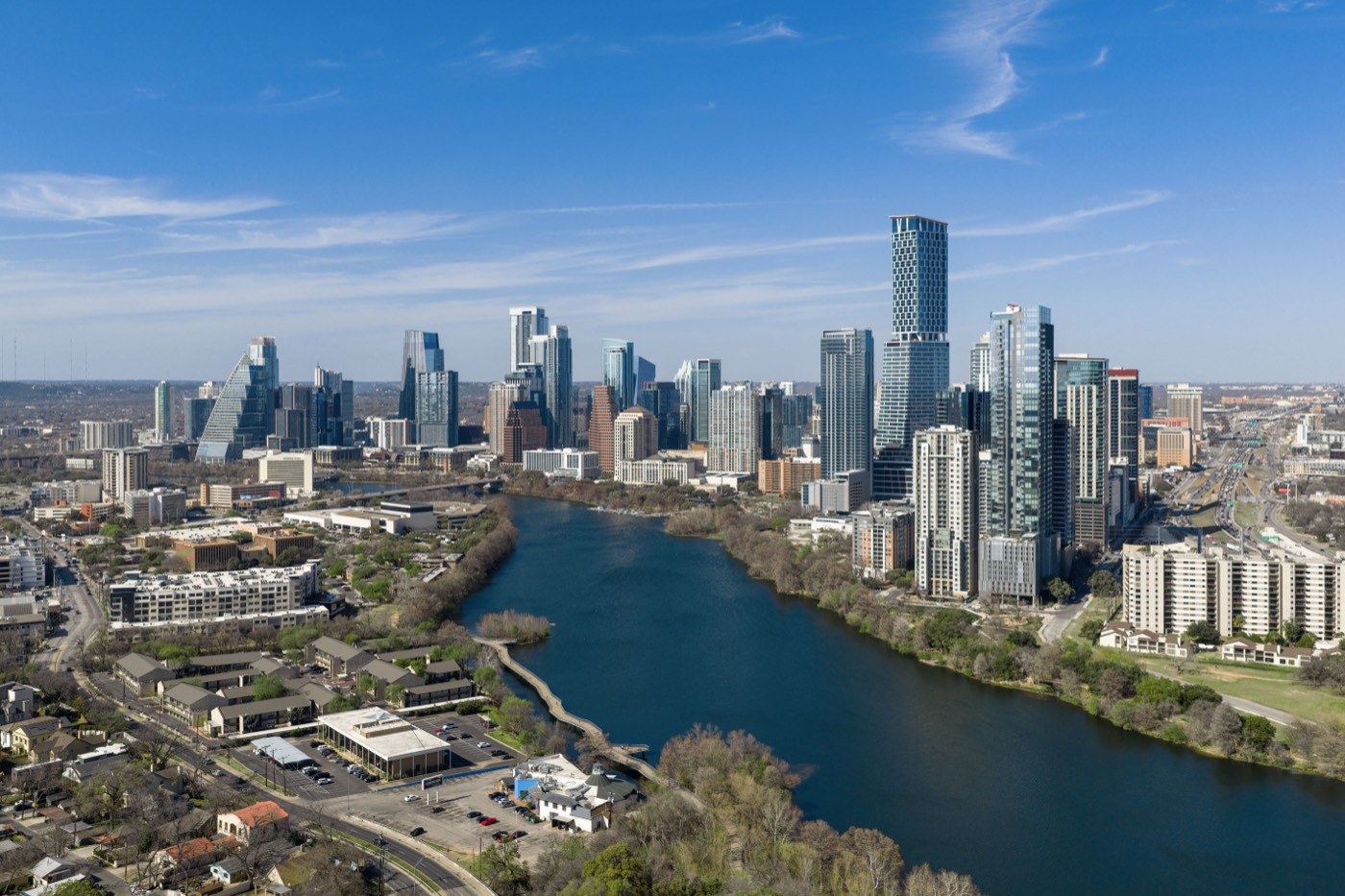
Austin is the capital of Texas and, since the 1990s, one of the fastest-growing tech hubs in the country. It is a city of roughly a million people that thinks of itself as a small town, ringed by suburbs that have swallowed the old farmland to the north and west.
The Chinese presence here is not concentrated in one walkable enclave the way it is in San Francisco or Flushing. It is spread across North Austin, the Williamson County suburbs of Round Rock and Cedar Park, and the affluent hills of the northwest. The thread that ties it together runs along North Lamar, where a 2006 shopping centre named itself Chinatown and gave a dispersed people a place to gather.
How It Became Chinese
Before the chip
Austin had Chinese residents long before it had a tech industry, but never many. For most of the twentieth century the city was a government and university town, and its Asian population was tiny. The University of Texas drew a trickle of Chinese graduate students from the 1950s onward, some of whom stayed.
One of the earliest visible Chinese businesses tells the story of how small the community was. When Ronald Cheng opened his restaurant Chinatown in 1983 on Bee Cave Road, he had learned to cook in his mother’s restaurant, which had been only the third Chinese eatery in the entire city. Austin in 1970 was a place where a Chinese family could count the competition on one hand.
Samsung, Dell, and the semiconductor pull
What changed Austin was silicon. The city had courted electronics manufacturers since the 1960s, but the decisive moves came later: the arrival of major chip operations, the explosive growth of Dell, founded by a UT dropout in 1984, and the watershed decision by Samsung to build a vast semiconductor plant in North Austin in 1997.
Those fabs and campuses needed engineers, and the global supply of semiconductor engineers ran heavily through Taiwan, Hong Kong, and mainland China. Apple, IBM, and a thicket of smaller firms added to the demand. Chinese professionals who might once have settled only in California or along the East Coast now had a reason to choose Texas, where salaries went further and the houses were enormous.
The northward sprawl
The newcomers did not settle downtown. They settled where the new jobs and the new houses were, which meant north. North Austin, with its zip codes clustered around the tech corridors, became the densest area of Asian settlement in Central Texas, and the Williamson County suburbs followed.
The pattern echoed what had happened in other Sun Belt tech regions. Engineers bought in master-planned subdivisions, chose them for the schools, and word travelled back through company networks and family chains. The same dynamic drew large numbers of Indian and Korean families, so that Chinese households in Austin often live among a broader Asian middle class rather than in a single-nationality enclave. The Williamson County suburbs that absorbed so many Chinese engineers also became home to the Indian community of Round Rock and the fast-growing Indian families of Cedar Park, a parallel professional migration drawn by the same chips and schools.
A doubling, and then a market
The growth was steep and recent. The Greater Austin Asian Chamber of Commerce has documented that the region’s total Asian population doubled between 2010 and 2021, making Asians the fastest-growing racial group in Central Texas. Cedar Park alone saw its Asian population grow by 225 percent in roughly a decade.
That kind of demand reshapes a retail landscape. The opening of Chinatown Center on North Lamar in 2006 was the first marker. A dozen years later, in early 2018, the floodgates opened: H Mart arrived in February and the Taiwanese-American chain 99 Ranch Market opened a 33,000-square-foot store on Airport Boulevard in March. A community that had once made do with a handful of shops suddenly had its pick.
The Landmarks
Chinatown Center, 10901 North Lamar Boulevard. Opened on 30 September 2006, this is the symbolic heart of Chinese Austin. Behind its pagoda gate sit more than thirty-five restaurants and shops, the offices of the Asian American Chamber of Commerce, and the anchor that draws the crowds, a sprawling Asian supermarket. During Lunar New Year the parking lot fills with lion dancers and the crackle of firecrackers.
MT Supermarket, inside Chinatown Center. Billed as the largest Asian supermarket in Central Texas, MT is the grocery backbone of the community, its produce section stocked with bitter melon and water spinach and its tanks alive with crab and tilapia. For many Chinese families in North Austin, the Saturday run to MT is a fixed ritual.
99 Ranch Market, 6929 Airport Boulevard. When this Taiwanese-American chain opened in March 2018, it signalled that Austin’s Chinese market had grown large enough to attract national Asian-grocery players. The store carries a bakery, a hot deli with Peking duck and dim sum, and a bubble tea counter, the full apparatus of a California-style 99 Ranch transplanted to Texas.
Asian American Resource Center, 8401 Cameron Road. Opened on 28 September 2013 after a 2006 city bond measure and a federal grant, the AARC is the civic anchor for Asian Austin. Members of the local Asian American community donated design services. Its ballroom, classrooms, and exhibition galleries host the annual CelebrASIA festival each May and host Lunar New Year programming for the broader public.
Austin Chinese Church, 11118 Dessau Road. One of the spiritual centres of the community, ACC holds Mandarin, Cantonese, and English services on Sunday mornings and has grown enough to open a southwest campus serving families on the other side of the metro. For first-generation immigrant families, the church doubles as a social network and a Chinese-language lifeline for their children.
Austin Chinese School. One of the largest and oldest weekend Chinese schools in the city, ACS exists to do what immigrant communities everywhere try to do: keep the language alive in children who think and dream in English. Saturdays bring parents ferrying kids to classrooms for hours of characters, calligraphy, and culture.
Chinatown restaurant, 3407 Greystone Drive. Ronald Cheng’s restaurant is a living thread back to the small Austin of the early 1980s. The original opened on Bee Cave Road in 1983, passed through a Chinese-Mexican fusion phase as El Chino’s, and the Greystone and Bee Cave kitchens carry the name forward. Few Austin restaurants connect the present community to its sparse beginnings so directly.
Where They Came From
The Chinese of Austin do not trace to a single village or province the way some older American Chinatowns do. They are a professional migration, and their origins reflect the geography of the global tech industry.
Many came by way of Taiwan and Hong Kong, the engineering pipelines that fed the early semiconductor boom. Others came from mainland China, often arriving first as graduate students at the University of Texas or at universities elsewhere in the United States before following a job offer to Austin. There is also a notable thread of Teochew Chinese, whose dialect can be heard along Lamar, a reminder that the community is not monolithic.
The common denominator is education and skill rather than region. These are families who moved for a fab, a campus, or a startup, and chose Austin over the more obvious gateways because the maths of cost and salary favoured Texas. Their children now grow up Texan, with the weekend Chinese school as the thread back. The same Texas tech corridor produced larger and older Chinese enclaves in the Dallas and Houston suburbs, from the Chinese of Plano and the Chinese of Frisco north of Dallas to the Chinese of Sugar Land outside Houston, communities Austin’s newer settlement increasingly resembles.
Austin Today
The Chinese community in Austin is prosperous, dispersed, and still growing. It does not have the dense, lived-in streetscape of an old Chinatown, and it never will. Its centre of gravity is a shopping plaza, a supermarket, a church hall, and a weekend classroom, scattered across forty miles of suburb.
That dispersal is partly a story of success. Chinese families in Austin tend to be homeowners in good school districts, employed in well-paid technical work, woven into a broader Asian middle class that includes large Indian and Korean populations. The North Lamar district functions less as a residential heartland than as a cultural anchor that everyone drives to.
The challenge, as with every professional diaspora, is continuity. The first generation built the churches and the schools and the markets. Whether the second generation, raised on Texas barbecue as much as on dumplings, keeps them full is the open question that the language schools and the Lunar New Year crowds are quietly trying to answer.
Frequently Asked Questions
Where do the Chinese in Austin live?
The Chinese in Austin are concentrated in North Austin and the northwest suburbs, along with the Williamson County cities of Round Rock and Cedar Park. There is no single residential enclave; the community is dispersed across affluent tech-corridor neighbourhoods, with North Lamar serving as its commercial and cultural anchor.
Is there a Chinatown in Austin?
Austin has Chinatown Center, a shopping plaza that opened in 2006 at 10901 North Lamar Boulevard, marked by a pagoda gate. It is not a residential Chinatown in the historic sense but a retail and cultural hub with a large Asian supermarket, dozens of restaurants and shops, and Lunar New Year celebrations.
Why did Chinese professionals move to Austin?
The semiconductor and computing industry drew them. Samsung’s North Austin chip plant, Dell, IBM, Apple, and the University of Texas created sustained demand for engineers, many of whom came from Taiwan, Hong Kong, and mainland China. Lower housing costs than California made Austin especially attractive.
How large is the Chinese community in Austin?
Austin’s total Asian population, of which Chinese are a significant part, roughly doubled between 2010 and 2021, making Asians the fastest-growing racial group in Central Texas. Asians make up around 7 percent of the city of Austin’s population, with even higher shares in suburbs like Cedar Park.
Where do Chinese families in Austin buy groceries?
The main options are MT Supermarket inside Chinatown Center on North Lamar, billed as the largest Asian supermarket in Central Texas, and 99 Ranch Market on Airport Boulevard, which opened in 2018. Both carry fresh seafood, Asian produce, and prepared foods central to the community.
What cultural institutions serve Chinese Austin?
The Asian American Resource Center on Cameron Road, the Austin Chinese Church on Dessau Road, and the Austin Chinese School are central. The Greater Austin Asian Chamber of Commerce supports Asian-owned businesses, and the annual CelebrASIA festival and Lunar New Year events bring the community together publicly.
If your family’s story passed through Austin, or any of the places Chinese families have made home in America, Atlas of Home can trace that journey. From the fabs of Taiwan and the campuses of the mainland to the pagoda gate on North Lamar, to wherever you are now.