
Drive north on US 183 past the toll plaza and the office parks thin out into something newer: master-planned subdivisions, an arena, and strip centres where the marquee tenant is as likely to be a dosa house as a taqueria. The Indians in Cedar Park, Texas, did not arrive to a historic enclave. They helped build one, almost from scratch, in a Williamson County town that barely existed forty years ago.
The Place
Cedar Park sits just northwest of Austin, in the southern tip of Williamson County, a roughly twenty-minute drive from the chip fabs and corporate campuses that define the region’s economy. It was named after a heavy-flowing spring once called Running Brushy, and as recently as 1960 it counted barely 200 residents.
Today it is home to more than 79,000 people, one of the fastest-growing suburbs in one of the fastest-growing metros in the country. The Austin and Northwestern Railroad crossed the old Cluck ranch here in 1882. A century later, the ranch land became subdivisions, and the subdivisions filled with engineers.
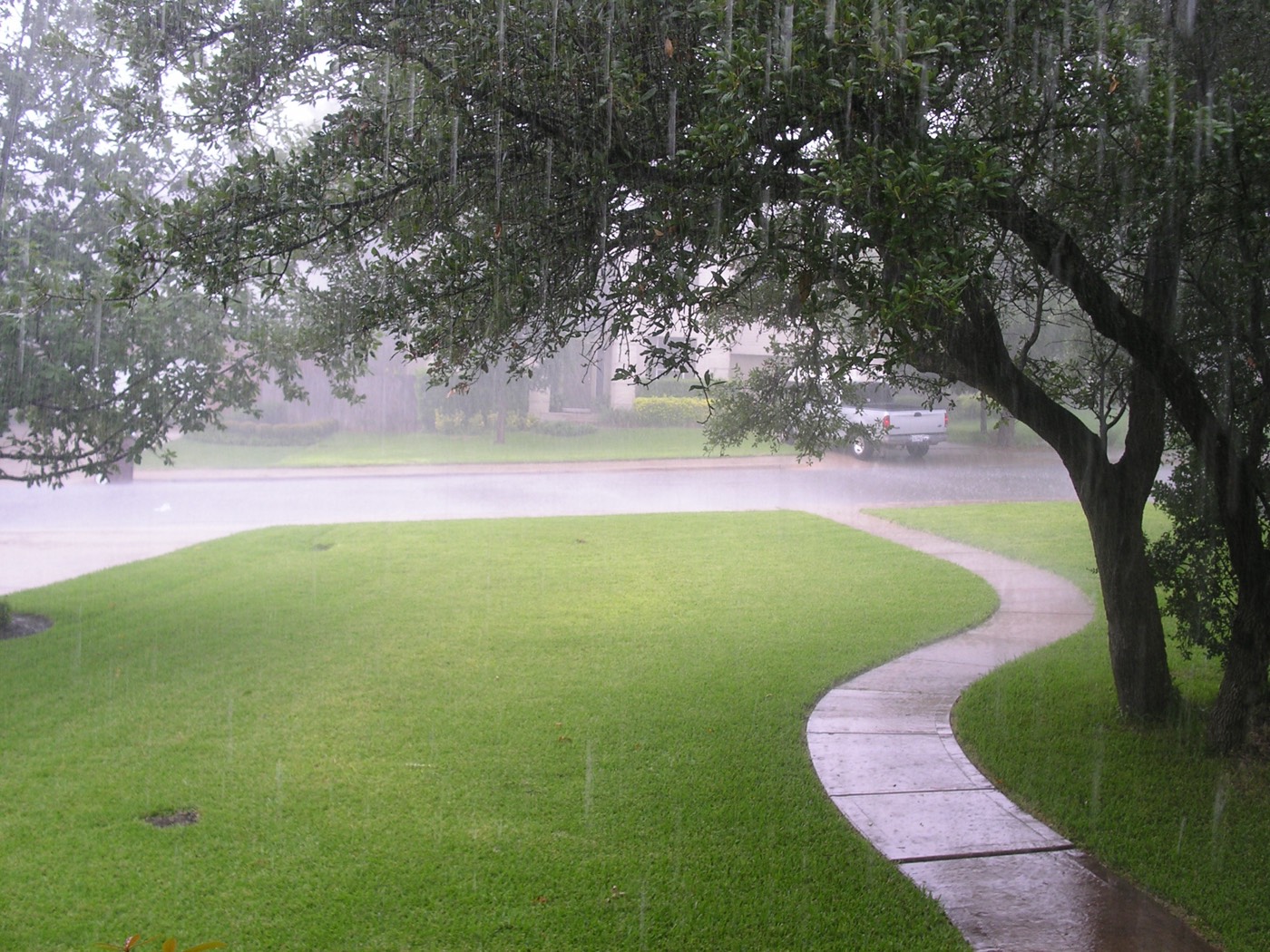
The geography is unfussy and modern: the 183A toll road carving north, the H-E-B-anchored shopping centres, the H-E-B Center arena where the local hockey and basketball teams play. It is a suburb that was designed, not weathered into shape, and that openness left room for newcomers to write themselves in.
How It Became Indian
There is no single founding story for Indians in Cedar Park, no garment district or first parish to point to. The community grew the way the town itself did: as an overflow, then a destination, of Austin’s technology boom.
The Austin tech magnet
Austin’s reputation as a software and semiconductor hub was built over decades by IBM, Texas Instruments, Samsung, and, above all, Dell, founded in nearby Round Rock in 1984. These were exactly the employers that recruited heavily from India’s engineering schools through the 1990s and 2000s on H-1B visas.
Indian professionals who landed the jobs needed somewhere to live within a reasonable commute. Cedar Park, with its new construction, good schools, and Williamson County tax base, fit the brief almost perfectly.
The timing mattered. Cedar Park’s own population exploded through the 2000s and 2010s, the same decades in which Indian tech migration to the United States peaked. Newcomers from Hyderabad or Bangalore were not squeezing into an established town. They were arriving alongside the homebuilders, choosing their subdivision off the same plat as their American-born neighbours.
The Williamson County surge
The clearest evidence of what happened is in the numbers. Asian Indians added more than 22,000 people to Central Texas between 2015 and 2021, more than five times the growth of any other Asian group in the region, according to the Greater Austin Asian Chamber of Commerce’s Central Texas Asian Impact Project.
That growth was concentrated overwhelmingly in Williamson County, in Round Rock and Cedar Park. In several Cedar Park zip codes the Indian population more than doubled over those six years. Statewide, the Census Bureau counted more than 450,000 Indian Americans in Texas by 2021, nearly double the 2010 figure.
Apple changes the math
The biggest single accelerant arrived in 2019, when Apple broke ground on a $1 billion campus at 6900 W. Parmer Lane, in the Williamson County portion of northwest Austin, minutes from Cedar Park’s southern edge. The site was planned for three million square feet and the capacity to house up to 15,000 employees.
A campus of that scale, layered on top of the existing Dell and semiconductor workforce, drew thousands more skilled families into the corridor. Many of them were Indian, and many chose Cedar Park and neighbouring Leander for the same reasons their predecessors had: schools and commute.
Williamson County, eager for the jobs, agreed to abate a large share of Apple’s property taxes for fifteen years in exchange for the investment and the promise of thousands of new positions. The deal was a bet on exactly the kind of high-earning, education-focused household that Cedar Park’s Indian community already exemplified.
From commuters to community
What began as a scattering of households following jobs has, over the past decade, knit itself into something recognisable. Grocers opened, then restaurants, then weekend classical-dance and language schools. The arc here mirrors the one Indian families followed in Round Rock just to the east, and the larger Texas suburbs to the north like Frisco and Plano, where tech hiring built Indian middle-class enclaves in a single generation.
The Landmarks
India Bazaar, 14300 Ronald Reagan Boulevard, Leander. The everyday anchor of the community sits just over the Cedar Park line in the same school district. Part of a Texas chain, its aisles of lentils, spices, and frozen parathas are where the weekly rhythm of an Indian household here actually plays out.
Desi District, 12301 W. Parmer Lane, Cedar Park. A Dallas-based hybrid of grocer and restaurant, it chose Cedar Park for its first Austin-area location, opening in 2024. The format says a lot about the customer base: a meat market selling fresh goat, fish, and chicken alongside a kitchen turning out playful crossovers like the taco-dosa.
Radha Madhav Dham, 400 Barsana Road, Austin. In the hills southwest of the city sits the oldest Hindu temple in Texas and one of the largest in North America, set on more than 200 acres beneath a 90-foot golden dome. Its grounds were designed to evoke Braj, the land of Krishna’s childhood, and its Diwali and Janmashtami gatherings draw families from across the metro, Cedar Park included.
Cedar Park High School, Leander ISD. One of the reasons families pay Cedar Park prices, the school holds an A rating from the Texas Education Agency and ranks among the better public high schools in the state. For many Indian parents the school district is not a footnote to the home search. It is the home search.
Vandegrift High School, Leander ISD. Serving the western, newer reaches of the area, Vandegrift ranks inside the top 90 high schools in Texas and carries its own A rating. The Leander ISD report-card numbers are quoted in Indian family WhatsApp groups the way home prices once were.
The Parmer Lane corridor, southern Cedar Park. Not one address but a stretch: the band of office space and strip retail running along Parmer Lane toward the Apple campus. It is here, between the cubicles and the car parks, that the Indian grocers and restaurants cluster, because this is where the workday actually happens.
Where They Came From
Cedar Park’s Indians are, overwhelmingly, a professional-class migration rather than a chain migration from a single village. They came for jobs in software, semiconductors, and hardware, which means the recruiting pipelines ran through India’s engineering campuses and the major IT cities.
In practice that produces a community heavy with Telugu speakers from Andhra Pradesh and Telangana, alongside Tamil, Hindi, Gujarati, and Malayalam-speaking families, a mix reflected in the Austin area’s Telugu associations and the Greater Austin Malayalee Association. It is a cross-section of urban, English-educated India rather than one region transplanted whole.
The route to Cedar Park itself is often a second or third move: from a first US job elsewhere, or from a starter apartment in Austin proper, out to the suburb once a family and a school district entered the picture. Some arrive by way of the older Indian centres of the East Coast and Midwest, places like Edison, New Jersey, before a company transfer or a better cost of living pulls them to Texas.
The pull of Central Texas is a familiar one in the wider Indian-American story. Where an earlier generation built dense, self-contained districts such as Houston’s Mahatma Gandhi District, the Cedar Park cohort settled into the suburban grain of the Sunbelt, trading the storefront enclave for the cul-de-sac.
Cedar Park Today
The Cedar Park of 2026 wears its diversity quietly. The 2020 census found the city about 17 percent Asian, with residents of Indian origin a substantial slice of that, and the share has kept climbing since. You see it not in a marked-off neighbourhood but in the texture of ordinary commerce.
It is a Saturday queue at India Bazaar, a temple flyer on a coffee-shop board, a Bharatanatyam recital in a rented hall, a cricket pitch improvised on a park outfield. The community’s institutions are young and still forming, more strip-mall than landmark, which is exactly what you would expect of a place this new.
The calendar fills out accordingly. Diwali brings rangoli and fireworks to driveways across the subdivisions, and many families make the short drive to Round Rock, whose festival is the largest in the metro, or to Radha Madhav Dham for the temple’s celebrations. Telugu and Malayalam associations stage their own gatherings, Ugadi and Onam among them, in rented halls and community centres rather than purpose-built ones.
There is a second generation rising now, children who will grow up calling Cedar Park, not Hyderabad or Chennai, home, and who will decide what the community’s permanent shape becomes. Their parents bought houses; they may yet build the temple, the cultural centre, the festival ground that turns a cluster of families into a named place.
What Cedar Park offers, and what keeps drawing Indian families, is unglamorous and durable: A-rated schools, a short drive to the best jobs in the state, and neighbours who made the same calculation. Whether the town develops the dense cultural infrastructure of an older enclave, or stays a comfortable bedroom suburb with great groceries, is the open question of the next decade.
Frequently Asked Questions
How many Indians live in Cedar Park, Texas?
Recent estimates put residents of Indian origin at roughly 4 percent of Cedar Park’s population of about 79,000, part of an Asian population of around 17 percent. The Indian share has grown sharply since 2015 and continues to rise.
Why did so many Indians move to Cedar Park?
The Indians in Cedar Park, Texas, came largely for technology jobs at Austin-area employers such as Dell, Samsung, and Apple, whose $1 billion campus opened minutes away. Highly rated Leander ISD schools and a short commute sealed the choice for many families.
Is there an Indian grocery store in Cedar Park?
Yes. India Bazaar on Ronald Reagan Boulevard serves the area, and Desi District on W. Parmer Lane opened in 2024 as a combined grocer, meat market, and restaurant, its first Austin-area location.
Where do Indians in Cedar Park worship?
Many attend Radha Madhav Dham, the oldest Hindu temple in Texas, set on more than 200 acres southwest of Austin, along with other temples and gurdwaras across the metro. Major festivals like Diwali and Janmashtami draw families from Cedar Park.
What languages do Cedar Park’s Indian families speak?
The community skews toward Telugu speakers from Andhra Pradesh and Telangana, alongside Tamil, Hindi, Gujarati, and Malayalam, reflecting recruitment from India’s major IT and engineering centres.
How does Cedar Park compare to Round Rock for Indian families?
The two neighbouring Williamson County suburbs grew together as the centre of Central Texas’s Indian population boom. Round Rock hosts the metro’s largest Diwali festival, while Cedar Park offers Leander ISD schools and proximity to the Apple campus; many families consider both.
If your family’s story passed through Cedar Park, or any of the places Indians have made home in America, Atlas of Home can trace that journey. From the engineering campuses of Hyderabad and Chennai to a Leander ISD cul-de-sac off Parmer Lane, to wherever you are now.