
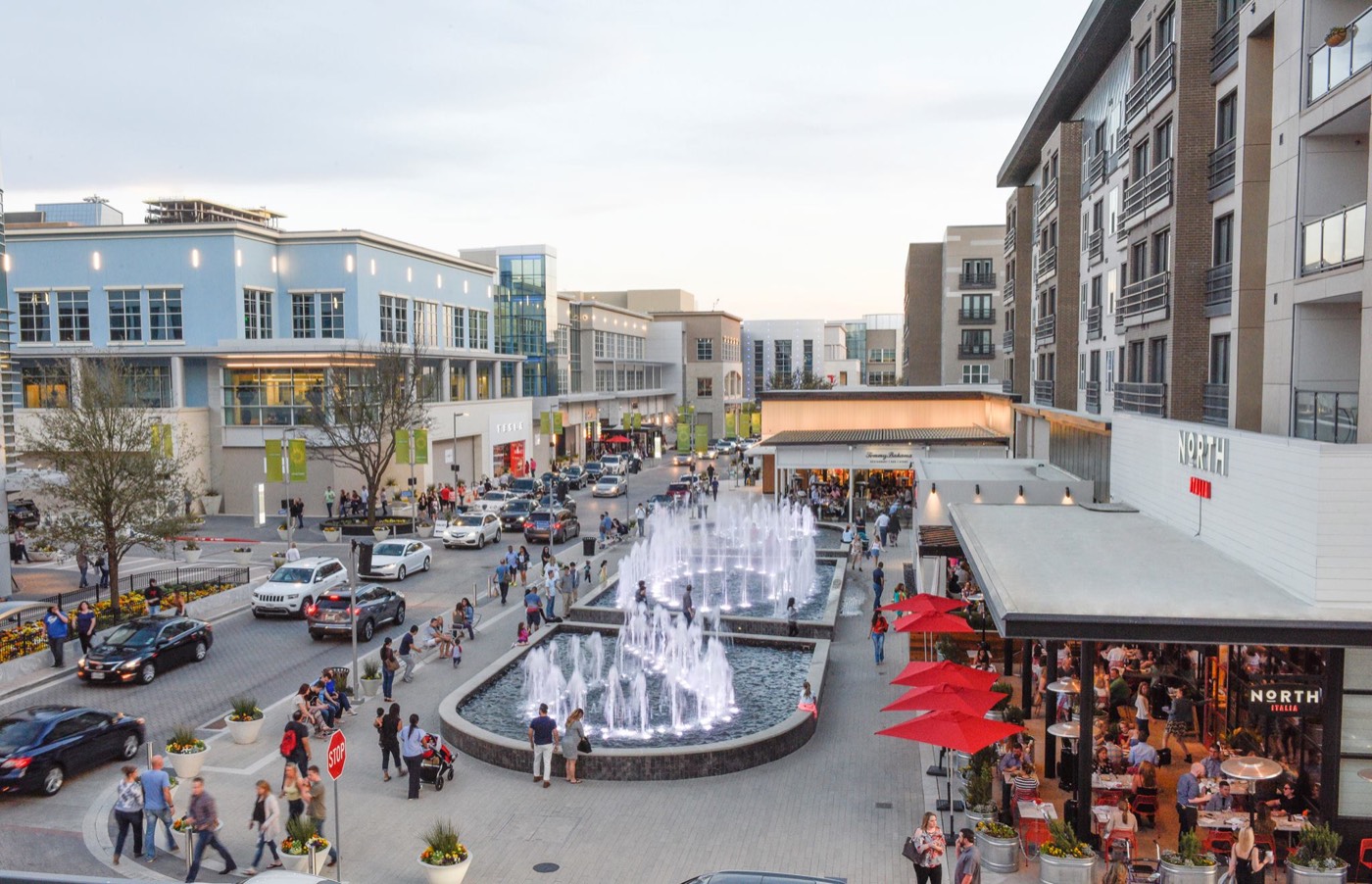
On a Saturday morning at the corner of Spring Creek Parkway and the North Central Expressway, the parking lot of 99 Ranch Market fills with families speaking Mandarin, the trunks of German sedans loading up with live tilapia and gai lan. This is the centre of the Chinese in Plano, Texas: a community of engineers, executives and their children who turned a prosperous North Dallas suburb into one of the most important Chinese American hubs between the coasts.
The Place
Plano sits roughly twenty miles north of downtown Dallas, in Collin County, strung along the US-75 corridor that runs up through Richardson, Allen, Frisco and McKinney. Once a quiet farming town, it became one of America’s wealthiest and best-run suburbs, repeatedly topping national lists for safety, schools and median income.
Its prosperity has a corporate engine. Toyota Motor North America consolidated its headquarters here in a roughly two-million-square-foot campus at Legacy West, drawing employees from California, New York, Michigan and Kentucky into a single Texas base. JPMorgan Chase built a high-rise campus on an anchor corner of the same development to house thousands of relocated workers, joining Liberty Mutual and a cluster of other large employers.
Around those towers grew a residential city of cul-de-sacs and master-planned neighbourhoods, and into that city, over four decades, came tens of thousands of Chinese families.
How It Became Chinese
The Chinese presence in Plano did not begin in Plano. It began one suburb south, in Richardson, in the middle of the 1980s.
The Telecom Corridor, 1980s
Richardson’s stretch of US-75 earned the nickname the Telecom Corridor for the technology firms clustered there, anchored by Texas Instruments and Rockwell International. Chinese and Taiwanese engineers and scientists, many of them recent graduates of American universities, took jobs at those companies and settled nearby.
Chinese investors gave the new arrivals a cultural anchor in the form of a Chinatown complex on North Greenville Avenue in Richardson, with grocery stores, restaurants and a community centre. It remains a focal point for the wider region, host each February to a Lunar New Year festival of dragon dances and martial arts. The Dallas Chinese Community Centre, with its library and classes, operates from the same complex.
One longtime resident recalled moving to the area in the mid-1980s, when most of the region’s Chinese children lived in Richardson rather than Plano. The community’s first institutions took root there. The Taiwanese Association of America’s DFW chapter had been established in 1974, and the Formosan Christian Church of Dallas was founded in 1978 by Taiwanese student immigrants.
The Move North, 1990s and 2000s
As families grew and prospered, they moved north into Plano, drawn above all by the schools. Plano Independent School District became a magnet: Plano West Senior High School led the state of Texas in 2017 with 77 National Merit Semifinalists, and the district produces dozens of National Merit honourees every year.
For Chinese parents raised on the idea that education is the surest ladder, a district like that was reason enough to choose a house. Word travelled through family networks and professional circles: a specific subdivision zoned to a specific elementary school could decide where a family bought. The professional class kept arriving, many holding advanced degrees and working in the region’s technology and engineering sectors, and the schools, in turn, were lifted by the children they sent.
The transformation showed up in the classroom rosters and in the queues at weekend Chinese school, but also in the supermarkets, the churches and the restaurant signage. A suburb known nationally for corporate relocations was quietly becoming, street by street, one of the most Chinese cities in the American interior. Plano had crossed a threshold.
The numbers tell the story plainly. From 2000 to 2016, Plano’s Asian American population more than doubled, from 22,594 to 53,335 residents, becoming the fastest-growing racial group in the Dallas area.
Building a Community, 1990s onward
The institutions multiplied. The Association of Chinese Professionals was founded in 1993 and grew past a thousand members. Chinese schools, where second-generation children spend their Saturdays learning to read and write the language of their grandparents, spread across the suburbs. The Dallas Chinese School, founded in 1985, is the metroplex’s oldest, serving families from Plano, Richardson and well beyond.
Six Chinese churches were established in Plano alone, and some sixty Chinese cultural organisations took root across North Texas, concentrated in Plano and Richardson. The First Chinese Baptist Church of Dallas had incorporated in 1986; the Buddhist Fo Guang Shan temple in Richardson was inaugurated in the mid-1990s. The community that had started as a few engineers’ families had become a civic world of its own.
The pattern echoed what was happening in other prosperous Sunbelt suburbs. The growth of the Chinese in Sugar Land, Texas, outside Houston, followed a similar arc of professional families settling for jobs and schools, a different end of the same long migration.
The Landmarks
99 Ranch Market, 131 Spring Creek Parkway. The anchor of Chinese Plano, this branch of the Tawa-owned chain carries live seafood, Asian vegetables, and a food court, bakery and salon under one roof. The surrounding plaza, dotted with restaurants and a Daiso, functions as a de facto town square for Chinese families on the weekend.
Jusgo Supermarket, 240 Legacy Drive. A pan-Asian grocery on Legacy whose interior is broken into stall-like shops: a porcelain seller, a bakery, a clothing stand. It sits on the same stretch of Legacy that runs out to the corporate campuses, a reminder of how closely the community and the office towers grew up together.
zTAO Marketplace, 2049 Coit Road. A Chinese and pan-Asian market on Coit stocked deep with hot-pot ingredients, dinnerware and seafood, serving the dense ring of Chinese households along the Coit and Park corridor.
Big Claw, off Coit Road and Park Boulevard. A Chinese restaurant opened in April 2017 by Gary Wang, known for dishes such as sour fish. Its arrival, alongside neighbours like the long-running Sichuanese Cuisine with its bright red double doors, marked the moment Plano’s once-scattered Asian dining scene consolidated into a single walkable district.
85°C Bakery Cafe, 99 Ranch plaza. A branch of the Taiwanese bakery-and-coffee phenomenon, its sea-salt coffee and glass cases of buns drawing queues. For many Plano families it is a taste of Taipei reproduced faithfully in a Texas strip mall.
The Dallas Chinese School and Sunray Chinese School. Weekend schools where the second generation learns characters, calligraphy and culture. The Dallas Chinese School, founded in 1985, is the metroplex’s oldest; Sunray, founded in 1984, has long run a Plano campus. Their classrooms, borrowed from public schools on Saturdays, are where heritage is deliberately handed down.
Where They Came From
Plano’s Chinese community is not from one place. Its earliest core was heavily Taiwanese, reflecting the wave of Taiwanese students who came to American graduate schools in the 1970s and 1980s and stayed to work in technology. Their institutions, the Taiwanese association, the Formosan church, came first.
Alongside and after them came immigrants from mainland China, many arriving for graduate study or skilled work and settling in the technology economy of North Texas. The result is a community that holds Mandarin and Taiwanese, traditional and simplified characters, mainland and island traditions, side by side.
What unites them is a profile rather than a single origin: highly educated, professional, drawn to Plano by work in the corporate and technology sectors and, above all, by the schools. It is a community defined less by the village left behind than by the ambitions carried forward.
Plano Today
Today the Chinese are one of the largest and most visible communities in a strikingly Asian city. Asian Americans make up well over a fifth of Plano’s population, and Chinese residents are counted in the tens of thousands, alongside the city’s large Indian community, whose own story runs parallel along the same corridor. You can read about that community in our piece on the Indians in Plano, Texas.
The food scene that was once, in one writer’s words, very disjointed, is now dense and self-sufficient. A family can buy live fish, eat Sichuan hot pot, and finish with Taiwanese shaved ice without leaving a single plaza. The markets on Legacy, Coit and Spring Creek are crowded every weekend, and the restaurant openings of 2017, Big Claw and its neighbours, marked the point at which the cuisine stopped being scattered and became a destination in its own right.
This is a young community by the standards of America’s old Chinatowns, suburban rather than urban, built around schools and office parks rather than a historic downtown. But its scale and confidence place it among the country’s significant Chinese centres, more akin to the Chinese in Cupertino, California than to the dense streetscapes of the Chinese in Monterey Park, California, the suburb often called the first American Chinatown of the modern era.
What Plano shares with all of them is permanence. The weekend schools, the churches and temples, the markets that anchor whole plazas: these are not the marks of a temporary posting but of a community that has decided to stay, and to raise its children fluent in two worlds.
Frequently Asked Questions
How many Chinese people live in Plano, Texas?
Estimates vary by method. Census-style counts have put Plano’s Chinese population in the tens of thousands, and a community estimate from the Association of Chinese Professionals has cited a figure of around 30,000. The Chinese in Plano are one of the city’s largest ethnic communities.
Why did so many Chinese families move to Plano?
Two forces drew them: jobs and schools. Many arrived through the technology and engineering economy of the Richardson and Plano corridor, and Plano Independent School District’s nationally ranked schools made the city especially attractive to families who prize education.
Where do Chinese residents in Plano shop for groceries?
The main Chinese and pan-Asian markets include 99 Ranch Market on Spring Creek Parkway, Jusgo Supermarket on Legacy Drive, and zTAO Marketplace on Coit Road, all anchoring plazas full of restaurants and bakeries.
Did the Chinese community start in Plano or Richardson?
It started in Richardson. Chinese and Taiwanese engineers settled there in the mid-1980s to work along the Telecom Corridor at firms such as Texas Instruments and Rockwell International, then moved north into Plano as families grew and sought better schools.
Are there Chinese schools in Plano?
Yes. Weekend Chinese schools serve the community across North Texas, including the Dallas Chinese School, founded in 1985 and the metroplex’s oldest, and Sunray Chinese School, founded in 1984, which has long operated a Plano campus.
How is the Chinese community in Plano different from older Chinatowns?
The Chinese in Plano form a suburban, professional community built around schools, corporate campuses and shopping plazas rather than a historic urban downtown. It is younger and more dispersed than places like Chinatown in San Francisco, but large and well established.
If your family’s story passed through Plano, or any of the places Chinese families have made home in America, Atlas of Home can trace that journey. From the lecture halls of Taipei and the engineering offices of the Telecom Corridor, to a house chosen for its school district in Plano, to wherever you are now.