
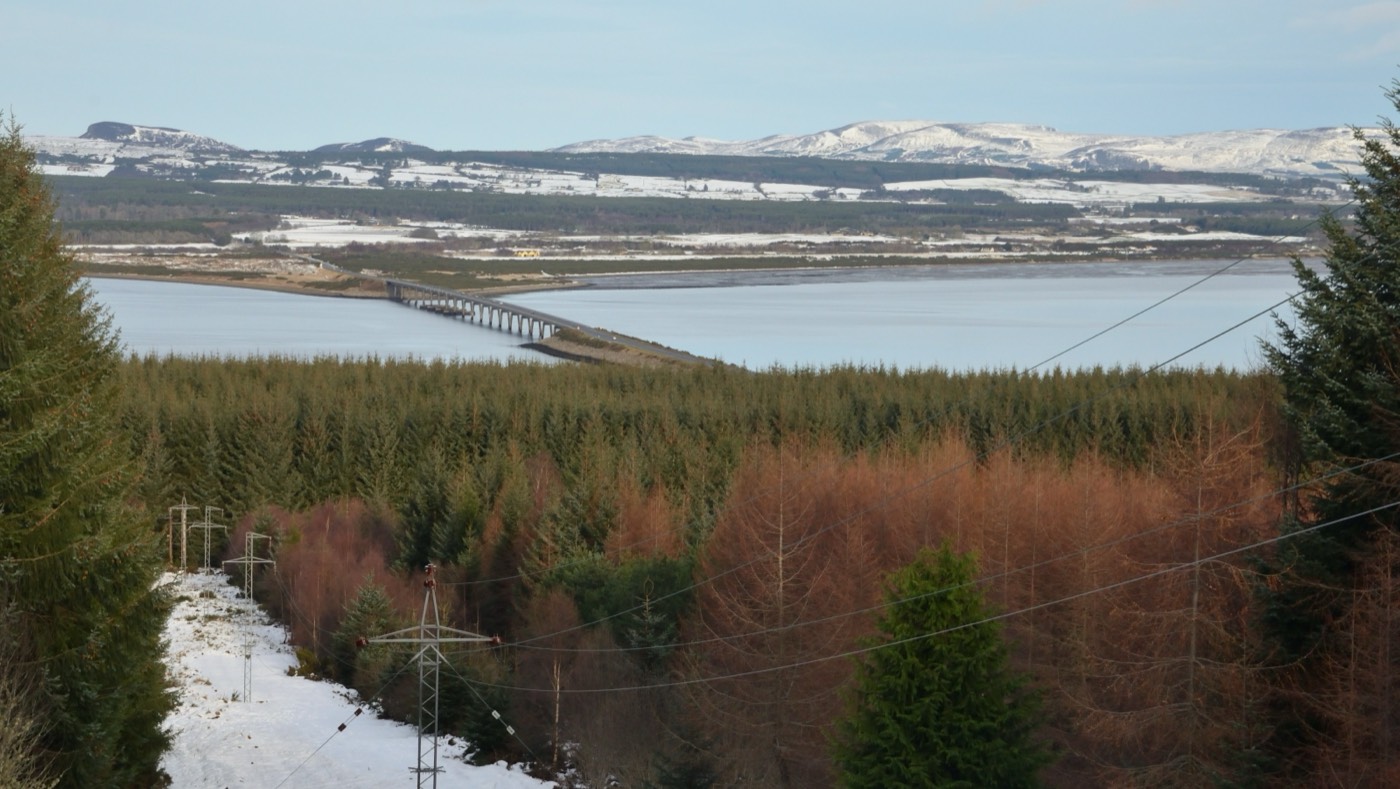
The Ross surname most often means a headland, from the Gaelic ros, and its oldest home is the province of Ross in the far north of Scotland. But it reached America along at least four separate roads, and only one of them runs through the Highlands.
What Does the Surname Ross Mean?
Ross usually means headland or promontory, from the Gaelic ros, the word that named the coastal province of Ross in northern Scotland centuries before anyone carried it as a family name.
That is the common reading, not the only one. Gaelic ros shares an ancestor with Welsh rhos, moor or heath, and several place-name scholars prefer that sense for the northern province: high open upland rather than a spur of land in the sea. The sources do not fully agree.
The complication is that Ross is not one word. In German, Ross means horse, and it produced a wholly unrelated surname. What your Ross means depends on which Ross family you belong to.
Where the Ross Name Comes From
Most American Rosses trace to Scotland, and specifically to the province and earldom of Ross in what is now Ross and Cromarty. The name also arose independently in Normandy and Yorkshire, in German-speaking Europe, and, more thinly, in Ireland.
The Highland clan of Ross
Ross was recorded as a province in the tenth century, claimed by the Scottish crown in 1098 and held as an earldom from the twelfth. The first chief we can name is Fearchar mac an t-Sagairt, “son of the priest”, of a kindred descended from the hereditary abbots of Applecross. He helped Alexander II put down a rebellion in Moray and Ross and was made Earl of Ross in the 1220s.
His descendants fought at Bannockburn in 1314, lost Earl Hugh at Halidon Hill in 1333 and turned out again at Harlaw in 1411. Late in the fourteenth century the earldom and the chiefship parted company, the chiefship passing to Hugh Ross of Rariches, granted the lands of Balnagown by charter in 1374. Balnagown Castle in Easter Ross has been the chiefs’ seat ever since, with the burgh of Tain as the clan’s town.
Ros, Roos and Rots
A second Ross is Anglo-Norman, taken from Roos in Holderness, East Yorkshire, and from Rots near Caen in Normandy. Robert de Ros married Isabella, a daughter of William the Lion, and carried the name into Scotland from the south, which is why some Lowland Rosses have no Highland ancestry at all.
In England the name attaches as well to Ross-on-Wye in Herefordshire, from the same Brittonic root. Two Ross families can share a spelling, a country and no common ancestor at all.
Ross the horse: German and Jewish bearers
In German-speaking Europe, Middle High German ros gave a surname for a horse breeder or keeper, a nickname for a man thought to resemble one, or a house marked by the sign of a horse. Among Ashkenazi Jewish families Ross carries that occupational sense and also serves as a shortened or Americanised form of Rose, Rosen and similar names.
In Ireland, Ross is largely a settler surname brought in by Scots and English planters, heaviest in Ulster. A rare native personal name Ros was anglicised as Ross by a handful of families, but it accounts for very few bearers.
Spelling Variants and Related Names
The Gaelic form is Ros, and a clansman was a Rosach. The clan’s own Gaelic name is Clann Anndrais, “children of Andrew”, which is why Anderson sits so oddly on the sept lists.
Documented variants include Rosse, Ros, de Ros, Roos and Roose. Rose is a separate Scottish name: Clan Rose of Kilravock is not Clan Ross, however often the two are muddled. Rossi is Italian and unconnected, and Rouse and Russ come from Old French rous, red-haired.
Names listed as associated with Clan Ross include Anderson, Andrew, MacAndrew, Gillanders, MacTaggart (from mac an t-Sagairt, the chief’s own patronymic), Dingwall, MacCulloch, Tulloch, Vass and Crowe. Sept lists, though, are largely nineteenth-century compilations made for clan societies: they record allegiance and neighbourhood, not proven descent.
The Rosses in America
Rosses arrived in three broad waves: Ulster Scots and Highlanders through the eighteenth century, German and Jewish Ross families through the nineteenth, and, after 1865, a very large number of freed Black Americans who took the name as their own.
The Highland strand came early and came hard. Easter Ross was among the first districts cleared for sheep, in the disturbances of 1792 that Gaelic tradition still calls Bliadhna nan Caorach, the Year of the Sheep, and emigration from Ross-shire ran steadily for sixty years after. Many landed in the Carolinas, joining the Gaelic-speaking Scottish settlements of the Cape Fear region of North Carolina, where Highland speech survived into the nineteenth century. Later Scots came for work rather than land, to mill towns such as the Scottish enclave in Kearny, New Jersey. Ulster Scots named Ross moved down the Great Wagon Road into the southern backcountry and the Appalachian ridges, a route the Campbell surname and the Stewart surname followed in far greater numbers.
German and Jewish Rosses came later and mostly to cities, through Castle Garden and Ellis Island into neighbourhoods like the Jewish Lower East Side of Manhattan, where a Rosenzweig could become a Ross inside a generation.
That last figure deserves its own paragraph. At the 2010 Census, 24.46 per cent of people named Ross identified as Black or African American, against 68.96 per cent who identified as White. After emancipation, formerly enslaved people chose surnames as free citizens for the first time. Some took the name already written beside them in an estate ledger, because that was the paper trail their freedom would be proved on. Others chose deliberately, for a place, a father, a preacher. Either way the name records a shared American history rather than descent from Ross-shire, and families carrying it were central to the Great Migration into Harlem and to Bronzeville on Chicago’s South Side.
A third strand is smaller but real. Some 0.90 per cent of Ross bearers identified as American Indian or Alaska Native in 2010, roughly two thousand people and well above the norm for a name this size. Scottish traders married into Cherokee families in the eighteenth century in what is now north Georgia and east Tennessee, and Ross has been a prominent Cherokee family name ever since, carried west to Oklahoma on removal.
Notable People Named Ross
John Ross (1790–1866), known in Cherokee as Guwisguwi, was Principal Chief of the Cherokee Nation from 1828 to 1866, longer than anyone else. The son of a Scottish trader and one-eighth Cherokee by descent, he fought the Treaty of New Echota in the courts and in Washington, then led his nation through forced removal on the Trail of Tears and through the Civil War.
Betsy Ross (1752–1836) was a Philadelphia upholsterer who took the name by marriage. The story that she sewed the first Stars and Stripes was made public by her grandson in 1870 and has never been documented from her own lifetime.
Sir John Ross (1777–1856), a naval officer from Wigtownshire, led two searches for the Northwest Passage and survived four winters in the Arctic ice.
Sir James Clark Ross (1800–1862), his nephew, located the North Magnetic Pole in 1831 and commanded the Antarctic expedition of 1839 to 1843. The Ross Sea and Ross Ice Shelf carry his name.
Nellie Tayloe Ross (1876–1977) was sworn in as governor of Wyoming in 1925, the first woman to hold a US governorship, and later became the first woman to direct the United States Mint.
Diana Ross (born 1944) of Detroit led the Supremes and then one of the most successful solo careers in American popular music. Genealogists tracing her paternal line have followed it to ancestors enslaved in east Tennessee.
How Common Is Ross Today?
Ross is the 98th most common surname in the United States, carried by 229,368 people at the 2010 Census. Few names sit inside the top hundred while being shared across so many unrelated origins.
The Census also records how bearers identified themselves in 2010: 68.96 per cent White, 24.46 per cent Black or African American, 2.75 per cent Hispanic, 2.32 per cent two or more races, 0.90 per cent American Indian or Alaska Native and 0.61 per cent Asian or Pacific Islander. These are self-identification figures, not measures of descent.
| US rank (2010 Census) | #98 |
|---|---|
| Americans with the name | 229,368 |
| Origin | Scottish, with separate Norman/English, German and Ashkenazi Jewish lines |
| Meaning | “Headland” or “moor” (Gaelic ros); “horse” in the German line |
Frequently Asked Questions
What does the surname Ross mean?
In its Scottish sense it means headland or promontory, from the Gaelic ros, though some scholars read the northern province name as moor or heath instead. In the separate German and Jewish line, Ross means horse.
Is Ross Scottish or German?
Both, in different families. Most Rosses in Britain and America descend from the Scottish territorial name, but German and Ashkenazi Jewish Ross is an independent surname from Ross, horse, and also an Americanised form of Rose and Rosen.
Where does the Ross family come from?
The Highland Rosses come from the old province of Ross in the far north of Scotland, with the chiefs’ seat at Balnagown Castle and the burgh of Tain at the clan’s centre. Other Ross families come from Roos in Yorkshire, Rots in Normandy, Ross-on-Wye and German-speaking Europe.
How common is the surname Ross?
Ross ranks 98th in the United States, with 229,368 bearers at the 2010 Census. It is also common in Scotland, especially in the Highlands and around the Moray and Cromarty firths, and in Northern Ireland.
Is there a Ross family crest or coat of arms?
No. In Scottish, English and Irish heraldry, arms are granted to an individual and pass to that person’s direct descendants, never to everyone sharing a surname. The Ross chief has arms and a crest badge; a company selling “the Ross family crest” is selling a decoration, not a lineage.
Why do so many Black Americans carry the surname Ross?
At emancipation, formerly enslaved people chose surnames as free citizens, many adopting names already recorded against them in estate and Freedmen’s Bureau paperwork and others choosing new ones outright. Ross was taken in large numbers, which is why 24.46 per cent of American Rosses identified as Black in 2010.
If your family carries the Ross name, its route to America is traceable, whichever road it took. Atlas of Home can follow it from the firths of Easter Ross, a Rhineland market town or a Tennessee ledger book to wherever your family landed, and to wherever you are now.