
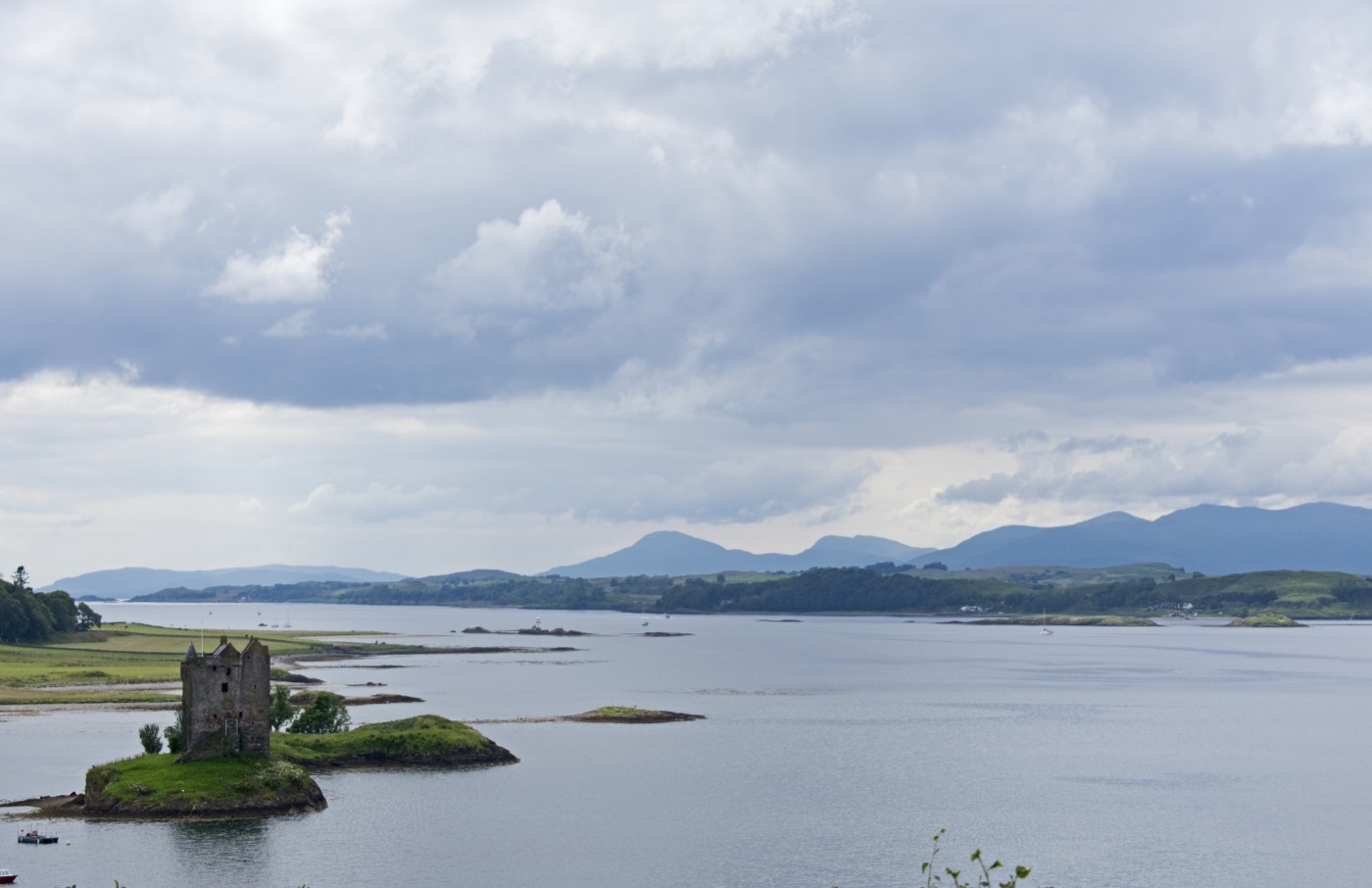
The Stewart surname is Scottish and occupational, from the Old English stigweard, the keeper of the household, a job title that hardened into the office of High Steward of Scotland and then into the name of a royal house.
What Does the Surname Stewart Mean?
Stewart means “steward”, from the Old English stigweard, a compound of stig (a hall, house or animal pen) and weard (a guardian or warden). Literally, the warden of the sty.
That sounds like a demotion, and in the beginning it was not much of a job. The stigweard watched the animals and the stores. But in the great households of early medieval Europe the man who controlled the food, the rents and the accounts was the man who ran everything, and the title climbed with him.
By the twelfth century a steward was a senior officer of state. In Scotland the office of High Steward sat close to the crown, holding the royal revenues and commanding armies. When the surname settled on the family, it carried none of the sty and all of the state.
This is the crucial thing about Stewart, and what makes it unlike most occupational surnames. Smith, Baker and Turner describe what a man did. Stewart describes what a specific family was, in one specific kingdom, in one office they held for six generations.
Where the Stewart Name Comes From
The Stewart name comes from Renfrewshire in west central Scotland, where a Breton knight named Walter fitz Alan was granted lands and the office of High Steward by King David I around 1150. His descendants took the office as their surname.
The Breton, not the Norman
Walter was the younger son of Alan fitz Flaad, a Breton whose family had been hereditary stewards of the archbishops of Dol in Brittany. The family crossed to England after the Norman Conquest and prospered under Henry I. Walter, with no English inheritance to wait for, went north into the service of David I, a king busily importing continental knights to remake Scotland along feudal lines.
So the Stewarts are Breton in blood, Norman-French in culture and Scottish by adoption. It is worth saying plainly, because the family became so completely identified with Scotland that the Brittany connection is often lost. Walter founded Paisley Abbey in 1163, and it became the burial place of his line.
From office to surname
The stewardship was made hereditary, passing from Walter to Alan to Walter again. By the fourth generation the family were signing themselves not “fitz Alan” but “Stewart”, and the office had become the name. This is roughly the 1250s, early for a fixed Scottish surname.
From surname to crown
Walter Stewart, sixth High Steward, married Marjorie Bruce, daughter of Robert the Bruce, in 1315. When their nephew David II died childless in 1371, their son took the throne as Robert II. The House of Stewart ruled Scotland from 1371, added England and Ireland in 1603 when James VI became James I, and ended with the death of Queen Anne in 1714. The full royal line runs to fourteen monarchs.
The branches
Younger sons scattered, and the great Stewart branches each hold a distinct piece of the country. The Stewarts of Appin in Argyll became a Highland clan proper, Gaelic-speaking and Jacobite. The Stewarts of Atholl descend from Alexander Stewart, Earl of Buchan, the “Wolf of Badenoch”. The Stuarts of Bute hold the only chiefship recognised by the Lord Lyon today. The Stewarts of Galloway are now reckoned the senior line.
The Appin Stewarts and their neighbours the Campbells spent centuries at each other’s throats, most notoriously in 1752 when Colin Campbell of Glenure was shot in the back near Ballachulish and James Stewart of the Glen was hanged for it by a jury of eleven Campbells. Robert Louis Stevenson built Kidnapped on the case.
Spelling Variants and Related Names
The main variants are Stuart, Steuart, Steward and Stewart itself, with the Scottish Gaelic form Stiùbhart and the patronymic MacStiùbhairt, anglicised as MacStewart or simply Stewart.
The Stewart to Stuart shift is the one everyone asks about, and the answer is French orthography. Mary, Queen of Scots, was sent to the French court as a child and married the Dauphin in 1558. Older French had no letter w in native words, so French scribes rendered her name as Stuart. Mary kept it, and the spelling followed the royal line into England.
The rule of thumb: Stuart usually signals a family with a courtly, aristocratic or English connection, or a later self-conscious adoption. Stewart is the older and far commoner Scottish form. Neither is more authentic, and both appear in the same parish registers, often for the same household.
You will also meet Steward, which in England is frequently a separate and genuinely occupational surname with no Scottish connection at all. Continental cognates such as Steuart and Stuard appear in émigré records. In Ireland, Ulster Stewarts occasionally appear Gaelicised as Stíobhard in later Irish-language sources.
The Stewarts in America
Most American Stewarts arrived not from Scotland directly but from Ulster, as Scots-Irish Presbyterians, in the great migrations of the eighteenth century. A smaller Highland stream came straight from Scotland after 1745.
The Ulster route began with the Plantation, when Lowland Scots crossed the narrow North Channel into Antrim, Down and Donegal. Stewart is now the 58th commonest surname in Ireland, and more than nine in ten Irish Stewarts are in Ulster. From about 1717, rack rents, bad harvests and the penal disabilities on Presbyterians pushed them out again. The Ulster-Scots Agency lists Stewart among the core Plantation surnames.
They landed at Philadelphia and New Castle. The Quaker city that received them had no interest in keeping them, and pointed them west and south down the Great Wagon Road through the Cumberland Valley into the Virginia backcountry, the Carolina Piedmont, East Tennessee and the mountain coves beyond. That is why Stewart is so thick on the ground in Appalachia today.
Many stopped short and stayed in western Pennsylvania, where the river forks at Pittsburgh gave onto the Ohio country. Others went to the Carolina coast: the Highland Scots who settled the Cape Fear valley of North Carolina after Culloden included Stewarts from Appin and Atholl, Gaelic speakers who kept the language on the Carolina rivers for three generations.
A later, industrial Scottish migration arrived in the nineteenth century, skilled men going to mills and mines. Kearny, New Jersey, where Clark’s thread works recruited straight from Paisley, is the clearest case of that wave, and Paisley is Stewart country from the beginning.
Notable People Named Stewart
Robert II (1316 to 1390) was the first Stewart king of Scots, grandson of Robert the Bruce through his mother Marjorie, and founder of a dynasty that lasted until 1714.
Mary, Queen of Scots (1542 to 1587) became queen at six days old, was raised in France, returned to a Reformation Scotland that would not have her, and was executed at Fotheringhay on Elizabeth I’s warrant.
James Stewart of the Glen (died 1752), Seumas a’ Ghlinne, was hanged at Ballachulish for the Appin Murder on evidence that convinced almost nobody, in what is still cited as Scotland’s most notorious miscarriage of justice.
James “Jimmy” Stewart (1908 to 1997), born in Indiana, Pennsylvania, to a Scots-Irish Presbyterian family, won the Academy Award for The Philadelphia Story and flew combat missions over Germany.
Sir Jackie Stewart (born 1939), from Milton in Dunbartonshire, won three Formula One world championships and then spent decades forcing the sport to take driver safety seriously.
Rod Stewart (born 1945), born in north London to a Scottish father from Leith, has sold more than 100 million records and never stopped calling himself a Scot.
How Common Is Stewart Today?
Stewart is the 61st commonest surname in the United States, carried by 324,957 Americans at the 2010 Census. In Scotland it ranks around seventh, with more than 41,000 bearers, and it is heavily concentrated in Glasgow and the west.
| US rank (2010 Census) | #61 |
|---|---|
| Americans with the name | 324,957 |
| Origin | Scottish (occupational) |
| Meaning | Steward, keeper of the household |
In America the name clusters in the Appalachian states and the South, exactly where the Scots-Irish settled, and it is also notably common among African American families, a legacy of surnames taken from or shared with slaveholding households after emancipation.
Frequently Asked Questions
What does the surname Stewart mean?
Stewart means steward, from Old English stigweard, “sty warden”, the guardian of a household and its stores. In Scotland the word became the title of the High Steward, a great officer of state, and then the family surname.
Is Stewart Scottish or Irish?
Stewart is Scottish in origin. It is very common in Ireland, but almost entirely in Ulster, where it arrived with Lowland Scottish settlers from the seventeenth century onward. An Irish Stewart is nearly always a Scottish Stewart a few generations back.
Where does the Stewart family come from?
The original line comes from Renfrewshire in west central Scotland, granted to Walter fitz Alan by David I around 1150. The family’s continental roots are in Dol in Brittany, and the Highland branches later took root in Appin, Atholl, Bute and Galloway.
How common is the surname Stewart?
Stewart is the 61st commonest surname in the United States, with 324,957 bearers recorded in the 2010 Census. It is roughly seventh in Scotland and 58th in Ireland, and it is well represented across Canada, Australia and New Zealand.
Is there a Stewart family crest or coat of arms?
No. In Scottish heraldry, which is the strictest in Europe, arms are granted by the Lord Lyon to one individual and pass to one heir at a time, never to everyone sharing a surname. There is no Stewart family crest that belongs to all Stewarts. Anyone selling you one is selling a decoration, not a lineage.
Am I descended from the Stewart kings?
Almost certainly not, and the honest answer matters more than the flattering one. The overwhelming majority of Stewarts descend from tenants, followers and neighbours who took the name of the family whose land they lived on, or from unrelated households who simply held a steward’s job. That history is worth more than a borrowed crown.
If your family carries the Stewart name, its route from Scotland to America is traceable. Atlas of Home can follow it from Renfrewshire and the Argyll glens through Ulster and the Great Wagon Road to wherever your family landed, and to wherever you are now.