
Drive thirty miles north of downtown Houston and the freeway noise thins into pine shade. This is Tomball, a railroad town in the far north of Harris County where the forest once reminded homesick settlers of the Black Forest, and where the story of the Germans in Tomball, Texas still hangs in the air every March and December, carried on accordion music and the smell of bratwurst on a downtown street.
It is an unlikely place for a German heritage festival that draws tens of thousands. Tomball is a small city, ringed by the suburban sprawl of the Greater Houston metro. But scratch the surface and the German roots are everywhere: in the surnames on the old gravestones, in the Lutheran churches set back among the pines, and in a sister city across the Atlantic.
The Place
Tomball sits at the northern edge of Harris County, where the dense East Texas pine forest begins to take over from the coastal prairie. The land slopes gently south toward the Gulf, which is precisely why a railroad once chose to run through it.
Today it is part of the vast suburban ring north of Houston, bordered by master-planned developments and big-box retail. Yet its historic core, a few blocks of brick storefronts around the old depot, has kept a distinct small-town character that the surrounding subdivisions have not erased.
The 2020 census recorded 12,341 residents, with a 2022 estimate of around 13,585. German is the second-largest reported ancestry in the city, behind English, claimed by roughly one in ten residents.
How It Became German
The forest that looked like home
The Germans came to this corner of Texas in the middle of the nineteenth century, part of one of the largest waves of European migration the state ever saw. Between roughly 1865 and 1900, tens of thousands of German settlers spread across the hill country and the piney woods alike, building the towns that would become the heart of German Texas.
The ones who reached the future site of Tomball found something familiar. The thick stands of loblolly pine and the creeks cutting through them recalled the forests of central Europe, and the comparison to the Black Forest became part of local lore. More practically, the soil was rich and the timber was abundant, which meant a settler could farm, raise livestock, and one day cut lumber. The same instinct drew Germans to the limestone hills west of San Antonio, where the Germans in Castroville, Texas and their Alsatian neighbours built a town that still looks like the old country.
These were farming families first. They cleared land along Spring Creek and its tributaries, built small homesteads, and planted. There was no town yet, only scattered farms and the slow accumulation of a rural German Lutheran world.
The Wends among the Germans
Not everyone who arrived was German in the simple sense. The region also drew Wends, a Slavic people from Lusatia in eastern Germany who spoke Sorbian and worshipped as Lutherans. They had emigrated to escape religious and cultural pressure at home, and they settled across this part of Texas alongside their German neighbours, in much the same way the Germans in Brenham, Texas shaped the farming country to the northwest.
Their presence is preserved literally in Tomball today. The local historical museum maintains a Wendish log cabin among its restored buildings, a reminder that the German community here was never a single uniform thing but a cluster of related Lutheran peoples from different corners of the old country.
Peck becomes Tomball
For decades the settlement had no real centre. That changed with the railroad. Just after the turn of the twentieth century the Trinity and Brazos Valley Railroad laid track through the area, and a stop appeared on the line. The little community that grew around it was first called Peck.
The railroad picked the route in part because the topography sloped gently toward the Galveston ports, making it efficient to move cargo. To the farmers along Spring Creek, the line was transformative. It connected their crops and timber to markets they could never have reached by wagon.
On 2 December 1907, in a ceremony at the new depot, Peck was renamed in honour of the man credited with routing the railroad through it: Thomas Henry Ball, a Houston attorney, former United States congressman, and later remembered as a father of the Port of Houston. The town has been Tomball ever since.
Oiltown USA
The German farming town might have stayed quiet had it not been for what lay beneath it. On 27 May 1933, the Humble Oil and Refining Company struck oil southwest of town, and Tomball became a boomtown almost overnight.
The population tripled as oil and gas companies rushed in to set up camps and housing. The town earned the nickname Oiltown USA. By 1935, around two and a half million barrels had already been produced from roughly two hundred wells.
The most extraordinary chapter of that boom was a contract. In 1935 Tomball negotiated an agreement with Humble Oil giving residents free water and natural gas for ninety years, in exchange for drilling rights within the city limits. For decades Tomball families paid nothing for gas or water. The arrangement was unusual enough that the town was reportedly featured in Ripley’s Believe It or Not as the only city with free gas and water. The deal ran until 1988.
Keeping the heritage alive
The German identity of Tomball might have faded into the general suburban blur of north Houston. Instead, in the closing years of the twentieth century, a group of residents chose to make it explicit. In 1999 the town formed a sister city partnership with Telgte, a small city in Westphalia, Germany.
The Tomball Sister City Organization built a foreign exchange programme around the partnership, hosting students from Telgte in local homes. In 2001 it launched the first Tomball German Heritage Festival, with proceeds supporting the exchange. What began modestly grew into one of the best-known street festivals in the region.
The Landmarks
Tomball Railroad Depot Museum, 201 S. Elm Street. This is where the town got its name, in the 1907 ceremony that turned Peck into Tomball. The restored depot now serves as a small museum and the anchor of the downtown plaza, and it is the heart of the German festival grounds every spring and winter.
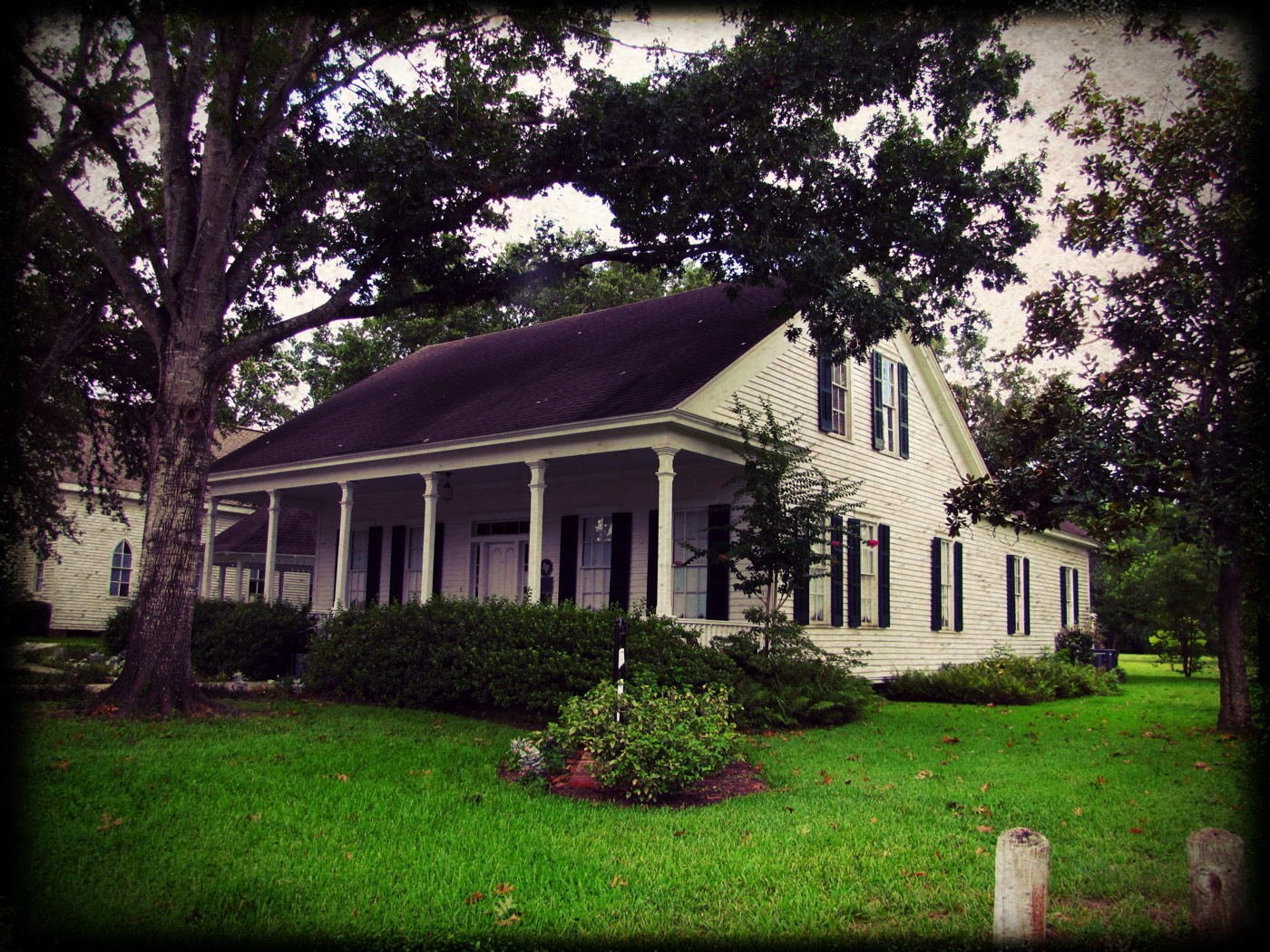
Tomball Museum Center, 510 N. Pine Street. Run by the Spring Creek County Historical Association, the centre is a cluster of historic buildings moved here and preserved: old homes, a church and fellowship hall, a country doctor’s office, a one-room schoolhouse, a jail, a barn, and the Wendish log cabin. It is the single best place to understand the German and Wendish settlers who built the area.
The Griffin House, at the Tomball Museum Center. A dog-run-style home believed to predate the Civil War, it is one of the centrepiece structures on the museum tour. Ruth Griffin McCourt gave it to the historical association in October 1965, asking that it carry her father Edmond Griffin’s name. It stands as a rare survivor of the pre-railroad rural world.
Old Town Tomball, around Main, Market and Elm Streets. The historic downtown is a few blocks of brick storefronts, antique shops, cafes and bakeries. On Saturday mornings the Tomball Farmers Market takes over Main Street, and it is here, on these same streets, that the German Heritage Festival sets up its stages.
Manna Bakery, 306 Commerce Street. An artisan bakery and sit-down cafe in Old Town serving breads, pastries and sandwiches baked from scratch each morning. It is the kind of small, owner-run food business that keeps the historic core a living place rather than a museum piece.
Telge Road. Not a building but a name on a map. The road is widely understood locally to nod to the sister city of Telgte, a small German imprint stamped onto the everyday geography of north Tomball.
The German Christmas Market. The winter half of the festival, held each December around the depot, recreates a German Weihnachtsmarkt with stalls, lights, food and music. It has been named among the better Christmas markets in the United States, drawing visitors from across the Houston metro.
Where They Came From
The Germans who settled around Tomball were part of the broad nineteenth-century migration that reshaped Texas, the same movement that built the hill country towns to the west. They came from across the German lands, drawn by cheap fertile soil, political turbulence at home, and the promise of room to farm. It was the same migration that produced the Germans in Boerne, Texas in the hill country and, far away, the Germans in Jasper, Indiana.
The Wendish element traced specifically to Lusatia, the Sorbian-speaking region straddling what is now eastern Germany. They left to protect a language and a faith under pressure, and in Texas they slipped into the wider German Lutheran community while keeping their own thread.
The modern connection runs to Westphalia, through Telgte. That partnership is a deliberate, late-twentieth-century choice rather than a migration origin, but it has given Tomball a living link to a real German town, complete with students who cross the Atlantic to stay in local homes each year.
Tomball Today
Tomball is, by most measures, a prosperous suburb now. It anchors a stretch of fast-growing north Houston, with master-planned communities, a regional hospital, good schools and the steady commercial growth that follows population. It sits inside the same sprawling, polyglot metro as the Hondurans in Houston, Texas, and not far up the road from the Mexicans in Dallas, Texas. The free-gas era is long over, and the oil derricks are gone.
What has not gone is the deliberate cultivation of German identity. Twice a year the historic streets fill with oompah bands, dancers, beer and food, and tens of thousands of people come to a town most of them would otherwise never visit. For a place this size, it is a remarkable act of collective memory.
The German story here is quieter than in the famous hill country towns, less of a tourist brand and more of a working civic tradition. But it is genuine. In the museum log cabins, in the Lutheran churches among the pines, and in the festival that a few residents started in 2001 to fund a student exchange, the Germans in Tomball remain a real and present part of who this town is.
Frequently Asked Questions
Why are there Germans in Tomball, Texas?
German families settled the area in the mid-nineteenth century as part of a large wave of migration into Texas. They were drawn by the fertile soil and the thick pine forest, which reminded some of the Black Forest back home, and they farmed and raised livestock here decades before the town itself existed.
When did Tomball get its name?
The settlement was first called Peck. On 2 December 1907, at a ceremony at the new railroad depot, it was renamed Tomball in honour of Thomas Henry Ball, the attorney credited with routing the Trinity and Brazos Valley Railroad through the town.
What is the Tomball German Heritage Festival?
It is a street festival celebrating the town’s German roots, held twice a year, in March and again as a Christmas market in December, around the historic downtown depot. The Tomball Sister City Organization launched the first festival in 2001, and proceeds support a student exchange with the German sister city of Telgte.
Is Tomball connected to a city in Germany?
Yes. In 1999 Tomball formed a sister city partnership with Telgte, a small city in the Westphalia region of Germany. The relationship includes a foreign exchange programme that hosts Telgte students in Tomball homes, and Telge Road is locally understood to nod to the connection.
Did Tomball residents really get free gas and water?
They did. A 1935 contract with the Humble Oil and Refining Company gave Tomball residents free natural gas and water for ninety years in exchange for drilling rights within the city. The arrangement, which lasted until 1988, was unusual enough that the town was reportedly featured in Ripley’s Believe It or Not.
Where can I learn about the German settlers in Tomball today?
The Tomball Museum Center at 510 N. Pine Street, run by the Spring Creek County Historical Association, preserves historic homes, a church, a schoolhouse and a Wendish log cabin from the settlement era. The nearby Railroad Depot Museum at 201 S. Elm Street tells the story of how the German railroad town got its start.
If your family’s story passed through Tomball, or any of the places Germans have made home in America, Atlas of Home can trace that journey. From a clearing in the East Texas pines that reminded someone of the Black Forest, to the depot where Peck became Tomball, to wherever you are now.