
The Ward surname carries two unrelated histories under a single spelling: an English watchman, from the Old English weard, and an Irish hereditary poet, from Mac an Bhaird, “son of the bard”, of Donegal and Galway.
What Does the Surname Ward Mean?
Ward means “watchman” or “guard” in its English form, from the Old English weard and Middle English ward. In its separate Irish form it means “son of the bard”, an anglicisation of the Gaelic Mac an Bhaird. The two names are not related.
The English name is occupational. A ward was the man who kept the watch, on a town gate, a lord’s park or a castle wall. It is the same root that survives in warden, in ward of court, and in the wards a city is still divided into. A smaller group of English Wards may instead be topographical, from a dialect word for marshy ground, though that reading is the weaker of the two.
The Irish name is patronymic and describes something far rarer. A bard in Gaelic Ireland was not a wandering singer but a trained professional in a hereditary caste, holding land in return for verse. Mac an Bhaird is the son of that man, and then his son, and his, for four hundred years.
Where the Ward Name Comes From
English Wards come chiefly from the north of England, Irish Wards from County Donegal and County Galway. Both strands are old, both are large, and the modern spelling gives no clue which one a given family belongs to.
The English Watchmen
The surname appears in English records from the twelfth century. William de la Warda is entered in Leicestershire in 1176, and a William Warde appears in the Yorkshire Pipe Rolls in 1194. By the nineteenth century the name was concentrated in the north, with a large share of English Wards found in Yorkshire, Lancashire and Cheshire.
This is the ordinary and probably the largest British strand: not one family but hundreds, formed independently wherever a man was known by the job he did. There is no single English Ward lineage.
Mac an Bhaird of Tir Chonaill
The Irish story is the opposite: specific, documented and traceable to one professional family. The Mac an Bhaird were among the learned families of Gaelic Ireland, and the Tir Chonaill branch, in what is now County Donegal, were hereditary poets to the O’Donnells.
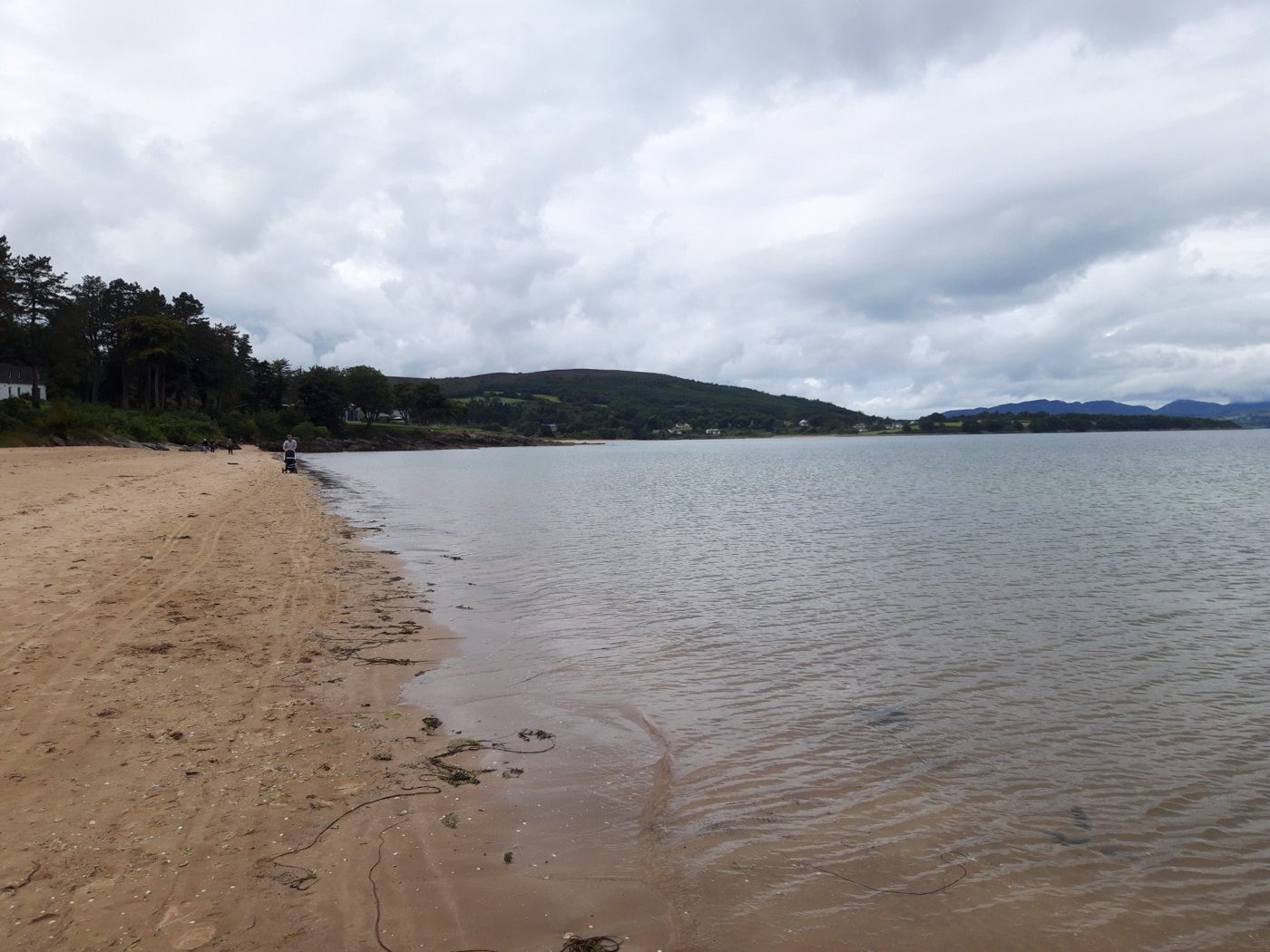
Their work survives. Eoghan Ruadh Mac an Bhaird sailed with his patrons from Rathmullan on Lough Swilly in September 1607, in the departure known as the Flight of the Earls. His best known poem addresses Nuala O’Donnell, weeping alone over her brothers’ graves in Rome.
The poets went into exile with their patrons because the system that paid them had ended. When the Gaelic lordships fell, the hereditary bardic schools fell with them, and within two generations the Mac an Bhairds were priests, soldiers and scholars in Louvain, Salamanca and Paris instead.
The Galway Branch and Ui Maine
The parent sept was seated further south, in the territory of Ui Maine in east County Galway, where they were poets to the O’Kellys. Their seat gave its name to the parish of Ballymacward, in Irish Baile Mhic an Bhaird, the town of the son of the bard, near Ballinasloe. A third branch is recorded in Oriel, in the Monaghan and Louth country.
Ward is now found in every Irish county, but it remains thickest in Donegal, Galway and Dublin, which is exactly the pattern the two bardic seats predict. It is also a common surname among Irish Travellers, a community with its own strong tradition of music and oral storytelling.
Spelling Variants and Related Names
The Irish name has many more variants than the English one, because clerks spent four centuries trying to write Mac an Bhaird in a language that had no sound for it.
Recorded anglicisations include MacAward, MacEward, MacEvard, Macanward, M’Ward, McWard and, very rarely, Vard. Continental records of the exiled scholars use latinised forms such as Vardaeus and Bardaeus. All of these collapsed, over time, into plain Ward.
The English name produced a smaller and tidier set: Warde, the older spelling, along with Warden, Wardle and Wardell, which are separate but easily confused names, several of them from place names rather than the occupation. Warder and Woodward are related in sense but distinct in formation.
Baird deserves its own note. The Scottish surname is usually explained from a place name in Lanarkshire rather than from the Gaelic word for a poet, so the tidy assumption that Baird is simply the Scottish Ward does not hold. Bard and Beard are likewise separate names in most cases. The true Gaelic form of the Irish Ward is Mac an Bhaird itself, which a number of families have taken back in recent decades, in Irish-language publishing and in Gaeltacht Donegal where the name never entirely went away.
The Wards in America
Wards arrived in America in two separate migrations. English Wards came early, with the seventeenth-century settlement of New England and the Chesapeake. Irish Wards came later and in far greater numbers, driven out by the Famine of the 1840s.
Ward families were present in Massachusetts within a generation of the first English settlement at Plymouth, and by the Revolution the name was thoroughly established in New England, which is how a Ward came to command the army outside Boston in 1775.
The Irish arrivals followed the Famine ships and then the work. Donegal and Galway Wards turn up in the labouring parishes of the eastern cities, in the older Catholic Irish community of Savannah in Georgia, in the copper camps of Butte, Montana, which drew more Irish per head than any city in America, and westward into the Mission District of San Francisco. The same anglicisation that made two names into one had already happened to Collins, another Irish surname that fell into an existing English spelling and disappeared inside it.
There is a third American strand, and it is large. In the 2010 US Census, 18.5 per cent of people named Ward identified as Black or African American, against 75.58 per cent who identified as white. Those are self-identification proportions recorded in one census, not a measure of ancestry, but the share reflects a real pattern: surnames adopted after emancipation, when formerly enslaved people chose or kept family names in the years after 1865. It is the same mechanism that shaped Williams, and the reasoning behind any one family’s choice is rarely recoverable now.
Those families moved as well. Ward is a familiar name in the Gullah Geechee Lowcountry of South Carolina and among the southern families who went north in the Great Migration to Harlem, which is where a Philadelphia gospel singer named Clara Ward found her audience.
Notable People Named Ward
Eoghan Ruadh Mac an Bhaird (c. 1570 to c. 1630), bardic poet of the O’Donnells, born in County Donegal. He left with the earls in 1607 and wrote the great elegy of the exile.
Hugh Ward, in Irish Aodh Buidhe Mac an Bhaird (c. 1593 to 1635), Franciscan scholar from Tirhugh in Donegal. He worked at St Anthony’s College in Louvain on the project to preserve the lives of the Irish saints, publishing in Latin as Vardaeus.
Mary Ward (1585 to 1645), Yorkshire-born founder of the Institute of the Blessed Virgin Mary. She argued for religious women who taught in the world rather than living enclosed, an idea that got her imprisoned and eventually vindicated.
Artemas Ward (1727 to 1800), Massachusetts general. He commanded the New England forces besieging Boston in 1775 and was made second in command of the Continental Army under Washington.
Aaron Montgomery Ward (1844 to 1913), Chicago merchant who founded America’s first mail-order business in 1872, putting a catalogue into farmhouses with no shop within a day’s ride.
Clara Ward (1924 to 1973), Philadelphia gospel singer. With the Ward Singers she carried gospel from the church circuit onto national stages, and her “How I Got Over” became one of the defining performances of the form.
How Common Is Ward Today?
Ward is the 79th most common surname in the United States, carried by 260,464 Americans at the 2010 Census. It ranks among the top hundred names in Ireland and Britain too.
| US rank (2010 Census) | #79 |
|---|---|
| Americans with the name | 260,464 |
| Origin | English and Irish |
| Meaning | Watchman (English); son of the bard (Irish) |
Frequently Asked Questions
What does the surname Ward mean?
In English it means watchman or guard, from the Old English weard. In Irish it means “son of the bard”, from Mac an Bhaird, the name of a family of hereditary poets. The two meanings belong to two unrelated names that ended up sharing a spelling.
Is Ward Irish or English?
Both, genuinely. The English occupational name is older in the written record and probably larger overall, while in Ireland almost every Ward is an anglicisation of Mac an Bhaird. Only documentary research can say which one a family belongs to.
Where does the Ward family come from?
Irish Wards come from two bardic seats: Tir Chonaill in County Donegal, poets to the O’Donnells, and Ui Maine in east Galway, poets to the O’Kellys, at the place still called Ballymacward. English Wards concentrate in Yorkshire, Lancashire and Cheshire.
How common is the surname Ward?
It is the 79th most common surname in the United States, with 260,464 bearers recorded in the 2010 Census. It sits inside the top hundred in Ireland and Britain as well.
Is there a Ward family crest or coat of arms?
No. In English, Scottish and Irish heraldry, arms are granted to an individual and pass to that person’s direct descendants, never to everyone sharing a surname. Given that Ward covers at least two unrelated families, a single “Ward crest” is meaningless. Sites selling one are selling a decoration, not a lineage.
Are Ward and Baird the same name?
Probably not. Baird is usually derived from a Lanarkshire place name rather than the Gaelic word for a poet, so the neat idea that Baird is the Scottish Ward does not hold up. The true Gaelic form of the Irish name is Mac an Bhaird, which some families have now taken back.
If your family carries the Ward name, its route from Donegal, Galway or the north of England to America is traceable. Atlas of Home can follow it from the bardic townlands of Tir Chonaill and Ui Maine, or from a Yorkshire gatehouse, to wherever your family landed, and to wherever you are now.