
The Villa surname means, almost literally, “the town”. It comes from the Latin villa, a country estate, and it belongs to two homelands at once: northern Spain and northern Italy. In America, it is overwhelmingly the Spanish one.
What Does the Surname Villa Mean?
Villa means “town” or “country estate” in both Spanish and Italian, from the Latin villa, a Roman farmstead. It is a toponymic surname, given to a family who lived at a villa or who came from a place called Villa.
The Latin root is not in dispute. A Roman villa was a working rural property, a house with land and labourers attached, and the word survived the empire in every Romance language that grew out of it.
What changed was the scale. In medieval Iberia the word climbed the ladder from farmstead to settlement, and then to something with legal weight. A villa in Castile was a town that held a royal charter, a fuero, which gave it privileges an ordinary aldea or hamlet did not have: its own courts, its own market rights, a measure of self-government.
So a Spanish family called Villa was not simply from the countryside. They were from the chartered town, the place with the paperwork, as opposed to the scattered farms around it. Behind the Name records the same distinction, glossing the name as belonging to a person who came from a town rather than the open country.
In Italy the older sense held on. There, Villa more often marked the household that lived at or worked a rural estate, particularly across the Lombard plain where such estates were thick on the ground.
Where the Villa Name Comes From
Villa arose independently in Spain and in Italy, and both lines are genuine. The Spanish line is the larger by far worldwide, and it is the one that produced almost every American Villa.
Northern Spain: Cantabria and Asturias
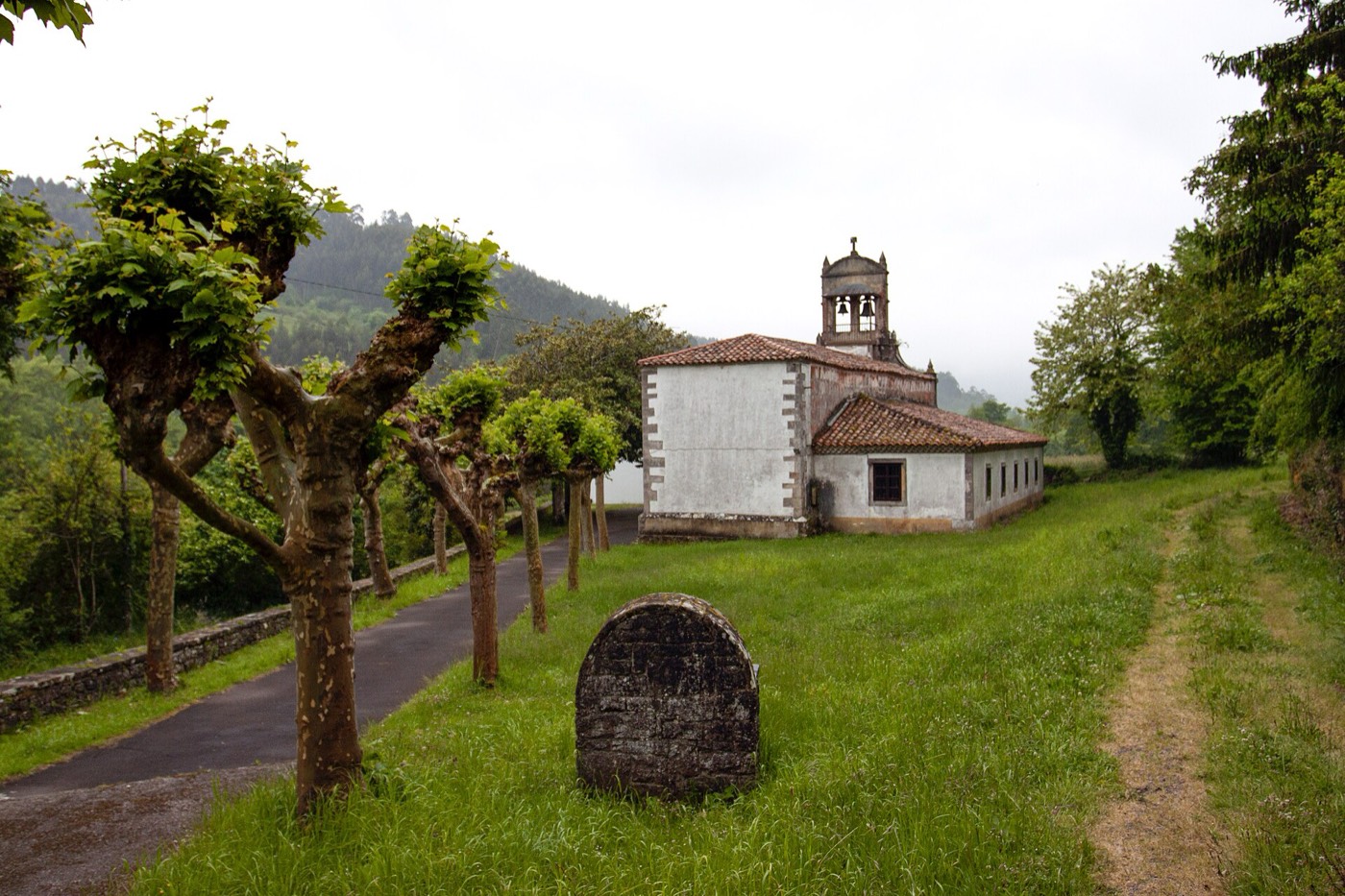
Spanish genealogical tradition puts the oldest casas solares, the ancestral houses of the name, in Cantabria, Asturias, Vizcaya and Toledo, with one of the earliest at Hinojedo in Cantabria. The green, rainy north is still where the name concentrates in Spain today.
That geography makes sense. The north is dense with settlements whose names begin with the element: Villaviciosa, Villanueva, Villarreal, Villalobos, Villafranca. A family who left one of them and settled somewhere else became, simply, the Villa family.
Lombardy and the Italian north
The Italian Villas are documented from the eleventh and twelfth centuries, clustered in Lombardy and the Veneto, with medieval records naming bearers in Milan. Villa remains one of the more common surnames in the province of Milan, and Lombardy is still its Italian heartland.
This is a real and separate origin, not a branch of the Spanish one. Two languages simply reached for the same Latin word.
New Spain and the making of a Mexican name
The decisive chapter is colonial. Spanish settlers carried Villa to New Spain from the sixteenth century onward, where it took root and multiplied far beyond its numbers in the homeland. Today Mexico holds more Villas than any other country, with the name thickest in Michoacán, Jalisco and the State of México, and Colombia is not far behind.
Spelling Variants and Related Names
Villa is short and phonetic, so it survived migration almost untouched. The variation lies less in respelling than in the enormous family of compound names built from the same element.
- Vila: the Catalan, Galician and Portuguese form, with the single l.
- Villar, Villas, Villalba, Villalobos, Villanueva, Villarreal, Villafranca, Villegas: Spanish compounds naming a particular town, “the new town”, “the royal town”, “the town of the wolves”.
- Villani, Villano, Villanova: Italian relatives, though villano carries the separate sense of a villein, a peasant tied to an estate.
- De Villa, De la Villa, Della Villa: the older prepositional forms, “of the town”, which often lost the particle in American records.
- Villareal, Villalpando, Villaseñor: further Mexican compounds, frequently mistaken for variants of plain Villa when they are distinct surnames.
American clerks rarely mangled it, though the doubled l was sometimes reduced to one, and Spanish speakers pronounce it “VEE-ya” while Italians say “VEEL-la”. A family that switched pronunciation somewhere along the line usually switched countries first.
The Villas in America
The American Villa story is a Mexican story, and the census says so plainly. Of Americans named Villa in 2010, 88.74 per cent identified as Hispanic and only 8.08 per cent as white, with 2.06 per cent Asian or Pacific Islander. Those are self-identification figures recorded on a form, not a measure of ancestry, but the balance is unmistakable.
Most Villa families arrived across the southern land border rather than through Ellis Island, in the great movements of the twentieth century: the Mexican Revolution and its aftermath, the labour recruitment of the war years, and the steady migrations that followed. They settled first in Texas, California, Arizona and Illinois.
You can trace them through the neighbourhoods they built. Villas appear among the families of Segundo Barrio in El Paso, the first stop for so many who crossed at the Rio Grande, and among those who went on to Boyle Heights in Los Angeles and Santa Ana. Farm work drew others to Mexican Fresno in the Central Valley.
Industry pulled the name north as well, to Little Village in Chicago and to the foundries and tanneries of Mexican Milwaukee. The smaller Italian Villa line followed an entirely different map, arriving through Atlantic ports into industrial towns such as Schenectady in New York.
Villa is not alone in being filed under the wrong flag. The Guerra surname carries the same double life, Italian and Spanish at once, and is just as often labelled Italian when the American bearers are overwhelmingly Hispanic.
Notable People Named Villa
Pancho Villa (1878 to 1923) is the most famous bearer of the name, and he was not born to it. He was born José Doroteo Arango Arámbula at La Coyotada in San Juan del Río, Durango, and took the name Francisco Villa around 1903 after killing an army officer. Accounts differ on where he got it: some say from his paternal grandfather Jesús Villa, others that he lifted it from a bandit in Coahuila.
He became the commander of the División del Norte, the most formidable revolutionary army in Mexico, and won the battle of Zacatecas in 1914. In March 1916 he led a raid on Columbus, New Mexico, which brought a United States punitive expedition under General Pershing into Mexico for a year without ever catching him. He was assassinated at Parral, Chihuahua, in July 1923. He was a general, a bandit and a land reformer, and which of those weighs heaviest has been argued in Mexico for a century.
David Villa (born 1981), the Spanish striker from Tuilla in Langreo, Asturias, is Spain’s all-time leading international goalscorer and a World Cup winner in 2010. His Asturian birthplace sits squarely in the name’s Spanish heartland.
Brenda Villa (born 1980), raised in Commerce, California, by parents from Mexico, is among the most decorated water polo players in history, with four Olympic medals across 2000 to 2012, including gold in London.
Beto Villa (born 1915), a saxophonist from Falfurrias, Texas, is called the father of the orquesta tejana, the big-band sound that let Mexican Americans hear their ranchero and cosmopolitan selves in the same tune.
José García Villa (1908 to 1997), the Filipino poet who wrote under the name Doveglion, was named a National Artist of the Philippines. His surname is a reminder that Spanish colonial naming reached the Pacific as well as the Americas.
How Common Is Villa Today?
Villa is the 644th most common surname in the United States, carried by 52,817 Americans at the 2010 census. Worldwide it is most numerous in Mexico, where roughly 137,000 people bear it.
| US rank (2010 Census) | #644 |
|---|---|
| Americans with the name | 52,817 |
| Origin | Spanish and Italian (chiefly Spanish and Mexican in America) |
| Meaning | From the town or country estate |
Frequently Asked Questions
What does the surname Villa mean?
It means “town” or “country estate”, from the Latin villa, a Roman farmstead. It was given to families who lived at such an estate or who came from a place named Villa. In medieval Castile a villa specifically meant a chartered town.
Is Villa Italian or Spanish?
Both, genuinely and separately. The name arose in Italy and in Spain independently from the same Latin word. In the United States it is overwhelmingly Spanish and Mexican: 88.74 per cent of American Villas identified as Hispanic in 2010, against 8.08 per cent as white.
Where does the Villa family come from?
The Spanish line traces to northern Spain, with its oldest recorded houses in Cantabria and Asturias, and spread through Castile and then to the Americas. The Italian line belongs to Lombardy and the Veneto. Mexico now holds more Villas than any other country.
How common is the surname Villa?
It ranked 644th in the United States in 2010, with 52,817 bearers. Globally it is most common in Mexico, followed by Colombia and Italy, and it appears in some 169 countries.
Is there a Villa family crest or coat of arms?
No. In Spanish, Italian and British heraldry alike, arms are granted to individuals and pass to their direct descendants, never to everyone who happens to share a surname. Individual Villa families were granted arms over the centuries, but no single crest belongs to the name. Anything sold as “the Villa family crest” is a decoration, not a lineage.
Was Pancho Villa really named Villa?
Not at birth. He was born José Doroteo Arango Arámbula in Durango in 1878 and adopted the name Francisco Villa in about 1903. Sources disagree on whether it came from his paternal grandfather Jesús Villa or from a Coahuila bandit whose name he took.
If your family carries the Villa name, its route from northern Spain to America is traceable. Atlas of Home can follow it from the chartered towns of Cantabria and Asturias through New Spain and Mexico to wherever your family landed, and to wherever you are now.