
The Olson surname is Scandinavian and patronymic: it means “son of Ole” or “son of Olaf”, from the Old Norse personal name Áleifr, “ancestor’s descendant”. It came to America from Norway and Sweden, and for most families it is younger than the immigrant who carried it.
What Does the Surname Olson Mean?
Olson means “son of Ole or Olaf”. The root is the Old Norse personal name Áleifr, formed from anu, “ancestor”, and leifr, “heir” or “descendant”, so the whole name reads roughly as “the ancestor’s heir”.
That personal name became Olav or Ole in Norway and Denmark, and Olof or Olav in Sweden. Add the possessive -s and the word for son, and you have Olsen, Olsson, Olson.
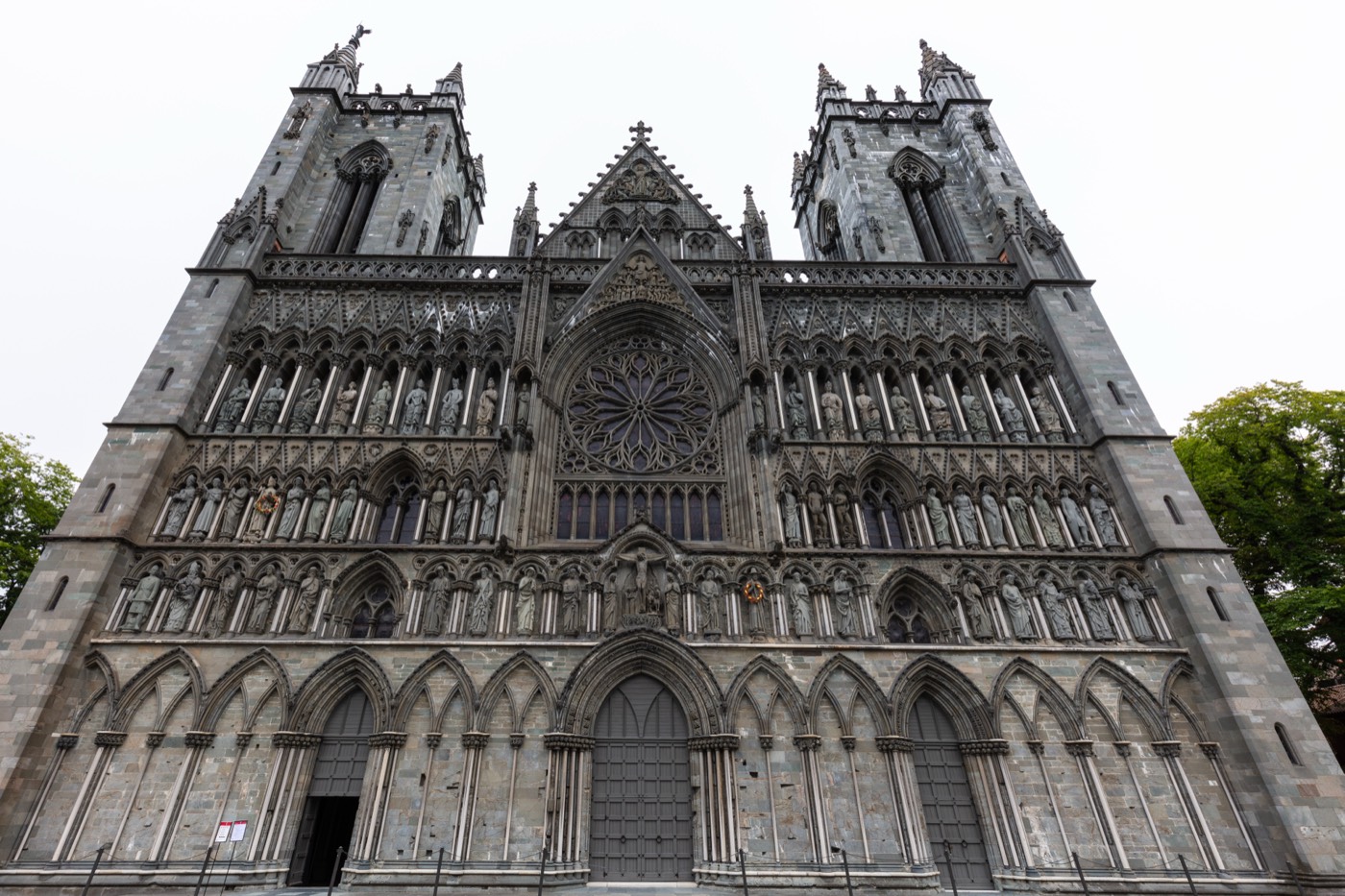
The reason so many families ended up with it is one man. Olaf II Haraldsson, king of Norway from 1015 to 1028, fell at the Battle of Stiklestad in 1030 and was canonised the following year. As Saint Olav he became the patron saint of Norway and was venerated in Sweden, Denmark, Iceland and Finland too. Churches were raised to him as far away as England and Rome, and for the next eight centuries Scandinavian parents named sons after him in enormous numbers.
A saint’s name given to millions of boys, in a naming system that turned every father’s name into his children’s surname, produces exactly what the census shows: an ocean of Olsons.
Where the Olson Name Comes From
Olson comes from Scandinavia, chiefly Norway and Sweden, and it was not originally a family name at all. Across rural Scandinavia the surname was patronymic and non-hereditary: it described your father, it changed every generation, and it belonged to you alone.
How the old system actually worked
If a man called Ole Larsson had a son named Lars, that son was Lars Olsson. Lars Olsson’s own son Ole was Ole Larsson again. The names alternated down the generations like a metronome, and daughters took -dotter or -datter instead: Ole’s daughter Kari was Kari Olsdatter, not Olsen.
This is the single most important thing to understand about the name, and it is the thing most surname pages skip. Before the reforms, no Scandinavian village contained an Olson family. It contained men whose fathers happened to be called Ole.
In Norway a further layer sat on top: many people were identified by the farm they lived on, and that farm name could change when they moved. A man could be Ole Hansen Nordby in one parish record and Ole Hansen Sæter in the next, without having changed anything but his address.
When the names were frozen
Each country fixed its surnames by law, and at different times. Denmark moved first, with an 1828 decree and a firmer 1856 law ordering patronymics to be frozen and inherited, though rural families quietly carried on the old way into the 1870s. Sweden followed with the Names Adoption Act of 1901, which required heritable surnames. Norway was last, in 1923.
Those dates matter enormously for anyone tracing a family. They are also, for most American Olsons, beside the point.
Why American Olsons were frozen early
The great Scandinavian emigration ran from the 1860s to about 1914, which means the majority of Norwegian and Swedish emigrants left home before their own countries made surnames hereditary. Their names were fixed not by parliament but by a passenger manifest, a naturalisation clerk or a Minnesota schoolteacher.
The practical consequence is blunt. An American Olson line often cannot be traced by surname beyond the immigrant, because on the other side of the Atlantic the surname simply stops existing as a family name. The immigrant’s father was not an Olson. He was an Ole, and his own surname pointed at his father instead.
Beyond that point you trace people, not names: parish registers, farm names, emigration lists and birth dates. It is entirely doable, and it is why so many Olson family trees hit an apparent wall in about 1870 that turns out not to be a wall at all.
Spelling Variants and Related Names
The main variants are Olsen, Olsson, Olson, Olesen, Olofsson and Olavsen, and the ending is a genuine clue to which country the family left. Scandinavian patronymics split along a clean line: Sweden used -sson, while Denmark and Norway used -sen.
- Olsson, with the double s, is Swedish. It is a contraction of Olofsson, from the Swedish form Olof, and remains one of Sweden’s most common surnames.
- Olsen is Danish and Norwegian, from Ole. It is among the most common surnames in both countries.
- Olesen is overwhelmingly Danish and rare in Norway, so it is a useful pointer toward Denmark.
- Olofsson and Olausson preserve the fuller Swedish given name.
- Olufsen and Olavsen preserve older Danish and Norwegian forms.
- Olason is the Icelandic pattern, where patronymics are still live and still change every generation.
Olson itself is largely an American creation. English speakers do not double the s and do not expect -sen, so Olsson and Olsen were both flattened into Olson on arrival, sometimes by the bearer and sometimes by whoever was holding the pen. This is why the American spelling, frustratingly, erases the very distinction that would tell you which country to search.
If your family writes it Olson, the Swedish and Norwegian possibilities are both open. Old letters, church records and the spelling used by cousins who stayed behind will usually settle it faster than the surname will. The same simplification happened to a great many Scandinavian names, including the closely related Peterson surname, which was built by the identical patronymic machinery.
The Olsons in America
Olsons arrived mainly between 1860 and 1914, in the largest per-capita emigration in Europe after Ireland’s, and they settled in a broad band across the Upper Midwest and the Pacific Northwest. Land, timber, iron and factory work drew them, and they clustered by home district with striking loyalty.
Illinois took an early share. Swedish machinists and furniture makers built one of the densest colonies in the country among the Swedes of Rockford, Illinois, where an Olson could work an entire career without needing much English. In Minneapolis and St Paul the Scandinavian working districts absorbed tens of thousands more.
New England drew the industrial wave east. Swedish moulders and toolmakers filled the workshops behind the Swedish community in Worcester, Massachusetts, one of the largest Swedish settlements outside the Midwest.
Farther west, California’s San Joaquin Valley pulled Swedish farming families into the vineyards and orchards around Kingsburg, California, a town that still leans into its Swedish identity. Norwegian Olsons went in numbers to Minnesota’s Norwegian settlements, including the farm country around Spring Grove, Minnesota, and on to the fishing and shipyard districts of the Northwest.
Worth remembering too that not every Olson came from Sweden or Norway proper. Finland’s Swedish-speaking coastal population carried the same names, and Finnish immigrant towns such as Ashtabula, Ohio and Fitchburg, Massachusetts included families whose surnames read as Swedish because their language was.
Notable People Named Olson
Floyd B. Olson (1891 to 1936) was the Farmer-Labor governor of Minnesota through the worst of the Depression, and the most prominent radical state executive of his era.
Charles Olson (1910 to 1970) was the American modernist poet behind The Maximus Poems and the essay “Projective Verse”, and a central figure at Black Mountain College.
Sigurd F. Olson (1899 to 1982) was a nature writer and wilderness campaigner whose work helped secure protection for the Boundary Waters canoe country of northern Minnesota.
Mancur Olson (1932 to 1998) was an economist whose book The Logic of Collective Action reshaped how political scientists think about interest groups.
Lute Olson (1934 to 2020) was the Hall of Fame college basketball coach who took Arizona to a national championship in 1997.
Kaitlin Olson (born 1975) is the American actress best known for It’s Always Sunny in Philadelphia.
How Common Is Olson Today?
Olson is the 157th most common surname in the United States, carried by 164,035 Americans at the 2010 Census. Add the Olsen, Olsson and Oleson spellings and the true Scandinavian total is far larger.
| US rank (2010 Census) | #157 |
|---|---|
| Americans with the name | 164,035 |
| Origin | Scandinavian (Norwegian and Swedish), patronymic |
| Meaning | “Son of Ole or Olaf”, from Old Norse Áleifr |
The name concentrates heavily in Minnesota, Wisconsin, the Dakotas and Washington State, tracking the settlement map almost exactly.
Frequently Asked Questions
What does the surname Olson mean?
Olson means “son of Ole or Olaf”. It descends from the Old Norse personal name Áleifr, built from anu, “ancestor”, and leifr, “heir”, giving a sense of “the ancestor’s descendant”.
Is Olson Norwegian or Swedish?
Both, and the American spelling cannot tell you which. Olsen is the Norwegian and Danish form, Olsson the Swedish one, and both were simplified to Olson in America. You need records rather than spelling to decide.
Where does the Olson family come from?
There is no single Olson family. The name arose independently in thousands of Norwegian, Swedish and Danish households wherever a father happened to be called Ole or Olof, so two Olson lines are usually unrelated.
How common is the surname Olson?
Olson ranks 157th in the United States with 164,035 bearers at the 2010 Census. In Scandinavia the parent forms are commoner still: Olsson sits in the top dozen Swedish surnames and Olsen in the top ranks in Norway and Denmark.
Is there an Olson family crest or coat of arms?
No. In every European heraldic tradition arms are granted to individuals and pass to their direct descendants, never to everyone who shares a surname. For a patronymic name like Olson, invented over and over by unrelated families, the idea is doubly meaningless. Sites selling an “Olson family crest” are selling a decoration, not a lineage.
Why do so many Olson family trees stop at the immigrant?
Because the surname genuinely stops there. Scandinavian patronymics changed every generation until Denmark’s 1828 and 1856 laws, Sweden’s 1901 Act and Norway’s 1923 law, so the immigrant’s father carried a different surname entirely. Tracing further means working from parish registers, farm names and birth dates instead.
If your family carries the Olson name, its route from Norway or Sweden to America is traceable. Atlas of Home can follow it from the parish register and the farm name to wherever your family landed, and to wherever you are now.