
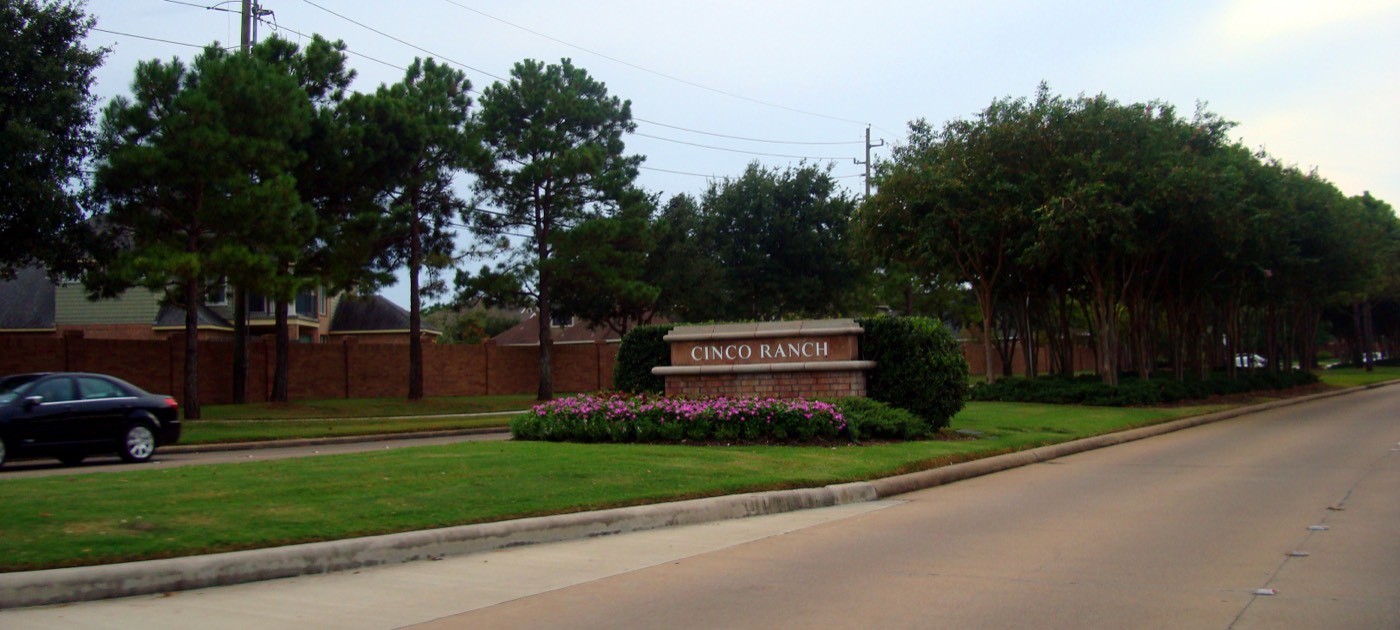
On a Saturday morning along Westheimer Parkway, the queue outside a bakery smells of warm cheese bread and strong coffee, and almost everyone in it is speaking the soft, sing-song Spanish of the Caracas valleys and the Maracaibo oilfields. This is the heart of the Venezuelans in Katy, Texas, a community that has grown so fast and so visibly that locals coined a nickname for it: Katyzuela. What began as a handful of oil engineers chasing work in Houston has become one of the largest concentrations of Venezuelans anywhere in the United States, rivalling the established hubs in Doral, Florida and Weston, Florida.
The Place
Katy sits on the western edge of Greater Houston, straddling Harris, Fort Bend and Waller counties along Interstate 10. It began as rice-farming prairie in the late nineteenth century, took on importance after the discovery of the Katy gas field in 1934, and was incorporated as a city in 1945.
What turned a railhead farming town into an affluent suburb was oil. The Energy Corridor, the cluster of energy company campuses along I-10, made the western suburbs a natural home for petroleum professionals. By 2022 the median household income in Katy had reached roughly 114,900 dollars, well above the Houston metropolitan figure.
Much of the Venezuelan story plays out inside Cinco Ranch, the sprawling master-planned community that anchors the southern half of Katy. Its blend of strong schools, new houses and Westheimer Parkway storefronts gave newcomers exactly what they were looking for.
How It Became Venezuelan
The Venezuelan presence in Katy is not the result of a single migration. It came in waves, each one larger than the last, each pushed by a different crisis at home and pulled by the same magnet: Houston’s oil industry and the family and friends who had already arrived.
The first engineers
The earliest Venezuelans to reach the Houston suburbs were oil professionals. As one community account put it, the first Venezuelans who came to Houston were engineers related to the oil company. Venezuela is an oil country and Houston is an oil town, and the two had done business for generations through the state petroleum giant, Petroleos de Venezuela, known as PDVSA.
These were not refugees. They were geologists, petroleum engineers and managers who knew Houston from secondments, training courses and joint ventures. When they relocated, they tended to land in the western suburbs near the Energy Corridor, and increasingly in the new houses going up around Cinco Ranch.
The PDVSA exodus
The trickle became a stream after the political convulsions of the early 2000s. During the national strike and lockout of 2002 and 2003, the Venezuelan government restructured PDVSA and dismissed more than 18,000 workers, many of them the engineers, geologists and specialised technicians who ran the Lake Maracaibo oilfields in Zulia state.
For thousands of skilled families, the obvious place to rebuild a career was the city where the oil industry already knew their names. Houston welcomed the experience, and the western suburbs, with their schools and space, welcomed the families. Katy received a generation of professionals who arrived already fluent in the business of crude.
The collapse and the crowd
The largest wave came later, driven not by a labour dispute but by the unravelling of an entire economy. As hyperinflation took hold from 2013 onward and the bolivar lost its value, the departures from Venezuela surged, swelling again from 2015.
By then the pattern was self-reinforcing. Well-off Venezuelans chose to settle near one another, building a community that offered support and a way to keep their culture alive. Newcomers came because cousins, former colleagues and school friends were already there, ready with advice on schools, churches and where to find proper harina pan.
The numbers tell the story. Nationally, the Venezuelan population in the United States expanded by 169 per cent in the decade after 2010, the fastest growth of any Hispanic group, according to the Pew Research Center. In the Houston metropolitan area the Venezuelan population reached roughly 75,000 by the mid-2020s. In Fort Bend County, which includes much of Cinco Ranch, Venezuelans had become the third-largest Hispanic group, around 5 per cent of the Hispanic population.
Where there were perhaps 10,000 Venezuelans across the Katy area in the late 2000s, the figure has since multiplied several times over. Somewhere along the way, residents started calling the place Katyzuela, and the name stuck.
Why Cinco Ranch
It is worth pausing on why so many landed in one master-planned community. Cinco Ranch was once a working cattle ranch and rice farm; its name comes from the five families who became partners in the original outfit in the 1930s. In 1984 the Cinco Ranch Venture acquired the land, ground was broken on the community in 1991, and in 2003 the San Diego developer Newland Communities took it over.
The result was a roughly 7,200-acre community wrapped around schools in the well-regarded Katy Independent School District. For a Venezuelan engineer trading Maracaibo or Caracas for Texas, the appeal was simple: good schools, safe streets, new houses and an easy drive to the Energy Corridor. One family told their friends, the friends told theirs, and a Venezuelan corner of Cinco Ranch took shape.
The Landmarks
El Kourmet, 25757 Westheimer Parkway, Suite 100, Katy. Billing itself as a pioneer of Venezuelan street food, El Kourmet began two decades ago in the mountain city of Merida, Venezuela, before relaunching in Katy as a food truck in 2015. It has since grown into bricks-and-mortar restaurants serving arepas, pepitos, patacones and Venezuelan burgers, and a second location anchors north Katy at 3939 North Fry Road.
Mi Querencia Latin Market, 25600 Westheimer Parkway, Katy. This South American grocer is where the community restocks on the staples that make home taste like home: harina for arepas, white cheese, guava paste and Venezuelan brands you cannot find at the chain stores. The market has also become an informal gathering point, the kind of place where crowds turn up when there is news from Venezuela to celebrate or mourn.
Deli’s Cafe, near Cinco Ranch Boulevard and Mason Road, Katy. A neighbourhood fixture serving Venezuelan cooking since 2013, Deli’s Cafe trades in empanadas, cachapas and pastelitos. Its longevity is its own kind of landmark: a sign that Venezuelan food in Katy is not a novelty but a settled part of local life.
Pan Pa’ Venezuela, Old Katy. Run by David Diaz, this bakery in the historic heart of old Katy turns out the breads and pastries of a Venezuelan panaderia. It places the community’s flavours not in a new strip mall but among the city’s oldest streets, a quiet sign of how thoroughly Venezuelans have woven themselves into Katy.
Stylus Dance Academy. Founded by Yibe Gonzalez, who came from Zulia, the oil heartland of Venezuela, the academy teaches traditional Venezuelan dance alongside other styles. For second-generation children growing up in Texas, it is a place to learn the joropo and the rhythms their grandparents danced.
The Westheimer Parkway corridor, Cinco Ranch. More than any single address, the stretch of Westheimer Parkway through Cinco Ranch is the spine of Katyzuela. Within a short drive sit Venezuelan restaurants, bakeries and the Latin market, clustered closely enough that a newcomer can run a week’s worth of errands entirely in Spanish.
Katy Independent School District schools, Cinco Ranch. The eight schools serving Cinco Ranch are landmarks in their own right for Venezuelan families, because the quality of those schools is often the reason the family chose Katy at all. School pickup lines are where many parents first found their Venezuelan neighbours.
Where They Came From
Venezuelan migration to Katy is closely tied to oil, and that gives it a distinct geography. A large share of the early arrivals came from Zulia, the western state around Lake Maracaibo that has long been the centre of the country’s petroleum industry. The same oil-and-engineering pull that drew Venezuelans west of Houston also helped build other Texas suburbs, from the Vietnamese of Houston to the tech and professional families behind the Indians of Celina and the Pakistanis of Frisco in the Dallas exurbs. These were the families whose livelihoods were tied to PDVSA and the Maracaibo fields, and who left in numbers after the 2002 and 2003 dismissals.
Others came from Caracas, the capital, and from cities such as Merida and Valencia, bringing the professional middle class that the hyperinflation of the 2010s hit hardest. They were doctors, engineers, accountants and business owners whose savings evaporated as the bolivar collapsed.
What unites them is not a single home region but a shared profile: educated, often English-speaking, frequently connected in some way to energy, finance or the professions. That profile is part of why the community settled into an affluent suburb rather than an inner-city enclave, and why it reproduced so quickly the comforts of home along Westheimer Parkway.
Katy Today
Today Katyzuela is no longer a curiosity but a recognised feature of Greater Houston’s map. Venezuelans are described as the fastest-growing Hispanic group in the region, and in parts of Cinco Ranch the accents at the supermarket, the soccer pitch and the school gate make the connection plain.
The community remains tied, painfully, to events at home. When there is political news from Caracas, the crowds gather outside places like Mi Querencia, and the mood of Katyzuela rises and falls with the fortunes of a country two thousand miles away. Many arrived expecting to return one day; for a great many, that expectation has quietly faded.
What has not faded is the texture of daily life they have built. The bakeries, the arepa counters, the dance academy and the Latin market are not nostalgia; they are infrastructure, the working parts of a community that intends to stay. Katy gave a generation of Venezuelans good schools and steady work near the oil industry that shaped their lives. In return, they gave a Texas suburb a name in two languages.
Frequently Asked Questions
Why are there so many Venezuelans in Katy, Texas?
The Venezuelans in Katy, Texas came first as oil professionals drawn to Houston’s energy industry, then in larger waves after the PDVSA dismissals of 2002 and 2003 and the economic collapse from 2013 onward. Well-off Venezuelans chose to settle near one another in Cinco Ranch, creating a community that supports newcomers and keeps the culture alive.
What does Katyzuela mean?
Katyzuela is the affectionate nickname locals gave the Katy area because so many Venezuelans live there. It blends Katy with Venezuela and reflects the cluster of Venezuelan restaurants, bakeries, markets and families concentrated around Cinco Ranch and Westheimer Parkway.
How many Venezuelans live in the Houston and Katy area?
The Venezuelan population of the Houston metropolitan area reached roughly 75,000 by the mid-2020s, with a large share in and around Katy. In Fort Bend County, which includes much of Cinco Ranch, Venezuelans are the third-largest Hispanic group, about 5 per cent of the Hispanic population.
Where can I find Venezuelan food in Katy?
The Westheimer Parkway corridor through Cinco Ranch is the centre of the Venezuelan food scene. El Kourmet serves arepas and Venezuelan street food, Deli’s Cafe has offered empanadas and cachapas since 2013, Pan Pa’ Venezuela bakes Venezuelan breads in old Katy, and Mi Querencia Latin Market stocks South American groceries.
Why did Venezuelan oil engineers come to Houston?
Venezuela and Houston are linked by oil. After the 2002 and 2003 PDVSA strike and lockout, the Venezuelan government dismissed more than 18,000 workers, many of them engineers and technicians from the Lake Maracaibo fields in Zulia state. Houston, the centre of the global oil business, was the natural place for them to rebuild their careers.
What part of Katy do Venezuelans live in?
Many of the Venezuelans in Katy, Texas are concentrated in and around Cinco Ranch, the large master-planned community in the southern part of Katy. Its strong Katy Independent School District schools, new housing and easy access to the Energy Corridor made it especially attractive to Venezuelan professional families.
If your family’s story passed through Katy, or any of the places Venezuelans have made home in America, Atlas of Home can trace that journey. From the oilfields of Zulia and the streets of Caracas, to the bakeries and arepa counters of Cinco Ranch, to wherever you are now.