
On a Saturday morning along Riggs Road, the griddles are already warm. The smell of masa pressing against hot comal carries out of half a dozen doorways, and the Spanish you hear is unmistakably eastern Salvadoran, soft on the consonants, quick on the jokes. The Salvadorans in Hyattsville, Maryland did not arrive looking for an arts district or a Metro stop. They arrived because a war pushed them out and because someone already here, a cousin, a neighbour, a friend from the same coastal town, said come, there is work, there is room.
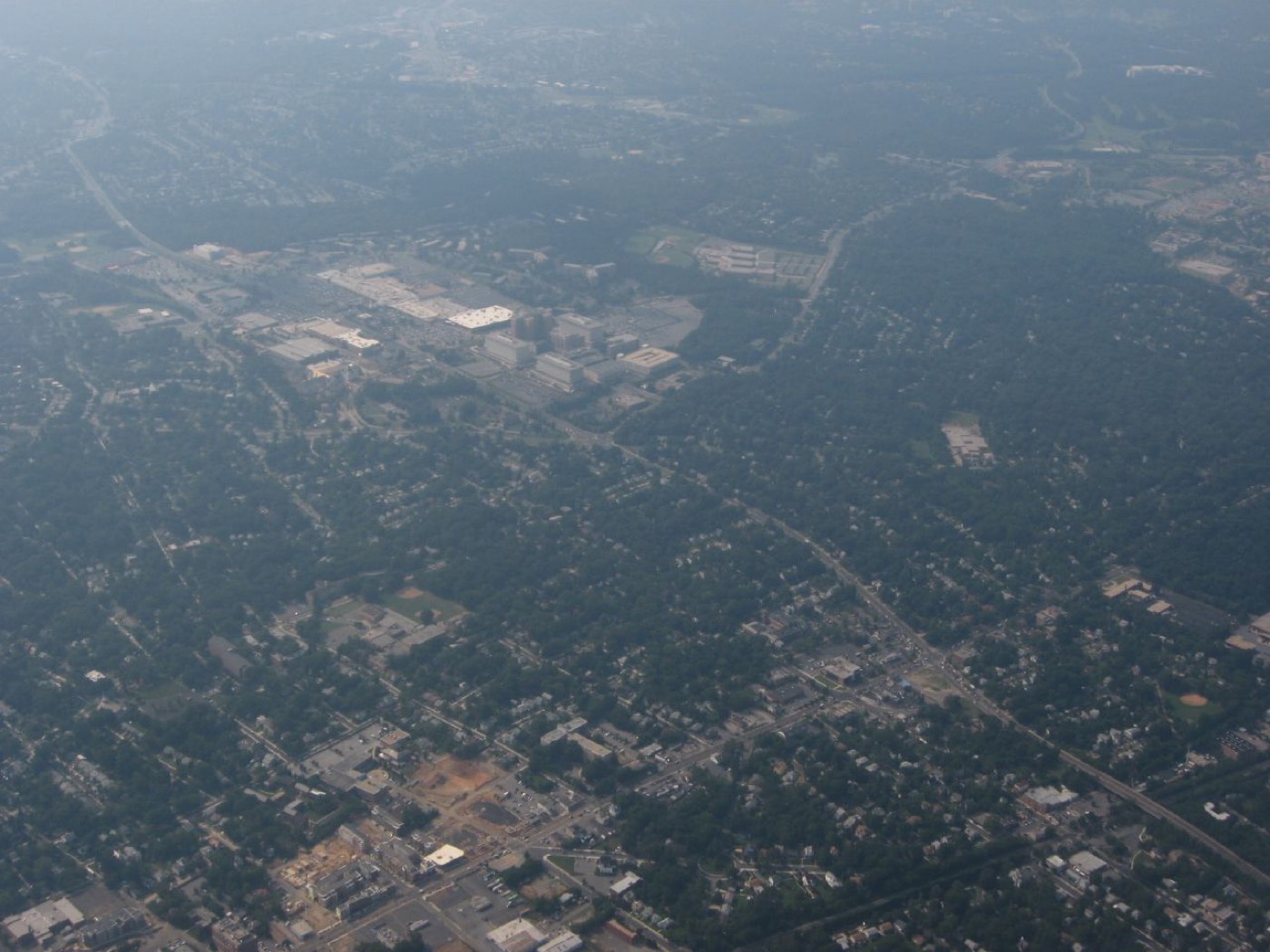
This is one of the quietest capitals of Salvadoran America. Not the most famous, not the most photographed, but one of the most lived-in. Hyattsville sits at the northern edge of Prince George’s County, a few miles up Route 1 from the District line, and for forty years it has been a place where Salvadoran families put down roots, raised children, opened restaurants, and stayed.
The Place
Hyattsville is an old railroad suburb. It grew up in the late nineteenth century around a station on the B&O line and the Washington-Baltimore Turnpike, what is now US Route 1, and was incorporated in 1886. The historic district, begun in 1873, still holds roughly 600 late-Victorian and early-twentieth-century houses on its tree-lined streets.
Today it is a small city of about 21,000 people inside the much larger sprawl of Prince George’s County. Two Metro Green Line stations, West Hyattsville and Hyattsville Crossing, connect it to downtown Washington in minutes. In the 2000s the western edge became the Gateway Arts District, a planned cluster of galleries, studios and new townhomes, even as the older Latino blocks along Riggs Road and University Boulevard carried on much as before.
The result is a place of two overlapping cities. One is the new arts-and-coffee Hyattsville written up in the lifestyle press. The other is the Central American Hyattsville that has been here longer, and it is the second city that this story is about.
How It Became Salvadoran
To understand the Salvadorans in Hyattsville you have to start two thousand miles south, and a little before the war.
The town that moved to Washington
The link between El Salvador and the Washington area is older than most people assume. It runs through a small town in the eastern department of La Unión called Intipucá. In 1967, a man named Sigfredo Chavez left Intipucá for Washington and found work washing dishes and cleaning houses. His letters home described a good living, and within a few years Washington had become the default destination for people leaving Intipucá.
By the time the civil war began, the path was already worn. Intipucá is still sometimes called Intipuca City for the thousands of its people who live in the DC area, and money wired home from Washington rebuilt the town in US-style houses.
The war years
The trickle became a flood in the 1980s. El Salvador’s civil war, which ran from 1979 to 1992, killed at least 75,000 people and displaced roughly a fifth of the country. The United States backed the Salvadoran government through the conflict, and as the violence spread, about a million Central Americans entered the United States over the decade.
Many of the first arrivals settled inside the District, in Mount Pleasant, Adams Morgan and Columbia Heights, neighbourhoods that became Central American by the early 1980s. You can still read that history in the older core of the community in the Salvadoran story of Mount Pleasant in Washington DC.
But the District was expensive, and it kept getting more expensive. Rent, space and the simple arithmetic of raising a family pushed Salvadoran households outward, across the line into Prince George’s and Montgomery counties. Hyattsville, cheap and well connected by bus and later by Metro, caught a large share of that movement.
CASA and the Langley Park anchor
Just up University Boulevard from Hyattsville sits Langley Park, the densest Central American settlement in Maryland. The two places function as one neighbourhood, and the institution that binds them sits between them.
CASA, often still called CASA de Maryland, was founded in 1985 in the basement of the Takoma Park Presbyterian Church by US citizens and Central American immigrants responding to the thousands of refugees arriving from the wars. In June 2010 it opened a 20,000-square-foot multicultural centre in the old Langley Park mansion on the Hyattsville-Langley Park edge, a 1924 country house that had once belonged to an American heiress and her British husband. From English classes to legal clinics to day-labour organising, CASA became the practical scaffolding of the immigrant community that radiates out into Hyattsville.
The deeper story of that adjoining settlement is told in the Salvadoran story of Langley Park, Maryland, and the two cannot really be understood apart.
Status, fear and staying anyway
Much of the community has lived for decades under Temporary Protected Status, the programme created in 1990 that let Salvadorans who fled the war remain and work legally. More than 30,000 Salvadorans across the Washington and Baltimore metro areas have depended on TPS, and the recurring threat of its cancellation has hung over Hyattsville households for years.
That insecurity shaped the community as much as the war did. Families bought homes, started businesses and enrolled children in Prince George’s County schools while never being entirely sure the ground would hold. They stayed anyway. By 2020 Hispanic residents made up close to four in ten people in Hyattsville, up from under a fifth in 2000, and Salvadorans were by far the largest group among them.
The Landmarks
CASA Multicultural Center, 8151 15th Avenue. The 20,000-square-foot centre in the restored Langley Park mansion is the institutional heart of Central American life on this side of the county line. English classes, citizenship help, a workers’ centre and legal services run out of a 1924 manor house that the community made its own.
Casa Dora, 1500 University Boulevard East. A long-running Salvadoran kitchen where the pupusas, fajitas and weekend breakfasts draw families from across the area. It is the kind of place where the menu is in two languages but the comfort food needs no translation.
El Dorado, 2200 University Boulevard East. A Salvadoran eatery that opens before seven in the morning, serving the early shift their pupusas and coffee. The cafeteria-style line, point and they plate it, is exactly how a Salvadoran fonda works back home.
Pupuseria Emily, 6824 Riggs Road. A small family pupuseria on Riggs Road turning out pupusas, empanadas and fried plantains for a few dollars apiece. It is one of a string of Salvadoran griddles along this corridor, the everyday infrastructure of the community.
Comedor y Pupuseria San Alejo, 1819 East West Highway. Named, like so many Salvadoran businesses here, for a place back home, San Alejo being a town in the eastern department of La Unión. The name is a small act of memory, a sign that points two thousand miles south.
The Mall at Prince George’s, 3500 East West Highway. The regional shopping centre that anchors the Hyattsville Crossing Metro stop has become, like many older malls in immigrant suburbs, a genuine community crossroads, a place where Salvadoran teenagers, abuelas and everyone in between actually spend their Saturdays.
The Gateway Arts District, along Route 1. Formed in 2001 along Baltimore Avenue, the arts district brought galleries, studios and new townhomes to western Hyattsville. It sits a short walk from the Latino corridor, and the relationship between the two, old immigrant city and new creative one, is the central tension of present-day Hyattsville.
Where They Came From
The Salvadorans of Hyattsville are not from everywhere in El Salvador in equal measure. The Washington pipeline is heavily weighted toward the east of the country, the departments of La Unión, San Miguel and Usulután, the dry coastal lowlands where Intipucá sits.
That is the logic of chain migration. Once Intipucá established Washington as its sister city in everything but name, the networks pulled in neighbours from nearby towns, San Alejo, Chirilagua and the rest. A migrant from eastern El Salvador arriving in the DC area in the 1980s was far more likely to find a cousin’s spare room here than in any other American city.
You can read the geography in the storefronts. The businesses carry the names of eastern towns and departments, and the regional accent on the street is the eastern one. This is, in a real sense, a piece of eastern El Salvador relocated to the Anacostia watershed. The same eastern-Salvadoran logic shaped other communities, including the Salvadorans of Brentwood, New York and the Salvadorans of MacArthur Park in Los Angeles.
Hyattsville Today
Hyattsville in the 2020s is a community holding two things at once: deep roots and rising pressure. The Salvadoran presence is established, multi-generational and visible in every block of the Riggs Road and University Boulevard corridor. Children of the war-era arrivals are now grown, many of them US citizens, some running the family restaurant, some long since moved into professions.
At the same time the city is changing fast. New townhomes on the western side have sold for between $750,000 and $1.2 million, far above the older housing stock, and gentrification is a live worry in Hyattsville as it is in neighbouring Brentwood and Langley Park. The Metro that makes Hyattsville convenient for Salvadoran workers also makes it attractive to buyers priced out of the District, and those two pressures meet on the same streets.
Politics adds its own weight. The long uncertainty over Temporary Protected Status, and the broader climate around immigration enforcement, has kept anxiety close to the surface in households that have been here for thirty years. The community has lived with that insecurity for so long that it has become part of the texture of daily life, present but not paralysing.
And yet the griddles stay warm. The pupuserias open before dawn, CASA’s doors stay busy, and on weekend evenings the soccer fields and the Mall at Prince George’s fill with a community that is, by any honest measure, home. The Salvadorans in Hyattsville have built something durable here, two thousand miles from La Unión, and they are not going anywhere.
Frequently Asked Questions
Why are there so many Salvadorans in Hyattsville, Maryland?
The Salvadorans in Hyattsville are part of one of the largest Salvadoran communities in the United States, centred on the Washington DC metro area. They settled here after fleeing El Salvador’s 1979 to 1992 civil war, drawn by cheap housing, transit access and existing family networks just across the District line in Prince George’s County.
When did Salvadorans first come to the Washington DC area?
The link predates the war. Migration from the eastern Salvadoran town of Intipucá to Washington began in 1967, when Sigfredo Chavez left for the capital and his letters home drew others. The civil war of the 1980s then turned that trickle into a mass movement of hundreds of thousands.
What part of El Salvador are Hyattsville’s Salvadorans from?
Most trace their roots to eastern El Salvador, especially the departments of La Unión, San Miguel and Usulután. The town of Intipucá in La Unión is so tied to Washington that it is nicknamed Intipuca City, and chain migration pulled in neighbours from surrounding eastern towns.
Where can you find Salvadoran food in Hyattsville?
The Riggs Road and University Boulevard corridor is lined with Salvadoran kitchens. Casa Dora at 1500 University Boulevard East, El Dorado at 2200 University Boulevard East and Pupuseria Emily at 6824 Riggs Road all serve pupusas and traditional Salvadoran dishes daily.
What is CASA and why does it matter to the community?
CASA, founded in 1985 and once known as CASA de Maryland, is one of the largest immigrant organisations in the state. Its multicultural centre, opened in 2010 in a restored 1924 mansion on the Hyattsville-Langley Park edge, provides English classes, legal help and a workers’ centre to the Salvadoran in Hyattsville and the wider Central American community.
Is the Salvadoran community in Hyattsville changing?
Yes. The community is multi-generational and well established, but rising home prices, new townhome developments selling for $750,000 and up, and long-running uncertainty over Temporary Protected Status are all pressing on it. Gentrification along the Route 1 corridor is a real concern, even as the Salvadoran presence remains strong.
If your family’s story passed through Hyattsville, or any of the places Salvadorans have made home in America, Atlas of Home can trace that journey. From a coastal town in La Unión to a pupuseria on Riggs Road, to wherever you are now.