
Where the Brentwood Salvadorans Came From
Brentwood’s Salvadorans come overwhelmingly from the rural east of the country, the departments of La Union, Morazan and San Miguel. These were among the regions hit hardest by the civil war, places where the fighting between the army and the FMLN guerrillas emptied villages and where there was little work to come back to once the shooting stopped.
The links are specific and traceable, town to town. Concepcion de Oriente in La Union to Westbury and Brentwood through Don Miguel Yanes. San Miguel to the menus of restaurants that carry its name. The same eastern Salvadoran world stretched itself across other parts of the United States too, from the Salvadoran community in Mount Pleasant, Washington DC to the Salvadoran heart of MacArthur Park in Los Angeles. Brentwood is the Long Island chapter of that single dispersed story.
Brentwood Today
Brentwood today is a majority-Latino hamlet where Salvadorans are the largest and most visible community. The homeownership rate sits above 80 percent, far higher than the national figure, a striking number for a place built largely by refugees and their children. Those frame houses on quarter-acre lots are owned, not just rented, by families who arrived with nothing.
The second generation has grown up. Salvadoran-American kids who were born in Suffolk County are now the ones running the businesses, teaching in the schools and buying the houses. Brentwood High School fields nationally ranked teams and sends graduates to college, and the children of lawn crews and house cleaners are becoming the professionals of the next Brentwood.
The community shares the hamlet with Puerto Rican neighbours who came first, and with newer arrivals from across the Americas, including the kind of mixing seen in places like the Ecuadorian community in Corona, Queens and the Peruvians of Paterson, New Jersey. TPS still hangs over many households, renewed in 2025 and valid into September 2026, a reminder that even decades-deep roots can feel provisional. But the dough still slaps between palms on Sunday mornings, and the comal is still hot. Brentwood is not a memory of El Salvador. It is El Salvador, continued.
Frequently Asked Questions
Why did Salvadorans settle in Brentwood, New York?
Salvadorans came to Brentwood mainly to escape the civil war that ravaged El Salvador from 1979 to 1992. They were drawn to the hamlet by cheap housing, an existing Spanish-speaking community of Puerto Rican neighbours, and abundant work in landscaping, construction and service jobs across wealthy Long Island towns.
Is Brentwood still Salvadoran today?
Yes. At the 2020 census more than three-quarters of Brentwood was Hispanic, and Salvadorans were the largest single group at 27.7 percent, having overtaken the area’s Puerto Ricans. The Salvadorans in Brentwood, New York remain the heart of the largest Salvadoran community on Long Island.
Where in El Salvador did the Brentwood Salvadorans come from?
The community comes overwhelmingly from the rural east of El Salvador, especially the departments of La Union, Morazan and San Miguel. These regions were hit hardest by the civil war, and chain migration carried whole towns, such as Concepcion de Oriente, to Long Island town by town.
What are the main Salvadoran landmarks in Brentwood?
The everyday landmarks are the pupuserias, delis and restaurants along Suffolk Avenue and Brentwood Road, such as El Salvador Deli and El Migueleno. CARECEN, the Central American Refugee Center, has anchored the community legally since the 1980s with offices in Brentwood and Hempstead.
When did Salvadorans first arrive in Brentwood?
Salvadorans began arriving in significant numbers in the early to mid-1980s as the civil war intensified. By the early 1990s the wider region’s Salvadoran population was estimated at around 90,000, and Brentwood had become its center on Long Island.
If your family’s story passed through Brentwood, or any of the eastern Salvadoran towns that sent their people to Long Island, Atlas of Home can help you trace that journey. From a village in La Union to a frame house in Suffolk County, to wherever you are now. Explore your story →
Sources: Brentwood, New York (Wikipedia) and Salvadoran Americans (Wikipedia).
Brentwood at Its Peak
Through the 1990s and 2000s the Salvadoran presence deepened from a foothold into a heartland. By the early 1990s the region’s Salvadoran population was estimated at around 90,000, and Brentwood was its center of gravity.
Daily life organized itself around work and family. Men left before dawn in pickups loaded with mowers and ladders, heading to landscaping and construction jobs across Suffolk and Nassau. Women cleaned houses, worked in restaurant kitchens, cared for other people’s children and elderly parents. A large share of what they earned went home as remittances, the lifeline that kept families in La Union and Morazan fed and housed.
The commercial strips filled with the businesses of a settled community. Pupuserias, Salvadoran delis, money-transfer storefronts sending dollars south, bakeries selling pan dulce. El Salvador Deli opened at 1185 Suffolk Avenue. Restaurants like El Migueleno, named for the city of San Miguel, advertised the food of home to people who had carried it in memory.
Temporary Protected Status became part of the texture of life. After devastating earthquakes struck El Salvador in 2001, the U.S. granted Salvadorans TPS, a renewable permission to live and work legally. For tens of thousands of Brentwood residents, every renewal cycle since has meant the same anxious paperwork and the same question of whether the status will hold.
The Change
By the 2010s the demographic shift was complete and then some. At the 2020 census, more than three-quarters of Brentwood identified as Hispanic, and Salvadorans, at 27.7 percent of the population, had clearly overtaken Puerto Ricans as the largest group.
The change rippled across the region. For the first time, recent census figures show more Salvadorans than Puerto Ricans on Long Island as a whole, with Salvadorans numbering close to 100,000 and forming roughly a quarter of the area’s entire Hispanic population.
This was also the period when Brentwood’s name was dragged into national headlines over the MS-13 gang. That coverage flattened a community of working families into a crime story. The honest truth is that Salvadoran Brentwood is overwhelmingly made up of its victims and its opponents, not its perpetrators: parents who fled one war and refused to let their children be lost to another. The story of Brentwood is the lawn crews and the pupuserias and the homeowners, not the headlines.
The Landmarks of Salvadoran Brentwood
El Salvador Deli, 1185 Suffolk Avenue. A neighbourhood fixture on one of Brentwood’s main commercial spines, selling Salvadoran groceries and prepared food. The kind of counter where you can buy a phone card, a bag of masa and a plate of pupusas in the same trip.
El Migueleno. Named after San Miguel, the largest city of eastern El Salvador and the region most Brentwood families come from. The name itself is a flag planted: this is food for people from the east, by people from the east.
El Texano Deli, Taqueria y Pupuseria, 46 First Avenue. A blend of Salvadoran and Mexican cooking that reflects how Brentwood’s Latino communities live side by side. Pupusas and tacos on the same menu, a portrait of the wider neighbourhood in a single kitchen.
CARECEN, the Central American Refugee Center. Founded in 1983 and operating offices in Brentwood and Hempstead, CARECEN has been the community’s legal backbone for over forty years. Through the 1980s it provided asylum defense for hundreds of Salvadorans a year, and today it handles TPS renewals, DACA, citizenship and family cases, serving more than 1,700 clients in 2024 alone.
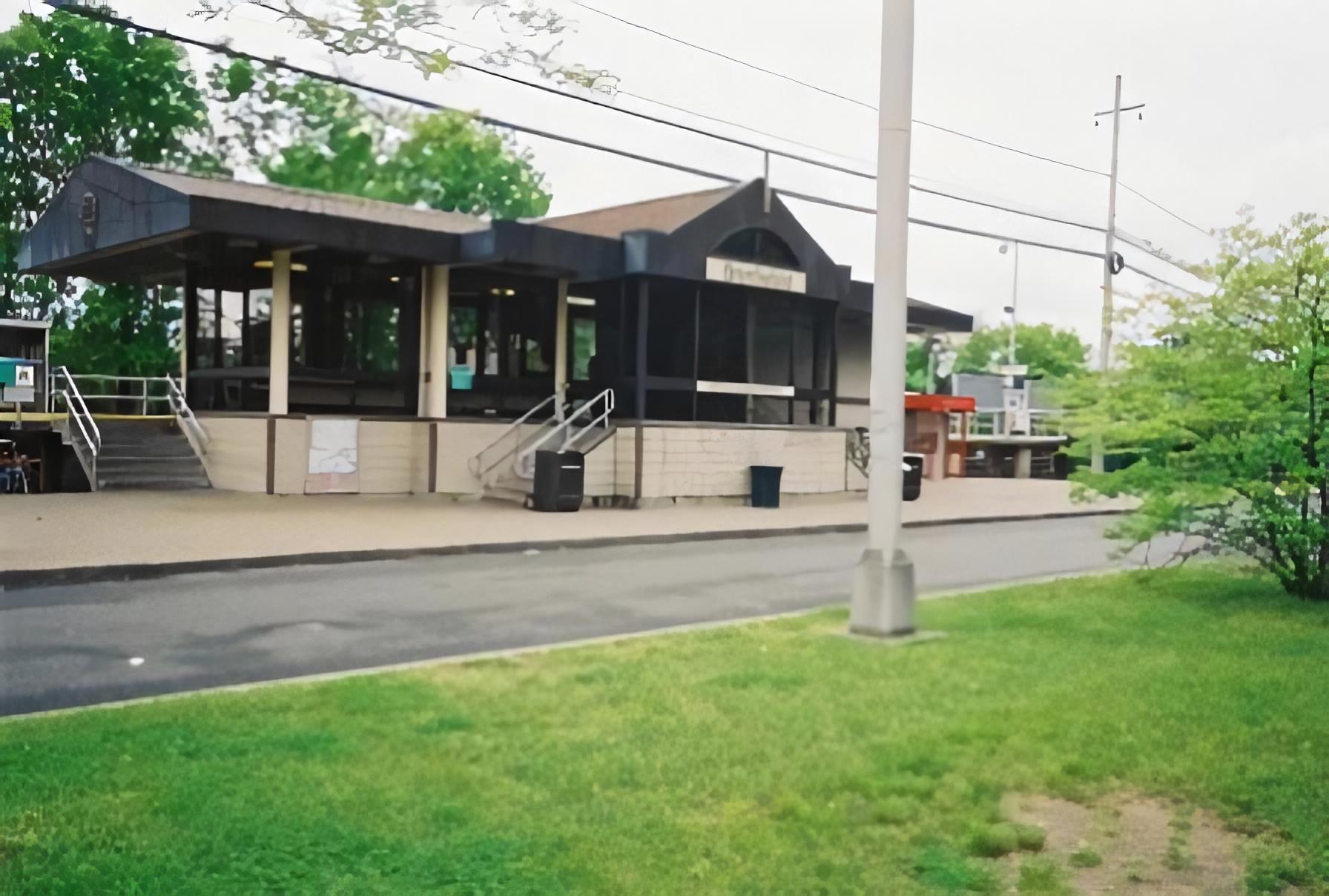
The Brentwood LIRR station, Ronkonkoma Branch. The daily threshold between Brentwood and the wider region, the platform where the early train carries workers west and brings them home at night. Like the church or the corner store, the station is one of the places the whole community passes through.
Suffolk Avenue and Brentwood Road. Not a single building but the living commercial heart of the hamlet, lined with the delis, restaurants and remittance offices that make the neighbourhood legibly Salvadoran to anyone driving through.
Where the Brentwood Salvadorans Came From
Brentwood’s Salvadorans come overwhelmingly from the rural east of the country, the departments of La Union, Morazan and San Miguel. These were among the regions hit hardest by the civil war, places where the fighting between the army and the FMLN guerrillas emptied villages and where there was little work to come back to once the shooting stopped.
The links are specific and traceable, town to town. Concepcion de Oriente in La Union to Westbury and Brentwood through Don Miguel Yanes. San Miguel to the menus of restaurants that carry its name. The same eastern Salvadoran world stretched itself across other parts of the United States too, from the Salvadoran community in Mount Pleasant, Washington DC to the Salvadoran heart of MacArthur Park in Los Angeles. Brentwood is the Long Island chapter of that single dispersed story.
Brentwood Today
Brentwood today is a majority-Latino hamlet where Salvadorans are the largest and most visible community. The homeownership rate sits above 80 percent, far higher than the national figure, a striking number for a place built largely by refugees and their children. Those frame houses on quarter-acre lots are owned, not just rented, by families who arrived with nothing.
The second generation has grown up. Salvadoran-American kids who were born in Suffolk County are now the ones running the businesses, teaching in the schools and buying the houses. Brentwood High School fields nationally ranked teams and sends graduates to college, and the children of lawn crews and house cleaners are becoming the professionals of the next Brentwood.
The community shares the hamlet with Puerto Rican neighbours who came first, and with newer arrivals from across the Americas, including the kind of mixing seen in places like the Ecuadorian community in Corona, Queens and the Peruvians of Paterson, New Jersey. TPS still hangs over many households, renewed in 2025 and valid into September 2026, a reminder that even decades-deep roots can feel provisional. But the dough still slaps between palms on Sunday mornings, and the comal is still hot. Brentwood is not a memory of El Salvador. It is El Salvador, continued.
Frequently Asked Questions
Why did Salvadorans settle in Brentwood, New York?
Salvadorans came to Brentwood mainly to escape the civil war that ravaged El Salvador from 1979 to 1992. They were drawn to the hamlet by cheap housing, an existing Spanish-speaking community of Puerto Rican neighbours, and abundant work in landscaping, construction and service jobs across wealthy Long Island towns.
Is Brentwood still Salvadoran today?
Yes. At the 2020 census more than three-quarters of Brentwood was Hispanic, and Salvadorans were the largest single group at 27.7 percent, having overtaken the area’s Puerto Ricans. The Salvadorans in Brentwood, New York remain the heart of the largest Salvadoran community on Long Island.
Where in El Salvador did the Brentwood Salvadorans come from?
The community comes overwhelmingly from the rural east of El Salvador, especially the departments of La Union, Morazan and San Miguel. These regions were hit hardest by the civil war, and chain migration carried whole towns, such as Concepcion de Oriente, to Long Island town by town.
What are the main Salvadoran landmarks in Brentwood?
The everyday landmarks are the pupuserias, delis and restaurants along Suffolk Avenue and Brentwood Road, such as El Salvador Deli and El Migueleno. CARECEN, the Central American Refugee Center, has anchored the community legally since the 1980s with offices in Brentwood and Hempstead.
When did Salvadorans first arrive in Brentwood?
Salvadorans began arriving in significant numbers in the early to mid-1980s as the civil war intensified. By the early 1990s the wider region’s Salvadoran population was estimated at around 90,000, and Brentwood had become its center on Long Island.
If your family’s story passed through Brentwood, or any of the eastern Salvadoran towns that sent their people to Long Island, Atlas of Home can help you trace that journey. From a village in La Union to a frame house in Suffolk County, to wherever you are now. Explore your story →
Sources: Brentwood, New York (Wikipedia) and Salvadoran Americans (Wikipedia).
You hear it before you see it. The slap of dough between two palms, the hiss of a pupusa hitting the comal, the murmur of Spanish carried in the accent of eastern El Salvador. Brentwood is a hamlet of frame houses and wide suburban streets in the middle of Long Island, more than two thousand miles from San Miguel. Yet on a Sunday morning along Suffolk Avenue, it can feel like a town in La Union folded itself into Suffolk County. Today Salvadorans are the single largest group in Brentwood, the heart of what has quietly become the largest Salvadoran community on Long Island.
Brentwood: The Place
Brentwood sits in the Town of Islip, near the geographic center of Long Island, about forty miles east of Manhattan. It is the most populous hamlet in Suffolk County, with a 2020 population of 62,387, and it is overwhelmingly residential: ranch houses, split-levels and modest frame homes on quarter-acre lots.
The Brentwood station on the Long Island Rail Road’s Ronkonkoma Branch ties the hamlet to the city, and the Long Island Expressway and Sagtikos Parkway cut across it. There is no single main street so much as a set of busy commercial spines: Suffolk Avenue, Brentwood Road, Washington Avenue. It is a working community, and it always has been.
How Brentwood Became Salvadoran
Before the Salvadorans
Long before pupuserias, Brentwood was a piece of American utopian history. In 1851 the social reformers Josiah Warren and Stephen Pearl Andrews founded a colony here called Modern Times, an experiment in individual liberty on 750 acres of pine barrens. The community renamed itself Brentwood in 1864, after the English town in Essex.
For most of the twentieth century Brentwood was a quiet, semi-rural place. That began to change after World War II, when postwar suburbanization pushed families east from the boroughs.
The first large Latino presence came from Puerto Rico. As early as 1947, Spanish-language newspapers in New York advertised cheap building lots in Brentwood, some for as little as $150, and Puerto Rican families bought in and built. By the time Salvadorans began arriving, they were joining an established Spanish-speaking neighbourhood, not founding one from scratch.
The Salvadorans Arrive
The catalyst was war. El Salvador’s civil war, from 1979 to 1992, killed roughly 75,000 people and drove a fifth of the population from the country. By the mid-1980s the United States was receiving more Salvadoran migrants than any state except California sent to New York, and many of them found their way to Long Island.
They came largely from the rural east of El Salvador, and they came through people they knew. The classic example is Don Miguel Yanes, who linked his home town of Concepcion de Oriente, in the department of La Union, to nearby Westbury. By one estimate, a thousand of his townspeople eventually followed the trail he opened.
Most Salvadorans did not arrive through a single founder, though. They came on the word of a cousin, a neighbour, a friend from the same village who had a spare couch and a lead on a job. One arrival sponsored the next, and the next sent for family back home. That is the engine of chain migration, and it is why whole stretches of eastern El Salvador effectively relocated to a few square miles of Suffolk County.
Brentwood drew them for plain reasons. Housing was cheaper than in Queens or Nassau. There was already a Spanish-speaking community to land in. And the wealthy towns of Long Island needed labour: lawns to cut in the Hamptons, houses to frame, kitchens to run, children to mind.
Brentwood at Its Peak
Through the 1990s and 2000s the Salvadoran presence deepened from a foothold into a heartland. By the early 1990s the region’s Salvadoran population was estimated at around 90,000, and Brentwood was its center of gravity.
Daily life organized itself around work and family. Men left before dawn in pickups loaded with mowers and ladders, heading to landscaping and construction jobs across Suffolk and Nassau. Women cleaned houses, worked in restaurant kitchens, cared for other people’s children and elderly parents. A large share of what they earned went home as remittances, the lifeline that kept families in La Union and Morazan fed and housed.
The commercial strips filled with the businesses of a settled community. Pupuserias, Salvadoran delis, money-transfer storefronts sending dollars south, bakeries selling pan dulce. El Salvador Deli opened at 1185 Suffolk Avenue. Restaurants like El Migueleno, named for the city of San Miguel, advertised the food of home to people who had carried it in memory.
Temporary Protected Status became part of the texture of life. After devastating earthquakes struck El Salvador in 2001, the U.S. granted Salvadorans TPS, a renewable permission to live and work legally. For tens of thousands of Brentwood residents, every renewal cycle since has meant the same anxious paperwork and the same question of whether the status will hold.
The Change
By the 2010s the demographic shift was complete and then some. At the 2020 census, more than three-quarters of Brentwood identified as Hispanic, and Salvadorans, at 27.7 percent of the population, had clearly overtaken Puerto Ricans as the largest group.
The change rippled across the region. For the first time, recent census figures show more Salvadorans than Puerto Ricans on Long Island as a whole, with Salvadorans numbering close to 100,000 and forming roughly a quarter of the area’s entire Hispanic population.
This was also the period when Brentwood’s name was dragged into national headlines over the MS-13 gang. That coverage flattened a community of working families into a crime story. The honest truth is that Salvadoran Brentwood is overwhelmingly made up of its victims and its opponents, not its perpetrators: parents who fled one war and refused to let their children be lost to another. The story of Brentwood is the lawn crews and the pupuserias and the homeowners, not the headlines.
The Landmarks of Salvadoran Brentwood
El Salvador Deli, 1185 Suffolk Avenue. A neighbourhood fixture on one of Brentwood’s main commercial spines, selling Salvadoran groceries and prepared food. The kind of counter where you can buy a phone card, a bag of masa and a plate of pupusas in the same trip.
El Migueleno. Named after San Miguel, the largest city of eastern El Salvador and the region most Brentwood families come from. The name itself is a flag planted: this is food for people from the east, by people from the east.
El Texano Deli, Taqueria y Pupuseria, 46 First Avenue. A blend of Salvadoran and Mexican cooking that reflects how Brentwood’s Latino communities live side by side. Pupusas and tacos on the same menu, a portrait of the wider neighbourhood in a single kitchen.
CARECEN, the Central American Refugee Center. Founded in 1983 and operating offices in Brentwood and Hempstead, CARECEN has been the community’s legal backbone for over forty years. Through the 1980s it provided asylum defense for hundreds of Salvadorans a year, and today it handles TPS renewals, DACA, citizenship and family cases, serving more than 1,700 clients in 2024 alone.
The Brentwood LIRR station, Ronkonkoma Branch. The daily threshold between Brentwood and the wider region, the platform where the early train carries workers west and brings them home at night. Like the church or the corner store, the station is one of the places the whole community passes through.
Suffolk Avenue and Brentwood Road. Not a single building but the living commercial heart of the hamlet, lined with the delis, restaurants and remittance offices that make the neighbourhood legibly Salvadoran to anyone driving through.
Where the Brentwood Salvadorans Came From
Brentwood’s Salvadorans come overwhelmingly from the rural east of the country, the departments of La Union, Morazan and San Miguel. These were among the regions hit hardest by the civil war, places where the fighting between the army and the FMLN guerrillas emptied villages and where there was little work to come back to once the shooting stopped.
The links are specific and traceable, town to town. Concepcion de Oriente in La Union to Westbury and Brentwood through Don Miguel Yanes. San Miguel to the menus of restaurants that carry its name. The same eastern Salvadoran world stretched itself across other parts of the United States too, from the Salvadoran community in Mount Pleasant, Washington DC to the Salvadoran heart of MacArthur Park in Los Angeles. Brentwood is the Long Island chapter of that single dispersed story.
Brentwood Today
Brentwood today is a majority-Latino hamlet where Salvadorans are the largest and most visible community. The homeownership rate sits above 80 percent, far higher than the national figure, a striking number for a place built largely by refugees and their children. Those frame houses on quarter-acre lots are owned, not just rented, by families who arrived with nothing.
The second generation has grown up. Salvadoran-American kids who were born in Suffolk County are now the ones running the businesses, teaching in the schools and buying the houses. Brentwood High School fields nationally ranked teams and sends graduates to college, and the children of lawn crews and house cleaners are becoming the professionals of the next Brentwood.
The community shares the hamlet with Puerto Rican neighbours who came first, and with newer arrivals from across the Americas, including the kind of mixing seen in places like the Ecuadorian community in Corona, Queens and the Peruvians of Paterson, New Jersey. TPS still hangs over many households, renewed in 2025 and valid into September 2026, a reminder that even decades-deep roots can feel provisional. But the dough still slaps between palms on Sunday mornings, and the comal is still hot. Brentwood is not a memory of El Salvador. It is El Salvador, continued.
Frequently Asked Questions
Why did Salvadorans settle in Brentwood, New York?
Salvadorans came to Brentwood mainly to escape the civil war that ravaged El Salvador from 1979 to 1992. They were drawn to the hamlet by cheap housing, an existing Spanish-speaking community of Puerto Rican neighbours, and abundant work in landscaping, construction and service jobs across wealthy Long Island towns.
Is Brentwood still Salvadoran today?
Yes. At the 2020 census more than three-quarters of Brentwood was Hispanic, and Salvadorans were the largest single group at 27.7 percent, having overtaken the area’s Puerto Ricans. The Salvadorans in Brentwood, New York remain the heart of the largest Salvadoran community on Long Island.
Where in El Salvador did the Brentwood Salvadorans come from?
The community comes overwhelmingly from the rural east of El Salvador, especially the departments of La Union, Morazan and San Miguel. These regions were hit hardest by the civil war, and chain migration carried whole towns, such as Concepcion de Oriente, to Long Island town by town.
What are the main Salvadoran landmarks in Brentwood?
The everyday landmarks are the pupuserias, delis and restaurants along Suffolk Avenue and Brentwood Road, such as El Salvador Deli and El Migueleno. CARECEN, the Central American Refugee Center, has anchored the community legally since the 1980s with offices in Brentwood and Hempstead.
When did Salvadorans first arrive in Brentwood?
Salvadorans began arriving in significant numbers in the early to mid-1980s as the civil war intensified. By the early 1990s the wider region’s Salvadoran population was estimated at around 90,000, and Brentwood had become its center on Long Island.
If your family’s story passed through Brentwood, or any of the eastern Salvadoran towns that sent their people to Long Island, Atlas of Home can help you trace that journey. From a village in La Union to a frame house in Suffolk County, to wherever you are now. Explore your story →
Sources: Brentwood, New York (Wikipedia) and Salvadoran Americans (Wikipedia).
You hear it before you see it. The slap of dough between two palms, the hiss of a pupusa hitting the comal, the murmur of Spanish carried in the accent of eastern El Salvador. Brentwood is a hamlet of frame houses and wide suburban streets in the middle of Long Island, more than two thousand miles from San Miguel. Yet on a Sunday morning along Suffolk Avenue, it can feel like a town in La Union folded itself into Suffolk County. Today Salvadorans are the single largest group in Brentwood, the heart of what has quietly become the largest Salvadoran community on Long Island.
Brentwood: The Place
Brentwood sits in the Town of Islip, near the geographic center of Long Island, about forty miles east of Manhattan. It is the most populous hamlet in Suffolk County, with a 2020 population of 62,387, and it is overwhelmingly residential: ranch houses, split-levels and modest frame homes on quarter-acre lots.
The Brentwood station on the Long Island Rail Road’s Ronkonkoma Branch ties the hamlet to the city, and the Long Island Expressway and Sagtikos Parkway cut across it. There is no single main street so much as a set of busy commercial spines: Suffolk Avenue, Brentwood Road, Washington Avenue. It is a working community, and it always has been.
How Brentwood Became Salvadoran
Before the Salvadorans
Long before pupuserias, Brentwood was a piece of American utopian history. In 1851 the social reformers Josiah Warren and Stephen Pearl Andrews founded a colony here called Modern Times, an experiment in individual liberty on 750 acres of pine barrens. The community renamed itself Brentwood in 1864, after the English town in Essex.
For most of the twentieth century Brentwood was a quiet, semi-rural place. That began to change after World War II, when postwar suburbanization pushed families east from the boroughs.
The first large Latino presence came from Puerto Rico. As early as 1947, Spanish-language newspapers in New York advertised cheap building lots in Brentwood, some for as little as $150, and Puerto Rican families bought in and built. By the time Salvadorans began arriving, they were joining an established Spanish-speaking neighbourhood, not founding one from scratch.
The Salvadorans Arrive
The catalyst was war. El Salvador’s civil war, from 1979 to 1992, killed roughly 75,000 people and drove a fifth of the population from the country. By the mid-1980s the United States was receiving more Salvadoran migrants than any state except California sent to New York, and many of them found their way to Long Island.
They came largely from the rural east of El Salvador, and they came through people they knew. The classic example is Don Miguel Yanes, who linked his home town of Concepcion de Oriente, in the department of La Union, to nearby Westbury. By one estimate, a thousand of his townspeople eventually followed the trail he opened.
Most Salvadorans did not arrive through a single founder, though. They came on the word of a cousin, a neighbour, a friend from the same village who had a spare couch and a lead on a job. One arrival sponsored the next, and the next sent for family back home. That is the engine of chain migration, and it is why whole stretches of eastern El Salvador effectively relocated to a few square miles of Suffolk County.
Brentwood drew them for plain reasons. Housing was cheaper than in Queens or Nassau. There was already a Spanish-speaking community to land in. And the wealthy towns of Long Island needed labour: lawns to cut in the Hamptons, houses to frame, kitchens to run, children to mind.
Brentwood at Its Peak
Through the 1990s and 2000s the Salvadoran presence deepened from a foothold into a heartland. By the early 1990s the region’s Salvadoran population was estimated at around 90,000, and Brentwood was its center of gravity.
Daily life organized itself around work and family. Men left before dawn in pickups loaded with mowers and ladders, heading to landscaping and construction jobs across Suffolk and Nassau. Women cleaned houses, worked in restaurant kitchens, cared for other people’s children and elderly parents. A large share of what they earned went home as remittances, the lifeline that kept families in La Union and Morazan fed and housed.
The commercial strips filled with the businesses of a settled community. Pupuserias, Salvadoran delis, money-transfer storefronts sending dollars south, bakeries selling pan dulce. El Salvador Deli opened at 1185 Suffolk Avenue. Restaurants like El Migueleno, named for the city of San Miguel, advertised the food of home to people who had carried it in memory.
Temporary Protected Status became part of the texture of life. After devastating earthquakes struck El Salvador in 2001, the U.S. granted Salvadorans TPS, a renewable permission to live and work legally. For tens of thousands of Brentwood residents, every renewal cycle since has meant the same anxious paperwork and the same question of whether the status will hold.
The Change
By the 2010s the demographic shift was complete and then some. At the 2020 census, more than three-quarters of Brentwood identified as Hispanic, and Salvadorans, at 27.7 percent of the population, had clearly overtaken Puerto Ricans as the largest group.
The change rippled across the region. For the first time, recent census figures show more Salvadorans than Puerto Ricans on Long Island as a whole, with Salvadorans numbering close to 100,000 and forming roughly a quarter of the area’s entire Hispanic population.
This was also the period when Brentwood’s name was dragged into national headlines over the MS-13 gang. That coverage flattened a community of working families into a crime story. The honest truth is that Salvadoran Brentwood is overwhelmingly made up of its victims and its opponents, not its perpetrators: parents who fled one war and refused to let their children be lost to another. The story of Brentwood is the lawn crews and the pupuserias and the homeowners, not the headlines.
The Landmarks of Salvadoran Brentwood
El Salvador Deli, 1185 Suffolk Avenue. A neighbourhood fixture on one of Brentwood’s main commercial spines, selling Salvadoran groceries and prepared food. The kind of counter where you can buy a phone card, a bag of masa and a plate of pupusas in the same trip.
El Migueleno. Named after San Miguel, the largest city of eastern El Salvador and the region most Brentwood families come from. The name itself is a flag planted: this is food for people from the east, by people from the east.
El Texano Deli, Taqueria y Pupuseria, 46 First Avenue. A blend of Salvadoran and Mexican cooking that reflects how Brentwood’s Latino communities live side by side. Pupusas and tacos on the same menu, a portrait of the wider neighbourhood in a single kitchen.
CARECEN, the Central American Refugee Center. Founded in 1983 and operating offices in Brentwood and Hempstead, CARECEN has been the community’s legal backbone for over forty years. Through the 1980s it provided asylum defense for hundreds of Salvadorans a year, and today it handles TPS renewals, DACA, citizenship and family cases, serving more than 1,700 clients in 2024 alone.
The Brentwood LIRR station, Ronkonkoma Branch. The daily threshold between Brentwood and the wider region, the platform where the early train carries workers west and brings them home at night. Like the church or the corner store, the station is one of the places the whole community passes through.
Suffolk Avenue and Brentwood Road. Not a single building but the living commercial heart of the hamlet, lined with the delis, restaurants and remittance offices that make the neighbourhood legibly Salvadoran to anyone driving through.
Where the Brentwood Salvadorans Came From
Brentwood’s Salvadorans come overwhelmingly from the rural east of the country, the departments of La Union, Morazan and San Miguel. These were among the regions hit hardest by the civil war, places where the fighting between the army and the FMLN guerrillas emptied villages and where there was little work to come back to once the shooting stopped.
The links are specific and traceable, town to town. Concepcion de Oriente in La Union to Westbury and Brentwood through Don Miguel Yanes. San Miguel to the menus of restaurants that carry its name. The same eastern Salvadoran world stretched itself across other parts of the United States too, from the Salvadoran community in Mount Pleasant, Washington DC to the Salvadoran heart of MacArthur Park in Los Angeles. Brentwood is the Long Island chapter of that single dispersed story.
Brentwood Today
Brentwood today is a majority-Latino hamlet where Salvadorans are the largest and most visible community. The homeownership rate sits above 80 percent, far higher than the national figure, a striking number for a place built largely by refugees and their children. Those frame houses on quarter-acre lots are owned, not just rented, by families who arrived with nothing.
The second generation has grown up. Salvadoran-American kids who were born in Suffolk County are now the ones running the businesses, teaching in the schools and buying the houses. Brentwood High School fields nationally ranked teams and sends graduates to college, and the children of lawn crews and house cleaners are becoming the professionals of the next Brentwood.
The community shares the hamlet with Puerto Rican neighbours who came first, and with newer arrivals from across the Americas, including the kind of mixing seen in places like the Ecuadorian community in Corona, Queens and the Peruvians of Paterson, New Jersey. TPS still hangs over many households, renewed in 2025 and valid into September 2026, a reminder that even decades-deep roots can feel provisional. But the dough still slaps between palms on Sunday mornings, and the comal is still hot. Brentwood is not a memory of El Salvador. It is El Salvador, continued.
Frequently Asked Questions
Why did Salvadorans settle in Brentwood, New York?
Salvadorans came to Brentwood mainly to escape the civil war that ravaged El Salvador from 1979 to 1992. They were drawn to the hamlet by cheap housing, an existing Spanish-speaking community of Puerto Rican neighbours, and abundant work in landscaping, construction and service jobs across wealthy Long Island towns.
Is Brentwood still Salvadoran today?
Yes. At the 2020 census more than three-quarters of Brentwood was Hispanic, and Salvadorans were the largest single group at 27.7 percent, having overtaken the area’s Puerto Ricans. The Salvadorans in Brentwood, New York remain the heart of the largest Salvadoran community on Long Island.
Where in El Salvador did the Brentwood Salvadorans come from?
The community comes overwhelmingly from the rural east of El Salvador, especially the departments of La Union, Morazan and San Miguel. These regions were hit hardest by the civil war, and chain migration carried whole towns, such as Concepcion de Oriente, to Long Island town by town.
What are the main Salvadoran landmarks in Brentwood?
The everyday landmarks are the pupuserias, delis and restaurants along Suffolk Avenue and Brentwood Road, such as El Salvador Deli and El Migueleno. CARECEN, the Central American Refugee Center, has anchored the community legally since the 1980s with offices in Brentwood and Hempstead.
When did Salvadorans first arrive in Brentwood?
Salvadorans began arriving in significant numbers in the early to mid-1980s as the civil war intensified. By the early 1990s the wider region’s Salvadoran population was estimated at around 90,000, and Brentwood had become its center on Long Island.
If your family’s story passed through Brentwood, or any of the eastern Salvadoran towns that sent their people to Long Island, Atlas of Home can help you trace that journey. From a village in La Union to a frame house in Suffolk County, to wherever you are now. Explore your story →
Sources: Brentwood, New York (Wikipedia) and Salvadoran Americans (Wikipedia).