
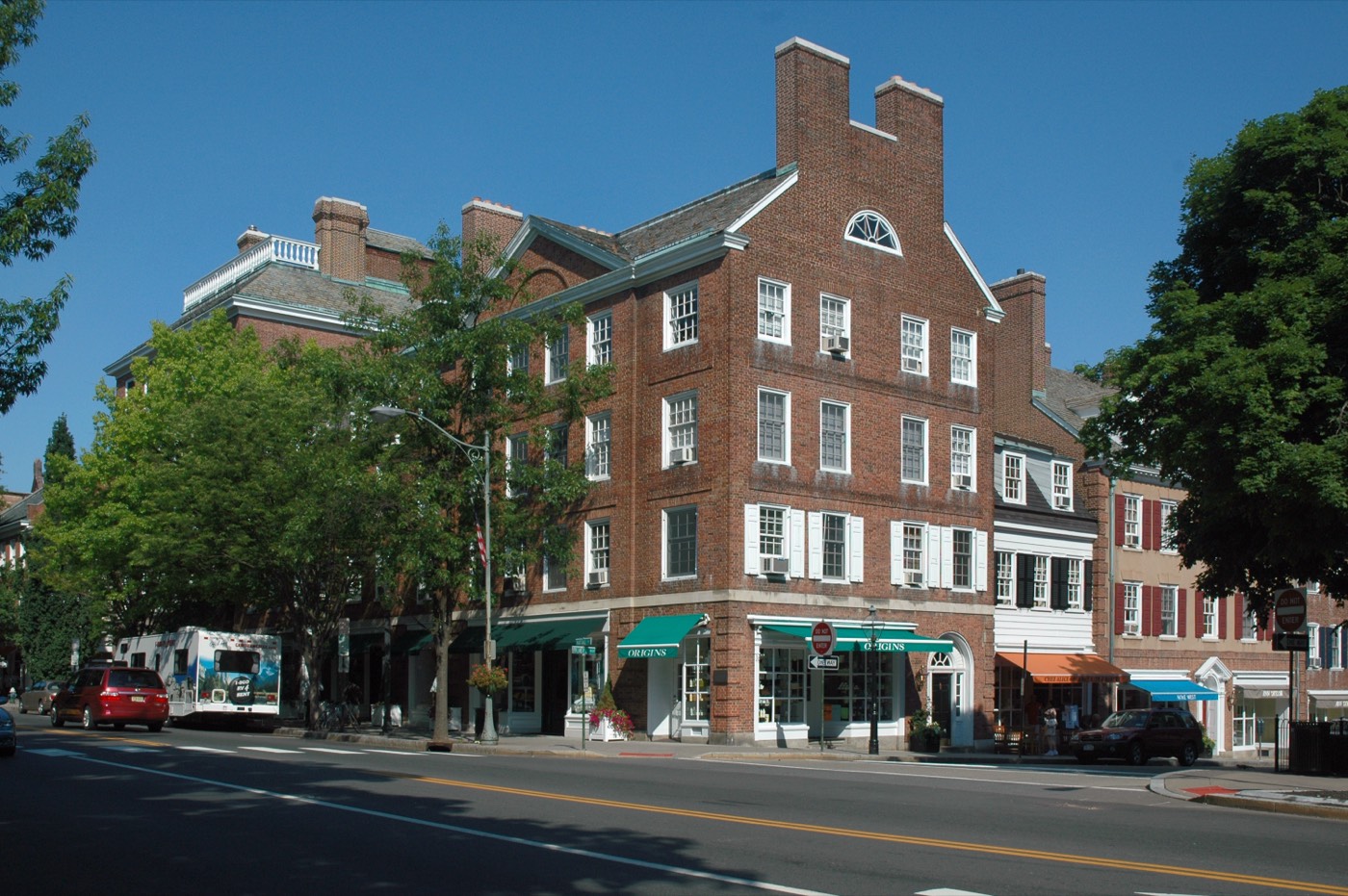
On a Saturday morning the McCaffrey’s at the Princeton Shopping Center fills with a particular kind of customer: a research chemist from one of the Route 1 pharmaceutical campuses, a postdoctoral fellow from the university, a cardiologist who keeps office hours near the medical centre. Many of them are Indian, and many of them will end the morning with a bag of curry leaves and a tin of asafoetida from one of the South Asian grocers a short drive east. The Indians in Princeton, New Jersey, do not cluster in a single immigrant quarter. They arrived instead through laboratories, lecture halls and corporate research parks, and the community they built reflects exactly that.
The Place
Princeton sits in Mercer County, in the central New Jersey corridor between New York and Philadelphia, and it is one of the wealthiest towns in the state. The 2020 Census counted 30,681 residents, and the median household income runs near $192,000, roughly double the figure for Mercer County as a whole.
The town is defined by two institutions: Princeton University, founded in 1746, and the Institute for Advanced Study, established in 1930. Around them spreads a landscape of leafy streets, the small downtown grid of Nassau Street and Palmer Square, and, to the east along Route 1, a dense band of corporate research campuses. Asian residents now make up roughly 21 percent of the population, and the largest part of that share is Indian.
How It Became Indian
Princeton’s Indian story did not begin with a wave of family migration. It began with a handful of brilliant individuals invited to think.
The scholars came first
Long before the Route 1 office parks existed, Indians reached Princeton through its two great centres of learning. The mathematician Harish-Chandra, born in Kanpur in 1923, came to the Institute for Advanced Study in 1947 as an assistant to the physicist Paul Dirac. He returned in the mid-1950s and accepted a permanent professorship at the Institute in 1963, spending what his family later called his golden years there until his death in 1983.
He was the most celebrated of many. From the 1950s onward, Indian physicists, mathematicians, economists and historians passed through the Institute and the university as visiting members and graduate students. They were small in number but established something durable: the idea that a person from India could belong at the very top of American intellectual life, and could do so in this particular town.
The Route 1 corridor opens
The character of the migration changed after the Immigration and Nationality Act of 1965 removed the national-origin quotas that had effectively barred Asian arrivals. The new law favoured the educated and the skilled, and it arrived just as central New Jersey was becoming one of the densest pharmaceutical and research regions in the world.
New Jersey is home to a large share of the world’s biggest drug companies, and many of their campuses cluster along the Route 1 corridor around Princeton. Bristol Myers Squibb, headquartered in the Princeton area, and Novo Nordisk, with major operations nearby in Plainsboro, drew chemists, statisticians and clinical researchers. A great many of them were Indian, trained in pharmacy, chemistry and medicine, and Princeton’s reputation and schools made it a natural place to settle.
The professional generation settles
By the 1980s and 1990s the trickle of scholars had become a steady flow of professionals. Indian doctors took positions at the area’s hospitals. Indian engineers and managers filled the research parks. Indian academics joined the university faculty in mathematics, engineering, economics and the sciences.
This generation could afford Princeton’s prices, and they wanted what the town offered: among the best public schools in New Jersey, proximity to the university, and a quiet, tree-lined respectability. They did not need a Little India to feel settled. The institutions themselves were the anchor.
The pattern echoed across central New Jersey, where Indian engineers and pharmacists were settling in Hillsborough and a string of other professional suburbs at the same time. Princeton’s distinction was simply its name and its institutions, which gave the local community a centre of gravity the other towns lacked.
The web of greater Princeton
What grew up instead was a regional Indian community spread across several towns. Princeton itself stayed expensive and small, so much of the family-scale Indian life settled in the surrounding municipalities. The neighbouring townships of West Windsor and Plainsboro became heavily Indian, their schools and shopping plazas reflecting it far more visibly than Princeton’s own downtown.
Princeton became the prestige address at the centre of this web: the town with the famous name, the university, the Institute, and the restaurants where families from the wider region came to celebrate. The grocers and the larger temples grew up in the towns around it, an easy drive from any Princeton kitchen.
It is a division of labour that suits everyone. The dense, family-scale Indian life of West Windsor and Plainsboro provides the schools full of Indian children, the cricket leagues and the dance classes. Princeton provides the address, the laboratory and the lecture hall. A family can live the whole of an Indian American life within a fifteen-minute drive, drawing on each town for what it does best.
The Landmarks
Cross Culture, 301 North Harrison Street. Tucked into the Princeton Shopping Center, this is the town’s best-known Indian restaurant, a fixture for graduate students and faculty families for years. Its North Indian menu has made it a default celebration spot, the place where a thesis defence or a promotion ends in butter chicken and naan.
Dvaraka Indian Restaurant, 36 Witherspoon Street. Steps from Nassau Street and the university gates, Dvaraka brings Indian food into the heart of downtown Princeton, a rarity in a district dominated by cafes and bookshops. Its central location makes it a meeting point for students and visiting scholars.
The Mauryas, Princeton Forrestal Village. Out along Route 1 in the Forrestal Village complex, The Mauryas offers an elevated, bar-and-lounge take on Indian cuisine aimed squarely at the corridor’s pharmaceutical and finance professionals. It signals how far the local Indian dining scene has moved from simple buffets toward polished, design-conscious rooms.
Sri Venkateswara Temple, 1 Balaji Temple Drive, Bridgewater. Inaugurated in 1998, this traditional stone Balaji temple a drive north of Princeton is one of the most significant Hindu temples in the country, drawing worshippers from across central New Jersey, including many Princeton families, for weddings, naming ceremonies and festival days.
BAPS Swaminarayan Akshardham, Robbinsville. Roughly ten to twelve miles from Princeton, the vast hand-carved stone mandir completed by the BAPS Swaminarayan Sanstha is among the largest Hindu temples in the United States. For Princeton-area Indians it is both a place of worship and a landmark they bring out-of-town visitors to see.
Subzi Mandi, 3800 Quakerbridge Road, area south of Princeton. One of the closest full Indian grocers to Princeton, a few miles south near Quakerbridge, it supplies the lentils, spices, fresh produce and frozen parathas that the town’s own supermarkets stock only in part. Saturday mornings here are a quiet census of the region’s Indian households.
Princeton Shopping Center, North Harrison Street. More than any single shop, this everyday plaza functions as a hub of Indian Princeton, anchoring Cross Culture and sitting within easy reach of the families who do their weekly errands here, from the McCaffrey’s grocery to the dry cleaners and pharmacy.
Where They Came From
Because Princeton’s Indians arrived through universities and pharmaceutical research rather than chain migration from a single village, the community is unusually pan-Indian. There is no dominant regional cluster the way some American Indian neighbourhoods skew Gujarati or Punjabi.
Instead the mix follows the professions. South Indians, especially Telugu and Tamil speakers trained in engineering, pharmacy and the sciences, are strongly represented, which is why South Indian food and Telugu and Tamil cultural associations are prominent across greater Princeton. North Indians from across the Hindi belt, along with Gujaratis, Bengalis and Maharashtrians, fill out a community defined less by where in India people began than by what they came to America to do.
Princeton Today
The Indians in Princeton today are visible less in storefronts than in classrooms and laboratories. They are on the university faculty and among its graduate students, in the research staff of the Route 1 drug companies, in the medical offices and hospitals of central New Jersey. Their children populate the honour rolls and science fairs of the area’s well-regarded schools.
Cultural life is real but largely regional. Diwali is marked with home gatherings, temple celebrations at Bridgewater and Robbinsville, and events across the wider area. Cricket is played on weekend pitches around central New Jersey, and classical dance and music classes thrive in the surrounding townships. For the biggest festivals and the deepest grocery runs, Princeton families drive the short distance to the denser Indian centres around them.
It is an affluent, high-achieving, quietly confident community, and it sits at the intellectual heart of one of the largest Indian American regions in the country. Princeton is the prestige node, the name on the diploma and the restaurant where the family gathers, in a web of central New Jersey towns, from Edison to Bridgewater, that together form one of Indian America’s strongholds.
Frequently Asked Questions
How many Indians live in Princeton, New Jersey?
Princeton counted 30,681 residents in the 2020 Census, with Asian residents about 21 percent of the population and Indians the largest part of that group. The Indians in Princeton are concentrated among university affiliates and Route 1 professionals rather than in one neighbourhood, with much larger family communities in the adjacent townships.
Why did Indians settle in Princeton?
The community grew from Princeton University and the Institute for Advanced Study, which drew Indian scholars from the 1940s onward, and from the pharmaceutical and research companies along the Route 1 corridor. Highly educated Indian professionals were attracted by the work, the schools and the town’s prestige.
Is there an Indian temple in Princeton?
The major Hindu temples serving the area are nearby rather than in Princeton itself: the Sri Venkateswara Balaji Temple in Bridgewater, inaugurated in 1998, and the BAPS Swaminarayan Akshardham in Robbinsville, one of the largest Hindu temples in the United States. Both draw many Princeton families.
Where do Indians in Princeton buy groceries?
Princeton’s own supermarkets carry a partial selection, but most Indian households drive a few miles to full South Asian grocers such as Subzi Mandi on Quakerbridge Road, or to the larger Indian shopping districts in nearby West Windsor, Plainsboro and Edison.
What are the best Indian restaurants in Princeton?
Long-standing favourites include Cross Culture in the Princeton Shopping Center and Dvaraka on Witherspoon Street downtown, while The Mauryas in Forrestal Village offers a more upscale, bar-and-lounge experience along Route 1. Together they reflect a dining scene that has grown more polished as the community has prospered.
How does Princeton relate to West Windsor and Plainsboro?
Princeton sits at the centre of a web of central New Jersey towns with large Indian populations. The neighbouring townships of West Windsor and Plainsboro hold much of the family-scale Indian life, schools and shopping, while Princeton serves as the prestige hub of universities, institutes and gathering-place restaurants.
If your family’s story passed through Princeton, or any of the places Indians have made home in America, Atlas of Home can trace that journey. From a laboratory bench in Hyderabad or a lecture hall in Kanpur, to a research campus on Route 1, to wherever you are now.