
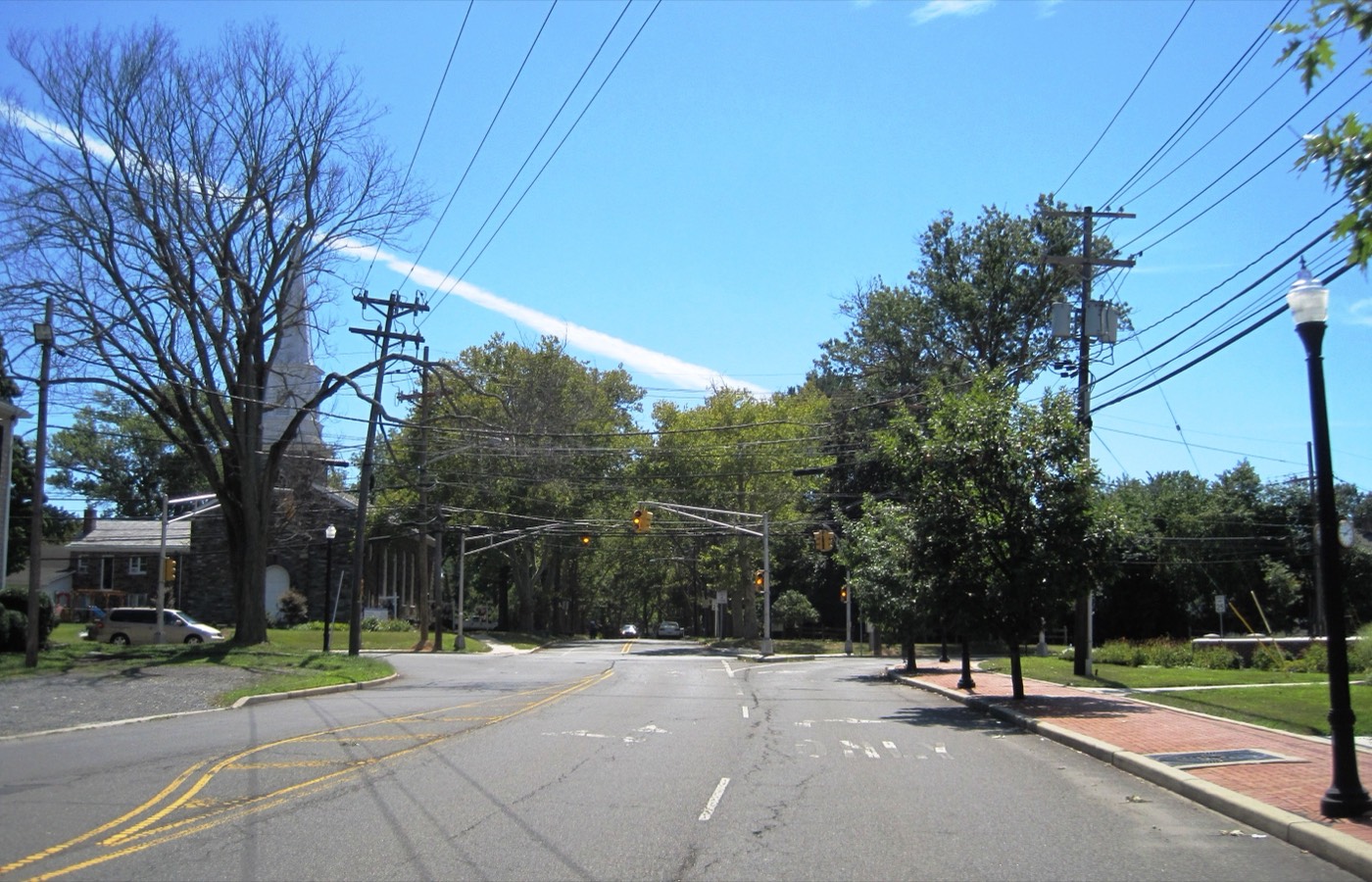
Drive south on Schalks Crossing Road on a Saturday morning and the cars in the Plainsboro Village shopping centre tell the story before any census does: families loading bags from Big Bazaar, children in cricket whites, parents comparing notes on the SATs. The Indians in Plainsboro, New Jersey did not arrive to a ready-made enclave. They built one out of a former dairy township, one corporate hire and one school catchment at a time, until more than half the town traced its roots to Asia and nearly a third to India alone.
The Place
Plainsboro Township sits in Middlesex County, a flat, leafy square of about 24,000 people pressed up against Princeton to the west and West Windsor to the south. It was officially founded on 6 May 1919, carved from sections of Cranbury and South Brunswick after the two refused to build a new school for Plainsboro Village.
For most of the twentieth century it was farm country, defined by the Walker-Gordon Dairy Farm, home of Elsie the Cow and the famous Rotolactor rotary milking parlour. Today the cows are long gone, the Route 1 corridor hums with pharmaceutical and finance campuses, and Plainsboro shares one of the country’s most decorated school districts with its sister town next door.
How It Became Indian
Plainsboro’s Indian story is inseparable from the corporate office parks that replaced its farmland, and from the green-card maths of American immigration after 1965.
From dairy farm to office park
The turn began in the late 1970s and 1980s, when planners zoned the township’s open acreage for corporate research and office use along the Route 1 corridor. A vast complex rose for Merrill Lynch in 1985, later occupied by BlackRock and, since 2013, rebuilt as the United States headquarters of the Danish drugmaker Novo Nordisk. FMC, American Re-Insurance, Bristol-Myers Squibb and other firms followed.
That concentration of pharmaceutical, reinsurance and finance jobs mattered enormously. These were exactly the white-collar, advanced-degree positions that Indian engineers, chemists, statisticians and software professionals were arriving to fill.
The H-1B and the school district
The Immigration and Nationality Act of 1965 had opened the door, but the surge that reshaped Plainsboro came later, through the H-1B visa programme of the 1990s and the IT and pharmaceutical boom that ran alongside it. Indian professionals took jobs at the corporate campuses on Route 1, at nearby Princeton companies, and in the data centres and consultancies that ringed central New Jersey.
When they chose where to live, one factor towered over the rest: the West Windsor-Plainsboro Regional School District. Shared between the two townships, it is consistently ranked among the best public systems in New Jersey, and families weighed it the way earlier generations weighed proximity to a church or a synagogue.
The commute helped seal it. Princeton Junction station, a short hop away, puts New York and Philadelphia within reach by NJ Transit and Amtrak, while Princeton itself, with its university and its research firms, sits minutes to the west. A professional could live in Plainsboro and work almost anywhere in the corridor between the two cities without uprooting a child mid-school-year. For families building a future around their children’s education, that stability was worth a great deal.
A neighbourhood compounds
The growth shows up cleanly in the numbers. In the 2000 census, Indian Americans made up about 17 per cent of Plainsboro, already among the highest shares of any municipality in the country. By 2010 that figure had climbed to roughly 29.6 per cent, nearly one resident in three.
By the 2020 census, Asian residents alone accounted for about 56 per cent of the township’s 24,084 people, with Indians the single largest thread within that. Word of mouth did the rest. A family that settled happily told cousins and colleagues; a temple or grocer that opened nearby made the area stickier still. The pattern that demographers call chain migration played out in a single planned township.
This was a self-reinforcing loop unusual for a suburb built largely from scratch. The grocers stocked what the families wanted because the families were there; tutoring centres and dance schools and weekend Hindi classes followed the same logic. By the 2010s a newly arrived engineer from Hyderabad could land in Plainsboro and find almost everything of home within a few miles, which only made the next arrival more likely.
The twin-town effect
None of this happened in isolation. Plainsboro grew up as the demographic twin of the Indian community in West Windsor next door, the two towns bound together by a shared school district and the Princeton Junction train station that sits on the West Windsor side. Many families consider the line between the two academic, not social.
It also drew on the deep Indian gravity of central New Jersey as a whole, from the Indian community in Edison and its famous Oak Tree Road to the broader Middlesex County corridor, the densest concentration of Indian Americans anywhere in the United States.
The Landmarks
Big Bazaar, 660 Plainsboro Road. The anchor of the Plainsboro Village shopping centre and the township’s everyday Indian grocer. Aisles of lentils and atta, a wall of spices, fresh curry leaves and produce, and the steady weekend traffic of families stocking up for the week.
West Windsor-Plainsboro High School North, 90 Grovers Mill Road. The Plainsboro-side high school of the shared district, where roughly three-quarters of students are of Asian descent. It posts reading and maths proficiency rates far above the state average and sends graduates to the most selective universities in the country every spring.
Sri Shirdi Sai Baba Temple, 12 Perrine Road, Princeton Junction. A short drive from Plainsboro, this Sai Baba mandir is one of the closest temples to the township and a fixture of the local Indian religious calendar, drawing families for darshan and festival days.
Durga Mandir, 4240 Route 27, Princeton. Dedicated to Durga Mata, with shrines to the major Hindu deities, the temple is known for the free prasad it serves visiting devotees on weekends and for its Diwali and Navratri observances.
BAPS Swaminarayan Akshardham, Robbinsville. A short drive south, this mandir opened in October 2023 after twelve years and some 12,500 volunteers. Sitting on 185 acres, it is the largest Hindu temple in the Western Hemisphere, and a point of pilgrimage and pride for the whole region’s Indian families.
Novo Nordisk US headquarters, College Road East. The rebuilt former Merrill Lynch campus anchors the Route 1 corridor that drew so many Indian professionals to Plainsboro in the first place. The pharmaceutical, reinsurance and finance jobs clustered here are the economic spine of the township’s Indian community.
Plainsboro Preserve. A 1,000-acre wildlife preserve with a lake and trails managed by the New Jersey Audubon Society, the green counterweight to the office parks, and a Saturday-morning destination for the same families who shop at Big Bazaar.
Where They Came From
Plainsboro’s Indians are overwhelmingly a professional, post-1990s migration rather than the descendants of an old labouring wave, and that shapes where in India they trace back to.
The largest threads run to the southern technology states, Andhra Pradesh, Telangana, Tamil Nadu and Karnataka, whose engineers and software professionals filled the IT and pharmaceutical pipeline into central New Jersey. Gujarati families, long the backbone of New Jersey’s Indian business and grocery world, are well represented too, along with Punjabis, Bengalis and Maharashtrians.
What unites them is less a single region than a single profile: highly educated arrivals, often with a master’s degree or a doctorate, who came for a specific job and then chose Plainsboro for its schools. It is a different chemistry from the merchant-driven story of the Indian community in Jackson Heights, Queens, and closer in spirit to the engineer-heavy enclaves of Silicon Valley such as the Indian community in Cupertino.
Plainsboro Today
Plainsboro today is a town where the Indian presence is simply the texture of daily life rather than a separate quarter of it. The cricket pitches see steady weekend use, Diwali lights go up across the subdivisions each autumn, and the grocery aisles and temple car parks fill on Saturdays. It is suburban, comfortable and academically intense, with the school district as its organising obsession.
That intensity is not without friction. The pressure of the WW-P schools, where competition for top grades and elite university places is fierce, has been the subject of community debate, documentaries and more than one round of soul-searching about how much achievement is enough. It is a very particular kind of suburban anxiety, and Plainsboro is one of its capitals, shared with engineer-heavy Indian suburbs across the country from the Indian community in Frisco, Texas to the campuses of northern California.
Still, the township remains a destination. New Indian families continue to arrive for the same reasons the first ones did: the jobs on Route 1, the train to New York and Philadelphia from Princeton Junction, and the schools. Half a century after the 1965 act opened the door, the dairy town that built itself around a rotary milking parlour has become one of the most Indian places in America.
Frequently Asked Questions
How large is the Indian community in Plainsboro, New Jersey?
It is one of the largest by share in the country. By the 2010 census roughly 29.6 per cent of Plainsboro residents identified as Indian American, and by 2020 Asian residents alone made up about 56 per cent of the township’s roughly 24,000 people.
Why did so many Indians settle in Plainsboro?
Two forces drove it: the corporate pharmaceutical and finance campuses along the Route 1 corridor, which offered exactly the professional jobs Indian arrivals were filling, and the West Windsor-Plainsboro Regional School District, one of the best in New Jersey. Jobs brought people in; the schools made them stay.
Where do Plainsboro’s Indian families worship?
Several temples serve the area. The Sri Shirdi Sai Baba Temple in Princeton Junction and the Durga Mandir on Route 27 in Princeton are among the closest, and the vast BAPS Swaminarayan Akshardham in Robbinsville, opened in 2023, draws families from across the region.
Where can you buy Indian groceries in Plainsboro?
Big Bazaar at 660 Plainsboro Road is the township’s main Indian grocer, and additional stores including Patel Brothers and other South Asian markets serve the wider Route 1 corridor. The huge grocery strip of Oak Tree Road in Edison is a short drive away.
How good are the West Windsor-Plainsboro schools?
Very. West Windsor-Plainsboro High School North and South are routinely ranked among the top public high schools in New Jersey and the nation, with reading and maths proficiency well above state averages. The district’s reputation is a primary reason Indian families choose Plainsboro.
Which parts of India do Plainsboro’s families come from?
Most trace to the southern technology states of Andhra Pradesh, Telangana, Tamil Nadu and Karnataka, reflecting the IT and pharmaceutical migration into central New Jersey, alongside well-established Gujarati, Punjabi and Bengali communities. They are largely a highly educated, post-1990s professional wave.
If your family’s story passed through Plainsboro, or any of the places Indians have made home in America, Atlas of Home can trace that journey. From a town in Andhra Pradesh or Gujarat, to a corporate campus on Route 1 and a house in the West Windsor-Plainsboro school catchment, to wherever you are now.