
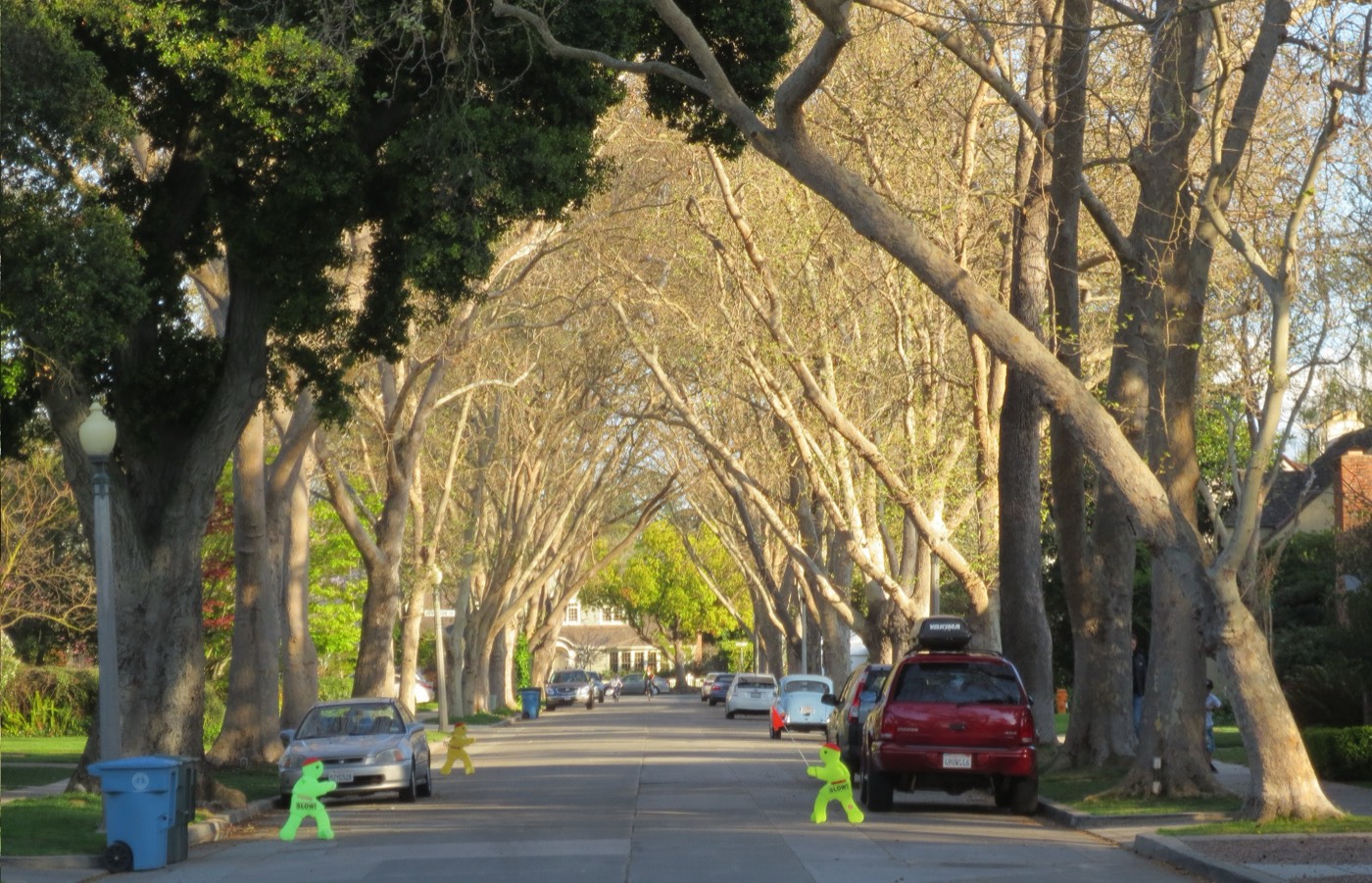
On a weekday morning along University Avenue, the queue outside the coffee shops is half engineers, and a good share of them carry the cadence of Chennai, Hyderabad and Pune in their speech. The Indians in Palo Alto did not arrive to build an enclave. They arrived to build software, to teach at Stanford, to raise children who would sit the same maths exams their parents once aced in Madurai. This is a community defined less by a single street than by a set of institutions: the university on the hill, the venture firms on Sand Hill Road, and the long counters of the Indian grocers a short drive south.
The Place
Palo Alto sits at the northern edge of Santa Clara County, wedged between the Stanford foothills and the marshlands of San Francisco Bay. It was incorporated on 16 April 1894 as the town beside Leland and Jane Stanford’s new university, and it has spent the century since growing from a dry college settlement into one of the wealthiest small cities in America.
The numbers are stark. Palo Alto’s population was 68,572 at the 2020 census, and the median household income reached roughly $220,408 in recent American Community Survey estimates. Few American towns of its size are so rich, so credentialed, or so closely tied to a single industry.
It is also the birthplace of Silicon Valley in the literal sense. The Hewlett-Packard garage on Addison Avenue, where William Hewlett and David Packard started their company in 1939, is a California Historical Landmark, and the city has been minting technology fortunes ever since.
How It Became Indian
There was no single boat, no founding family, no village that decamped en masse to the Peninsula. The Indian presence in Palo Alto was assembled student by student and visa by visa, and it tracks almost exactly with the rise of the computer industry that surrounds it.
The Stanford pipeline
The first Indians most Palo Altans encountered were not neighbours but classmates. Stanford’s School of Engineering drew graduate students from the Indian Institutes of Technology and from regional engineering colleges across the subcontinent, and many of them never left. They finished a master’s or a doctorate, took a job a few miles away, and bought into the city’s schools.
Vinod Khosla, born in Pune in 1955, came to Stanford for his MBA and went on to co-found Sun Microsystems before launching Khosla Ventures. Sundar Pichai, born in Madurai in 1972, passed through Stanford’s engineering school on his way to running Google and then Alphabet. They are the famous names, but behind them are thousands of quieter careers built on the same route: a Stanford acceptance letter, a degree, a job offer within bicycling distance.
The H-1B decade
If the 1970s and 1980s belonged to the students, the 1990s belonged to the engineers. The software boom triggered a wave of Indian migration channelled almost entirely through the H-1B visa, the route by which thousands of Indian IT professionals entered the American economy and fuelled the digital revolution in Silicon Valley.
The scale is hard to overstate. By 2024, Indian nationals received about 71 per cent of all H-1B visas issued for highly skilled workers. Many of those workers landed first in rental apartments in Sunnyvale, Santa Clara and Mountain View, then moved up to Palo Alto as salaries and stock options matured. Indian immigrants founded an outsized share of the region’s startups, a pattern documented across the 1995 to 2005 period.
From renters to homeowners
Palo Alto was rarely the first stop. Its house prices put it out of reach for a newly arrived engineer, so the typical path ran through cheaper towns nearby before arriving at a craftsman bungalow in Midtown or a ranch house in Barron Park. What pulled families across that final, expensive threshold was almost always the same thing: the schools.
The Palo Alto Unified School District, and Henry M. Gunn High School in particular, became a magnet for Indian families who placed academic achievement at the centre of family life. Gunn and Palo Alto High School both sit on land that once belonged to Stanford, and the university’s proximity shapes their culture, with professors piloting curricula and students drifting onto campus for summer programmes. For an immigrant engineer raised on competitive exams, that environment was the whole point.
A community without a single centre
Unlike the Indian neighbourhoods of Fremont or Sunnyvale, Palo Alto never developed a dense commercial Indian strip of its own. Its Indian residents are woven into a wealthy, mixed city rather than clustered in one quarter. The community’s institutions, the big temples and the cash-and-carry grocers, sit a few exits down Highway 101 or El Camino Real, in the towns where the diaspora is more concentrated. Palo Alto’s Indians drive to them, the way they drive to so much else.
The Landmarks
Hewlett-Packard Garage, 367 Addison Avenue. The literal birthplace of Silicon Valley, marked as a California Historical Landmark. For Indian engineers who came chasing the valley’s promise, it is a kind of secular shrine, the spot where the industry that carried them to Palo Alto first sparked.
Khazana, 339 University Avenue. A fine-dining Indian restaurant from celebrity chef Sanjeev Kapoor, drawing on regional cuisines from across India. Its arrival on Palo Alto’s flagship downtown street signalled that high-end Indian food had earned a place among the city’s marquee dining rooms.
ROOH Palo Alto, 473 University Avenue. A progressive Indian restaurant whose kitchen reinterprets the subcontinent’s regional dishes in a contemporary register. It is the kind of place where a visiting relative from Bangalore and a Stanford colleague can both find something to argue about over dinner.
Curry Up Now, 321 Hamilton Avenue. A fast-casual Indian spot a block off University Avenue, trading in tikka burritos and chaat for the lunchtime tech crowd. It represents the other end of the spectrum from the white-tablecloth rooms: Indian food as everyday valley fuel.
Henry M. Gunn High School, 780 Arastradero Road. One of the two public high schools that draw Indian families into the city, sitting on former Stanford land and known for a maths culture that sends a steady stream of students to national olympiad qualifications. For many families, the address on this side of the district line was the reason they bought the house.
India Cash & Carry, 1032 East El Camino Real, Sunnyvale. A short drive south, this is among the largest Indian grocers serving the Peninsula, its aisles stocked with the lentils, spices and frozen parathas that Palo Alto’s supermarkets do not carry. Weekend trips here are a fixture of diaspora life across the mid-Peninsula.
Stanford University, 450 Jane Stanford Way. The institution that started it all, and still the single largest reason Indian families settle in and around Palo Alto. Its engineering and graduate schools remain a primary entry point, drawing students from the IITs and beyond who go on to build careers within cycling distance of the campus.
Where They Came From
The Indians of the Bay Area are not from one place. The largest waves came from the engineering and IT heartlands of the south and west: Andhra Pradesh and the Telugu-speaking region, Tamil Nadu, Gujarat and Maharashtra. The 2020 Indian American Attitudes Survey ranked Gujarat, Maharashtra, Andhra Pradesh and Tamil Nadu among the leading states of origin for Indian immigrants nationally.
In Palo Alto specifically, the southern Indian skew is pronounced, because the route in ran through engineering. A graduate of an institute in Hyderabad or Chennai, a master’s degree at Stanford, a job at a nearby chip or software firm: that sequence selected heavily for families from the technical states. The result is a community where Telugu and Tamil are commonly heard alongside Hindi and Gujarati.
What they shared was not a region but a profile. They were, overwhelmingly, highly educated professionals who arrived through universities and skilled-worker visas rather than through refuge or hardship, and that shaped everything from where they settled to how fiercely they invested in their children’s schooling. For more on how this professional diaspora has shaped other suburbs, see the stories of the Indians in Livermore across the bay and the Israelis in Palo Alto, another tech-driven immigrant community in the same city.
Palo Alto Today
Asian residents made up about 35 per cent of Palo Alto’s population at the 2020 census, up sharply from a decade earlier, and Indian Americans are a substantial and growing slice of that figure. You can read the change in the city’s small details: the Diwali decorations in shop windows, the Indian fine dining on University Avenue, the second-generation kids who answer their grandparents in English and get gently corrected in Tamil.
It is, by any measure, a story of arrival. The community here is wealthy, settled and influential, with Indian-origin executives running some of the largest companies on earth from offices a few miles away. The hard climb of the H-1B years has given way, for many families, to property, tenure and a deep stake in the local schools.
Yet the success carries its own strains. Palo Alto’s house prices keep the city out of reach for all but the most established arrivals, and the academic pressure that draws Indian families to Gunn and Palo Alto High has been the subject of painful public reckoning over student wellbeing. The community that came to Palo Alto for its schools now grapples, alongside everyone else, with what that intensity costs. It is a long way from the first nervous graduate student stepping off a plane, and the journey is still being written. The stories of the Indians in Gilbert, Arizona, the Indians in Milton, Georgia, the Indians in Stone Ridge, Virginia and the Indians in Celina, Texas trace the same arc in other corners of America.
Frequently Asked Questions
How many Indians live in Palo Alto?
There is no separate official count for Indian Americans alone, but Asian residents made up about 35 per cent of Palo Alto’s 68,572 people at the 2020 census, and Indian Americans are a large and growing share of that group. The Indians in Palo Alto are concentrated among tech professionals and Stanford-affiliated families.
Why did so many Indians settle in Palo Alto?
Two forces drew them: Stanford University, which has long recruited Indian graduate students in engineering and the sciences, and the H-1B visa wave of the 1990s that brought thousands of Indian IT professionals to Silicon Valley. The Indians in Palo Alto largely arrived through education and skilled work rather than family reunification.
Where do Indians in Palo Alto go for groceries and temples?
Most drive south to towns where the diaspora is more concentrated. India Cash & Carry at 1032 East El Camino Real in Sunnyvale is among the largest grocers serving the Peninsula, and major Bay Area Hindu temples sit in nearby Sunnyvale, Livermore and Fremont rather than in Palo Alto itself.
What parts of India do Palo Alto’s Indians come from?
Because the route in ran through engineering and IT, the community skews toward the southern and western technical states: Andhra Pradesh and the Telugu region, Tamil Nadu, Gujarat and Maharashtra. Telugu and Tamil are commonly heard alongside Hindi and Gujarati.
Are there Indian restaurants in Palo Alto?
Yes. Downtown University Avenue hosts upscale Indian dining including Khazana from chef Sanjeev Kapoor at 339 University Avenue and the progressive ROOH at 473 University Avenue, while Curry Up Now at 321 Hamilton Avenue serves a fast-casual lunch crowd.
Why is Palo Alto so expensive for Indian families?
Palo Alto is one of the wealthiest small cities in America, with a median household income around $220,408 in recent estimates, driven by its proximity to Stanford and the technology industry. Most Indian families arrive only after building careers and equity, often having first rented in cheaper nearby towns.
If your family’s story passed through Palo Alto, or any of the places Indians have made home in America, Atlas of Home can trace that journey. From an engineering college in Hyderabad or Chennai to a Stanford lecture hall, to a bungalow in Midtown Palo Alto, to wherever you are now.