
On a Saturday morning in autumn, the queue outside India Bazaar on Edmonds Lane spills past the entrance: families in salwar kameez balancing trays of mangoes, fathers in Stryker lanyards grabbing a sack of basmati before the cricket starts, grandmothers debating the freshness of the methi. A few miles north, the Flower Mound Hindu Temple readies its evening aarti. The story of Indians in Flower Mound, Texas is told in these ordinary errands, the quiet accumulation of a community that arrived for the schools and the jobs and decided to stay for good.
The Place
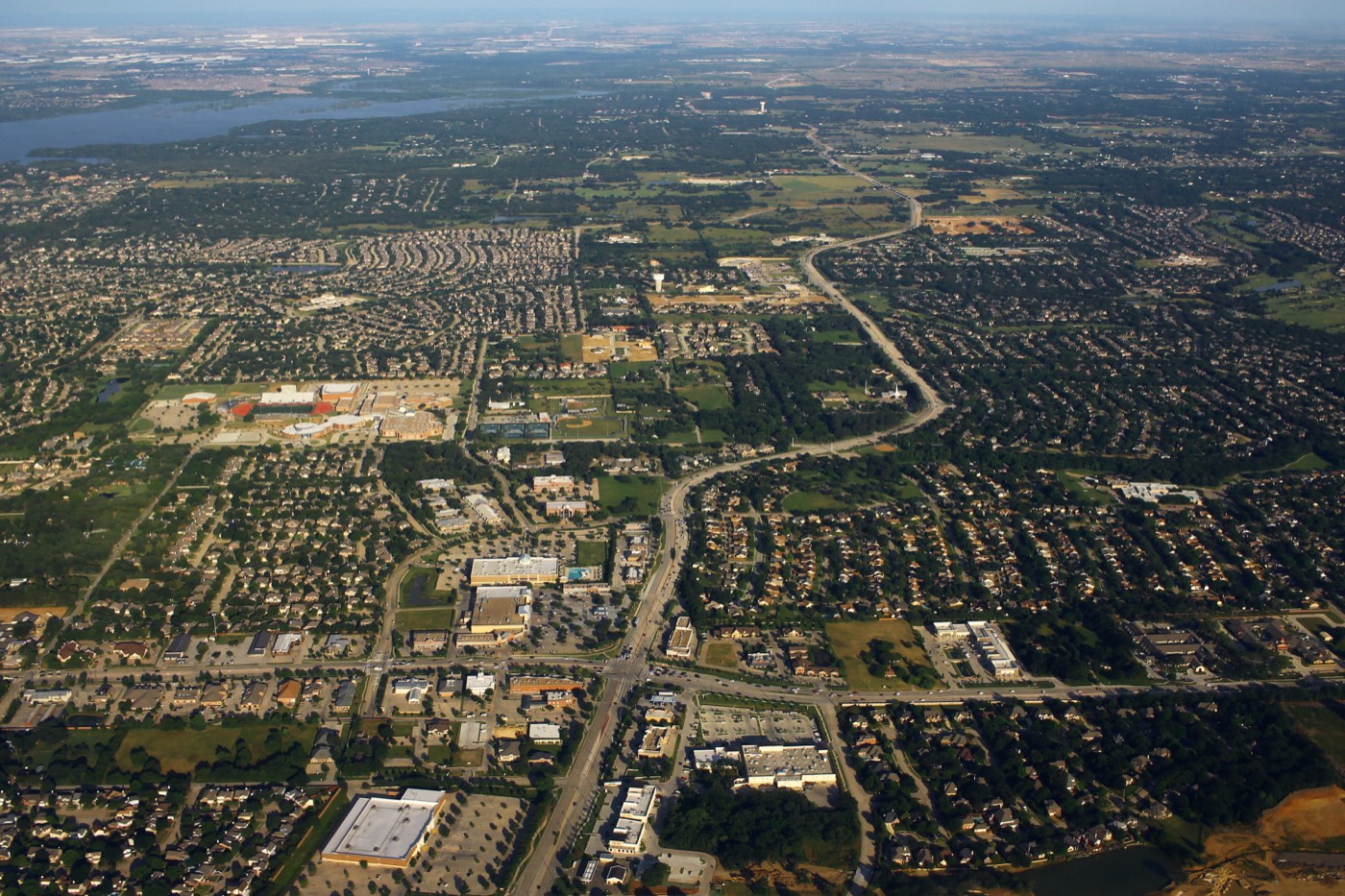
Flower Mound sits in southern Denton County, about thirty miles northwest of downtown Dallas, on the shores of Grapevine Lake. It takes its name from a real landmark: a twelve and a half acre swell of native Blackland Prairie that rises about fifty feet above the surrounding flat, blanketed in spring with more than four hundred species of wildflowers.
The town is unambiguously affluent. The median household income runs north of $159,000, more than half of homes are valued above half a million dollars, and over sixty percent of adults hold a bachelor’s degree or higher. It is the kind of place people move to on purpose, having studied the school ratings first.
The mound itself is protected land now. After a long campaign by local residents, it was placed into a permanent conservancy in 1983 and designated a State of Texas Historic Site the following year, one of the last unaltered fragments of the Blackland Prairie that once covered this part of the state.
That deliberateness is exactly why Indian families found it.
How It Became Indian
A prairie town becomes a suburb
Permanent settlers moved to the area in the 1840s, after Sam Houston settled a tribal dispute in 1844 and raids in the region ceased. They came for soil that grew cotton, corn and wheat, and for decades Flower Mound stayed rural, a scatter of farms around the sacred mound the Wichita had once used as a burial ground.
Incorporation came in 1961, partly to fend off annexation by Dallas. For another generation it remained small. The change came with the Dallas Fort Worth metroplex itself, as the airport, the freeways and the corporate campuses pushed the suburban frontier north and west until it reached Denton County.
The H-1B generation arrives
The Indian story in Flower Mound is, at heart, the story of the metroplex’s technology economy. Through the 1990s and 2000s, North Texas became a magnet for software engineers, telecom specialists and IT consultants, many arriving on H-1B visas to work for the banks, carriers and corporations clustered around Las Colinas, Plano and the airport.
The first wave of Indian professionals settled closer to their jobs, in Irving and Coppell. But as families grew and salaries rose, many looked north for more land, newer homes and the school district that kept topping the state rankings. Flower Mound, with its B-rated Lewisville ISD and its reputation for safety, was the natural next step.
From a handful of families to a temple
By the late 2000s there were enough Indian families in southern Denton County to want their own gathering place. In 2009 a small group of them founded the Flower Mound Hindu Temple on Long Prairie Road, beginning with a handful of deities and a calendar of weekend pujas.
That a community on the far edge of the metroplex could sustain its own mandir, rather than driving to the older temples in Irving or Frisco, was a marker of arrival. The temple is now building a larger campus, with a community centre, projected to open around 2027.
The corporate anchor
If the early arrivals worked elsewhere, the town eventually grew employers of its own. Stryker’s communications division operates a roughly 250,000 square foot office and warehouse campus in Flower Mound, on the shore of Grapevine Lake, with engineering, analytics and IT roles that pull in precisely the kind of professional household that has reshaped the suburb.
Between the local campuses and an easy commute to the rest of the metroplex, Flower Mound let Indian families do something many had wanted for a decade: live somewhere green and quiet without giving up the careers that brought them to Texas. The patterns echo those in nearby Coppell and across the county line in Frisco.
What the numbers show
The growth is visible in the census. In 2010, Asian residents made up about 8.6 percent of Flower Mound. By the 2020 count they were 14.1 percent, more than 10,700 people, a jump of over five percentage points in a single decade. Within that, the Asian Indian share alone, roughly 1.6 percent and rising, runs well above the Texas average.
That speed of change reshaped quiet corners of the town. School parking lots filled with new faces, the Saturday market gained vendors selling chaat alongside the kettle corn, and the local supermarkets quietly widened their international aisles. A suburb that had been overwhelmingly white as recently as 2010 had become, within a decade, one of the more diverse towns in Denton County.
Numbers like those do not happen by accident. They are the sum of thousands of individual decisions about schools, commutes and where to raise children, all pointing to the same Denton County town.
The Landmarks
Flower Mound Hindu Temple, 3325 Long Prairie Road. Founded in 2009 by a small group of Indian families, the temple houses deities including Ganesh, Durga, Siva, Balaji and Shirdi Sai Baba, and runs classes in Vedic studies, Bharatanatyam dance and Carnatic music. A larger temple and community centre is under construction, expected around 2027.
India Bazaar, 2151 S Edmonds Lane, Lewisville. The chain’s sixth North Texas store sits just over the line in Lewisville, serving Flower Mound and Coppell shoppers. Its produce aisles, frozen sweets and snack shelves make it the weekend grocery anchor for families across southern Denton County.
Cafe India, 1121 Flower Mound Road. Opened in 2024, this is one of the newer of the town’s home-grown Indian kitchens, a sign that demand had grown large enough to support full-service restaurants inside Flower Mound rather than just in neighbouring cities.
Ista Indian Cuisine, 2221 Cross Timbers Road. On the Cross Timbers corridor, Ista is part of a cluster of Indian eateries that have opened as the community matured, offering the regional dishes that draw both Telugu and Gujarati diners.
Gerault Park, 1200 Gerault Road. Each autumn the Town of Flower Mound and the Denton County India Cultural Association turn this municipal park into the stage for Diwali: Festival of Lights, with Rangoli art, dance, street food and a fireworks show. A town-sponsored Diwali is, in itself, a measure of how settled the community has become.
Flower Mound High School, 3411 Peters Colony Road. Routinely ranked among the top five percent of Texas high schools, it is one of the magnets that drew Indian families to the town in the first place, and where many of their children now graduate near the top of the class.
DFW Hindu Temple, 1605 N Britain Road, Irving. The older Ekta Mandir in Irving, founded long before Flower Mound had its own temple, still draws families from across the metroplex, including those who first put down roots there before moving north.
Where They Came From
The Indian families of Flower Mound did not arrive from one village or even one state. They came through the visa pipeline that fed the American technology and telecom industries, which means they came disproportionately from the south, from Andhra Pradesh and Telangana, and from the entrepreneurial west, from Gujarat.
The Telugu presence is especially strong. The Telugu Association of North Texas runs a community radio programme, and Flower Mound has become a hub for the American Telugu Association’s leadership. Gujarati families, many with backgrounds in business and hospitality, form the other large stream.
What unites them is less a region than a route: a graduate degree or an IT contract, a first job in Irving or Plano, and a gradual move north as the family and the bank balance grew. The same arc carried Indian families to Irving, Southlake and Allen across the metroplex.
Flower Mound Today
Today Flower Mound is a place where the Indian community is woven into the ordinary rhythm of the town rather than set apart from it. The grocery run, the temple class on Saturday, the high school robotics team, the town’s own Diwali in the park: none of it feels like a separate enclave, because none of it is.
It is not Little India, and it does not pretend to be. There is no dense commercial strip of saree shops and sweet houses the way older immigrant districts have. Flower Mound’s Indian life is suburban and dispersed, lived in cul-de-sacs and shopping centres, the way the rest of the town lives.
What it offers instead is permanence. The children who grew up here are starting to buy houses of their own nearby, and the new temple rising on Long Prairie Road is being built for a community that plainly intends to be here for generations. The wildflowers on the mound come back every spring, and so, now, does this.
Frequently Asked Questions
How many Indians live in Flower Mound, Texas?
The 2020 census counted Asian residents at 14.1 percent of Flower Mound, more than 10,700 people, up from 8.6 percent in 2010. The Asian Indian share specifically runs around 1.6 percent and rising, above the Texas average, and the broader Indian community in Flower Mound continues to grow each year.
Why did Indians move to Flower Mound?
Most Indian families came for the highly rated Lewisville ISD schools, the safety and the larger newer homes, after starting their American careers in the technology and telecom corridors around Irving and Plano. As salaries rose, many moved north into Denton County, making Indians in Flower Mound one of the suburb’s fastest growing groups.
Is there a Hindu temple in Flower Mound?
Yes. The Flower Mound Hindu Temple at 3325 Long Prairie Road was founded in 2009 and offers daily pujas, religious classes and cultural programmes. A larger temple and community centre is under construction, expected to open around 2027.
Where do Indian families in Flower Mound buy groceries?
India Bazaar at 2151 S Edmonds Lane in neighbouring Lewisville is the main Indian grocery anchor, with several other South Asian stores nearby. Restaurants such as Cafe India and Ista Indian Cuisine serve the community inside Flower Mound itself.
What Indian festivals are celebrated in Flower Mound?
The Town of Flower Mound co-hosts an annual Diwali: Festival of Lights with the Denton County India Cultural Association at Gerault Park, featuring dance, music, street food, Rangoli art and fireworks. Temple festivals through the year add further celebrations for the community.
Which Indian communities are largest in Flower Mound?
Telugu families from Andhra Pradesh and Telangana form one of the largest groups, reflected in the active Telugu Association of North Texas, alongside a substantial Gujarati community. Both arrived largely through the technology and business pathways that shaped Indian migration across the metroplex.
If your family’s story passed through Flower Mound, or any of the places Indians have made home in America, Atlas of Home can trace that journey. From a first job in Irving or a graduate degree carried across an ocean, to a house near the prairie mound in Denton County, to wherever you are now.