
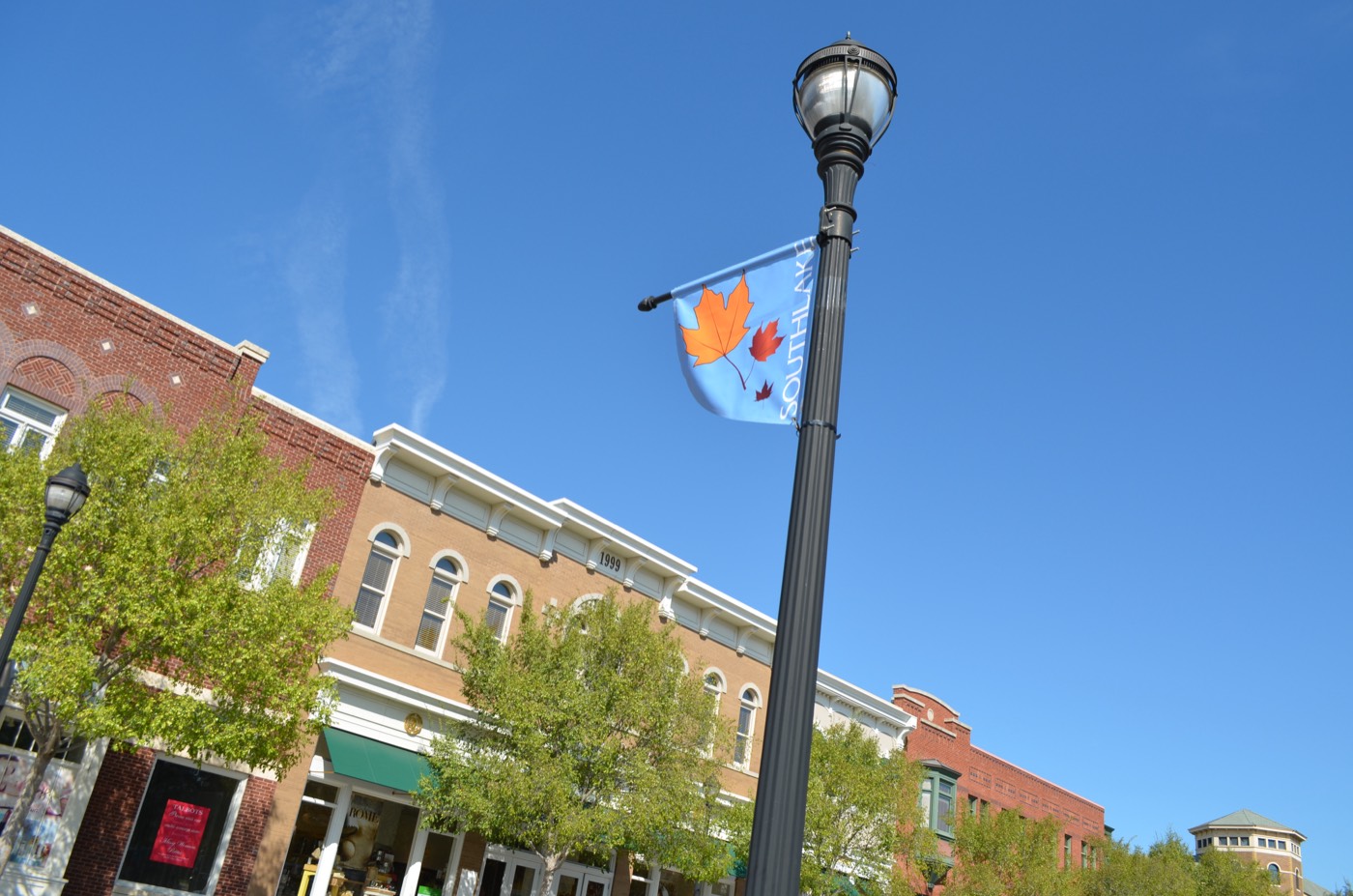
On a Saturday morning in Southlake Town Square, the children filing out of music lessons and tennis clinics carry surnames like Patel, Reddy and Iyer alongside the Hendersons and the Carrolls. The Indians in Southlake, Texas, did not arrive to build a Little India of grocers and sari shops. They came for something quieter and harder to buy: a top-ranked school, a short drive to the airport, and a place where ambition for the next generation is simply assumed.
The Place
Southlake sits in the far north-east corner of Tarrant County, a wedge of land between Grapevine Lake and the runways of Dallas Fort Worth International Airport. Settled in the 1840s, it stayed rural farmland until it was incorporated in 1956, four years after Grapevine Lake was completed.
What turned the cattle pasture into one of the wealthiest suburbs in Texas was the airport. After DFW opened in 1974, Southlake became a boomburb, its population doubling in the 1980s and tripling again in the 1990s.
Today roughly 31,000 people live here, and the median household income runs north of $240,000, higher than any other city in the Dallas Fort Worth Metroplex. The median home now sits well above a million dollars.
How It Became Indian
There was no single boat, no founding family, no chain migration from one village in Gujarat. The Indian story in Southlake is a story of the wider Metroplex, and of a community that climbed the corporate ladder and then went looking for the best place to raise its children.
The Metroplex pull, 1970s to 1990s
The first large wave of Indian professionals reached Dallas Fort Worth in the wake of the 1965 Immigration and Nationality Act, which abolished the national-origin quotas that had effectively barred Asian immigration. Engineers, physicians and graduate students came for the universities and the booming aerospace and telecom firms.
They settled first not in Southlake but in Irving and Las Colinas, close to the airport and to employers like the carriers and electronics giants clustered there. Irving became the established centre of Indian Dallas, dense with grocers, temples and apartment complexes. That older community is the subject of our piece on the Indians in Irving, Texas.
By the 1990s a second generation of arrivals, many of them software engineers riding the technology boom, was earning enough to think about ownership rather than rental, and about schools rather than commutes.
The school decides everything
If one institution explains the Indian presence in Southlake, it is the Carroll Independent School District. Carroll is consistently ranked the number one public school district in the Dallas Fort Worth area and among the very best in Texas, and its reputation travels along Indian professional networks faster than any realtor’s brochure.
For families raised in a culture where academic achievement is treated as the surest path to security, a free public school district that sends graduates to the country’s elite universities is close to irresistible. Couples who could afford private school in Plano or Frisco chose instead to buy into Carroll’s attendance zone.
The numbers tell the story. Carroll ISD’s student body is now roughly a quarter Asian, far above the Texas average, and a large share of those students are of Indian origin. In a district where overall minority enrolment is around forty per cent, the Asian presence is not a footnote: it shapes the maths teams, the science fairs and the spelling bees.
From Irving and Coppell, north and west
Much of Southlake’s Indian population did not arrive directly from India. It arrived from a few miles down the road. Families who had established themselves in Irving and in Coppell, Texas, another Carroll-adjacent suburb with a deep Indian community, moved up and over as incomes rose.
The pattern mirrors the larger DFW migration. As Indian wealth concentrated, it spread north along the airport corridor and up into Collin and Denton counties, into Frisco and Plano. Southlake is the Tarrant County answer to that northward climb: smaller and more discreet than Frisco, but every bit as aspirational.
Executives, not just engineers
Southlake’s Indian residents skew senior. The corporate relocations that fill its cul-de-sacs bring vice presidents and directors commuting to American Airlines, to the defence contractors of Fort Worth, and to the technology and travel firms headquartered in the area, among them Sabre, long the town’s largest employer.
This is a community of arrival in the fullest sense. The H-1B visa holder who landed in an Irving apartment in 1998 is, in Southlake, the naturalised citizen with a corner office, two children in Carroll schools and a house backing onto a country-club fairway.
The Landmarks
Southlake itself has no temple and no Indian high street. The community’s institutions sit in the surrounding cities, an easy drive across the Metroplex, while the town square supplies the everyday backdrop.
DFW Hindu Temple, 1605 N Britain Rd, Irving. The largest Hindu temple in the Dallas Fort Worth area and the spiritual anchor for much of the region’s Indian community. Southlake families drive the twenty minutes south for festivals, pujas and the rites of passage that mark a Hindu life, from the first feeding of a baby to a wedding.
Karya Siddhi Hanuman Temple, 12030 Independence Pkwy, Frisco. A grand temple devoted to Lord Hanuman that draws devotees from across north Texas. For Southlake’s many families with roots in southern India, its style and traditions feel like home, and the drive north is a familiar weekend ritual.
Minerva Indian Cuisine, 2140 E Southlake Blvd, Southlake. One of the few Indian restaurants inside Southlake proper, a South Indian and Hyderabadi kitchen where dosas and biryani draw both homesick families and curious neighbours. It is the kind of place where a child’s exam results get celebrated over a thali.
India Bazaar, 8600 N MacArthur Blvd, Irving. One of the largest Indian grocery chains in the Metroplex, stocking the lentils, spices, fresh produce and frozen parathas that a Southlake kitchen cannot do without. The drive down to Irving for the weekly shop keeps a tie alive between the new suburb and the old one.
Southlake Town Square, State Highway 114 and Southlake Boulevard. The open-air heart of the town, an outdoor district of shops, restaurants and fountains that doubled in size after a 2005 plan was approved. It is where Indian families stroll on summer evenings, where teenagers gather after Carroll football games, and where the worlds of newcomer and native quietly overlap.
Carroll Senior High School, Southlake. The destination at the end of every calculation. The high school of the Carroll Dragons is the reason many Indian families chose Southlake at all, and its hallways, robotics labs and academic competitions are where the second generation makes its mark.
Where They Came From
Southlake’s Indians are not from one place. Like the wider DFW community, they come from across the subcontinent, with a strong representation from the south, Andhra Pradesh, Telangana and Tamil Nadu, alongside Gujaratis, Punjabis and families from the great metropolitan centres of Mumbai, Delhi and Bangalore.
That breadth reflects how they came. They arrived as individuals selected for skill, the engineer recruited for a telecom firm, the doctor matched to a Texas hospital, the graduate student who stayed, rather than as a village transplanted whole.
The southern Indian presence is especially visible, a legacy of the software boom that drew so many Telugu and Tamil speakers into American technology. It is one reason the Telugu-friendly temples of Frisco and the South Indian kitchens of the mid-cities matter so much to this community.
Southlake Today
The Indian community in Southlake is prosperous, confident and almost invisible in the way that successful suburban communities tend to be. There is no enclave to point at, no commercial strip that announces it. The evidence is in the school rosters, the temple car parks on a festival weekend, and the Diwali gatherings held in living rooms and rented halls each autumn.
It is also a community without a buffer. To live in Southlake is to live among a white-majority population, in a town that has had its own public reckonings over race and belonging in its schools. Indian families navigate that the way ambitious newcomers often do, by excelling, by joining the booster clubs and the parent associations, and by trusting that achievement will earn a place.
For many, Southlake is the summit of a long climb that began in a one-bedroom apartment near the airport. The grocers are still in Irving and the temples in Frisco, but the children are Dragons, and that, for a community that measures success in its children, is the whole point. According to the city’s own record, Southlake went from cattle country to one of the richest towns in Texas in a single lifetime. A good many of its newest families made a parallel journey, from arrival to belonging, in less.
Frequently Asked Questions
How many Indians live in Southlake, Texas?
Southlake has a population of around 31,000, and people of Indian origin make up roughly five to six per cent of residents, a far higher share than the Texas or national average. The Indians in Southlake, Texas, are concentrated among the town’s professional and executive families.
Why do so many Indian families move to Southlake?
The single biggest draw is the Carroll Independent School District, repeatedly ranked the best public school district in the Dallas Fort Worth area. For Indian families who prize education above almost everything, a free, elite public school district is a powerful magnet, reinforced by Southlake’s safety, prosperity and short drive to DFW International Airport.
Is there a Hindu temple in Southlake?
Not within the town itself. Southlake’s Indian families worship at the DFW Hindu Temple in Irving, the largest in the Metroplex, and at the Karya Siddhi Hanuman Temple in Frisco, both a short drive away.
Where do Indians in Southlake buy groceries and eat?
Minerva Indian Cuisine on East Southlake Boulevard is a local favourite for South Indian and Hyderabadi food. For groceries, many families drive to Indian supermarkets such as India Bazaar in nearby Irving, where the chain has long-established stores.
How diverse is Carroll ISD?
Carroll ISD’s student body is roughly a quarter Asian, well above the Texas average, with a large proportion of those students being of Indian origin. The district’s academic competitions, science fairs and advanced courses reflect that strong Indian and broader Asian presence.
How is Southlake’s Indian community connected to Irving, Coppell and Frisco?
Closely. Many of the Indians in Southlake, Texas, first settled in Irving or Coppell before moving up as incomes rose, and they remain tied to the temples, grocers and restaurants of Irving, Coppell and Frisco. Southlake is best understood as the affluent western point of a broad DFW Indian community.
If your family’s story passed through Southlake, or any of the places Indians have made home in America, Atlas of Home can trace that journey. From an apartment near the DFW runways to a house in the Carroll school zone, to wherever you are now.