
On a Saturday morning in Allen, the parking lot at the Radha Krishna Temple on North Watters Road fills with minivans and the smell of incense, while a few miles east the Eagles practise under the lights at the most expensive high school stadium in America. The Indians in Allen, Texas have built a life in the seam between those two scenes: a place where a child can grow up reciting both the Hanuman Chalisa and the school fight song, and feel that neither one is borrowed.
The Place
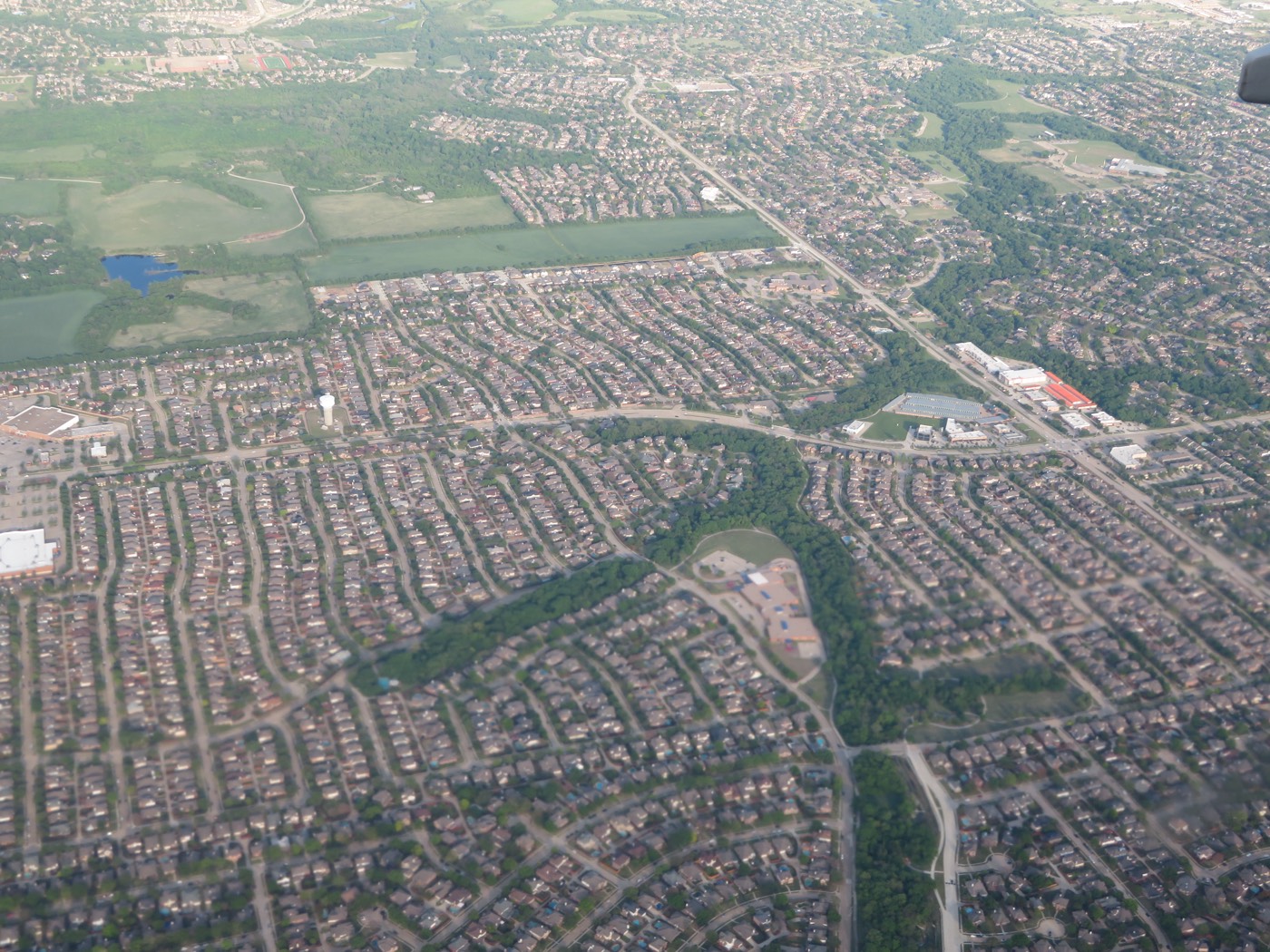
Allen sits about twenty miles north of downtown Dallas, in the heart of Collin County, wedged between Plano to the south, Frisco to the west, and McKinney to the north. For most of its history it was barely a place at all: 512 people in 1950, a railway stop named in 1872 for Ebenezer Allen, a Texas politician and railroad promoter.
Then the metroplex came north. The population jumped from under 2,000 in 1970 to more than 8,000 by 1980, pulled along by the growth of Dallas and Plano and the building of the region’s airport. It reached 43,554 by 2000 and crossed 104,000 by the 2020 census, with a median household income above $107,000 and a poverty rate under five per cent.
Today roughly one in five residents is Asian, and the single largest piece of that is Indian. Allen did not advertise itself to them. The schools, the jobs, and the quiet did.
How It Became Indian
The Indian story in Allen is really the story of Collin County, and it begins one town over.
The Plano spillover
Through the 1980s and 1990s, the corporate corridor along the Dallas North Tollway pulled engineers and managers to Plano. Telecom, then technology, then the back offices of national banks and insurers needed people who could write code and run systems, and a steady stream of Indian professionals, many of them on H-1B visas, arrived to do it.
Plano filled first. As prices rose and families looked for newer houses and shorter commutes to the jobs creeping north, they kept driving up Highway 75. Allen was the next exit with land, good schools, and a school district that had not yet been discovered, just as families a few years later would keep going to Prosper further north.
The schools did the recruiting
Allen Independent School District is unusual in Texas: a city of more than 100,000 people served by a single comprehensive high school. Every Allen teenager funnels into the same building, the same band, the same football team. For Indian parents raised on the idea that a child’s school is a family’s most important investment, that concentration was not a drawback. It was the selling point.
Word travelled the way it always does in immigrant networks, through colleagues and cousins and temple acquaintances. A family that bought in Allen told the next family, and the next, that the test scores were strong and the neighbourhoods were safe.
That single high school became a particular point of pride. The Allen Eagles fill the stands of an 18,000-seat stadium, and the marching band alone runs to hundreds of students. An Indian teenager in Allen does not attend a small magnet programme tucked away from everyone else. They are part of the same enormous senior class as the whole town, and that shared experience, more than any quiet enclave, is what knits the second generation into the place.
The tech and corporate engine
The jobs that anchored the community were never far away. Allen and its neighbours grew into a corporate hub for technology, professional services, financial services, and telecommunications, with employers ranging from the school district itself to firms like Credit Union of Texas and a cluster of tech and aerospace companies across Collin County.
Many of those workers do not work in Allen at all. They commute to Plano, Frisco, Richardson, or the Telecom Corridor, and come home to Allen at night. The town became a bedroom for the region’s engineers, the place where the salary turned into a house and a garden and a college fund.
A faith takes root on Watters Road
For years, worship meant a drive. Families went to temples in Irving or Frisco, or gathered in living rooms. That changed in July 2017, when the Radha Krishna Temple of Dallas was inaugurated at 1450 North Watters Road in Allen, run by the JKYog organisation.
It gave the community a centre inside its own city limits. The temple added a Center for Indian Culture and Education in 2022, teaching the next generation the languages, music, and stories their parents carried from India. When a community builds a temple, it is saying something plain: we are not passing through.
The temple also became a calendar. Ram Navami, Janmashtami, Holi, and above all Diwali now have a fixed address in Allen, and the festivals draw families who might otherwise have scattered to worship in Irving or Frisco. A shared place to gather is how a collection of households becomes a community, and Watters Road gave Allen’s Indians exactly that.
The Landmarks
Radha Krishna Temple of Dallas, 1450 North Watters Road, Allen. Inaugurated in July 2017 by the JKYog organisation, it is the spiritual heart of Indian Allen. Its annual Diwali Mela draws thousands from across North Texas, and in 2025 the celebration filled the grounds with 11,111 lit diyas, a Ramleela performance, and fireworks staged with the City of Allen.
Center for Indian Culture and Education, at the Radha Krishna Temple. Opened in April 2022, it exists for the children born here, teaching heritage languages, classical music, and the epics. It is where second-generation Allen kids learn that the stories are theirs to keep.
Karya Siddhi Hanuman Temple, 12030 Independence Parkway, Frisco. A short drive west, this temple opened in 2015 and is one of the largest Hindu landmarks in the region, crowned by a 72-foot rajagopuram tower. For many Allen families it is the temple of big occasions, weddings, and Hanuman Jayanti.
Allen Premium Outlets, 820 West Stacy Road, Allen. One of North Texas’s busiest shopping destinations, the outlets are where families from across the metroplex spend a Saturday, and where weekend conversation in the food court drifts easily between English, Hindi, Telugu, and Tamil.
Watters Creek at Montgomery Farm, Allen. An open-air centre of restaurants and shops along a landscaped creek, it has become the town’s informal living room, the place teenagers gather after games and where families stroll on warm evenings before dinner.
Eagle Stadium, 155 Rivercrest Boulevard, Allen. The $60 million, 18,000-seat home of the Allen Eagles opened in 2012 and is woven into local identity. On a Friday night in autumn, Indian families fill the stands alongside everyone else, because in Allen the high school football team belongs to all of them.
The Plano grocery row, Coit Road and Spring Creek Parkway, just south of Allen. The big South Asian grocers, including Patel Brothers on Coit Road and India Bazaar on West Spring Creek Parkway, sit a few minutes down Highway 75. They are where the week’s dal, atta, and fresh curry leaves come from, and where new arrivals find the first familiar shelves.
Where They Came From
The Indians of Allen are overwhelmingly a professional migration, drawn by the technology and corporate economy of the Dallas suburbs rather than by an older chain of factory or farm labour.
That shapes the origins. The community leans heavily toward the software and engineering hubs of India: Andhra Pradesh and Telangana in the south, Tamil Nadu, Karnataka, and Maharashtra, alongside families from the north. You hear Telugu and Tamil in the temple courtyard as often as Hindi.
Most came as adults with degrees already in hand, many first to a campus or a first job elsewhere in America, then to Texas when the work and the visa pointed here. Allen was rarely the first stop in the country. It was the place they chose once they could choose.
That detail matters, because it explains the shape of the community. There is little of the boarding-house or factory-gate history that marks older immigrant neighbourhoods. The Indians of Allen arrived into ownership, into mortgages and minivans and back-to-school nights, and the institutions they built reflect a settled, middle-class life rather than a struggling foothold.
Allen Today
Allen today is a town where the Indian presence is woven in rather than set apart. There is no single Indian quarter, no Devon Avenue or Mahatma Gandhi District. The community lives across the subdivisions, and its institutions, the temple, the cultural school, the grocers a few minutes south, form a network rather than a strip.
The rhythm of the year reflects it. Diwali brings fireworks sanctioned by the city and thousands of lamps lit on temple grounds. Cricket is played on weekend pitches across Collin County. And every autumn the same families pour into Eagle Stadium, because their children wear the Eagle jersey and the second generation is as much of Allen as of India.
It is an honest kind of belonging, built quietly over a single generation. The parents came for work and schools and stayed for a life. The children are growing up bilingual in two cultures and fluent in neither apology nor explanation, simply at home in a Texas suburb that has become, without ever announcing it, partly theirs.
Frequently Asked Questions
How many Indians live in Allen, Texas?
Allen is home to a sizeable Indian community within an Asian population that makes up roughly one in five of the city’s more than 104,000 residents. The Indians in Allen, Texas form one of the largest single ancestry groups inside that Asian share, concentrated among professional and family households.
Why did so many Indian families move to Allen?
Two forces drew them: the technology, financial services, and corporate jobs of the northern Dallas suburbs, and the reputation of Allen Independent School District. As Plano filled and prices rose, Indian professionals moved north up Highway 75 to newer homes and the same single, well-regarded high school.
Is there a Hindu temple in Allen?
Yes. The Radha Krishna Temple of Dallas at 1450 North Watters Road, inaugurated in July 2017, is the main temple inside Allen and a centre of community life. The larger Karya Siddhi Hanuman Temple is a short drive west in Frisco.
Where do Indian families in Allen shop and eat?
Allen has its own Indian restaurants and sweet shops, and the major South Asian grocers, including Patel Brothers and India Bazaar, sit just south in Plano along Coit Road and Spring Creek Parkway. Watters Creek and the Allen Premium Outlets are popular weekend gathering spots.
How does Allen compare to Frisco, Plano, and McKinney for Indian families?
All four Collin County cities have grown large Indian communities from the same job market, and families often move between them. Allen is known for its single unified high school and its central position between the Indians of Plano, Frisco, and McKinney.
How do Indians in Allen celebrate Diwali?
The Radha Krishna Temple hosts a multi-day Diwali Mela that draws thousands, and the 2025 celebration featured 11,111 lit diyas, a Ramleela, and fireworks staged together with the City of Allen. It is one of the largest festival-of-lights gatherings in North Texas.
If your family’s story passed through Allen, or any of the places Indians have made home in America, Atlas of Home can trace that journey. From a software job in Hyderabad or Chennai to a house off Watters Road and a child in an Eagle jersey, to wherever you are now.