
Drive west out of Philadelphia on the old Lincoln Highway and the strip malls thin, the lawns widen, and somewhere around the crossroads of Chester County you reach Exton. It is the kind of place that announces nothing about itself. Yet step into the Patel Brothers off Lancaster Avenue on a Saturday morning, or into the prayer hall of a temple a few minutes up the road, and a different map of the town appears. The story of Indians in Exton is one of pharmaceutical labs and software offices, of weekend temples carved out of converted buildings, and of a quiet suburb that became, almost without noticing, one of the most Indian places in Pennsylvania.
The Place
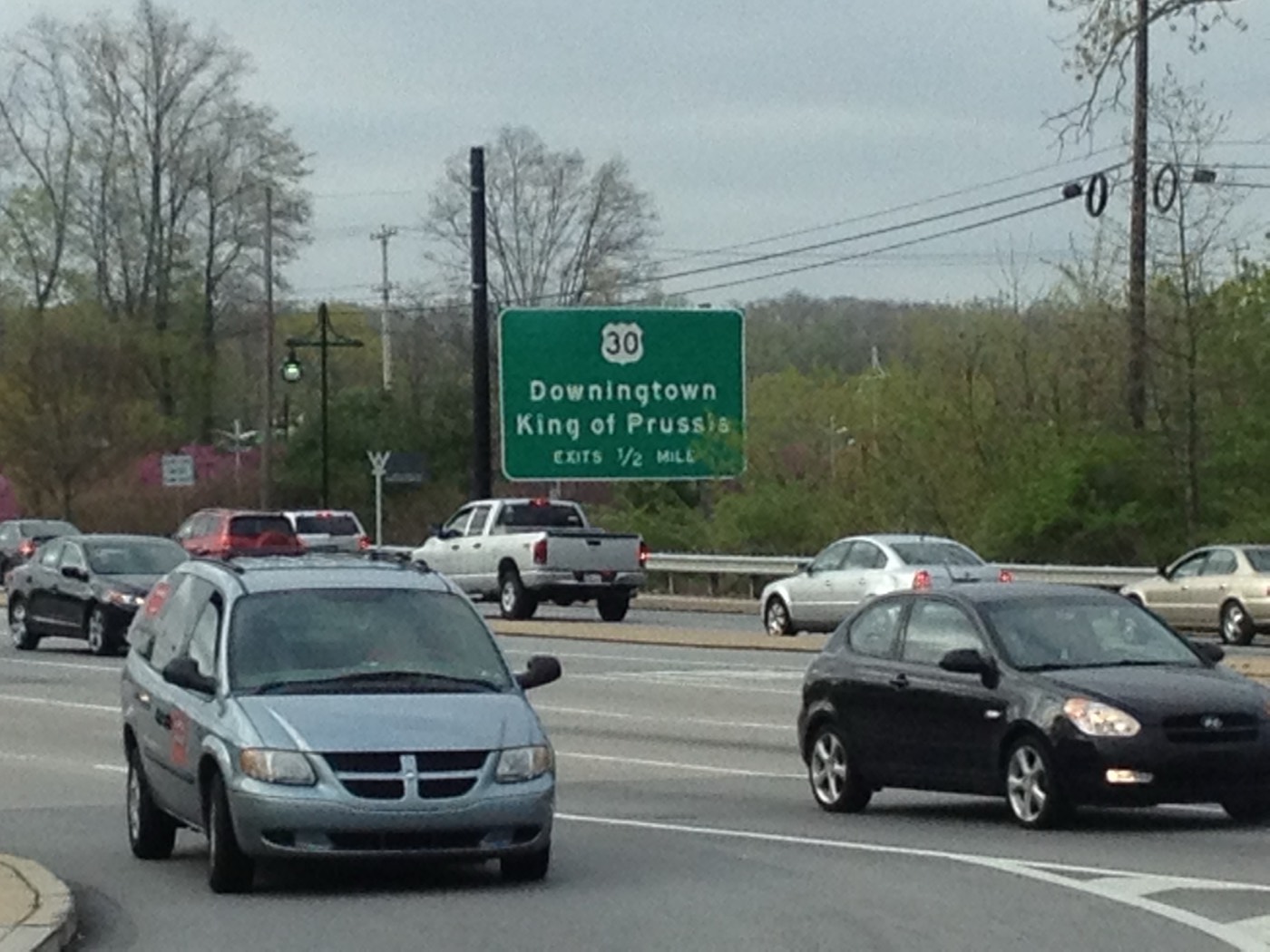
Exton is not really a town. It is a census-designated place in West Whiteland Township, Chester County, sitting where U.S. Route 30, the historic Lincoln Highway, meets Pennsylvania Route 100. One theory holds that the name comes from the “X” those two roads draw on the map, the crossroads marking the spot.
For most of its history this was farm country and a stop on the trading route between Philadelphia and the settlements to the west. That changed when the highways turned the junction into a commercial hub, and the population followed the asphalt.
Today it is affluent and young. The 2020 census counted 5,622 residents in the Exton CDP, with a median age in the low thirties and a household income well above the national figure. It is a place built for families who arrived with degrees and stayed for the schools.
How It Became Indian
Exton did not have an Indian community for most of the twentieth century. It barely had a community at all in the modern sense. What it had was a crossroads, and then a mall, and the mall changed everything.
The mall that made the suburb
Exton Square Mall opened on 15 March 1973, a Rouse Company project anchored by the Philadelphia department store Strawbridge & Clothier. It was an event. Pennsylvania’s first Chick-fil-A opened in the food court that same year. The developers even restored an eighteenth-century farmhouse, the Zook House, that stood on the site.
The mall pulled growth toward the junction like a magnet. West Whiteland Township’s population more than doubled between 1973 and 2000, climbing from roughly 7,900 to over 16,000. The infrastructure that would later draw Indian families, the roads, the housing developments, the schools, was laid down in those decades of expansion.
The professionals arrive
The Indian families who came to Exton in the 1990s and 2000s did not come for the mall. They came for the work. Chester County had quietly become a corridor of pharmaceutical and life-sciences employment, and Exton sat at its centre.
West Pharmaceutical Services, the maker of injectable drug-packaging systems, is headquartered in Exton itself. The animal-health giant Zoetis has a major presence nearby. Up and down the Route 30 corridor and out toward Malvern and King of Prussia, drug companies, medical-device firms, and the contract labs that serve them needed scientists, statisticians, and quality engineers. Many of those hires came from India on H-1B visas.
Software work pulled in just as many. The scale is striking: by 2018, Chester County counted more than 7,000 software developers and programmers, and roughly 43 per cent of them had been born in India, a share nearly equal to the US-born total. The county had become one of the densest concentrations of India-born engineering talent in the country, and Exton, with its newer housing and its highway access, was a natural place to settle.
From a trickle to a presence
The growth was sudden when it came. The clearest measure sits just up the road in neighbouring Upper Uwchlan Township, an affluent exurb of the same Route 100 corridor. Its Indian population went from about 20 residents in 2000 to nearly 1,000 by 2010, rising from a fraction of a per cent to almost nine per cent of the township in a single decade.
Across South Jersey and south-eastern Pennsylvania the regional Indian population roughly doubled over the 2000s, passing 80,000, with some Philadelphia suburbs growing by well over a hundred per cent. Exton rode that wave. By the 2020 census, the Asian share of the Exton CDP had reached 31.5 per cent, the largest such share among the towns of its size in the county.
What had been a handful of families inviting one another to dinner became a community large enough to support its own grocers, its own restaurants, and its own temples, all within a short drive of the crossroads.
The Landmarks
Sai Temple of Pennsylvania, 1100 Osborne Road, Downingtown. The presiding deity here is Sri Shirdi Sai Baba, the saint who preached the oneness of God across faiths, and the temple draws Hindu families from across western Chester County. The complex pairs a worship hall with a community centre, the standard two-part anatomy of suburban American Hindu life, where the religious and the social happen under adjacent roofs.
Sai Temple, 170 Planebrook Road, Malvern. The temple’s second Chester County location, a few minutes east of Exton, serves the dense cluster of Indian families that has formed around Malvern and the Route 30 corridor. Together the two sites function as one institution with two front doors.
Om Sakthi Peetam, 1459 Conestoga Road, Chester Springs. Dedicated to the Mother Goddess AdhiParaSakthi, with worship also of Vinayagar and Kamatchi, this temple is run entirely by volunteers and offers free food to all visitors on its operating days. Its devotional tradition draws particularly on Tamil South Indian practice, a reminder that “Indian” in Exton is a coalition of many regions and languages.
India Corner, 278 Exton Square Parkway, Exton. Sitting in the shadow of the mall that built the town, this restaurant is one of the everyday anchors of the community, the place for a thali at lunch or sweets for a festival. The parkway address alone tells the story: the Indian present built directly atop the commercial past.
Deccan Flavors, Exton. A South Indian kitchen serving dosa, idli, and the Hyderabadi biryani that the region’s Telugu-speaking families grew up on. Its existence, alongside North Indian places nearby, marks the breadth of the community: this is not a single cuisine but several, sharing a postcode.
Patel Brothers, near Lancaster Avenue, Exton. The arrival of a Patel Brothers, the national Indian-American supermarket chain founded in 1974, is the surest sign a suburb has crossed a threshold. When a community can fill a full-size grocery with the right lentils, the right spice blends, the right frozen parathas, it has stopped being a scattering of families and become a market.
Exton Square Mall, 260 Exton Square Parkway, Exton. The mall that made the suburb has faded in the era of online retail, but it remains the geographic heart of the place, the crossroads landmark around which the Indian grocers and restaurants have clustered. The town’s two histories meet in its car park.
Where They Came From
The Indians of Exton did not arrive from one place. They came along two distinct currents, and both reached back to specific corners of India.
The first current was pharmaceutical and scientific. These were chemists, biostatisticians, and quality-control specialists, often drawn from India’s science and engineering universities, who followed the life-sciences jobs that cluster across Chester County. Many came by way of graduate study in the United States before settling near the labs that hired them.
The second current was software, and it leaned heavily on the Telugu-speaking states of Andhra Pradesh and Telangana, and on Tamil Nadu, the regions that have supplied so much of America’s IT migration. The presence of South Indian temples and South Indian restaurants in the area is the visible trace of that origin, the dosa griddle and the AdhiParaSakthi shrine standing in for Hyderabad and Chennai.
What both currents shared was a profile: educated, professional, arriving on work or student visas, and choosing Exton for the same reasons American families did. The schools were good, the commute to the labs was short, and the houses were new.
Exton Today
Exton today is a suburb that wears its Indian community lightly and lives it fully. There is no single Indian district, no street of shopfronts in a row. Instead the community is woven through the place: a temple off one country road, a grocery off another, a biryani house beside the parkway, a school where Diwali is a date on the calendar.
The children of the H-1B generation are now growing up in the West Chester Area School District, fluent in two cultures and often in two languages, the second spoken mostly at home and at the temple. For them the crossroads is not a waypoint between Philadelphia and somewhere west. It is simply home.
The mall that started it all has dimmed, but the community it indirectly seeded has not. Exton is now one node in a wider Indian Pennsylvania that runs through the families who settled in Malvern, the growing community around Collegeville, and out across the country to the Indian suburbs of Northern Virginia, the tech families of Gilbert, Arizona, the new builds of Celina, Texas, and the professional enclaves of Milton, Georgia. The pattern repeats: good schools, science and software jobs, a temple within reach, a Patel Brothers down the road.
Frequently Asked Questions
How large is the Indian community in Exton, Pennsylvania?
The Indians in Exton are part of a large Asian population that reached 31.5 per cent of the Exton CDP in the 2020 census, out of about 5,622 residents. Indians make up the great majority of that Asian total, making Exton one of the most heavily Indian small communities in Chester County.
Why did so many Indians settle in Exton?
The Indians in Exton came chiefly for work in two industries: pharmaceuticals and life sciences, anchored by employers such as West Pharmaceutical Services in Exton itself, and software engineering across Chester County, which by 2018 counted thousands of India-born developers. Good schools and new housing kept the families that the jobs first brought.
Are there Hindu temples near Exton?
Yes. The Sai Temple of Pennsylvania operates locations at 1100 Osborne Road in Downingtown and 170 Planebrook Road in Malvern, both within a short drive. The Om Sakthi Peetam at 1459 Conestoga Road in Chester Springs serves devotees of the Mother Goddess AdhiParaSakthi.
Where can you find Indian groceries and food in Exton?
Exton has a Patel Brothers, the national Indian-American supermarket chain, near Lancaster Avenue, along with smaller Indian grocers. Restaurants include India Corner on Exton Square Parkway and South Indian kitchens such as Deccan Flavors, reflecting the community’s mix of North and South Indian families.
What parts of India do Exton’s Indian families come from?
They come from across India, but two streams dominate. Pharmaceutical and scientific workers come from many states, while the large software-engineering population leans heavily on the Telugu-speaking states of Andhra Pradesh and Telangana and on Tamil Nadu, a heritage visible in the area’s South Indian temples and restaurants.
How quickly did the Indian population in the Exton area grow?
Very quickly. In neighbouring Upper Uwchlan Township, the Indian population rose from roughly 20 residents in 2000 to nearly 1,000 by 2010, climbing from a fraction of a per cent to almost nine per cent of the township in a single decade, a pace mirrored across the Philadelphia suburbs.
If your family’s story passed through Exton, or any of the places Indians have made home in America, Atlas of Home can trace that journey. From the universities of Hyderabad and Chennai to the labs along Route 30, to wherever you are now.