
On a Saturday morning along Sawmill Road, the queue at India Grocers stretches past the spice aisle while a few miles north, in the parking lot of the Bharatiya Hindu Temple, families slip off their shoes before the morning aarti. This is the rhythm of the Indians in Dublin, Ohio, a community that has quietly become one of the largest of its kind in the state, settled into a prosperous Columbus suburb where corporate headquarters and top-ranked schools drew a generation of engineers, physicians and managers from across the subcontinent.
The Place
Dublin sits on the Scioto River at the northwest edge of the Columbus metropolitan area, straddling Franklin, Delaware and Union counties. It takes its name from the Irish capital, chosen by surveyor John Shields when the village was platted in the early 1800s in honour of his birthplace.
For most of two centuries it was a small farming town. Then Interstate 270, the outerbelt that loops around Columbus, arrived in the latter half of the twentieth century, and with it the corporate parks, the cul-de-sacs and the population boom that turned Dublin into one of central Ohio’s wealthiest suburbs. The town that incorporated as a city in 1987 with around 5,000 residents now holds roughly ten times that number.
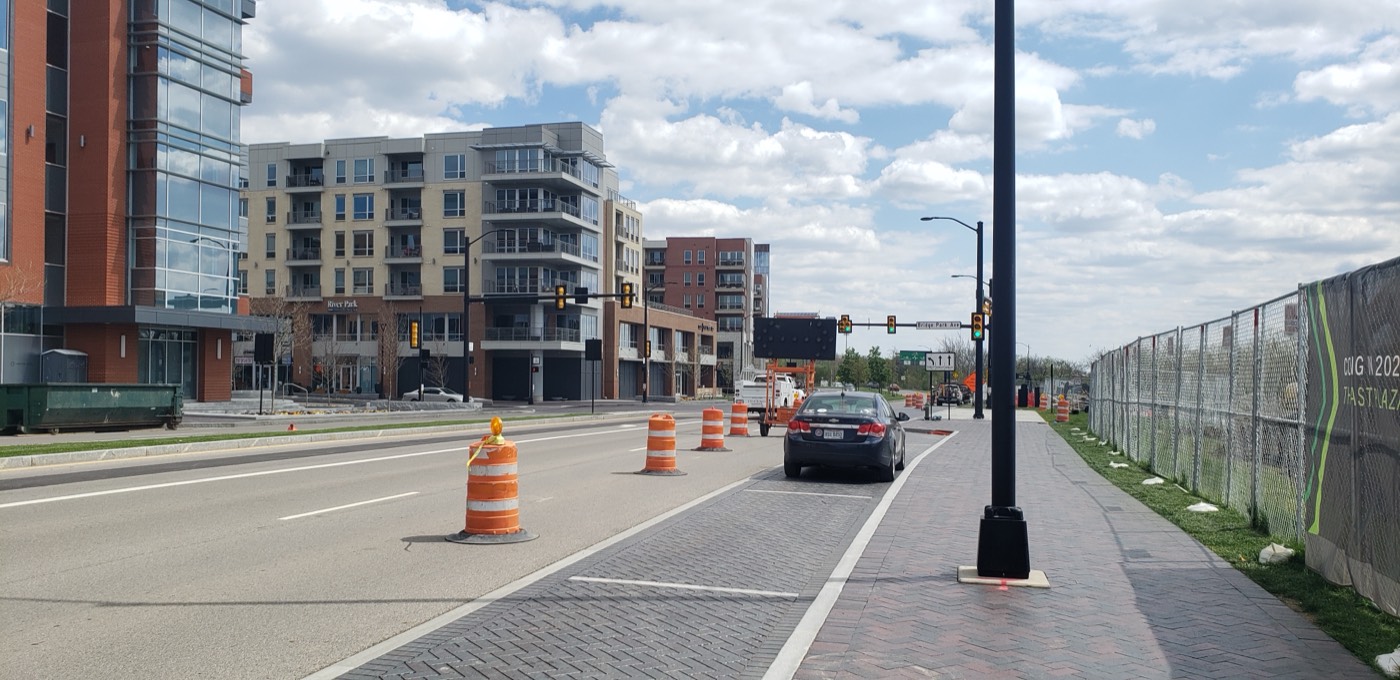
The median household income today is around 137,000 dollars, more than double the Ohio figure. It is a place of golf courses, restored stone farmhouses along the river, the Memorial Tournament at Muirfield Village, and a walkable new district called Bridge Park on the east bank of the Scioto. Into that prosperous backdrop, over the past three decades, a substantial Indian community has settled.
How It Became Indian
Dublin did not set out to become a centre of Indian American life. It became one because of where the jobs were, and because the people who took those jobs wanted the things this particular suburb already offered: good schools, safe streets, and room to build a community from scratch.
The corporate magnet
The story begins with the companies. Cardinal Health, the pharmaceutical and medical distribution giant, built its headquarters at 7000 Cardinal Place in Dublin and grew into a Fortune 500 anchor employing thousands. Nationwide’s insurance operations, the library cooperative OCLC, and a dense cluster of technology and logistics firms followed the same path out to the I-270 corridor.
These were exactly the employers that recruited heavily from the pipeline of Indian professional migration that opened in the 1990s and 2000s: software engineers, data specialists, pharmacists, financial analysts and physicians. Many arrived on H-1B visas, often after graduate degrees at Ohio State University just down the road, and looked for somewhere to put down roots within commuting distance. It is a pattern that played out in corporate suburbs across the Midwest, from the Indian families who gathered around the carmakers in Troy, Michigan to those who followed the tech and healthcare jobs to Mason, Ohio, in the suburbs of Cincinnati.
The schools decided it
If the jobs brought Indian families to central Ohio, the schools decided which suburb they chose. Dublin City Schools is consistently rated among the very best districts in the Columbus region, with all three of its high schools ranked near the top of the state.
For families who treated education as the whole point of emigrating, that rating was decisive. Word travelled through workplaces and temples and WhatsApp groups: if you wanted your children in those classrooms, you bought in Dublin. The district now reports students who trace their roots to more than 100 countries and speak more than 70 languages, and a great many of those languages are Indian ones.
The effect compounds. A district that performs well attracts families who push it to perform better, and the spelling bees, science fairs and advanced maths classes of Dublin’s schools fill with the children of Indian engineers and physicians. Houses near the strongest attendance zones command a premium, and Indian buyers, weighing test scores as carefully as square footage, have helped sustain it.
From newcomers to a community
The early arrivals of the 1990s were scattered, a few families per cul-de-sac, driving to Columbus for a bag of dal or a tin of ghee. As their numbers grew, the infrastructure followed them. Grocers opened on Sawmill Road. Restaurants put out lunch buffets. A temple already taking shape in nearby Powell became the spiritual centre for thousands.
By the 2010s the change was unmistakable. Dublin had grown into the city with the second-largest Indian population in all of Ohio, behind only Columbus itself, with roughly 5,900 residents of Indian origin in a city of around 50,000. Today close to one in five Dublin residents is of Asian descent, and India is the single most common country of birth among the foreign-born across Ohio.
The Landmarks
Bharatiya Hindu Temple, 3671 Hyatts Road, Powell. Just north of Dublin, this is the spiritual heart for the area’s Hindu families. The congregation bought twenty-two acres of suburban land in 1991 and consecrated the new temple in July 1994, and it has since grown into the largest Hindu temple in the Columbus metropolitan area, drawing Dublin families for daily worship, weddings and the great festival days.
India Grocers, 5843 Sawmill Road, Dublin. One of the workhorse grocers of the corridor, stocked floor to ceiling with lentils, atta flour, fresh curry leaves and the snack brands of half a dozen Indian states. On weekends it functions as much as a meeting point as a shop.
Bhavani Cash & Carry, 2855 Festival Lane, Dublin. A South Asian cash-and-carry that keeps the larger households supplied, the kind of place where families buy rice by the twenty-pound bag and trade notes on which mango variety just came in.
Amul India Restaurant, 5871 Sawmill Road, Dublin. A fixture of the Sawmill Road dining scene, known for a busy lunch buffet that draws office workers from the surrounding corporate parks and weekend tables of extended families ordering saag paneer and butter naan by the platter.
The Sawmill Road corridor, Dublin. More a stretch than a single address, this commercial spine on the city’s eastern edge has become the everyday hub of Indian Dublin: grocers, restaurants, jewellers and sweet shops clustered within a few minutes of one another, where the errands of an ordinary week get done.
Dublin City Schools, district-wide. Less a landmark than a magnet, the district’s reputation is woven into why Indian families chose this suburb at all. Its high schools rank among Ohio’s best, and its classrooms reflect the more than 100 nationalities now represented across the city.
Columbus Cricket Club, central Ohio. Founded in 1996, one of the oldest cricket clubs in the region, it gives Dublin’s Indian residents a place to keep the game alive through the Ohio summer, playing on fields scattered across the metro and feeding a wider local cricket scene that has grown alongside the community.
Where They Came From
Dublin’s Indian population is not drawn from any single region of India. It reflects the broad professional migration that has shaped Indian America since the 1990s, with strong representation from the southern states of Andhra Pradesh, Telangana, Tamil Nadu and Karnataka, alongside families from Gujarat, Maharashtra and the north.
The common thread is not geography but profession. These are, overwhelmingly, the engineers, doctors, pharmacists and managers who came for graduate study and corporate work, and who picked Dublin for the same reasons their colleagues did. It is a different kind of community from the dense, decades-old Indian centres of the coasts, the sari shops and groceries of Edison, New Jersey or the engineer-heavy enclaves of Cupertino, California. The temple in Powell, with its range of deities and festivals, was built precisely to hold a congregation this varied under one roof.
Dublin Today
The Indians in Dublin, Ohio are no longer newcomers. The children who started in those celebrated schools have graduated, gone to college and, in many cases, come back to raise families of their own in the same district. The community has moved from arrival to permanence.
You can read that permanence in the city’s calendar. Dublin now stages its own Diwali celebration, a municipal Festival of Lights with cultural performances, music and Indian food, the kind of event that signals a community has stopped being a guest and become part of the civic furniture.
It is not a self-contained enclave in the old immigrant-neighbourhood sense. Indian Dublin is woven through an affluent American suburb of golf courses and corporate campuses, more cul-de-sac than Chinatown. But the threads are unmistakable, in the grocers on Sawmill Road, the temple bells north of town, and the surnames filling the honour rolls at Dublin’s high schools.
What that next chapter looks like is still being written. The second generation, raised between the temple in Powell and the classrooms of Dublin City Schools, will decide how much of the inheritance to keep and in what form. Some will scatter to the coasts and the bigger Indian centres there. Many, judging by the pattern already visible, will stay close, drawn back by the same things that brought their parents: the schools, the safety, and a community that is no longer waiting to feel at home.
Frequently Asked Questions
How many Indians live in Dublin, Ohio?
Dublin is home to roughly 5,900 residents of Indian origin, making it the city with the second-largest Indian population in Ohio after Columbus. Around one in five Dublin residents is of Asian descent.
Why did so many Indians settle in Dublin, Ohio?
The Indians in Dublin, Ohio were drawn first by jobs at major employers such as Cardinal Health, Nationwide and OCLC, and then by Dublin City Schools, one of the top-rated districts in the state. The combination of professional work and excellent schools made it a natural choice for engineers, physicians and managers.
Where is the nearest Hindu temple to Dublin, Ohio?
The Bharatiya Hindu Temple sits just north of Dublin at 3671 Hyatts Road in Powell. Consecrated in 1994 on a twenty-two-acre site, it is the largest Hindu temple in the Columbus metropolitan area and serves many Dublin families.
Where can you buy Indian groceries in Dublin, Ohio?
Sawmill Road is the centre of the scene, with India Grocers at 5843 Sawmill Road and Bhavani Cash & Carry at 2855 Festival Lane stocking lentils, spices, flours and South Asian brands. The corridor also holds several Indian restaurants.
Is Dublin, Ohio a good place for Indian families?
Dublin is consistently ranked among central Ohio’s most desirable suburbs, with a median household income above 137,000 dollars and schools that rank near the top of the state. Those features are precisely why so many Indian families settled there.
Is this the same as Dublin, California?
No. This article is about Dublin, Ohio, a suburb of Columbus. Dublin, California is a separate city in the San Francisco Bay Area, also home to a substantial Indian community, but the two should not be confused.
If your family’s story passed through Dublin, or any of the places Indians have made home in America, Atlas of Home can trace that journey. From a graduate degree and an H-1B visa, to a cul-de-sac near the best schools in central Ohio, to wherever you are now.