
Drive west on Atlantic Avenue, past the galleries and pavement cafes of downtown Delray Beach, and the road keeps going. The boutiques thin out. The gated entrances begin. Within a few miles you reach the quiet, palm-lined heart of one of the largest concentrations of Jews in America, a place where the accents are pure Brooklyn and the Bronx, and where the story of the Jews in Delray Beach is written across thousands of low-rise condominiums and a string of synagogues set back from the highway.
The Place
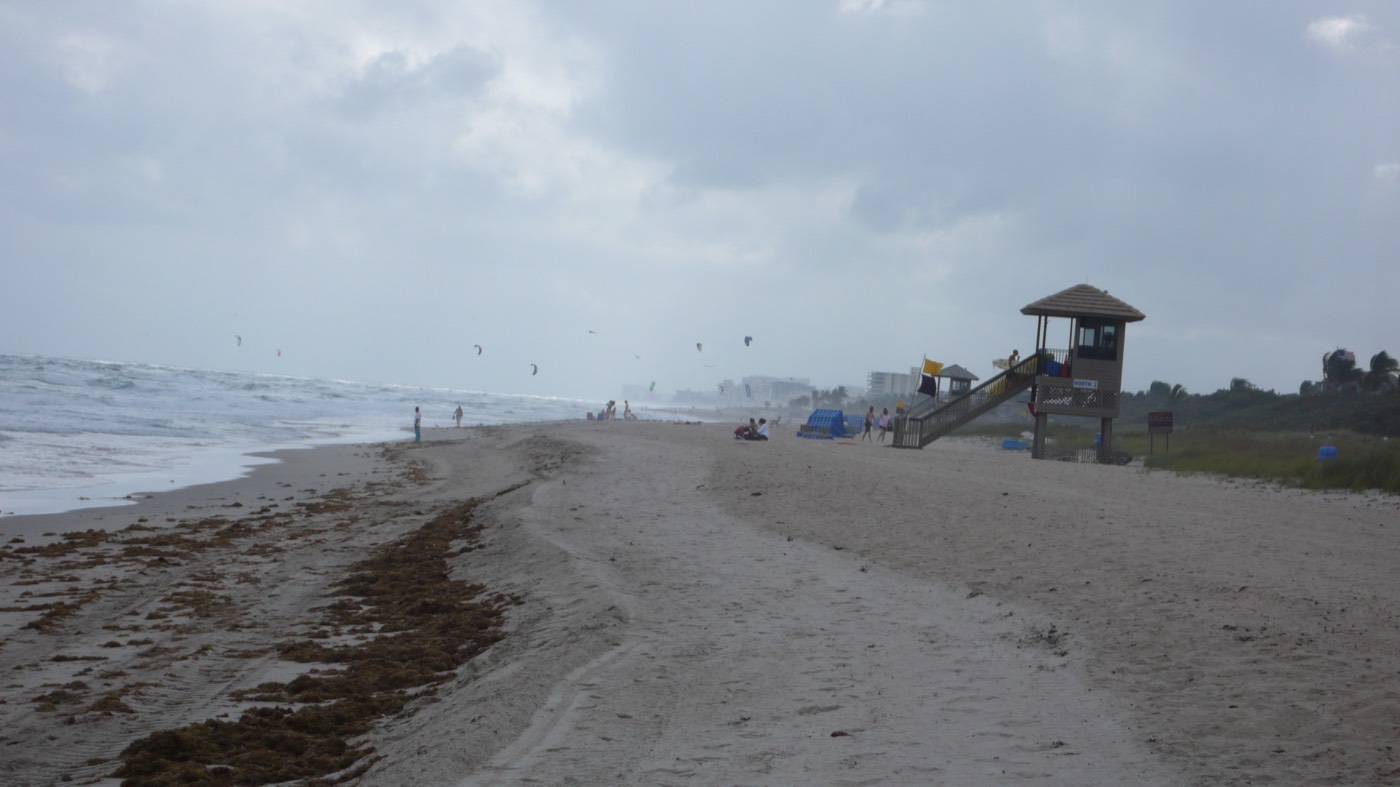
Delray Beach sits on the Atlantic coast of southern Palm Beach County, between Boynton Beach to the north and Boca Raton to the south. The eastern edge is a postcard: a wide public beach, the restored 1920s storefronts of Atlantic Avenue, and the Morikami Museum and Japanese Gardens, founded in 1977 on land left to the county by a Japanese farmer named George Morikami.
But the demographic centre of gravity is not on the water. It lies in the western, largely unincorporated developments that spread inland through the 1970s and 1980s, vast adult communities built for a single purpose: to give retiring Northeasterners somewhere warm, affordable and familiar to land.
Those developments filled, overwhelmingly, with Jews.
How It Became Jewish
A county that started small
Jews have lived in Palm Beach County since around 1900, when Jewish merchants kept shops along Clematis Street in downtown West Palm Beach. The county’s first synagogue, Temple Israel, was established in 1923. For decades the numbers stayed modest, and parts of South Florida, Delray Beach among them, carried a reputation for open antisemitism, with restricted hotels and clubs that did not admit Jews.
What changed everything was the road. The completion of Interstate 95 through southern Palm Beach County in the 1970s collapsed the distance between the Northeast and the South Florida coast, and the condominium developers were waiting.
The condominium revolution
The template was set a little to the north and west. In 1968 a Palm Beach lawyer named H. Irwin Levy persuaded a few clients to back a condominium development for retirees outside West Palm Beach. The first Century Village units sold for between 9,000 and 13,000 dollars, with pools, clubhouses and a calendar of activities thrown in. Comedian Red Buttons became the smiling face of the over-55 lifestyle in newspaper advertisements across the New York metropolitan area.
The model was a sensation, and it was copied across the region. By the 1980s these communities were full of transplanted Northeasterners, most of them Jewish, most of them Democrats, and they reshaped the culture and politics of South Florida.
The numbers climb
The growth in southern Palm Beach County was extraordinary. Between 1970 and 1980 the Jewish population of the Boca Raton and Delray Beach area jumped from roughly 1,000 to 37,000. The University of Miami demographer Ira Sheskin, who has tracked Jewish South Florida for decades, counted 62,000 Jews across Boynton Beach, Delray Beach and Highland Beach in 1984. By 1995 the figure for that South County area had reached 116,000, and by 2001 it stood near 129,000.
These were not refugees or immigrants in the old sense. They were retirees, the children and grandchildren of the great Eastern European migration that had filled New York’s tenements a century before. They had spent their working lives in the Bronx and Brooklyn, in Newark and Long Island, and they arrived with their delicatessen tastes and their union loyalties intact.
Kings Point and the western communities
The clearest expression of all this is Kings Point, the sprawling adult condominium community in the unincorporated land west of Delray Beach. By the 2000 census it held more than 12,000 residents across some 10,000 housing units, with a median age of 78 and nearly nine in ten residents over 65. Yiddish was the first language of a striking share of households, a plain measure of just how Jewish the place is.
Country-club developments followed for those who wanted golf with their retirement, among them Gleneagles Country Club, a gated community of roughly 1,000 homes with two 18-hole courses. The pattern repeats across western Delray: low buildings, broad lawns, a clubhouse, and a population drawn from the same handful of Northeastern zip codes.
Institutions take root
Where the people went, the institutions followed. Temple Emeth, a large Conservative congregation, settled on West Atlantic Avenue to serve the western communities. Temple Sinai of Palm Beach County, the area’s Reform congregation, built its home further east on Atlantic Avenue. Chabad of Delray Beach opened on West Atlantic Avenue as well, part of the Orthodox presence that rounds out a community now served by several synagogues.
The umbrella is the Jewish Federation of South Palm Beach County, headquartered in Boca Raton, which coordinates fundraising and social services across Boca Raton and Delray Beach. Its affiliated Ruth Rales Jewish Family Service has long carried much of the burden of caring for an ageing population, from kosher meal deliveries to grief counselling and help for residents living alone far from their grown children.
The Landmarks
Kings Point, west of Delray Beach off West Atlantic Avenue. The defining community of Jewish Delray, a gated expanse of mid-century condominiums where clubhouses host card games, lectures and Yiddish theatre. A 2012 documentary, simply titled Kings Point, followed several residents and brought national attention to the loneliness and resilience of late life here.
Temple Emeth, 5780 West Atlantic Avenue. A large Conservative synagogue built to serve the western condominium communities, the kind of congregation that swelled to thousands of members at the height of the season and emptied somewhat in the summer when the snowbirds went home.
Temple Sinai of Palm Beach County, 2475 West Atlantic Avenue. The Reform congregation of Delray Beach, drawing members from across Boynton Beach, Boca Raton and Wellington, and a reminder that the community here spans every branch of American Judaism.
Chabad of Delray Beach, 7495 West Atlantic Avenue. Led for years by Rabbi Sholom B. Korf, the Chabad house anchors the area’s Orthodox and outreach life, running holiday programmes and a steady schedule of classes for residents who never imagined they would study Torah in retirement.
Atlantic Avenue, downtown Delray Beach. The mile of restored storefronts, galleries and restaurants that links the western communities to the sea. It is where grandchildren visiting from up north get taken for dinner, and where the older Delray and the newer one meet.
Morikami Museum and Japanese Gardens, 4000 Morikami Park Road. Not a Jewish landmark, but a beloved one: 200 acres of Japanese gardens given to the county in 1973 by farmer George Morikami, and a favourite outing for residents and their families, proof that Delray’s story holds more than one immigrant chapter.
Where They Came From
The Jews of Delray Beach are, almost to a person, a second migration. Their families had already made the journey from the shtetls and cities of Russia, Poland, Lithuania and the rest of Eastern Europe to the American Northeast in the late nineteenth and early twentieth centuries. Delray was the next leg, not the first.
The feeder map is specific and consistent: New York City and its outer boroughs, Long Island, Westchester and the northern New Jersey suburbs. Many had themselves moved out from the city to places like Scarsdale or the older religious neighbourhoods of Borough Park before retiring south. The retirees who poured into Kings Point and its neighbours were carrying the habits of those places with them, from the bagel shops they sought out to the politics they brought to the polls.
The pull was simple and powerful: a mild climate, low entry prices, no state income tax, and the reassurance of moving somewhere that was already full of people exactly like them. A man who had spent forty years in a Bronx apartment could find, west of Atlantic Avenue, a building where half his old neighbours seemed to have moved too. The synagogue down the road read like a reunion of the boroughs.
Delray Beach Today
The community is changing, slowly and then quickly. The original condominium generation, the men and women who bought their units in the 1970s and 1980s, is passing. Some of the developments are ageing along with their first owners, and a quieter conversation runs through the clubhouses about who will fill the apartments next.
At the same time, younger Jewish families are arriving, drawn by the same things that draw everyone to South Florida now: the weather, the tax climate, and the wave of remote work and relocation that accelerated in the 2020s. They cluster more often in Boca Raton and Boynton Beach, but Delray catches its share, and the synagogues that once served retirees increasingly run preschools and family programmes alongside the bridge clubs.
Kosher dining remains thin in Delray itself, with most observant residents driving to Boca Raton to the south or Boynton Beach to the north for a wider choice. But the larger picture is unmistakable. From the towers of Aventura up through Boca and Delray to West Palm Beach, the southern Florida coast holds one of the great Jewish populations of the country, and Delray Beach, with its quiet western avenues and its accents straight from the Five Boroughs, sits squarely at its heart.
Frequently Asked Questions
How many Jews live in Delray Beach, Florida?
Estimates have placed the Jewish population of Delray Beach in the tens of thousands, part of a broader South County area that demographer Ira Sheskin counted near 129,000 Jews across Boynton Beach, Delray Beach and Highland Beach by 2001. The Jews in Delray Beach are concentrated in the western adult communities rather than near the coast.
Why did so many Jews move to Delray Beach?
The completion of Interstate 95 in the 1970s, combined with affordable retiree condominiums modelled on H. Irwin Levy’s Century Village, made South Palm Beach County an easy and inexpensive destination for Jewish retirees from the Northeast. They came mainly from New York, New Jersey and the surrounding suburbs.
What is Kings Point in Delray Beach?
Kings Point is a large gated adult condominium community in the unincorporated land west of Delray Beach. With more than 12,000 mostly elderly residents and a high share of Yiddish-speaking households, it is the most visible centre of the Jews in Delray Beach.
Which synagogues serve the Jewish community in Delray Beach?
Delray Beach is served by several congregations across the denominations, including Temple Emeth and Temple Sinai of Palm Beach County on West Atlantic Avenue, and Chabad of Delray Beach. Together they cover Conservative, Reform and Orthodox worship.
Is there kosher food in Delray Beach?
Kosher dining within Delray Beach itself is limited. Most observant residents travel to neighbouring Boca Raton or Boynton Beach, which have a wider range of kosher restaurants and markets.
How is the Jewish community in Delray Beach changing?
The original retiree generation that arrived in the 1970s and 1980s is passing, while younger Jewish families are moving to South Florida for its climate and tax advantages. Synagogues that once focused on retirees now increasingly run preschools and family programmes.
If your family’s story passed through Delray Beach, or any of the places Jews have made home in America, Atlas of Home can trace that journey. From a tenement in Brooklyn or the Bronx, to a condominium west of Atlantic Avenue, to wherever you are now.