
Drive north along the Dallas North Tollway on a Saturday morning and the signal is unmistakable. The grocery trolleys at India Bazaar are stacked with toor dal and curry leaves, the parking lot at a Frisco temple fills before the heat sets in, and the queue at a dosa counter in a Plano strip mall stretches past the door. The Indians in Plano, Texas have built one of the most prosperous and fast growing South Asian communities in the United States, and they did it inside a city better known for corporate headquarters than for diaspora life.
The Place
Plano sits in Collin County, roughly twenty miles north of downtown Dallas, an affluent suburb that grew from a farming town of fewer than 18,000 people in 1970 into the ninth most populous city in Texas. Its population reached 285,494 at the 2020 census and has since edged past 294,000.
What pulled people here was work. Plano became a corporate magnet in the late 1970s and 1980s, and today it hosts the headquarters of Frito-Lay at 7701 Legacy Drive, JCPenney, Pizza Hut, and Toyota Motor North America, which relocated more than 3,000 jobs to the city when its Legacy West campus opened in 2017.
That concentration of white collar employers, combined with strong public schools and new master planned subdivisions, made Plano and its neighbours Frisco and Irving the natural landing pad for a particular kind of migrant: the Indian technology professional arriving on an H-1B visa, looking for a job, a good district, and a community that already spoke the language of home.
How It Became Indian
The corporate corridor
The story really begins with the companies. When Electronic Data Systems built its headquarters at 5400 Legacy Drive, and telecoms and IT firms followed, Plano turned into one of the largest white collar employment hubs between the coasts. Indian engineers and analysts, many recruited by staffing giants, slotted directly into those campuses.
By the 2020s the largest sponsors of H-1B workers in Texas were Indian heritage IT firms such as Cognizant and Infosys, with Cognizant alone hiring tens of thousands of visa holders in the state across the decade. A great many of those workers settled along the Tollway, in Plano, Frisco and Irving.
The pull was self-reinforcing. Once a critical mass of Indian engineers had landed at the Legacy corporate campuses, recruiters knew where to find talent, and arriving workers knew where to find a flat, a grocer and a temple. A neighbourhood that already feels like home is one of the strongest magnets in any migration, and Plano offered exactly that within a decade of the first arrivals.
The Telugu wave
The defining feature of this diaspora is its Telugu character. The Telugu-speaking population of the United States quadrupled from roughly 320,000 in 2016 to about 1.23 million in 2024, the fastest growing language community in the country, and Texas became its second largest home with around 150,000 speakers.
The Dallas-Fort Worth metroplex absorbed a huge share of that growth. More than 235,000 Indian Americans now live across DFW, and the suburbs of Collin County saw their Indian share climb past 7 per cent. In Frisco, Asian Indians make up the majority in many newer subdivisions, and cinemas screen films in Telugu, Tamil and Hindi.
Gujarati, Tamil and the older arrivals
The Telugu surge is recent, but it layered onto an older South Asian presence. Gujaratis settled across DFW from the 1980s onward, many running motels, shops and wholesale businesses, and Hindu temples in the area kept Gujarati-speaking priests to serve them. Tamil, Kannada, Hindi and Punjabi families filled in alongside, drawn by the same engines of work and schooling.
That mix is why a single Plano strip mall can hold a South Indian tiffin house, a Gujarati sweet shop and a North Indian Mughlai kitchen within a few doors of one another.
The Landmarks
Karya Siddhi Hanuman Temple, 12030 Independence Parkway, Frisco. Inaugurated in 2015 by Sri Ganapathi Sachchidananda Swamiji on a ten-acre site, this is one of the largest Hindu temples in the western hemisphere and holds the largest prayer hall in Texas. A week after opening it hosted a Guinness World Record for the longest continuous chanting, more than 24 hours of the Hanuman Chalisa. Its towering Raja Gopuram, completed in 2019, is now a landmark of the northern suburbs.
DFW Hindu Temple, Irving. Before Frisco rose, this was the gathering point. Families drove in from across the metroplex for worship and for evenings of Indian classical music and dance, and it remains a cornerstone of the older diaspora west of the airport.
India Bazaar, 832 West Spring Creek Parkway, Plano. The Pabari family opened their first store here in 2004, a modest 3,000 square feet stocked with the staples an average South Asian family needs. It has since grown into a chain of around ten locations across DFW, and the Spring Creek shop remains a community hub for produce, spices and gossip.
India Bazaar, 8450 Angels Drive, Plano. The second Plano outpost sits in West Plano near the Legacy corporate belt, serving the engineers and families clustered around Toyota and Frito-Lay. Its aisles are a roll call of regional India, from idli batter to ready packs of biryani masala.
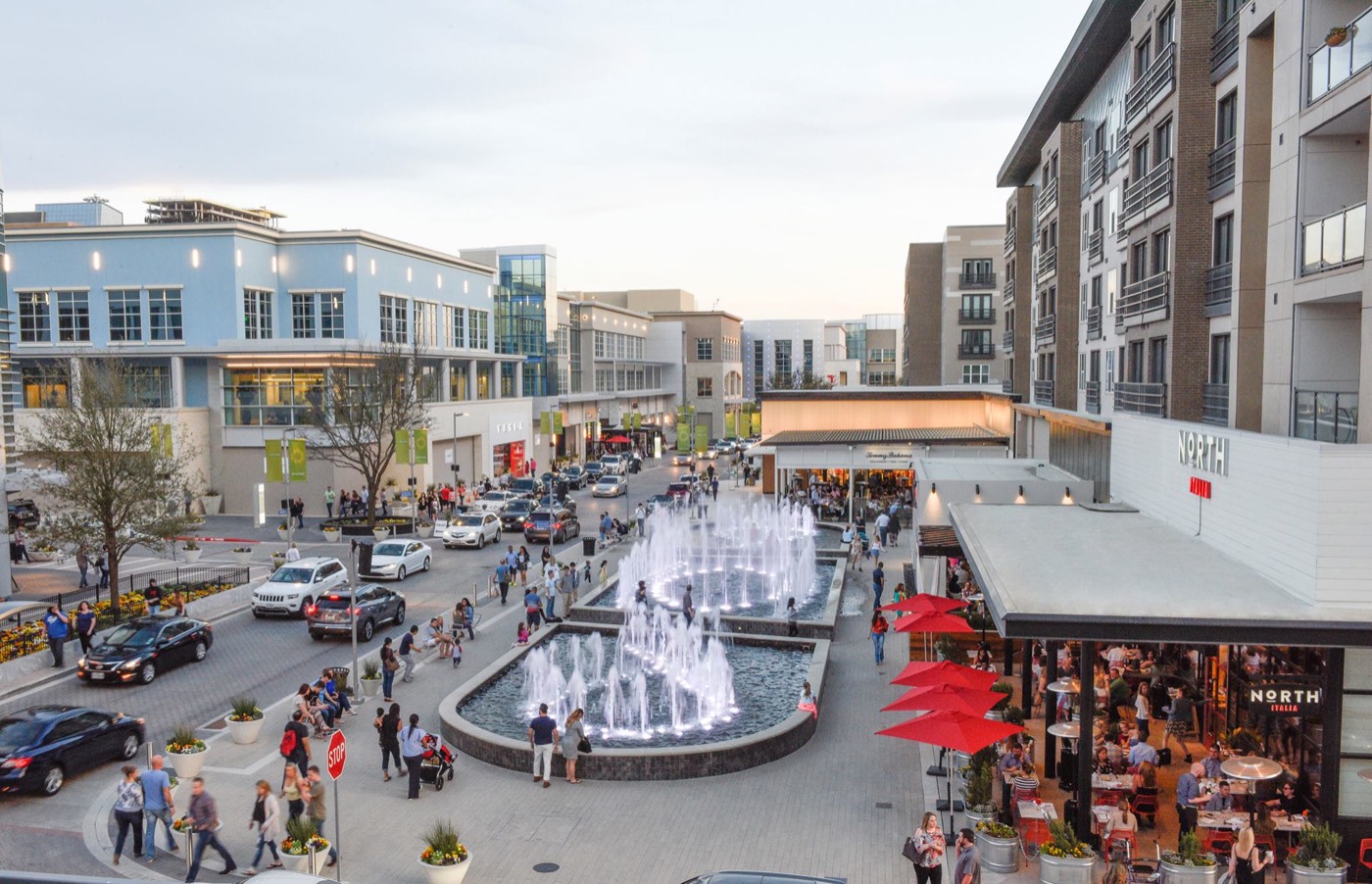
Legacy West, north Plano. This 255-acre mixed-use development around Toyota’s headquarters, with offices for JPMorgan Chase, Liberty Mutual and FedEx Office, is where much of the corporate diaspora works and eats. Its walkable plazas blur the line between the office and the after-work dosa.
The Diwali melas of north Texas. Each autumn the community gathers at large outdoor festivals near Plano, including events at Southfork Ranch and Myers Park in McKinney that draw tens of thousands for food, dance and fireworks. In 2023 a Frisco celebration alone featured more than 300 performers across fifteen styles of Indian dance.
Sanjh and the upscale dining scene. As the community’s wealth grew, so did its restaurants. Modern Indian rooms such as Sanjh now host masala chai afternoon teas and plated regional menus, a long way from the early days when a tiffin counter was the only option for miles.
Where They Came From
The single largest current is from the Telugu states of Andhra Pradesh and Telangana, whose IT corridors in Hyderabad feed directly into the American technology pipeline. For many families the route ran from a Hyderabad engineering college to a campus interview, to a staffing firm, to a one-bedroom flat in Plano, and then to a house in a Frisco subdivision once the green card came through.
Gujaratis arrived earlier and along a different path, often through family and business networks that spanned motels, retail and wholesale trade. Tamil, Kannada and Punjabi families came through the same professional channels as the Telugus, drawn by engineering and finance jobs.
What united them was chain migration through work. One relative sponsored on an H-1B visa would vouch for the schools, recommend a recruiter, and within a few years a cousin and then a sibling had joined the same few square miles. The pattern echoes other American Indian enclaves, from Edison, New Jersey to the Mahatma Gandhi District in Houston, though Plano’s version is younger, wealthier and more decisively Telugu.
Plano Today
Indians are now woven into the fabric of Plano and its neighbours, not on the margins of it. The 2020 census recorded an Asian population of about 23 per cent in Plano, with Asian Indians forming the single largest Asian group, and Collin County as a whole has grown steadily more South Asian since.
That presence shows up in the everyday. Plano ISD and Frisco ISD, both highly rated districts, count Indian American students among their highest performers, and the cricket pitches, dance schools and Carnatic music classes of the suburbs are full. The wider DFW diaspora has produced communities that mirror others across Texas, from the Telugu-heavy north to the long-settled families of Sugar Land south of Houston.
Plano’s Indians are also visibly prosperous. They are software architects, finance managers, doctors and founders, and their spending power has reshaped retail, dining and real estate across the northern suburbs. The pattern of a high-skilled diaspora anchoring an affluent tech town is one the Indians of Cupertino, California would recognise instantly.
It is worth remembering how new most of this is. Two decades ago a single small temple in Irving and one 3,000 square foot grocery in Plano served the whole metroplex. Today a Guinness record temple anchors Frisco, melas fill ranch grounds each autumn, and the cinemas sell out for Telugu premieres. The Indians in Plano did not inherit a neighbourhood. They built one in a single generation. For context on how other immigrant communities reshaped Texas cities, the story of Nigerians in Houston follows a strikingly similar arc.
Frequently Asked Questions
How many Indians live in Plano, Texas?
Plano’s 2020 census recorded an Asian population of roughly 23 per cent of about 285,000 residents, with Asian Indians the largest Asian group at around 6 to 7 per cent of the city. Across the wider Dallas-Fort Worth metroplex more than 235,000 Indian Americans now live, many concentrated in Plano, Frisco and Irving.
Why do so many Indians live in Plano and Frisco?
The main draw is work. Plano is a major corporate hub, home to Toyota Motor North America, Frito-Lay, JCPenney and Pizza Hut, and the surrounding area is a magnet for IT and telecom jobs filled by H-1B professionals. Strong public schools and new suburban housing made it ideal for young Indian families.
Is the Plano Indian community mostly Telugu?
Telugu speakers from Andhra Pradesh and Telangana are the largest and fastest growing group, and DFW holds one of the biggest Telugu populations in the United States. Gujarati, Tamil, Kannada, Hindi and Punjabi families are also well represented, with Gujaratis among the earliest settlers.
What is the biggest Hindu temple near Plano?
The Karya Siddhi Hanuman Temple at 12030 Independence Parkway in Frisco, inaugurated in 2015, is one of the largest Hindu temples in the western hemisphere and has the largest prayer hall in Texas. The older DFW Hindu Temple in Irving served the community before it opened.
Where do Indians shop for groceries in Plano?
India Bazaar, which opened its first store at 832 West Spring Creek Parkway in 2004 and now has around ten DFW locations, is a community staple. A second Plano store sits at 8450 Angels Drive near the Legacy corporate district, and the suburbs are dotted with South Indian, Gujarati and North Indian eateries.
When is Diwali celebrated in the Plano area?
Diwali falls in autumn, usually October or November, and north Texas hosts some of the largest melas in the state. Major outdoor festivals are held near Plano at venues such as Southfork Ranch and Myers Park in McKinney, alongside temple events and city library programmes in Plano and Frisco.
If your family’s story passed through Plano, or any of the places Indians have made home in America, Atlas of Home can trace that journey. From Hyderabad to Plano, to wherever you are now.