
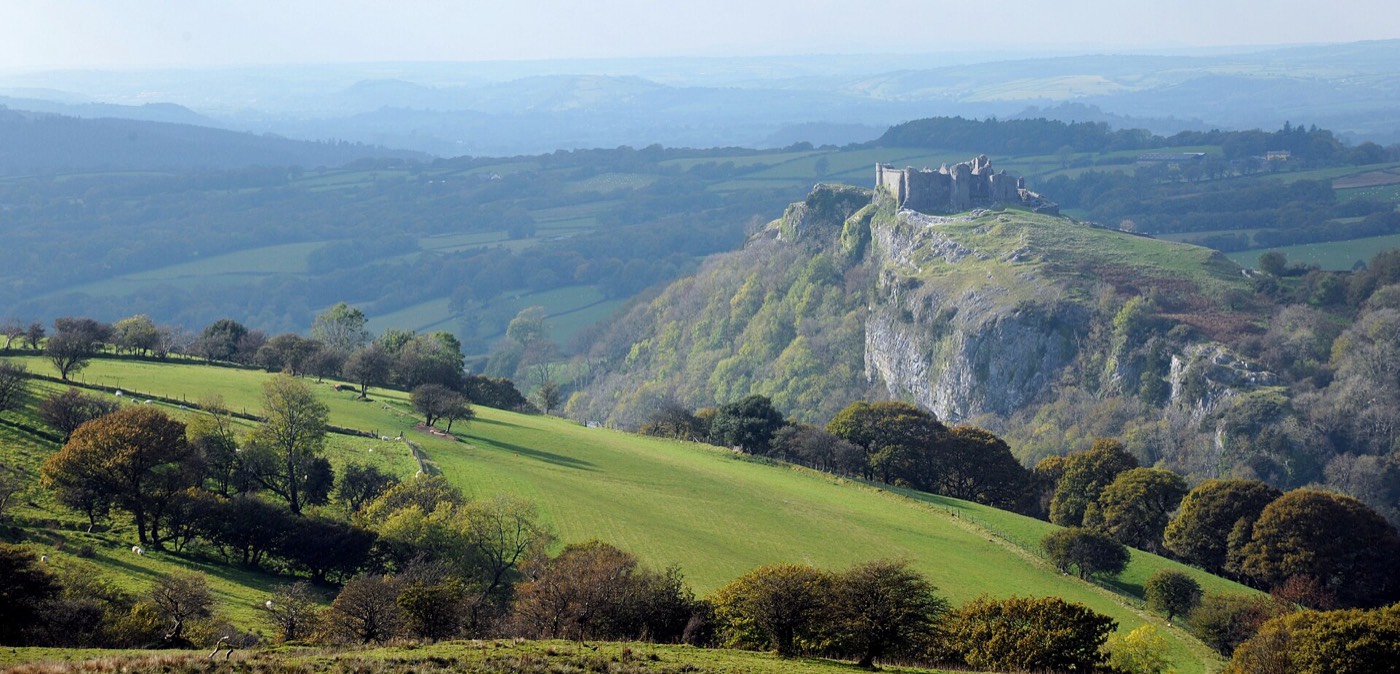
The Lewis surname has three honest origins, and the largest of them is Welsh: an anglicised form of Llywelyn, an ancient name carrying the sense of a leader. Wales is the homeland. It is not the whole story.
What Does the Surname Lewis Mean?
Lewis has no single meaning, because it descends from three unrelated names. The Welsh Llywelyn, from the Brittonic Lugubelinos, a compound of two Celtic divine names. The Norman Lowis, from Latin Ludovicus and Germanic Hludwig, “famous battle”. And the Hebrew Levi, “joined” or “attached”.
Three names, three languages, one spelling. That collision is the most important fact about the name, and most surname pages skip it.
Two of the three arrived at the modern spelling by accident. Anglo-Norman clerks writing Welsh names into English records reached for the nearest familiar sound, and Llywelyn came out as Lewis. Jewish families in Georgian and Victorian Britain made the same substitution deliberately, trading Levi for a name that would not mark them on a shop sign.
Where the Lewis Name Comes From
Most British Lewises come from Wales, above all from Glamorgan, Monmouthshire, Carmarthenshire and Cardiganshire. Lewis is the sixth most common surname in Wales and the twenty-second in England, a gap that tells you where the weight sits.
The Welsh Line: From Llywelyn to Lewis
Medieval Wales had no fixed surnames. A man was known as the son of his father: Dafydd ap Llywelyn, Ieuan ap Lewys. The name changed every generation, which worked perfectly well until English administration arrived and demanded something that stayed still.
The Acts of Union of 1536 and 1543 brought English law, English courts and English record-keeping into Wales. Over the following two centuries the ap system collapsed and Welsh families froze a single father’s name into a permanent surname. Llywelyn and its shortened form Lewys became Lewis. The same process produced the Williams surname and the Jones surname, which is why a small handful of names now covers so much of the Welsh population.
This is also why there is no Lewis clan. Hundreds of unconnected Welsh households arrived at the name independently, in different counties, in different decades. The gentry Lewis family of Van in Glamorgan, prominent from the 1540s, is one such line among many, not a parent stock.
The Norman Line: Lowis and Ludovicus
Quite separately, English Lewises descend from the Norman personal name Lowis, brought over after 1066. It is the same root that gave French Louis and eighteen kings of France, from the Germanic hlut, “loud” or “famous”, and wig, “battle”.
These families spread across southern and midland England from the medieval period onward, with no Welsh connection whatsoever. If your Lewis line sits in Kent or Essex in the 1500s, this is likely your branch.
The Jewish Line: Levi Becomes Lewis
The third strand is Ashkenazi Jewish and well documented. From the late eighteenth century, Jewish families settling in London and the industrial cities anglicised Levi, Levy, Loew and Lowe to Lewis, a name already common enough in Britain to draw no attention.
Sir George Henry Lewis, 1st Baronet (1833 to 1911), the most celebrated solicitor of late Victorian London, came from exactly this world, as did the historian Bernard Lewis (1916 to 2018), born in Stoke Newington to Harry Lewis and Jane Levy. The parallel history of the priestly name itself is covered on our Cohen surname page.
Why the Isle of Lewis Is Not the Source
The Hebridean island of Lewis has nothing to do with the surname, despite being the guess almost everyone makes first. Its Gaelic name is Leòdhas, from Old Norse Ljóðhús as recorded on medieval Norwegian charts, and possibly older still. Two different words that happen to look alike in English.
The evidence is in the distribution: Lewis ranks sixth in Wales and only about 129th in Scotland. If the island were the source, that ratio would be reversed.
Spelling Variants and Related Names
Because three separate names converged on one spelling, the variant list runs in three directions at once.
From the Welsh side: Llywelyn, Llewelyn, Llewellyn, Lewys, Lewes, Llewhellin and Fluellen, the last a phonetic English mangling that Shakespeare used for his Welsh captain in Henry V. Older records may also show Lewis ap Owen or Lewis ap Ieuan, the patronymic caught mid-collapse.
From the Norman side: Lowis, Louis, Lewes, Ludovic, Ludwig and the Latin Ludovicus found in parish registers and wills.
From the Jewish side: Levi, Levy, Levey, Levine, Levinson and Lewin. A family may appear as Levy in one census and Lewis in the next, with no change of household.
Two minor sources also exist: the Gaelic Mac Lughaidh, occasionally anglicised as Lewis, and records where Lewis stands in for Elias.
The Lewises in America
Lewis reached America by two routes with almost nothing in common: Welsh and English migration, and the adoption of surnames by formerly enslaved Black Americans after 1865. The second is larger than most people expect.
The 2010 US Census recorded 58.23 per cent of Lewises self-identifying as white and 34.84 per cent as Black. Applied to 531,781 bearers, that is roughly 185,000 Black Americans carrying the name, one of the highest counts for any surname in the country. Those figures are self-identification recorded on a census form, not a measurement of ancestry.
The reason is emancipation. Freed people choosing a legal surname for the first time often took common English and Welsh names already circulating in the South, some from former enslavers, many simply because the name was familiar, portable and unremarkable. Lewis was all three. The same pattern shaped Williams and Jones, and it explains why Lewis ranks fourth in Saint Vincent and the Grenadines and sixteenth in Jamaica.
Those families moved north in the twentieth century with the Great Migration, and Lewis is a common name in the neighbourhoods it built: Harlem in Manhattan and Bronzeville on Chicago’s South Side. It runs equally deep in the older communities of the coast, including the Gullah Geechee Lowcountry of South Carolina.
The Welsh Lewises took a different road. Quakers and Baptists reached William Penn’s colony from the 1680s, and the great wave came in the nineteenth century, when Welsh colliers and ironworkers were recruited straight into the Pennsylvania anthracite fields. Lewis is written all over the chapel registers of Welsh Scranton and Wilkes-Barre, and across the farming settlement of Remsen in upstate New York.
Notable People Named Lewis
Meriwether Lewis (1774 to 1809), of Welsh descent through his father, led the Corps of Discovery across the continent with William Clark and later served as governor of Upper Louisiana.
Edmonia Lewis (c. 1844 to 1907), of African American and Mississauga descent, was the first sculptor of colour to win international standing. She studied at Oberlin, then worked in marble in Rome from 1865.
John L. Lewis (1880 to 1969), born in Iowa to Welsh immigrant parents from the mining valleys, led the United Mine Workers from 1920 to 1960 and founded the Congress of Industrial Organizations.
C. S. Lewis (1898 to 1963), the Belfast-born author of The Chronicles of Narnia, came from a family of Welsh origin that had crossed to Ireland in the nineteenth century.
John Lewis (1940 to 2020) was born to sharecroppers near Troy, Alabama. A Freedom Rider, speaker at the 1963 March on Washington and leader of the march beaten back on Bloody Sunday in Selma, he represented Georgia’s fifth district in Congress for more than thirty years.
Carl Lewis (born 1961) won nine Olympic gold medals in sprinting and the long jump across four Games, from Los Angeles in 1984 to Atlanta in 1996.
How Common Is Lewis Today?
Lewis is the 29th most common surname in the United States, carried by 531,781 people at the 2010 Census. It is also sixth in Wales, twenty-second in England and fourth in Saint Vincent and the Grenadines.
| US rank (2010 Census) | #29 |
|---|---|
| Americans with the name | 531,781 |
| Origin | Welsh, with distinct Norman English and Ashkenazi Jewish lines |
| Meaning | From Llywelyn, “leader”; or Ludovicus, “famous battle”; or Levi, “joined” |
Frequently Asked Questions
What does the surname Lewis mean?
It depends which Lewis you are. The Welsh name comes from Llywelyn, an ancient Brittonic name understood as leader or ruler. The Norman name comes from Ludovicus, “famous battle”. The Jewish name is an anglicisation of Levi, “joined”.
Is Lewis Welsh or English?
Both, from separate roots. The Welsh line, from Llywelyn, is much the larger of the two and made Lewis the sixth most common surname in Wales. The English line descends independently from the Norman personal name Lowis.
Where does the Lewis family come from?
There is no single Lewis family. Welsh Lewises cluster in Glamorgan, Monmouthshire, Carmarthenshire and Cardiganshire, English Lewises across southern England, and Jewish Lewises in London and the industrial cities. The Isle of Lewis in the Hebrides is unrelated.
How common is the surname Lewis?
Very. It ranks 29th in the United States with 531,781 bearers, sixth in Wales and twenty-second in England. It is also among the most common surnames in Jamaica and Saint Vincent and the Grenadines.
Is there a Lewis family crest or coat of arms?
No. In British and most European heraldry, arms are granted to an individual and pass to that person’s direct descendants, never to everyone who shares a surname. Given that Lewis arose independently in hundreds of unrelated Welsh, English and Jewish families, a single Lewis crest is a commercial fiction. Anyone selling you one is selling a decoration, not a lineage.
Why is Lewis a common African American surname?
At the 2010 Census, 34.84 per cent of American Lewises identified as Black, around 185,000 people. Most descend from families who chose a surname after emancipation in 1865, taking a common and portable English name rather than inheriting it by Welsh descent.
If your family carries the Lewis name, its route from Wales, from England, from a Jewish East End street or from a Southern county courthouse in 1865 is traceable. Atlas of Home can follow it from the parish or the plantation ledger to wherever your family landed, and to wherever you are now.
Further reading: Lewis (surname) on Wikipedia and the National Library of Wales.