
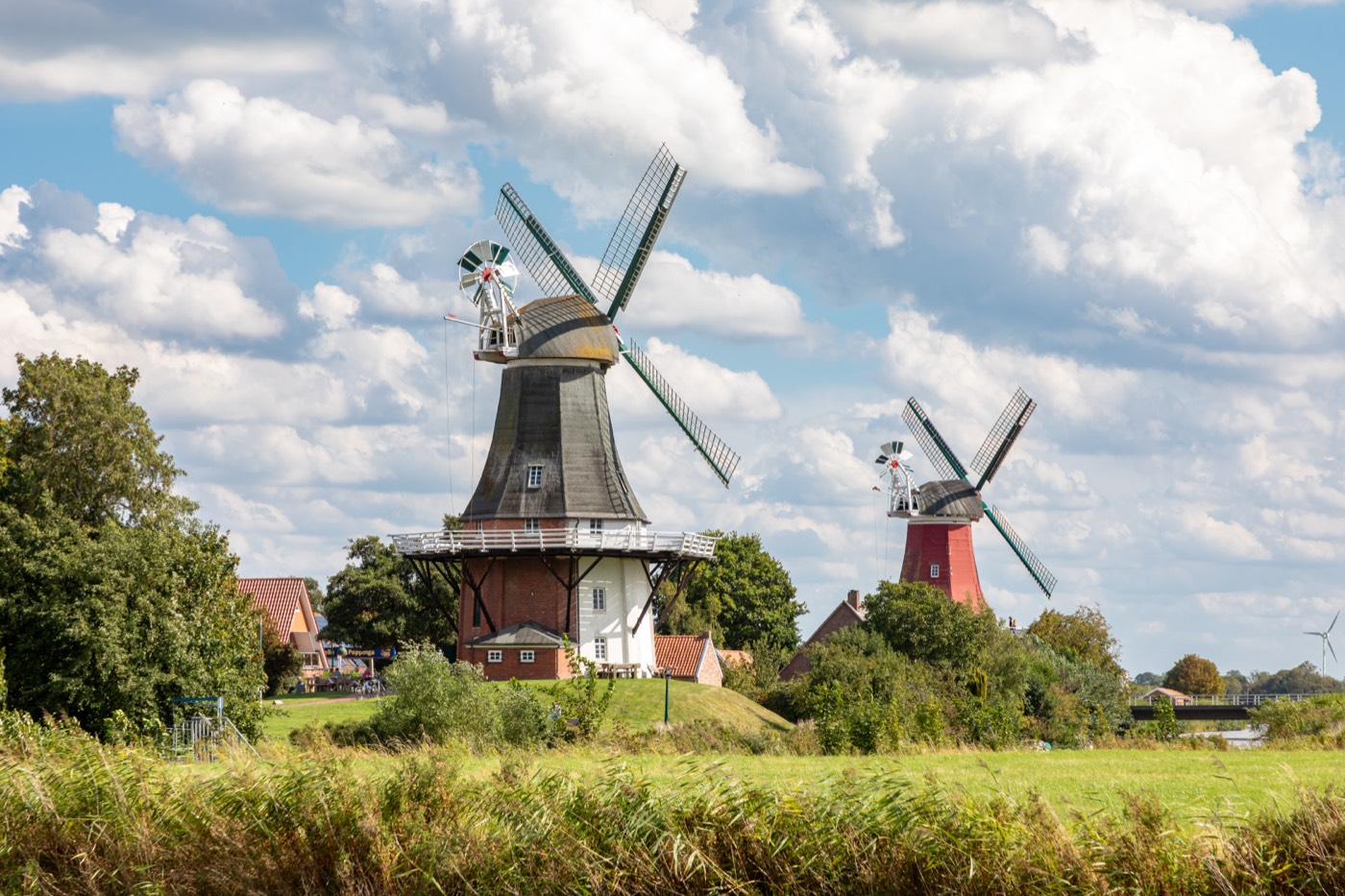
The Janssen surname means “son of Jan”, Jan being the Dutch and Low German form of John. It belongs to the flat, wind-scoured country on both sides of the Dutch-German border, and it is not quite as Dutch as most people assume.
What Does the Surname Janssen Mean?
Janssen means “son of Jan”. Jan is the Dutch and Low German form of Johannes, from the Hebrew Yohanan, “God is gracious”. The name is a straight patronymic, the exact continental cousin of the English Johnson.
Nothing in it describes a trade, a landholding or a personality. It records a father, and nothing else.
Jan was the most popular male name across the Low Countries and the North German plain for four hundred years, so the patronymic formed independently thousands of times over. Two Janssen families with no shared ancestor at all is the normal case, not the exception.
Where the Janssen Name Comes From
Janssen comes from the Dutch-German borderlands: the southeastern Netherlands, the adjoining Rhineland, and East Frisia in northwestern Germany. It is a Dutch name and a German name at the same time, and the border between the two was drawn long after the name existed.
The Dutch side
Roughly 60,000 Janssens live in the Netherlands, where the name ranks in the top ten. The concentration is emphatically southeastern: Limburg, Gelderland and North Brabant hold the bulk of them. Not the Frisian north people tend to picture, but the Maas and Rhine country pressed against the German frontier.
The German side
Germany holds around 36,000 Janssens, and they are not scattered evenly. In Lower Saxony the name is more than five times as frequent as the German national average, and the densest pocket of all is East Frisia, the marshland and dyke country around Aurich, Leer and Emden. East Frisian speech is Low German, closer to Dutch than to the German of Munich, and East Frisian naming behaved accordingly.
Fixed by Napoleon
Before the nineteenth century these were not surnames at all. They changed every generation: Jan’s son Klaas became Klaas Jansen, and Klaas’s son Jan became Jan Klaassen. The system worked perfectly well until a state wanted lists.
The Netherlands introduced compulsory civil registration in 1811 under French occupation, and families had to declare one fixed name for good. Less noticed: East Frisia sat inside the same empire at that moment, annexed to France as the Département de l’Ems-Oriental, and a parallel decree landed there in 1811 too. One emperor froze one name on both sides of the frontier in a single year. The Dutch half of that story is covered on our De Vries surname page.
The Mennonite Janzens
One branch of this name has a history entirely of its own.
Dutch and Frisian Mennonites, fleeing persecution in the sixteenth century, settled the Vistula delta around Danzig in what was then Polish Royal Prussia. The name is on record in Danzig by 1568, and the Global Anabaptist Mennonite Encyclopedia traces the family through the Prussian congregations at Elbing and Koenigsberg. There they farmed reclaimed marshland for two hundred years, kept Dutch as a church language long after they had stopped speaking it at home, and shifted the spelling towards Janzen and Jantzen.
When Catherine the Great offered land, religious freedom and exemption from military service, they moved again, founding the Chortitza colony in 1789 and Molotschna after 1804 in what is now Ukraine. Then in 1870 the Russian government announced that the special privileges would end. Between 1874 and the mid-1880s roughly a third of the Mennonites in the Russian Empire left, about 10,000 to the United States and 8,000 to Canada.
They landed in Kansas, Nebraska, Dakota Territory and Manitoba, bringing hard red winter wheat with them. A Janzen from Newton, Kansas or Steinbach, Manitoba is Dutch by deep ancestry, Prussian by four generations, Russian by another three, and none of those is the wrong answer.
Spelling Variants and Related Names
The main variants are Jansen, Janssen, Janssens, Jansens, Janzen, Jantzen, Jansz, Jans, Jansson, Jensen and the anglicised Johnson. The endings are not random, and they carry real geographic information.
The doubled -ss-. Jansen and Janssen are the same name; the double consonant simply keeps the preceding vowel short in Dutch and German spelling conventions. In practice Jansen is commoner in the central and northern Netherlands, while Janssen dominates in the southeast and across the German border. If your family wrote it Janssen, the odds tilt towards Limburg, the Rhineland or East Frisia.
The final -s. Janssens is the genitive of Janssen, and it is overwhelmingly Flemish. It is the second most common surname in Belgium, with roughly 26,000 bearers in Flanders alone. A terminal -s on almost any Belgian surname does the same work. So the practical rule for a reader tracing a family: Janssens points south into Flanders, Janssen points to the Dutch southeast or northwest Germany, Jansen points to the Dutch heartland.
Janzen and Jantzen. These are the Prussian and Russian Mennonite spellings, and encountering either in an American record is a strong hint of that particular migration rather than a general Dutch one.
Scandinavian cousins. Jansson is Swedish, Jensen and Johansen Danish and Norwegian. They are formed identically from the same given name but are not the same family; they are parallel inventions, not branches.
Johnson. Many American Janssens simply translated, usually between the 1880s and the First World War. If an immigrant ancestor appears as Janssen in one census and Johnson in the next, nothing happened except assimilation.
The Janssens in America
Janssens arrived in three distinct waves, and knowing which one your family belongs to narrows the search enormously.
The first was the Dutch Protestant emigration of the 1840s, driven by religious secession and potato blight. These families sailed for Michigan and Iowa, founding colonies that still bear the marks: the Dutch settlement at Holland, Michigan, the farm town the Reverend Hendrik Scholte planted as the Dutch colony at Pella, Iowa, and later the prairie congregations around Sioux Center in northwest Iowa. If your Janssens were Reformed and farming by 1860, this is almost certainly the wave.
The second was Flemish and Belgian, and it is a different story with different destinations. Belgian Janssens went to the Belgian farm parishes of Door County, Wisconsin from the 1850s, and then in far greater numbers to the car plants, joining the Flemish Belgian community in Detroit in the first decades of the twentieth century. Catholic parish records, not Reformed church books, are where these families surface.
The third was the Mennonite migration of 1874. Those Janzens and Jantzens went straight to the wheat counties of central Kansas, southeastern Nebraska and Manitoba, and their descendants later spread west to the Mennonite settlement at Reedley, California. There is even a village called Jansen in Jefferson County, Nebraska, named for the migration.
Notable People Named Janssen
Pierre Jules Cesar Janssen (1824 to 1907), French astronomer, observed an unexplained yellow line in the solar spectrum during the 1868 eclipse in India, which led to the identification of helium. Craters on the Moon and Mars carry his name.
Saint Arnold Janssen (1837 to 1909), born at Goch on the German side of the Dutch border, founded the Society of the Divine Word missionary order. He was canonised in 2003.
Paul Janssen (1926 to 2003), Belgian physician and one of the most prolific drug developers of the twentieth century. He founded Janssen Pharmaceutica in 1953, and his laboratories produced more than eighty medicines.
Jan Janssen (born 1940), Dutch cyclist, won the 1968 Tour de France by 38 seconds on the final time trial, the first Dutchman to take the race.
David Janssen (1931 to 1980), American actor, best known as Dr Richard Kimble in The Fugitive. He was born David Harold Meyer and took his stepfather’s surname.
Famke Janssen (born 1964), Dutch actress and director from Amstelveen, widely known for the X-Men films.
The spectacle maker Zacharias Janssen is often credited with inventing the compound microscope, but the claim was made by his son two decades after his death and historians now treat it as unreliable. Worth knowing, and worth not repeating as fact.
How Common Is Janssen Today?
Janssen is the 3,160th most common surname in the United States, carried by 11,423 Americans at the 2010 Census. Worldwide it is borne by roughly 132,000 people, with the Netherlands and Germany holding about three quarters of them.
| US rank (2010 Census) | #3160 |
|---|---|
| Americans with the name | 11,423 |
| Origin | Dutch and Low German (patronymic) |
| Meaning | Son of Jan (John) |
That US figure counts only the Janssen spelling. Add Jansen, Janssens, Janzen and Jantzen and the American total climbs well past 60,000, before counting the families who became Johnson.
Frequently Asked Questions
What does the surname Janssen mean?
Janssen means “son of Jan”, the Dutch and Low German form of John, itself from the Hebrew Yohanan meaning “God is gracious”. It is a patronymic surname and the direct equivalent of the English Johnson.
Is Janssen Dutch or German?
Both, genuinely. Around 60,000 Janssens live in the Netherlands and 36,000 in Germany, and the densest areas on each side face each other across the border. Dutch bearers cluster in Limburg, Gelderland and North Brabant, German bearers in East Frisia and the Rhineland.
Where does the Janssen family come from?
There is no single Janssen family. The name arose independently across the Low Countries and northern Germany wherever a man named Jan had children, then froze into a hereditary name with civil registration in 1811. Tracing a line means tracing a parish, not the name.
How common is the surname Janssen?
It ranks 3,160th in the United States with 11,423 bearers, and about 132,000 worldwide. In the Netherlands it sits in the top ten surnames, and the Flemish variant Janssens is the second most common surname in Belgium.
Is there a Janssen family crest or coat of arms?
No. In Dutch, German and every other European heraldic tradition, arms are granted to an individual and pass to that person’s direct descendants, never to everyone sharing a surname. With a patronymic formed thousands of times over by unrelated families, the idea is especially empty. Anyone selling a “Janssen family crest” is selling a decoration, not a lineage.
What is the difference between Janssen, Janssens and Jansen?
They are the same name spelled by different conventions. Jansen is commoner in the central and northern Netherlands, Janssen in the southeast and in Germany, while Janssens adds a genitive -s and is characteristically Flemish. Janzen and Jantzen mark the Mennonite branch.
If your family carries the Janssen name, its route from the Dutch-German borderlands to America is traceable. Atlas of Home can follow it from a village on the Maas, a dyke parish in East Frisia or a Mennonite colony on the Vistula to wherever your family landed, and to wherever you are now.